Hoppa till innehåll










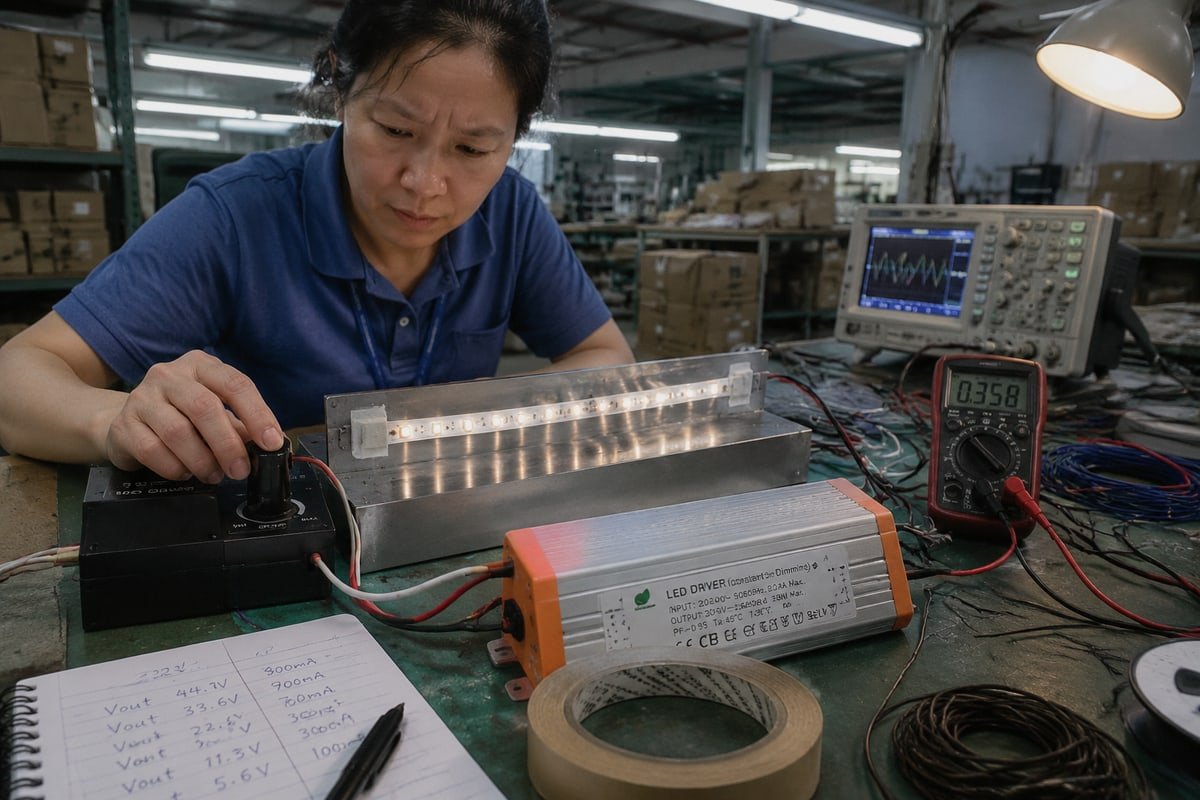
LED-remsor flimrar med CV TRIAC-drivdon oftare än något annat klagomål vi loggar på vår drivdonsfabrik. Det frustrerar installatörer, dödar projektförtroende och stoppar återkommande beställningar.
LED-remsor flimrar med CV TRIAC-drivdon när dimmern, drivdonets ingångskrets och LED-belastningen inte är korrekt matchade. TRIAC:en klipper AC-vågformen, och ett inkompatibelt drivdon misslyckas med att hålla stabil DC-reglering—särskilt vid låga dimningsnivåer, låga laster eller med felaktig leading-edge/trailing-edge-parning.
Det svaret låter enkelt. Men detaljerna spelar roll. Nedan bryter jag ner de verkliga orsakerna, lösningarna som fungerar och hur du kvalificerar produkter innan du köper i bulk.
Vad orsakar att mina LED-remsor flimrar när jag använder CV TRIAC-drivrutiner?
Förra året spårade vårt QC-team en Singaporesisk kunds flimmerklagomål till en grundorsak: drivdonets ingångssteg 1 kunde inte hålla TRIAC:en låst. Det fallet formade hela den här sektionen.
Flimmer uppstår när den fas-klippta vågformen, drivdonets ingångssteg, dess DC-regleringsloop och LED-belastningen hamnar ur synk. Vanliga utlösare inkluderar hållströmsbortfall, överdriven ingångskapacitans, leading-edge/trailing-edge-mismatch, hiccup-skyddscykling och laster under drivdonets minimilastkrav.
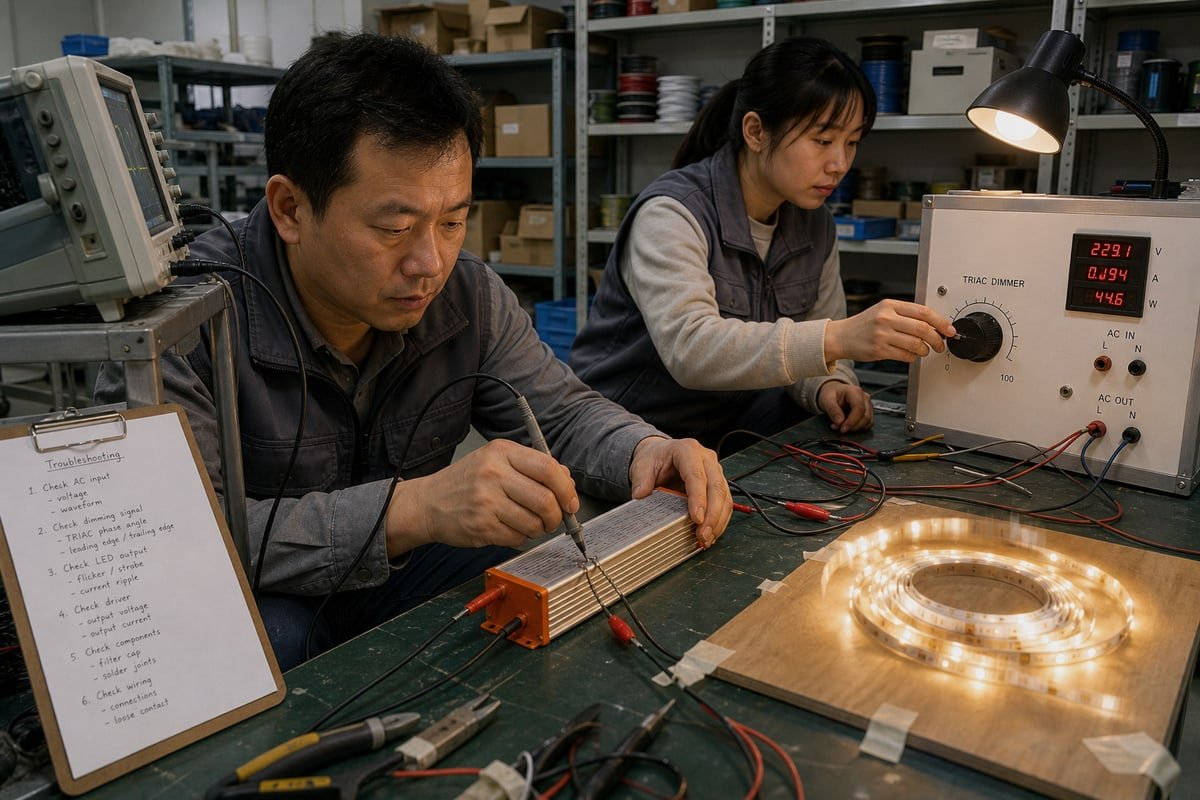
De flesta beskriver detta som “TRIAC-inkompatibilitet.” Den beskrivningen är för vag för att åtgärda något. Den verkliga kedjan är denna: fas-klippt vågform → drivdonets ingångssteg → DC-reglering och kontrollloop → LED-belastning. Flimmer uppträder när någon länk i kedjan bryts.
Den mest förbisedda orsaken: hållström
En TRIAC behöver tillräckligt med ström som flyter genom den för att förbli låst under varje AC-halvcykel. Ett drivdon med liten eller starkt olinjär ingångsström kan få TRIAC:en att stängas av tidigt eller tända inkonsekvent. Detta blir värre nära botten av dimningsområdet, eftersom ledningsfönstret 2 redan är kort. Det är därför flimmer ofta bara uppträder under ungefär 20% ljusstyrka. Systemet fungerar bra vid full effekt, sedan blinkar, poppar eller skimrar det när du dimmar ner.
Hela listan över flimmermekanismer
I vårt labb sorterar vi flimmerklagomål i mekanismerna nedan. Var och en har en annan lösning, så att identifiera rätt sparar veckor.
| Mekanism | Vad som faktiskt händer | Typiskt symptom |
|---|---|---|
| Hållströmsbortfall | Drivdon drar för lite ström för att hålla TRIAC:en låst | Blinkande eller poppande vid låga dimningsnivåer |
| Leading/trailing edge-mismatch | Drivdon kan inte avkoda dimmerns fas-klippningsstil | Flimmer över hela området |
| EMI-filtrets inrush-ringning | Ingångskondensatorer ringer vid varje TRIAC-utlösning | Skimmer eller surr nära mellanområdet |
| Nollgenomgångsdetekteringsjitter | Drivdon misstolkar den klippta vågformens timing | Slumpmässigt, oregelbundet flimmer |
| Hiccup-skyddscykling | Överbelastningsskydd startar om drivdonet upprepade gånger | Långsamt, rytmiskt på-av-blinkande |
| Rippel vs PWM-beatmönster | Likriktad AC-rippel stör den interna PWM-dimningsfrekvensen | Långsam rullande eller stroboskopisk effekt |
| Termisk drift | Låsningströsklar skiftar när komponenter värms upp | Flimmer som börjar efter uppvärmning |
| Harmonisk förorening | Andra olinjära laster skapar hack i AC-vågformen på grenen | Flimmer bara när annan utrustning körs |
| Spänningsfall på DC-ledningar | Underdimensionerad kabel eller långa ledningar orsakar svajoscillationer | Flimmer vid den bortre änden av remsan |
| Reflekterad impedansmismatch | Remsans parasitiska induktans stör utgångsregleringsloopen | Instabilitet med mycket långa remsor |
Notera att bara några av dessa är dimmerproblem. Flera är strömförsörjningsproblem som bara blir synliga när dimning tar bort systemets marginal.
Hur kan jag åtgärda flimmer i mina TRIAC-dimbara LED-remsbelysningsprojekt?
En kund i Vietnam returnerade en gång tre “defekta” drivare till vår verkstad. Alla tre klarade våra bänktester. Hans verkliga problem var spänningsfall på en lång remssträcka på arbetsplatsen.
Åtgärda flimmer genom att testa i ordning: koppla förbi dimmern, verifiera att drivarens spänning och watt matchar remsan, bekräfta att dimmerns minimilast är uppfylld, dra åt varje anslutning, mät spänningsfall längs sträckan, och ersätt slutligen drivaren med en fasklippningsklassad CV-enhet.
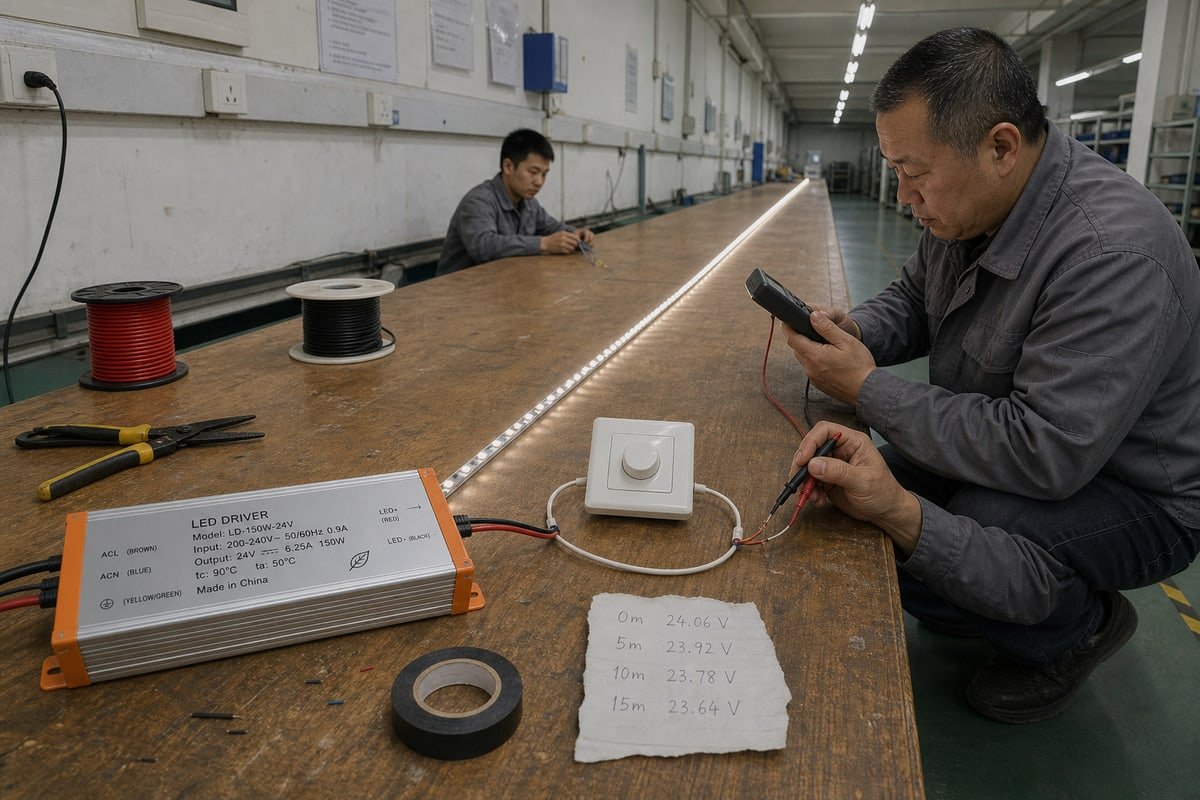
Det snabbaste sättet att åtgärda flimmer är att sluta gissa och börja eliminera. Den viktigaste skillnaden är mellan dimmerinducerat flimmer och strömförsörjningsflimmer. De ser identiska ut för ögat, men de kräver motsatta åtgärder. Här är elimineringssekvensen vi rekommenderar våra ingenjörskunder.
- Koppla förbi dimmern. Anslut drivaren direkt till nätet. Om flimret försvinner ligger problemet i dimningskedjan 3. Om det kvarstår, undersök strömförsörjningen istället.
- Verifiera den elektriska matchningen. Bekräfta att lågspänningstransformatorn för LED ger korrekt 12V eller 24V, och att dess watt täcker remsan med marginal. En drivare som körs på sitt tak kan glida in i hiccup-skydd, vilket ser ut som rytmiskt blinkande.
- Kontrollera dimmerns minimilast. Många väggdimmers behöver en minimieffekt för att fungera. En kort remsa vid låg ljusstyrka kan ligga under den gränsen, så dimmern cyklar på och av.
- Inspektera varje anslutning. Lösa terminaler, korroderade skarvar och billiga klipkontakter skapar intermittent kontakt som perfekt efterliknar dimmerproblem.
- Mät spänningen i båda ändar av remsan. Om du ser mer än cirka 0,5V fall från början till slut bidrar sänkningen till flimret. Korta sträckan, öka kabelarean eller mata ström från båda ändar.
- Byt drivaren sist. Om steg ett till fem klarar sig och flimmer kvarstår, ersätt drivaren med en enhet som uttryckligen är klassad för fasklippningsdimning och bekräftad mot din dimmermodell.
Att följa denna ordning är viktigt. I våra efterförsäljningsregister visar sig en stor andel av “drivarfel” vara kablage, lastdimensionering eller dimmerns minimilastproblem som en ny drivare aldrig skulle ha åtgärdat.
Vilka TRIAC-dimmerbrytare är verkligen kompatibla med mina CV LED-drivrutiner?
Att välja mellan en framkantsdimmer och en trailing-edge-modell är en avvägning våra ingenjörer ständigt väger: rå låsningstillförlitlighet mot mjuk lågnivåprestanda.
Kompatibla TRIAC-dimmers matchar drivarens deklarerade dimningsmetod—framkant, bakkant eller båda—uppfyller drivarens inspänningsprofil och har en minimilastklassning som den anslutna remsan kan uppfylla. Bekräfta alltid parningen mot drivartillverkarens testade dimmerkompatibilitetslista.
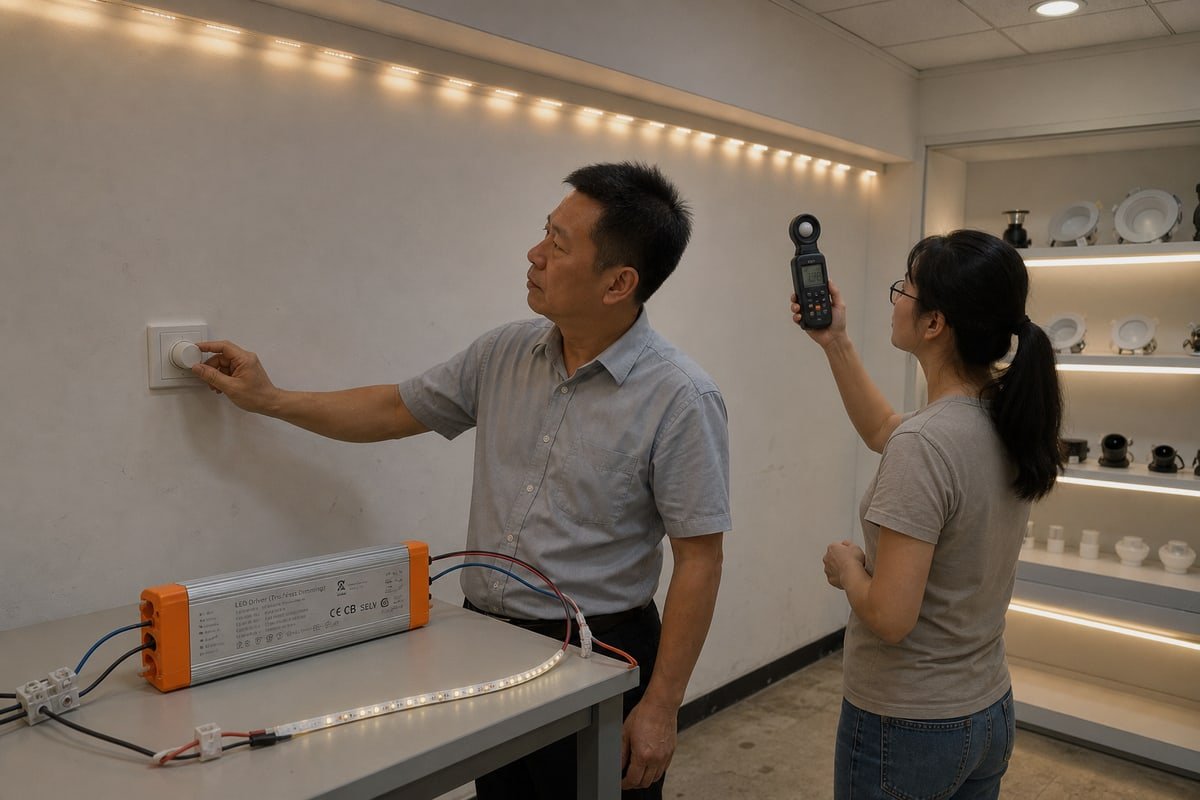
Dimmerbrytarkompatibilitet är där de flesta projekt går fel, så börja med jämförelsen framkant vs bakkant. De två teknikerna klipper AC-vågformen olika, och en drivare designad för en kan bete sig fel på den andra.
| Faktor | Framkant (forward phase) | Bakkant (ELV-typ) |
|---|---|---|
| Hur den klipper vågformen | Klipper framsidan av varje halvcykel | Klipper baksidan av varje halvcykel |
| Ursprungligt designtarget | Glöd- och magnetiska laster | Elektroniska lågspänningslaster |
| Hållströmskänslighet | Hög—behöver stadig ström för att förbli låst | Låg—använder transistorer, inte en låsande TRIAC |
| Minimikrav på last | Ofta 25W eller mer | Vanligtvis betydligt lägre |
| Lågnivådimningsbeteende | Benägen för bortfall och blixtrande | Vanligtvis mjukare och tystare |
| Bästa parning | Drivare uttryckligen klassade för framkant | ELV-dimbara drivardesigner |
Låt mig nu ta upp en vanlig köparinvändning. Vissa ingenjörer säger till mig att TRIAC-dimning är i sig fel för LED-remsor, och att bara en MOSFET- eller trailing-edge-lösning kan vara flimmerfri. Jag förstår var den synen kommer ifrån—äldre glödlampedimmers på generiska konstantspänningsaggregat 4 flimrar kraftigt. Men slutsatsen är föråldrad. En drivare vars ingångssteg är konstruerat för att avkoda fasklippningsinput, presentera en stabil ström till TRIAC:en och reglera rent vid djupa dimningsnivåer kan prestera mycket väl på framkantshårdvara 5. Det verkliga spektrumet sträcker sig från “gamla generiska installationer som flimrar” till “konstruerade TRIAC-kompatibla system som inte gör det.”
Den praktiska regel vi ger distributörer: kvalificera aldrig en dimmer ensam. Kvalificera dimmern, drivdonet och listen som ett system, och fråga din leverantör om deras testade kompatibilitetslista innan du specificerar något.
Hur väljer jag en pålitlig CV TRIAC-drivrutin för att förhindra flimmer vid bulkbeställningar?
En lärdom från år av export av drivdon till Europa och Sydostasien sticker ut för mig: en databladrad som anger 24V konstantspänning säger ingenting om dimning.
Välj ett drivdon som uttryckligen är märkt 24V konstantspänning, TRIAC/fasklippningsdimbart—inte bara konstantspänning. Verifiera stöd för framkant och bakkant, minsta och maximal last, stabilitet vid låg dimningsnivå, inströmsbeteende, säkerhetsmärkningar som CE, CB och SELV, testa sedan hela kombinationen dimmer-drivdon-list innan du förbinder dig.
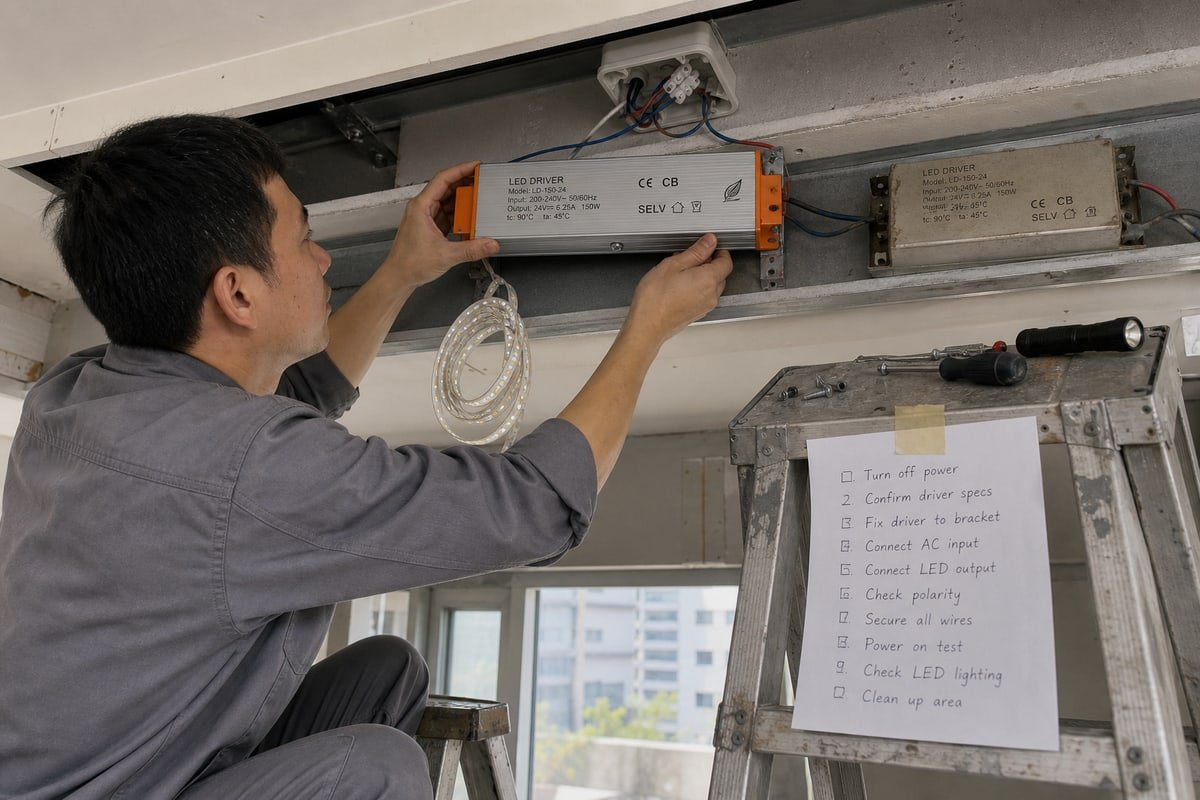
Här är det dolda problemet som kostar köpare mest pengar. En 24V LED-list kan vara perfekt kompatibel med ett 24V CV-drivdon elektriskt och ändå flimra vid dimning. Spänningskompatibilitet och dimningskompatibilitet är två olika saker. Ett konventionellt konstantspänningsaggregat kan producera utmärkt 24V DC vid normal drift, men dess ingångskrets kan vara helt olämplig för en fasklippt vågform. Att koppla den bakom en TRIAC-dimmer gör den inte magiskt till ett TRIAC-dimbart drivdon. Specifikationen måste säga något som “24V konstantspänning, TRIAC/fasklippningsdimbart”—inte bara “24V konstantspänningsaggregat.”
De sex frågorna att ställa till varje leverantör
Innan någon bulkorder säger vi till köpare att gå bortom “är den TRIAC-dimbart?” och istället ställa dessa sex frågor:
- Är den konstruerad för framkant, bakkant, eller båda?
- Vad är drivdonets minsta och maximala last?
- Vad är drivdonets inströmsvågform?
- Upprätthåller den stabil reglering vid din avsedda lägsta dimningsnivå?
- Drar LED-listen faktiskt tillräckligt med effekt för drivdonets driftområde?
- Har dimmern ett eget minimilastkrav?
Kvalificeringschecklista för bulkorder
| Kontrollpunkt | Vad man ska kontrollera | Röd flagga |
|---|---|---|
| Dimningsetikett | Anger uttryckligen TRIAC/fasklippningsdimbart | Säger bara konstantspänning |
| Säkerhetsmärkningar | CE, CB och SELV tryckta på höljet | Saknade eller overifierbara certifikat |
| Termisk design | Aluminiumhölje med värmeavledningsräfflor | Förseglad plast utan termisk väg |
| Flimmerfria påståenden | Fråga om 0–100%-dimning gäller för din dimmer och last | Påstående ges utan testad dimmerlista |
| Lågnivåtest | Provtestad vid din verkliga lägsta ljusstyrka | Endast testad vid full effekt |
| Garantivillkor | Skriftlig garanti som täcker dimningsfel | Garantin utesluter dimningsbeteende |
På hårdvarusidan säger fysisk byggkvalitet mycket. Våra egna enheter använder ett borstat aluminiumhölje med räfflade värmeavledningsspår, eftersom termisk drift i ett varmt drivdon kan skifta låsningsbeteende och skapa flimmer som bara uppträder efter uppvärmning. Behandla också “0–100% flimmerfri” marknadsföring som ett kompatibilitetspåstående, inte en universell garanti—det gäller endast med testade dimmers över det angivna lastområdet. Min starkaste B2B-slutsats: kvalificera inte ett CV-drivdon som TRIAC-dimbart bara för att det accepterar en TRIAC-dimmer. Det verkliga testet är om hela kombinationen dimmer, drivdon och LED-list förblir stabil över hela ditt krävda dimningsområde.
Slutsats
Flimmer är en systemmismatch, inte ett mysterium. Matcha dimmern, drivdonet och listen; testa hela kedjan; och köp endast från leverantörer som kvalificerar fullständiga kombinationer.
Fotnoter
- Förklarar funktionen hos ingångssteget i TRIAC-baserad effektstyrning. ↩︎
- Teknisk förklaring av fasklippningsstyrning och ledningstidpunkt. ↩︎
- Den ursprungliga Department of Energy-URL:en är 404; detta är den uppdaterade auktoritativa sidan som förklarar LED-flimmergrunder och systemkomponenter. ↩︎
- EU:s lågspänningsdirektivstandarder för konstantspänningsutrustning. ↩︎
- NEMA-standard gällande dimningskompatibilitet för solid-state-belysning. ↩︎