Przejdź do treści










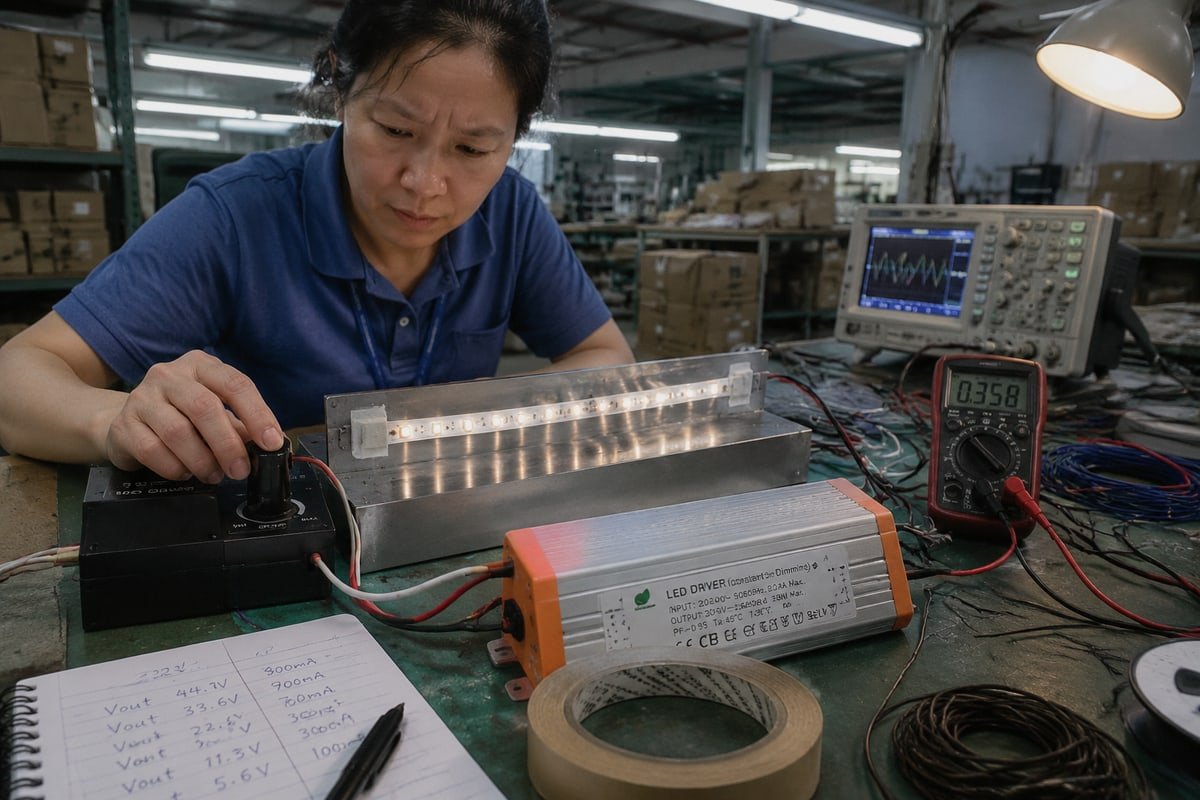
Paski LED migoczą z przetwornicami CV TRIAC częściej niż jakakolwiek inna skarga, którą rejestrujemy w naszej fabryce przetwornic. To frustruje instalatorów, podważa zaufanie do projektu i wstrzymuje zamówienia powtórne.
Paski LED migoczą z przetwornicami CV TRIAC, gdy ściemniacz, obwód wejściowy przetwornicy i obciążenie LED nie są odpowiednio dopasowane. TRIAC tnie przebieg AC, a niekompatybilna przetwornica nie utrzymuje stabilnej regulacji DC—szczególnie przy niskich poziomach ściemniania, niskich obciążeniach lub przy złym dopasowaniu krawędzi narastającej/opadającej.
Ta odpowiedź brzmi prosto. Ale szczegóły mają znaczenie. Poniżej rozbijam rzeczywiste przyczyny, skuteczne rozwiązania i sposób kwalifikacji produktów przed zakupem hurtowym.
Co powoduje migotanie moich taśm LED, gdy używam sterowników CV TRIAC?
W zeszłym roku nasz zespół QC prześledził skargę klienta z Singapuru dotyczącą migotania do jednej przyczyny źródłowej: stopień wejściowy 1 przetwornicy nie był w stanie utrzymać zatrzaśnięcia TRIAC. Ten przypadek ukształtował całą tę sekcję.
Migotanie występuje, gdy przebieg z odcięciem fazy, stopień wejściowy przetwornicy, pętla regulacji DC i obciążenie LED wypadają z synchronizacji. Typowe wyzwalacze obejmują spadek prądu podtrzymania, nadmierną pojemność wejściową, niedopasowanie krawędzi narastającej/opadającej, cykliczne działanie ochrony hiccup oraz obciążenia poniżej minimalnego wymaganego obciążenia przetwornicy.
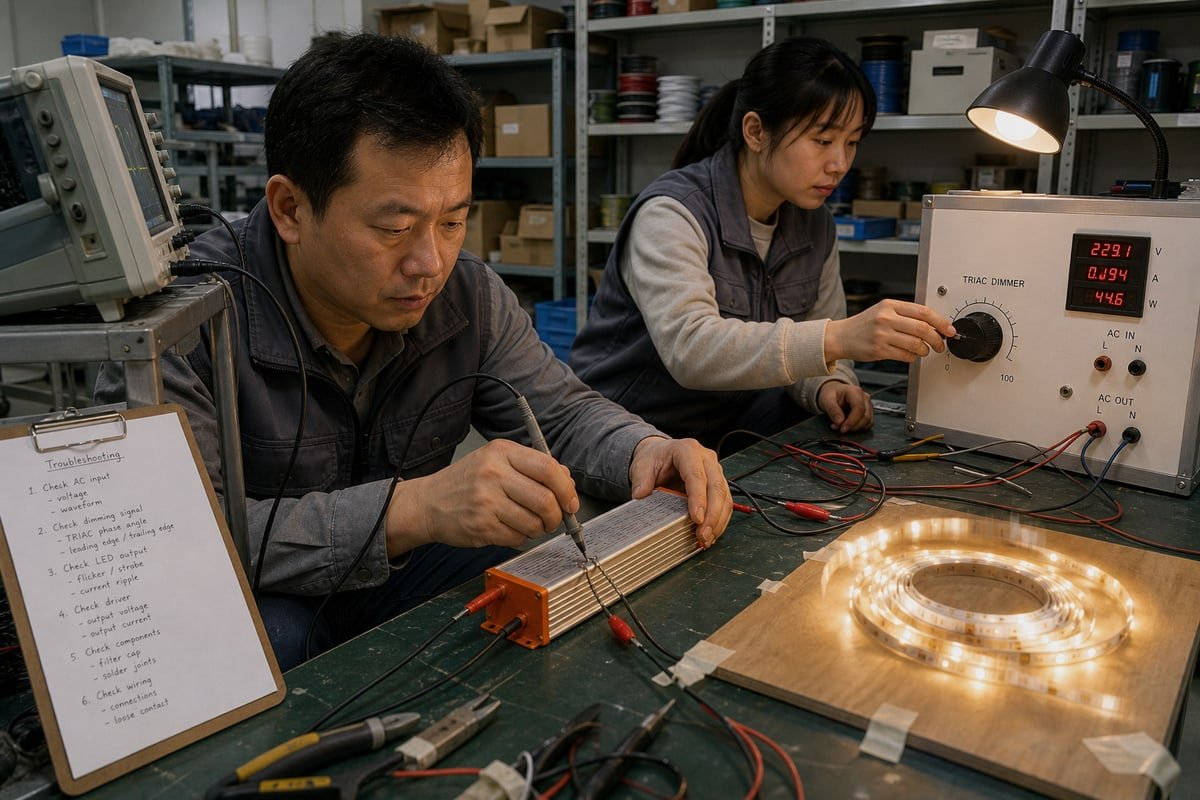
Większość ludzi określa to jako “niekompatybilność TRIAC”. To określenie jest zbyt ogólne, aby cokolwiek naprawić. Prawdziwy łańcuch jest taki: przebieg z odcięciem fazy → stopień wejściowy przetwornicy → regulacja DC i pętla sterowania → obciążenie LED. Migotanie pojawia się, gdy którykolwiek element tego łańcucha ulega awarii.
Najczęściej pomijana przyczyna: prąd podtrzymania
TRIAC potrzebuje wystarczającego prądu przepływającego przez niego, aby pozostać zatrzaśniętym podczas każdego półcyklu AC. Przetwornica z małym lub silnie nieliniowym prądem wejściowym może spowodować wcześniejsze wyłączenie TRIAC lub nieregularne wyzwalanie. Pogarsza się to w pobliżu dolnej granicy zakresu ściemniania, ponieważ okno przewodzenia 2 jest już krótkie. Dlatego migotanie często pojawia się tylko poniżej około 20% jasności. System działa dobrze przy pełnej mocy, a następnie miga, trzaska lub migocze przy ściemnianiu.
Pełna lista mechanizmów migotania
W naszym laboratorium sortujemy skargi dotyczące migotania według mechanizmów poniżej. Każdy ma inne rozwiązanie, więc zidentyfikowanie właściwego oszczędza tygodnie.
| Mechanizm | Co faktycznie się dzieje | Typowy objaw |
|---|---|---|
| Spadek prądu podtrzymania | Przetwornica pobiera zbyt mało prądu, aby utrzymać zatrzaśnięcie TRIAC | Miganie lub trzaskanie przy niskich poziomach ściemniania |
| Niedopasowanie krawędzi narastającej/opadającej | Przetwornica nie może odczytać stylu odcięcia fazy ściemniacza | Migotanie w całym zakresie |
| Dzwonienie przepięciowe filtra EMI | Kondensatory wejściowe dzwonią przy każdym wyzwalaniu TRIAC | Migotanie lub brzęczenie w pobliżu środka zakresu |
| Drgania detekcji przejścia przez zero | Przetwornica błędnie odczytuje czas przebiegu ciętego | Losowe, nieregularne migotanie |
| Cykliczne działanie ochrony hiccup | Ochrona przed przeciążeniem wielokrotnie restartuje przetwornicę | Wolne, rytmiczne włączanie-wyłączanie |
| Wzorce dudnienia tętnienia vs PWM | Tętnienie wyprostowanego AC interferuje z wewnętrzną częstotliwością ściemniania PWM | Wolno toczący się lub stroboskopowy efekt |
| Dryf termiczny | Progi zatrzaskiwania przesuwają się w miarę nagrzewania komponentów | Migotanie pojawiające się po rozgrzaniu |
| Zanieczyszczenie harmonicznymi | Inne obciążenia nieliniowe tworzą zapady w przebiegu AC na obwodzie | Migotanie tylko wtedy, gdy działają inne urządzenia |
| Spadek napięcia na liniach DC | Zbyt cienki przewód lub długie linie powodują oscylacje zapadu | Migotanie na dalekim końcu paska |
| Niedopasowanie impedancji odbitej | Indukcyjność pasożytnicza paska zaburza pętlę regulacji wyjścia | Niestabilność przy bardzo długich paskach |
Zauważ, że tylko niektóre z nich to problemy ze ściemniaczem. Kilka to problemy z dostarczaniem zasilania, które stają się widoczne, gdy ściemnianie usuwa margines systemu.
Jak mogę naprawić migotanie w moich projektach oświetlenia LED taśmowego z regulacją TRIAC?
Klient z Wietnamu zwrócił kiedyś trzy “wadliwe” sterowniki do naszego warsztatu. Wszystkie trzy przeszły nasze testy laboratoryjne. Jego prawdziwym problemem był spadek napięcia na długim odcinku paska na miejscu instalacji.
Napraw migotanie, testując w kolejności: omiń ściemniacz, sprawdź, czy napięcie i moc sterownika odpowiadają paskowi, potwierdź, że minimalne obciążenie ściemniacza jest spełnione, dokręć każde połączenie, zmierz spadek napięcia wzdłuż odcinka, a na końcu wymień sterownik na jednostkę CV z certyfikatem do przycinania fazy.
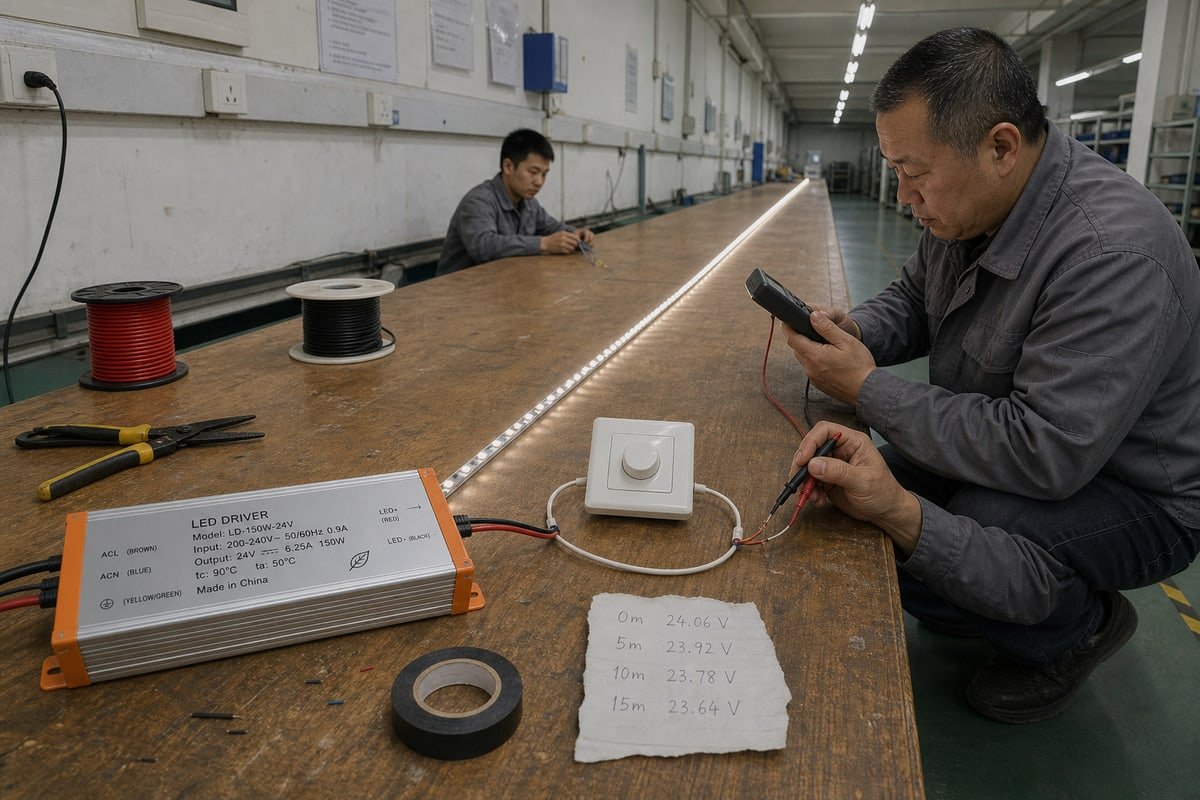
Najszybszy sposób na naprawę migotania to przestać zgadywać i zacząć eliminować. Kluczowe rozróżnienie dotyczy migotania wywołanego ściemniaczem i migotania związanego z dostawą zasilania. Wyglądają identycznie dla oka, ale wymagają przeciwnych rozwiązań. Oto sekwencja eliminacji, którą polecamy naszym klientom inżynieryjnym.
- Omiń ściemniacz. Podłącz sterownik bezpośrednio do sieci. Jeśli migotanie zniknie, problem leży w łańcuchu ściemniania 3. Jeśli pozostanie, sprawdź dostawę zasilania.
- Zweryfikuj dopasowanie elektryczne. Potwierdź, że niskonapięciowy transformator LED wyprowadza prawidłowe 12V lub 24V i że jego moc pokrywa pasek z zapasem. Sterownik pracujący na granicy wydajności może wpaść w ochronę przeciwprzeciążeniową, co wygląda jak rytmiczne miganie.
- Sprawdź minimalne obciążenie ściemniacza. Wiele ściemniaczy ściennych wymaga minimalnej mocy do działania. Krótki pasek przy niskiej jasności może znajdować się poniżej tego progu, więc ściemniacz cyklicznie się włącza i wyłącza.
- Sprawdź każde połączenie. Luźne zaciski, skorodowane sploty i tanie złącza klipsowe tworzą przerywany kontakt, który doskonale imituje problemy ze ściemniaczem.
- Zmierz napięcie na obu końcach paska. Jeśli zauważysz spadek większy niż około 0,5 V od początku do końca, spadek napięcia przyczynia się do migotania. Skróć odcinek, zwiększ przekrój przewodu lub zasilaj z obu końców.
- Wymień sterownik na końcu. Jeśli kroki od pierwszego do piątego przejdą pomyślnie, a migotanie pozostanie, wymień sterownik na jednostkę wyraźnie przeznaczoną do ściemniania z przycinaniem fazy i potwierdzoną pod kątem twojego modelu ściemniacza.
Przestrzeganie tej kolejności ma znaczenie. W naszych rejestrach posprzedażowych duża część “awarii sterowników” okazuje się problemami z okablowaniem, doborem obciążenia lub minimalnym obciążeniem ściemniacza, których nowy sterownik nigdy by nie rozwiązał.
Które ściemniacze TRIAC są naprawdę kompatybilne z moimi sterownikami LED CV?
Wybór między ściemniaczem z przycinaniem fazy narastającej a modelem z opadającą krawędzią to kompromis, który nasi inżynierowie stale rozważają: surowa niezawodność zatrzaskiwania versus płynna praca przy niskich poziomach.
Zgodne ściemniacze TRIAC odpowiadają zadeklarowanej metodzie ściemniania sterownika—krawędź narastająca, opadająca lub obie—spełniają profil prądu wejściowego sterownika i mają minimalne obciążenie znamionowe, które podłączony pasek może spełnić. Zawsze potwierdzaj parowanie z listą zgodności ściemniaczy przetestowaną przez producenta sterownika.
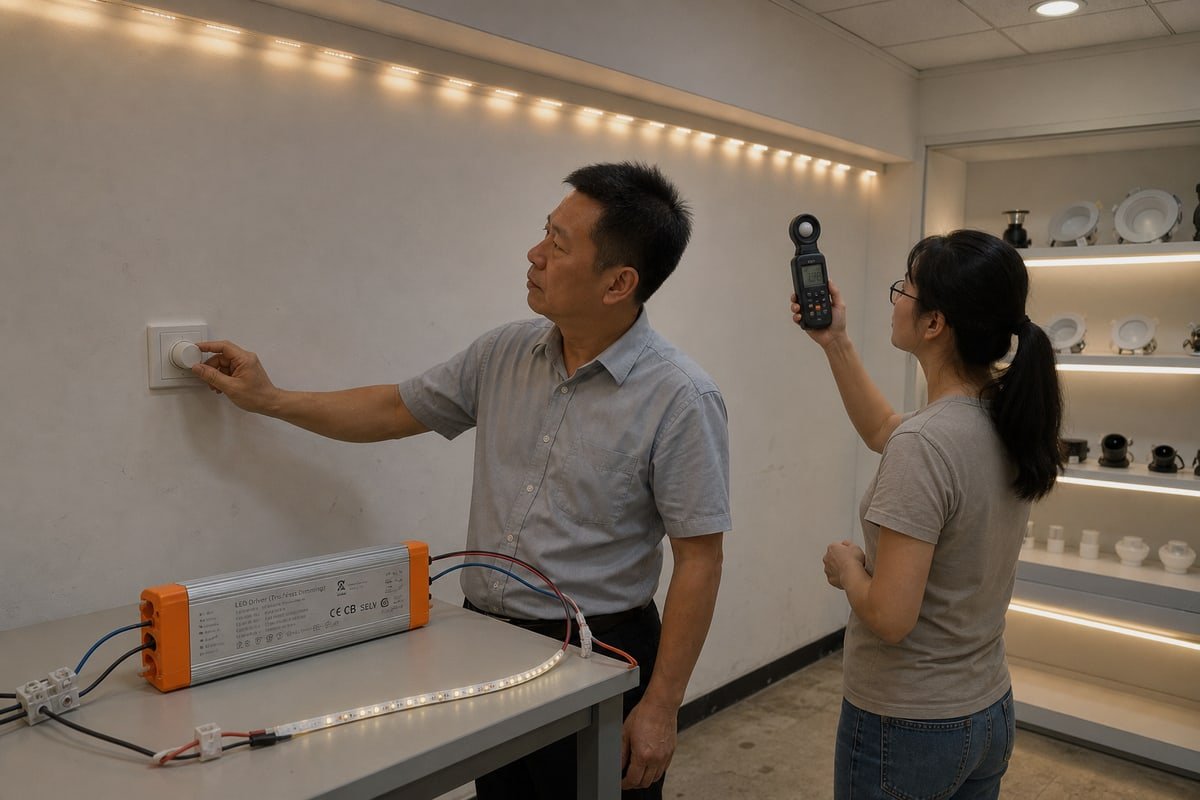
Zgodność ściemniacza to miejsce, gdzie większość projektów zawodzi, więc zacznij od porównania krawędzi narastającej i opadającej. Te dwie technologie przecinają przebieg prądu przemiennego inaczej, a sterownik zaprojektowany dla jednej może źle działać na drugiej.
| Czynnik | Krawędź narastająca (przycinanie fazy narastającej) | Krawędź opadająca (typ ELV) |
|---|---|---|
| Jak przecina przebieg | Odcina początek każdego półcyklu | Odcina koniec każdego półcyklu |
| Pierwotny cel projektowy | Obciążenia żarowe i magnetyczne | Elektroniczne obciążenia niskonapięciowe |
| Czułość na prąd podtrzymania | Wysoka—wymaga stałego prądu, aby pozostać zatrzaskiwany | Niska—używa tranzystorów, nie zatrzaskowego TRIAC-a |
| Wymóg minimalnego obciążenia | Często 25 W lub więcej | Zwykle znacznie niższy |
| Zachowanie przy niskim ściemnianiu | Podatny na zaniki i błyski | Zazwyczaj płynniejszy i cichszy |
| Najlepsze parowanie | Sterowniki wyraźnie przeznaczone do krawędzi narastającej | Konstrukcje sterowników ściemnialnych ELV |
Teraz odniosę się do częstego zastrzeżenia kupujących. Niektórzy inżynierowie mówią mi, że ściemnianie TRIAC jest z natury niewłaściwe dla pasków LED i że tylko rozwiązanie MOSFET lub z opadającą krawędzią może być wolne od migotania. Rozumiem, skąd bierze się ten pogląd—przestarzałe ściemniacze żarowe na ogólnym zasilaczu stałonapięciowym 4 jednostki migoczą mocno. Ale wniosek jest nieaktualny. Sterownik, którego stopień wejściowy jest zaprojektowany do dekodowania sygnału z obcinaniem fazy, zapewnienia stabilnego prądu dla triaka i płynnej regulacji przy głębokim ściemnianiu, może działać bardzo dobrze na sprzęcie z obcinaniem zbocza narastającego 5. Rzeczywiste spektrum rozciąga się od “starych generycznych zestawów, które migoczą” do “zaprojektowanych systemów kompatybilnych z triakiem, które nie migoczą”.”
Praktyczna zasada, którą przekazujemy dystrybutorom: nigdy nie kwalifikuj samego ściemniacza. Kwalifikuj ściemniacz, sterownik i taśmę jako jeden system, a przed specyfikacją czegokolwiek poproś dostawcę o przetestowaną listę kompatybilności.
Jak wybrać niezawodny sterownik CV TRIAC, aby zapobiec migotaniu przy zamówieniach hurtowych?
Jedna lekcja z lat eksportu sterowników do Europy i Azji Południowo-Wschodniej szczególnie mi się wyróżnia: wiersz w karcie katalogowej mówiący 24V stałe napięcie nie mówi nic o ściemnianiu.
Wybierz sterownik wyraźnie oznaczony jako 24V stałe napięcie, ściemnialny triakowo/obcinaniem fazy—nie tylko stałe napięcie. Zweryfikuj obsługę zbocza narastającego i opadającego, minimalne i maksymalne obciążenie, stabilność ściemniania w dolnym zakresie, zachowanie prądu wejściowego, oznaczenia bezpieczeństwa takie jak CE, CB i SELV, a następnie przetestuj próbnie pełną kombinację ściemniacz–sterownik–taśma przed podjęciem decyzji.
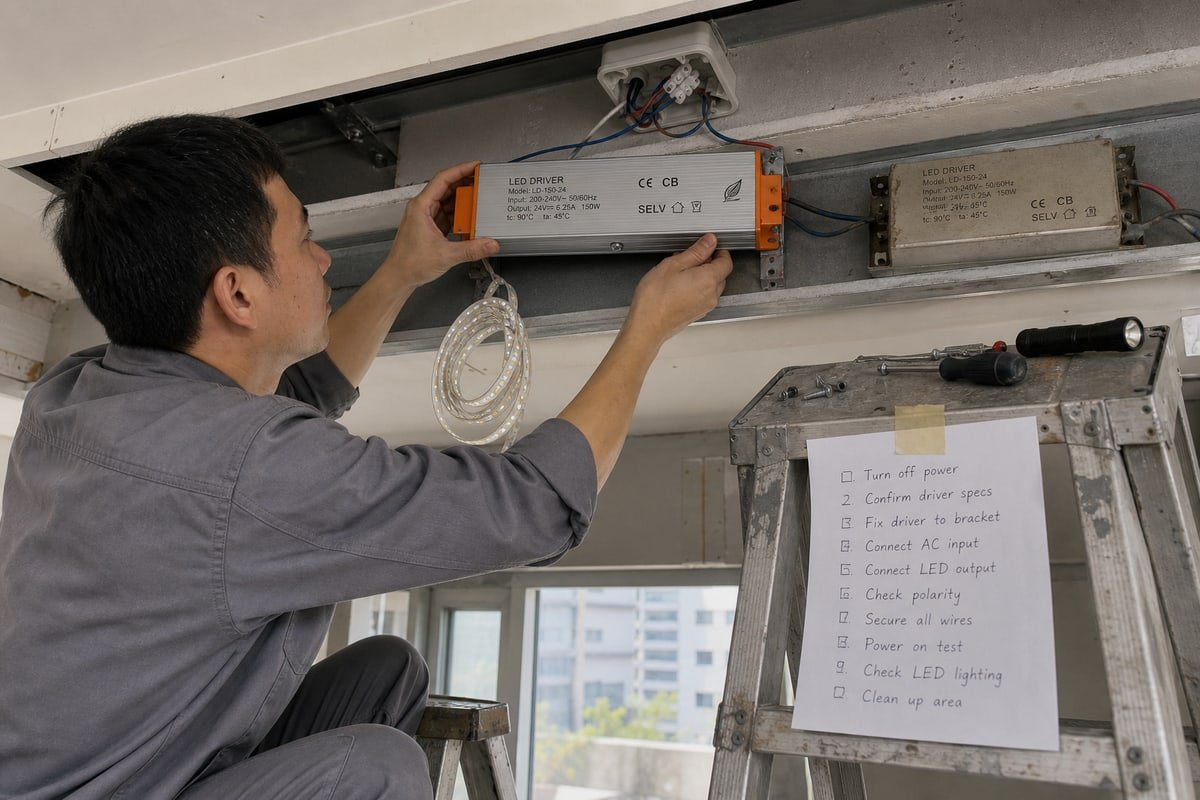
Oto ukryty problem, który kosztuje kupujących najwięcej pieniędzy. Taśma LED 24V może być w pełni kompatybilna elektrycznie ze sterownikiem CV 24V i nadal migotać przy ściemnianiu. Kompatybilność napięciowa i kompatybilność ściemniania to dwie różne rzeczy. A konwencjonalny zasilacz stałego napięcia może wytwarzać doskonałe napięcie stałe 24V w normalnej pracy, ale jego obwód wejściowy może być całkowicie nieodpowiedni do przebiegu z obcinaniem fazy. Podłączenie go za ściemniaczem triakowym nie czyni go magicznie sterownikiem ściemnialnym triakowo. Specyfikacja musi zawierać coś takiego jak “24V stałe napięcie, ściemnialny triakowo/obcinaniem fazy”—nie po prostu “zasilacz stałego napięcia 24V”.”
Sześć pytań, które należy zadać każdemu dostawcy
Przed każdym zamówieniem zbiorczym mówimy kupującym, aby wykroczyli poza “czy jest ściemnialny triakowo?” i zadali zamiast tego te sześć pytań:
- Czy jest zaprojektowany do zbocza narastającego, opadającego, czy obu?
- Jakie jest minimalne i maksymalne obciążenie sterownika?
- Jaki jest przebieg prądu wejściowego sterownika?
- Czy utrzymuje stabilną regulację przy zamierzonym minimalnym poziomie ściemniania?
- Czy taśma LED faktycznie pobiera wystarczającą moc dla zakresu pracy sterownika?
- Czy ściemniacz ma własny wymóg minimalnego obciążenia?
Lista kontrolna kwalifikacji zamówienia zbiorczego
| Punkt kontrolny | Co należy sprawdzić | Czerwona flaga |
|---|---|---|
| Etykieta ściemniania | Wyraźnie podaje ściemnialny triakowo/obcinaniem fazy | Mówi tylko stałe napięcie |
| Oznaczenia bezpieczeństwa | CE, CB i SELV wydrukowane na obudowie | Brakujące lub niemożliwe do zweryfikowania certyfikaty |
| Konstrukcja termiczna | Aluminiowa obudowa z rowkami odprowadzającymi ciepło | Uszczelniony plastik bez ścieżki termicznej |
| Deklaracje braku migotania | Zapytaj, czy ściemnianie 0–100% dotyczy twojego ściemniacza i obciążenia | Deklaracja bez przetestowanej listy ściemniaczy |
| Test dolnego zakresu | Próbka przetestowana przy rzeczywistej minimalnej jasności | Testowana tylko przy pełnej mocy wyjściowej |
| Warunki gwarancji | Pisemna gwarancja honorowana przy usterkach ściemniania | Gwarancja wyklucza zachowanie przy ściemnianiu |
Po stronie sprzętu fizyczna jakość wykonania wiele mówi. Nasze jednostki używają szczotkowanej aluminiowej obudowy z żebrowanymi rowkami odprowadzającymi ciepło, ponieważ dryft termiczny w gorącym sterowniku może przesunąć zachowanie zatrzaskiwania i wywołać migotanie, które pojawia się dopiero po rozgrzaniu. Traktuj też marketing “0–100% bez migotania” jako deklarację kompatybilności, a nie uniwersalną gwarancję—obowiązuje tylko z przetestowanymi ściemniaczami w podanym zakresie obciążenia. Moje najważniejsze wnioski B2B: nie kwalifikuj sterownika CV jako ściemnialnego triakowo tylko dlatego, że akceptuje ściemniacz triakowy. Prawdziwym testem jest to, czy pełna kombinacja ściemniacz, sterownik i taśma LED pozostaje stabilna w całym wymaganym zakresie ściemniania.
Wniosek
Migotanie to niedopasowanie systemu, a nie tajemnica. Dopasuj ściemniacz, sterownik i taśmę; przetestuj cały łańcuch; i kupuj tylko od dostawców, którzy kwalifikują pełne kombinacje.
Przypisy
- Wyjaśnia funkcję stopnia wejściowego w sterowaniu mocą opartym na triaku. ↩︎
- Techniczne wyjaśnienie sterowania fazowego i czasu przewodzenia. ↩︎
- Oryginalny adres URL Departamentu Energii zwraca błąd 404; to zaktualizowana autorytatywna strona wyjaśniająca podstawy migotania LED i komponenty systemu. ↩︎
- Normy dyrektywy niskonapięciowej UE dla urządzeń elektrycznych o stałym napięciu. ↩︎
- Norma NEMA dotycząca kompatybilności ściemniania dla oświetlenia półprzewodnikowego. ↩︎