Перейти к содержимому










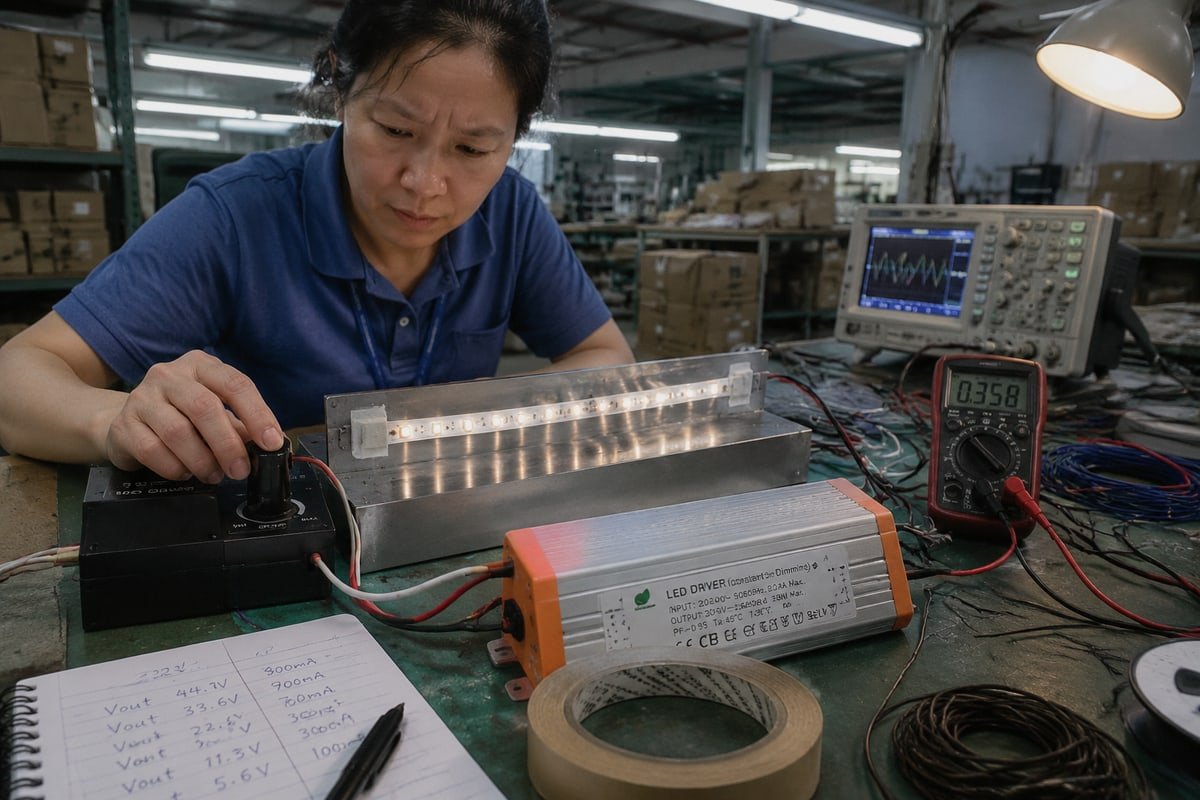
Светодиодные ленты мерцают с CV TRIAC-драйверами чаще, чем любая другая жалоба, которую мы регистрируем на нашем заводе драйверов. Это расстраивает монтажников, подрывает доверие к проекту и останавливает повторные заказы.
Светодиодные ленты мерцают с CV TRIAC-драйверами, когда диммер, входная схема драйвера и светодиодная нагрузка неправильно согласованы. TRIAC обрезает форму волны переменного тока, и несовместимый драйвер не может поддерживать стабильную регулировку постоянного тока — особенно при низких уровнях затемнения, малых нагрузках или при неправильном сочетании переднего/заднего фронта.
Этот ответ звучит просто. Но детали имеют значение. Ниже я разбираю реальные причины, работающие решения и способы проверки продукции перед оптовой закупкой.
Что вызывает мерцание моих светодиодных лент, когда я использую драйверы CV TRIAC?
В прошлом году наша команда контроля качества проследила жалобу на мерцание клиента из Сингапура до одной корневой причины: входной каскад драйвера входной каскад 1 не мог удерживать TRIAC в запертом состоянии. Этот случай сформировал весь этот раздел.
Мерцание возникает, когда форма волны с фазовым срезом, входной каскад драйвера, его контур регулировки постоянного тока и светодиодная нагрузка выходят из синхронизации. Распространенные триггеры включают падение тока удержания, чрезмерную входную емкость, несоответствие переднего/заднего фронта, циклирование защиты от икоты и нагрузки ниже минимального требования драйвера.
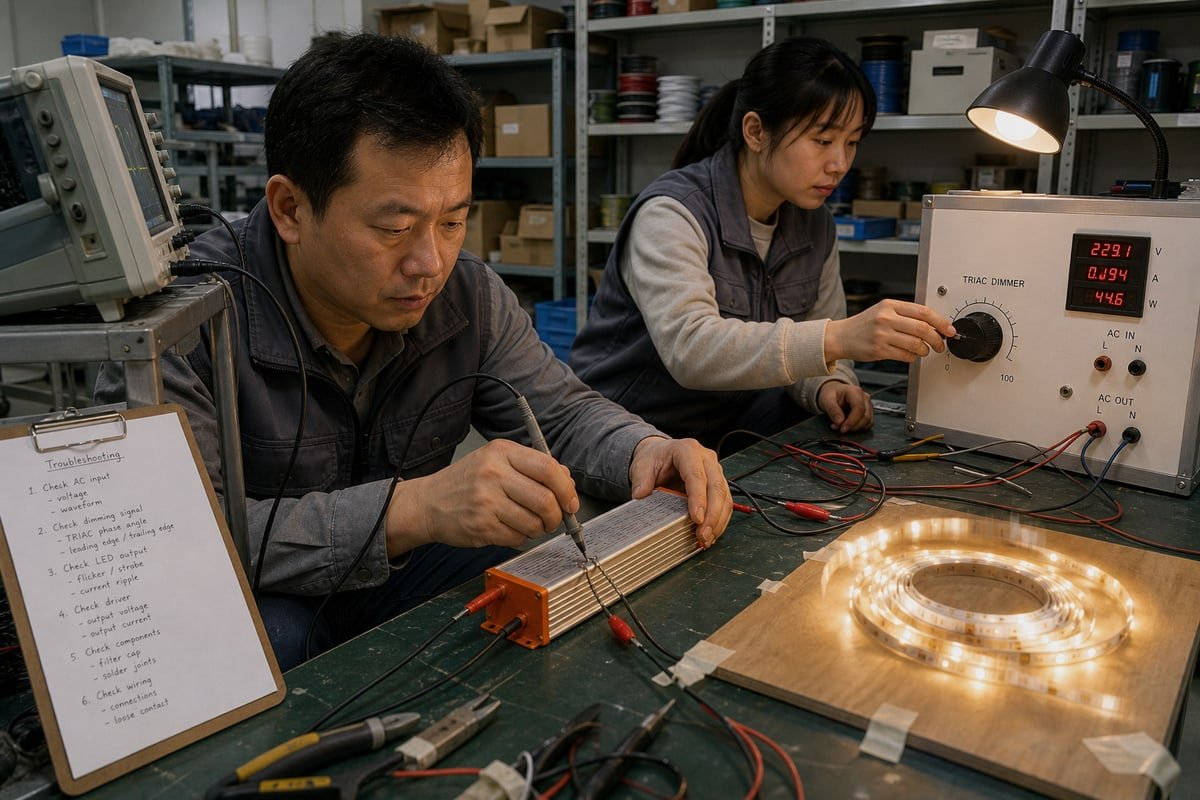
Большинство людей формулируют это как “несовместимость TRIAC”. Эта формулировка слишком расплывчата, чтобы что-то исправить. Реальная цепочка такова: форма волны с фазовым срезом → входной каскад драйвера → регулировка постоянного тока и контур управления → светодиодная нагрузка. Мерцание появляется, когда любое звено в этой цепочке выходит из строя.
Самая упускаемая из виду причина: ток удержания
TRIAC требует достаточного тока, протекающего через него, чтобы оставаться в запертом состоянии в течение каждого полупериода переменного тока. Драйвер с малым или сильно нелинейным входным током может привести к раннему отключению TRIAC или нестабильному срабатыванию. Это ухудшается вблизи нижней границы диапазона затемнения, потому что окно проводимости окно проводимости 2 уже короткое. Вот почему мерцание часто появляется только ниже примерно 20% яркости. Система работает нормально на полной мощности, затем мигает, потрескивает или мерцает при затемнении.
Полный список механизмов мерцания
В нашей лаборатории мы классифицируем жалобы на мерцание по механизмам ниже. У каждого есть свое решение, поэтому правильная идентификация экономит недели.
| Механизм | Что на самом деле происходит | Типичный симптом |
|---|---|---|
| Падение тока удержания | Драйвер потребляет слишком мало тока, чтобы удерживать TRIAC в запертом состоянии | Мигание или потрескивание при низких уровнях затемнения |
| Несоответствие переднего/заднего фронта | Драйвер не может декодировать стиль фазового среза диммера | Мерцание во всем диапазоне |
| Звон фильтра ЭМП при пуске | Входные конденсаторы звенят при каждом срабатывании TRIAC | Мерцание или гул вблизи среднего диапазона |
| Дрожание детектора пересечения нуля | Драйвер неправильно считывает тайминг обрезанной формы волны | Случайное, нерегулярное мерцание |
| Циклирование защиты от икоты | Защита от перегрузки многократно перезапускает драйвер | Медленное, ритмичное мигание вкл-выкл |
| Биения пульсации и ШИМ | Пульсация выпрямленного переменного тока interferes с внутренней частотой ШИМ-затемнения | Медленный эффект качения или стробоскопа |
| Тепловой дрейф | Пороги запирания смещаются по мере нагрева компонентов | Мерцание, начинающееся после прогрева |
| Гармоническое загрязнение | Другие нелинейные нагрузки создают выемки в форме волны переменного тока на ветке | Мерцание только при работе другого оборудования |
| Падение напряжения на линиях постоянного тока | Провод заниженного сечения или длинные линии вызывают колебания просадки | Мерцание на дальнем конце ленты |
| Несоответствие отраженного импеданса | Паразитная индуктивность ленты нарушает контур регулировки выхода | Нестабильность с очень длинными лентами |
Обратите внимание, что только некоторые из них являются проблемами диммера. Несколько — это проблемы подачи питания, которые просто становятся видимыми, когда затемнение убирает запас системы.
Как я могу исправить мерцание в моих проектах с диммируемой светодиодной лентой TRIAC?
Один клиент из Вьетнама однажды вернул три “неисправных” драйвера в нашу мастерскую. Все три прошли наши стендовые испытания. Его реальной проблемой было падение напряжения на длинном участке ленты на объекте.
Устраните мерцание, тестируя по порядку: отключите диммер, проверьте соответствие напряжения и мощности драйвера ленте, убедитесь, что минимальная нагрузка диммера соблюдена, затяните все соединения, измерьте падение напряжения вдоль участка и, наконец, замените драйвер на CV-устройство с сертификацией для фазового среза.
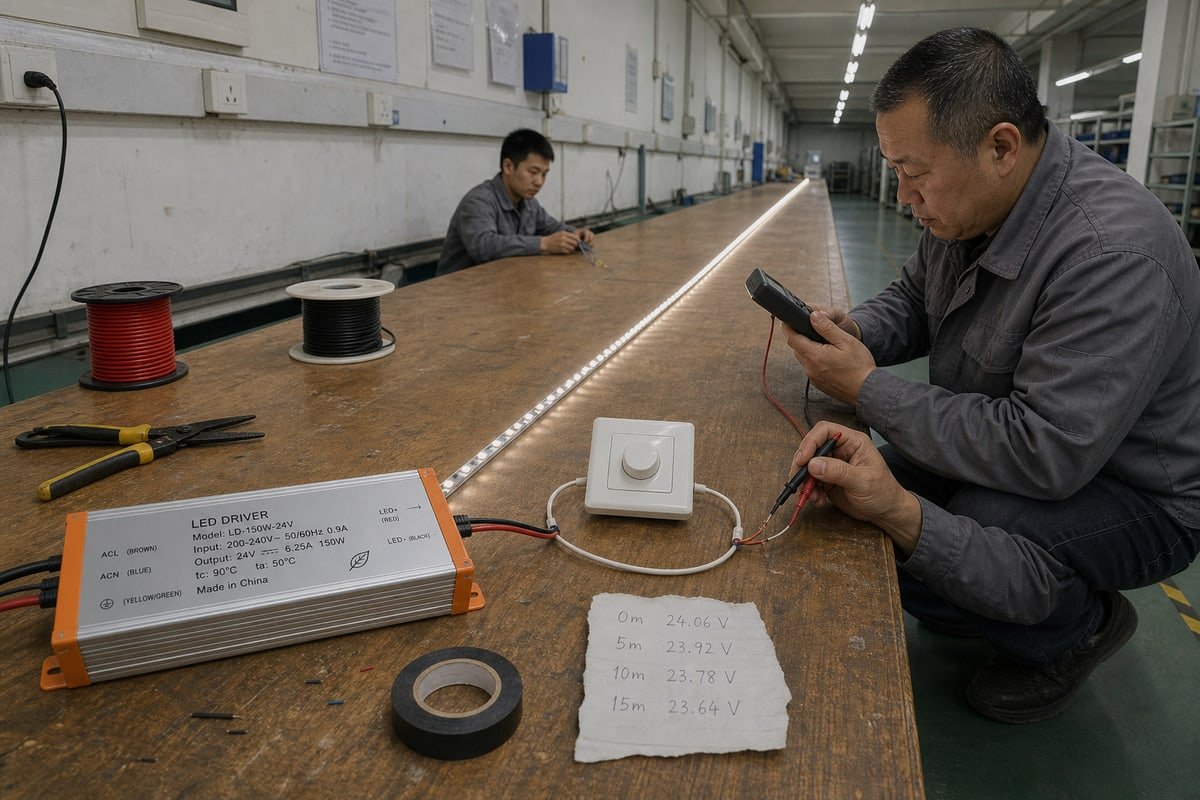
Самый быстрый способ устранить мерцание — перестать гадать и начать исключать. Ключевое различие — между мерцанием, вызванным диммером, и мерцанием из-за подачи питания. На глаз они выглядят одинаково, но требуют противоположных решений. Вот последовательность исключения, которую мы рекомендуем нашим инженерным клиентам.
- Отключите диммер. Подключите драйвер напрямую к сети. Если мерцание исчезает, проблема кроется в цепи диммирования 3. Если оно остается, ищите проблему в подаче питания.
- Проверьте электрическое соответствие. Убедитесь, что низковольтный LED-трансформатор выдает правильные 12 В или 24 В, и что его мощность покрывает ленту с запасом. Драйвер, работающий на пределе, может перейти в защитный режим прерывистой работы, который выглядит как ритмичное мигание.
- Проверьте минимальную нагрузку диммера. Многим настенным диммерам требуется минимальная мощность для работы. Короткая лента при низкой яркости может оказаться ниже этого порога, поэтому диммер циклически включается и выключается.
- Осмотрите каждое соединение. Ослабленные клеммы, корродированные скрутки и дешевые клипсовые разъемы создают прерывистый контакт, который идеально имитирует неполадки диммера.
- Измерьте напряжение на обоих концах ленты. Если вы видите падение более чем примерно 0,5 В от начала до конца, просадка способствует мерцанию. Укоротите участок, увеличьте сечение провода или подайте питание с обоих концов.
- Замените драйвер в последнюю очередь. Если шаги с первого по пятый пройдены, а мерцание остается, замените драйвер на устройство, явно сертифицированное для фазового диммирования, и проверенное на совместимость с вашей моделью диммера.
Соблюдение этого порядка важно. В наших записях послепродажного обслуживания большая доля “отказов драйверов” оказывается проблемами проводки, подбора нагрузки или минимальной нагрузки диммера, которые новый драйвер никогда бы не исправил.
Какие диммеры TRIAC действительно совместимы с моими драйверами для светодиодов с постоянным напряжением (CV)?
Выбор между диммером с передним фронтом и моделью с задним фронтом — это компромисс, который наши инженеры постоянно взвешивают: надежность удержания против плавности работы на низком уровне.
Совместимые TRIAC-диммеры соответствуют заявленному методу диммирования драйвера — передний фронт, задний фронт или оба, — удовлетворяют профилю входного тока драйвера и имеют номинал минимальной нагрузки, которую подключенная лента может обеспечить. Всегда проверяйте пару по протестированному списку совместимости диммеров производителя драйвера.
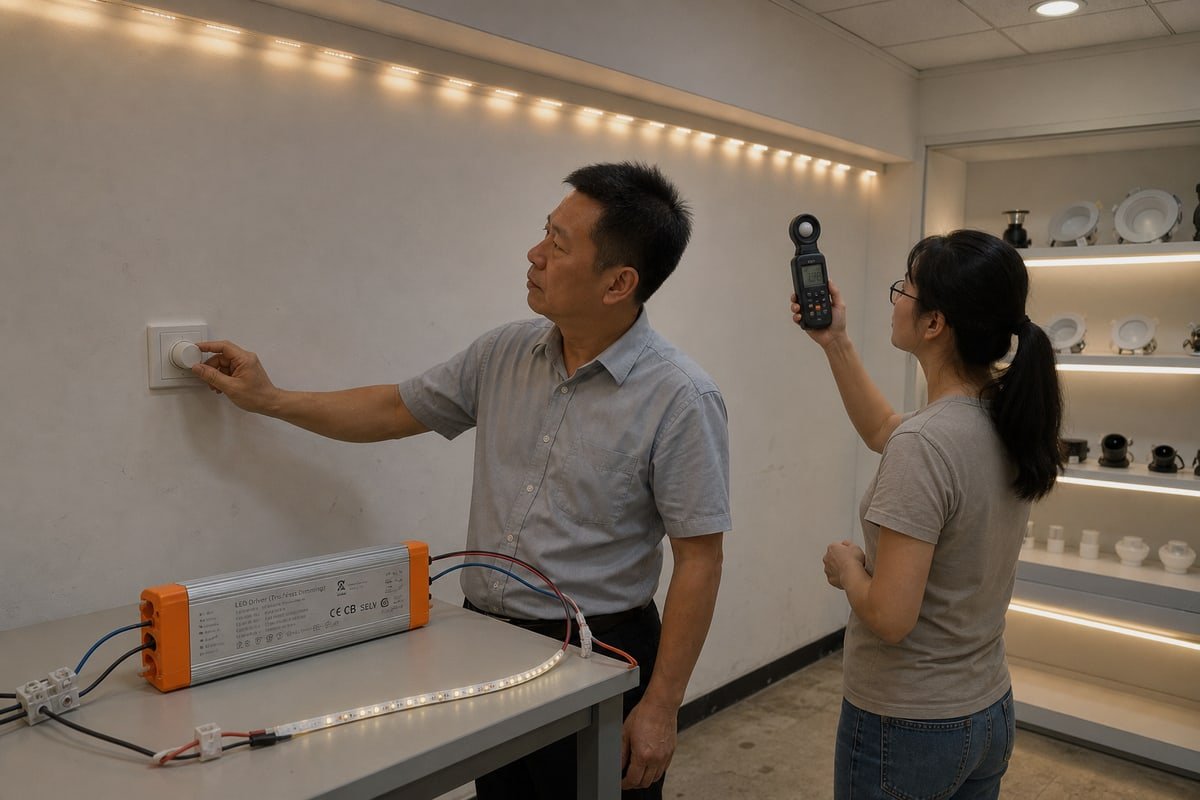
Совместимость диммерного выключателя — это то, где большинство проектов идет не так, поэтому начните с сравнения переднего и заднего фронта. Эти две технологии по-разному срезают форму волны переменного тока, и драйвер, спроектированный для одной, может некорректно работать с другой.
| Фактор | Передний фронт (фазовое управление) | Задний фронт (тип ELV) |
|---|---|---|
| Как срезается форма волны | Срезает начало каждого полупериода | Срезает конец каждого полупериода |
| Изначальная цель разработки | Лампы накаливания и магнитные нагрузки | Электронные низковольтные нагрузки |
| Чувствительность к удерживающему току | Высокая — требуется стабильный ток для удержания | Низкая — используются транзисторы, а не запираемый TRIAC |
| Требование минимальной нагрузки | Часто 25 Вт или более | Обычно намного ниже |
| Поведение при диммировании на низком уровне | Склонно к сбоям и вспышкам | Обычно более плавное и тихое |
| Лучшее сочетание | Драйверы, явно сертифицированные для переднего фронта | Конструкции драйверов с диммированием ELV |
Теперь позвольте мне затронуть распространенное возражение покупателей. Некоторые инженеры говорят мне, что TRIAC-диммирование по своей сути неправильно для светодиодных лент, и что только MOSFET или решение с задним фронтом может быть без мерцания. Я понимаю, откуда берется эта точка зрения — устаревшие диммеры для ламп накаливания на универсальном источнике питания постоянного напряжения 4 блоки сильно мерцают. Но вывод устарел. Драйвер, входной каскад которого спроектирован для декодирования фазового сигнала, обеспечения стабильного тока для симистора и точной регулировки на глубоких уровнях затемнения, может отлично работать на оборудовании с передним фронтом 5. Реальный спектр простирается от “старых универсальных систем, которые мерцают” до “инженерных симистор-совместимых систем, которые не мерцают”.”
Практическое правило, которое мы даём дистрибьюторам: никогда не квалифицируйте только диммер. Квалифицируйте диммер, драйвер и ленту как единую систему и запрашивайте у поставщика проверенный список совместимости перед выбором чего-либо.
Как выбрать надежный драйвер CV TRIAC, чтобы предотвратить мерцание при оптовых заказах?
Один урок из многолетнего экспорта драйверов в Европу и Юго-Восточную Азию выделяется для меня: строка в техническом описании, указывающая 24V постоянное напряжение, ничего не говорит о затемнении.
Выбирайте драйвер с явной маркировкой 24V постоянное напряжение, симистор/фазовое затемнение — а не просто постоянное напряжение. Проверьте поддержку переднего и заднего фронта, минимальную и максимальную нагрузку, стабильность затемнения на нижнем пределе, поведение входного тока, знаки безопасности, такие как CE, CB и SELV, затем протестируйте образец полной комбинации диммер-драйвер-лента перед принятием решения.
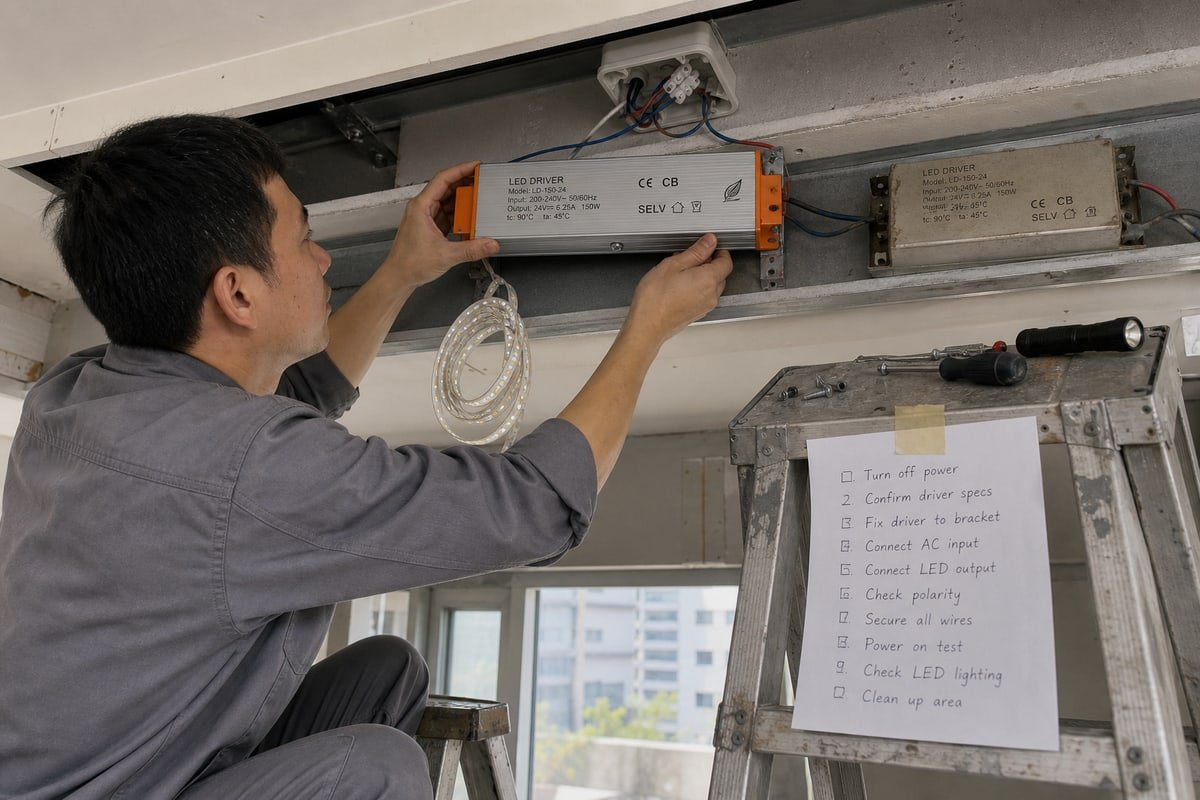
Вот скрытая проблема, которая стоит покупателям больше всего денег. Светодиодная лента 24V может быть электрически полностью совместима с драйвером постоянного напряжения 24V и всё равно мерцать при затемнении. Совместимость по напряжению и совместимость по затемнению — это две разные вещи. Обычный источник питания постоянного напряжения может выдавать отличное постоянное напряжение 24V в нормальном режиме, но его входная схема может быть совершенно непригодна для фазового сигнала. Подключение его за симисторным диммером не делает его магическим образом симистор-совместимым драйвером. Спецификация должна содержать что-то вроде “24V постоянное напряжение, симистор/фазовое затемнение” — а не просто “источник питания постоянного напряжения 24V”.”
Шесть вопросов, которые нужно задать каждому поставщику
Перед любым оптовым заказом мы советуем покупателям выйти за рамки вопроса “поддерживает ли он симисторное затемнение?” и задать вместо этого эти шесть вопросов:
- Спроектирован ли он для переднего фронта, заднего фронта или обоих?
- Каковы минимальная и максимальная нагрузка драйвера?
- Какова форма входного тока драйвера?
- Сохраняет ли он стабильную регулировку на вашем предполагаемом минимальном уровне затемнения?
- Потребляет ли светодиодная лента достаточно мощности для рабочего диапазона драйвера?
- Имеет ли диммер собственное требование минимальной нагрузки?
Контрольный список квалификации для оптовых заказов
| Контрольная точка | Что проверить | Красный флаг |
|---|---|---|
| Маркировка затемнения | Явно указано симистор/фазовое затемнение | Указано только постоянное напряжение |
| Знаки безопасности | CE, CB и SELV напечатаны на корпусе | Отсутствуют или не поддаются проверке сертификаты |
| Тепловая конструкция | Алюминиевый корпус с рёбрами для отвода тепла | Герметичный пластик без теплового пути |
| Заявления об отсутствии мерцания | Уточните, применимо ли затемнение 0–100% к вашему диммеру и нагрузке | Заявление сделано без проверенного списка диммеров |
| Тест нижнего предела | Образец протестирован при вашей реальной минимальной яркости | Протестирован только при полной выходной мощности |
| Условия гарантии | Письменная гарантия распространяется на дефекты затемнения | Гарантия исключает поведение при затемнении |
Что касается аппаратной части, физическое качество сборки говорит о многом. Наши собственные устройства используют алюминиевый корпус с ребристыми канавками для отвода тепла, потому что тепловой дрейф в горячем драйвере может изменить поведение удержания и создать мерцание, которое появляется только после прогрева. Также относитесь к маркетингу “0–100% без мерцания” как к заявлению о совместимости, а не как к универсальной гарантии — оно действует только с проверенными диммерами в указанном диапазоне нагрузки. Мой главный вывод для B2B: не квалифицируйте драйвер постоянного напряжения как симистор-совместимый только потому, что он принимает симисторный диммер. Настоящий тест — остаётся ли полная комбинация диммера, драйвера и светодиодной ленты стабильной во всём требуемом диапазоне затемнения.
Заключение
Мерцание — это несоответствие системы, а не загадка. Согласуйте диммер, драйвер и ленту; протестируйте всю цепочку; и покупайте только у поставщиков, которые квалифицируют полные комбинации.
Сноски
- Объясняет функцию входного каскада в управлении мощностью на основе симистора. ↩︎
- Техническое объяснение фазового управления и синхронизации проводимости. ↩︎
- Оригинальный URL Министерства энергетики возвращает 404; это обновлённая авторитетная страница, объясняющая основы мерцания светодиодов и компоненты системы. ↩︎
- Стандарты Директивы ЕС по низковольтному оборудованию для электрического оборудования постоянного напряжения. ↩︎
- Стандарт NEMA, касающийся совместимости диммирования для твердотельного освещения. ↩︎