Lewati ke konten










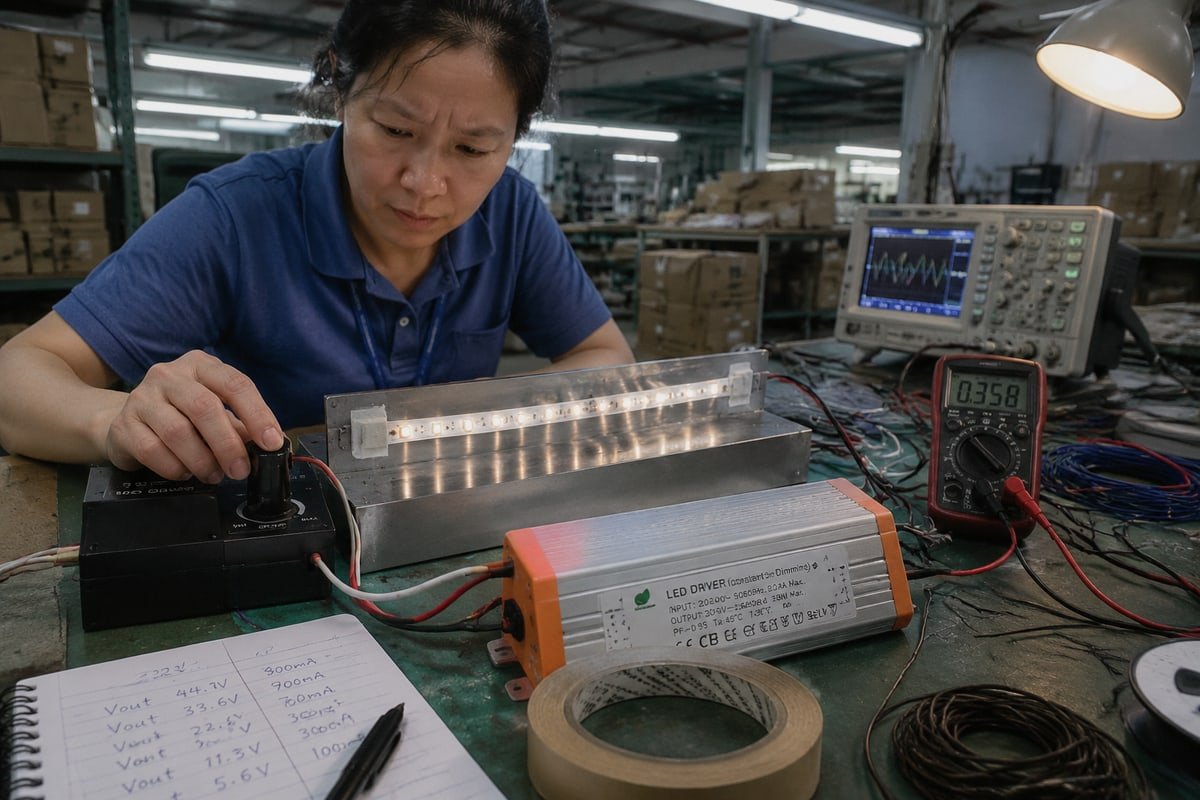
Strip LED berkedip dengan driver TRIAC CV lebih sering daripada keluhan lain yang kami catat di pabrik driver kami. Ini membuat frustrasi para pemasang, merusak kepercayaan proyek, dan menghentikan pesanan berulang.
Strip LED berkedip dengan driver TRIAC CV ketika dimmer, rangkaian input driver, dan beban LED tidak cocok dengan benar. TRIAC memotong gelombang AC, dan driver yang tidak kompatibel gagal menjaga regulasi DC yang stabil—terutama pada tingkat peredupan rendah, beban rendah, atau dengan pasangan leading-edge/trailing-edge yang salah.
Jawaban itu terdengar sederhana. Tetapi detailnya penting. Di bawah ini, saya menguraikan penyebab sebenarnya, perbaikan yang berhasil, dan cara memenuhi syarat produk sebelum Anda membeli dalam jumlah besar.
Apa yang menyebabkan strip LED saya berkedip ketika saya menggunakan driver CV TRIAC?
Tahun lalu tim QC kami menelusuri keluhan kedipan klien Singapura ke satu akar penyebab: input tahap input 1 driver tidak dapat menahan TRIAC tetap terkunci. Kasus itu membentuk seluruh bagian ini.
Kedipan terjadi ketika gelombang phase-cut, tahap input driver, loop regulasi DC-nya, dan beban LED keluar dari sinkronisasi. Pemicu umum termasuk penurunan arus penahan, kapasitansi input berlebihan, ketidakcocokan leading-edge/trailing-edge, siklus perlindungan cegukan, dan beban di bawah persyaratan beban minimum driver.
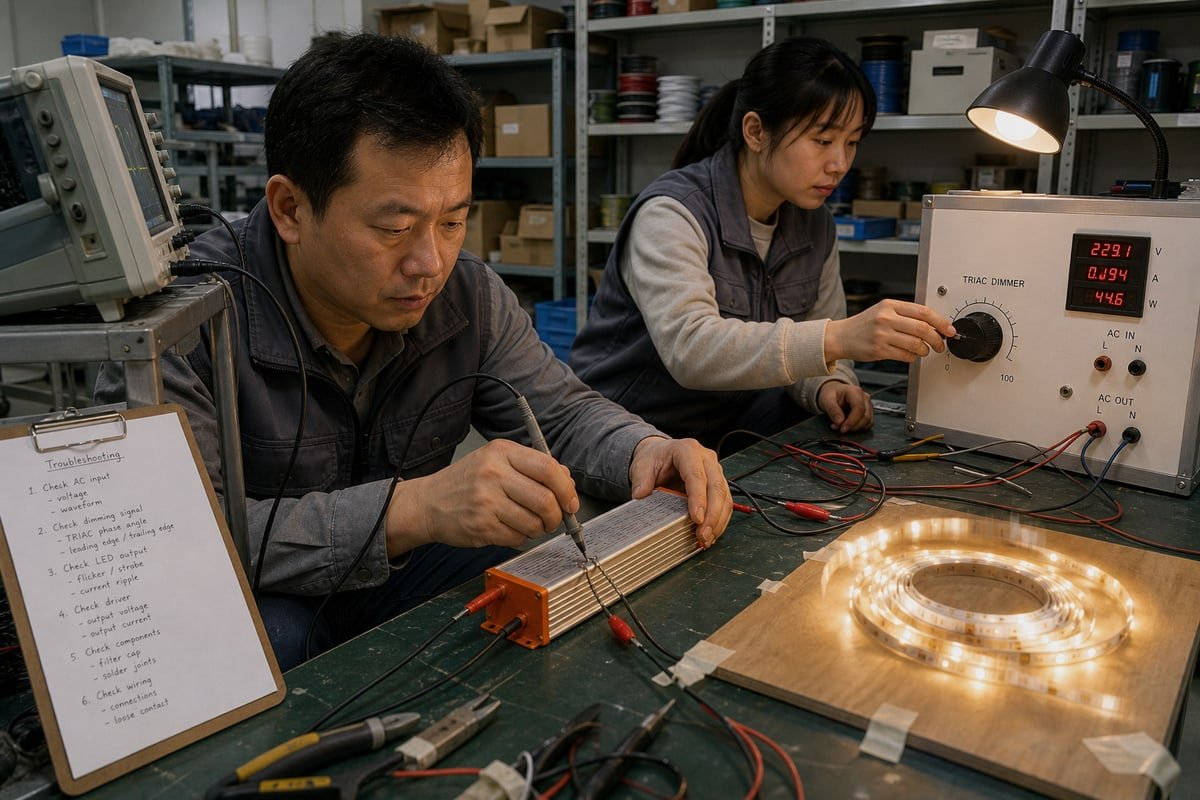
Kebanyakan orang membingkai ini sebagai “ketidakcocokan TRIAC.” Pembingkaian itu terlalu samar untuk memperbaiki apa pun. Rantai sebenarnya adalah ini: gelombang phase-cut → tahap input driver → regulasi DC dan loop kontrol → beban LED. Kedipan muncul ketika salah satu tautan dalam rantai itu rusak.
Penyebab yang paling sering diabaikan: arus penahan
TRIAC membutuhkan cukup arus yang mengalir melaluinya untuk tetap terkunci selama setiap setengah siklus AC. Driver dengan arus input kecil atau sangat non-linear dapat membuat TRIAC mati lebih awal atau menyala tidak konsisten. Ini menjadi lebih buruk di dekat bagian bawah rentang peredupan, karena jendela konduksi 2 sudah pendek. Itulah mengapa kedipan sering muncul hanya di bawah sekitar kecerahan 20%. Sistem bekerja dengan baik pada daya penuh, lalu berkedip, muncul, atau berkilau saat Anda meredupkan.
Daftar lengkap mekanisme kedipan
Di laboratorium kami, kami mengelompokkan keluhan kedipan ke dalam mekanisme di bawah ini. Masing-masing memiliki perbaikan yang berbeda, jadi mengidentifikasi yang benar menghemat berminggu-minggu.
| Mekanisme | Apa yang sebenarnya terjadi | Gejala khas |
|---|---|---|
| Penurunan arus penahan | Driver menarik terlalu sedikit arus untuk menjaga TRIAC tetap terkunci | Berkedip atau muncul pada tingkat peredupan rendah |
| Ketidakcocokan leading/trailing edge | Driver tidak dapat mendekode gaya phase-cut dimmer | Kedipan di seluruh rentang |
| Dering lonjakan filter EMI | Kapasitor input berdering pada setiap pemicu TRIAC | Berkilau atau berdengung di dekat rentang menengah |
| Jitter deteksi zero-cross | Driver salah membaca waktu gelombang yang dipotong | Kedipan acak dan tidak teratur |
| Siklus perlindungan cegukan | Perlindungan kelebihan beban memulai ulang driver berulang kali | Berkedip on-off berirama lambat |
| Pola detak riak vs PWM | Riak AC yang disearahkan mengganggu frekuensi peredupan PWM internal | Efek bergulir lambat atau strobing |
| Drift termal | Ambang penguncian bergeser saat komponen memanas | Kedipan yang dimulai setelah pemanasan |
| Polusi harmonik | Beban non-linear lain membuat takik pada gelombang AC di cabang | Kedipan hanya ketika peralatan lain berjalan |
| Penurunan tegangan pada jalur DC | Kabel yang terlalu kecil atau jalur panjang menyebabkan osilasi kendur | Kedipan di ujung jauh strip |
| Ketidakcocokan impedansi pantulan | Induktansi parasit strip mengganggu loop regulasi output | Ketidakstabilan dengan strip yang sangat panjang |
Perhatikan bahwa hanya beberapa dari ini adalah masalah dimmer. Beberapa adalah masalah pengiriman daya yang menjadi terlihat ketika peredupan menghilangkan margin sistem.
Bagaimana cara saya memperbaiki kedipan pada proyek pencahayaan strip LED yang dapat diredupkan dengan TRIAC?
Seorang klien di Vietnam pernah mengembalikan tiga driver yang “rusak” ke bengkel kami. Ketiganya lulus uji meja kami. Masalah sebenarnya adalah penurunan tegangan pada jalur strip yang panjang di lokasi proyek.
Perbaiki kedipan dengan menguji secara berurutan: lewati peredup, verifikasi tegangan dan watt driver sesuai dengan strip, pastikan beban minimum peredup terpenuhi, kencangkan setiap sambungan, ukur penurunan tegangan di sepanjang jalur, dan terakhir ganti driver dengan unit CV yang diberi peringkat pemotongan fasa.
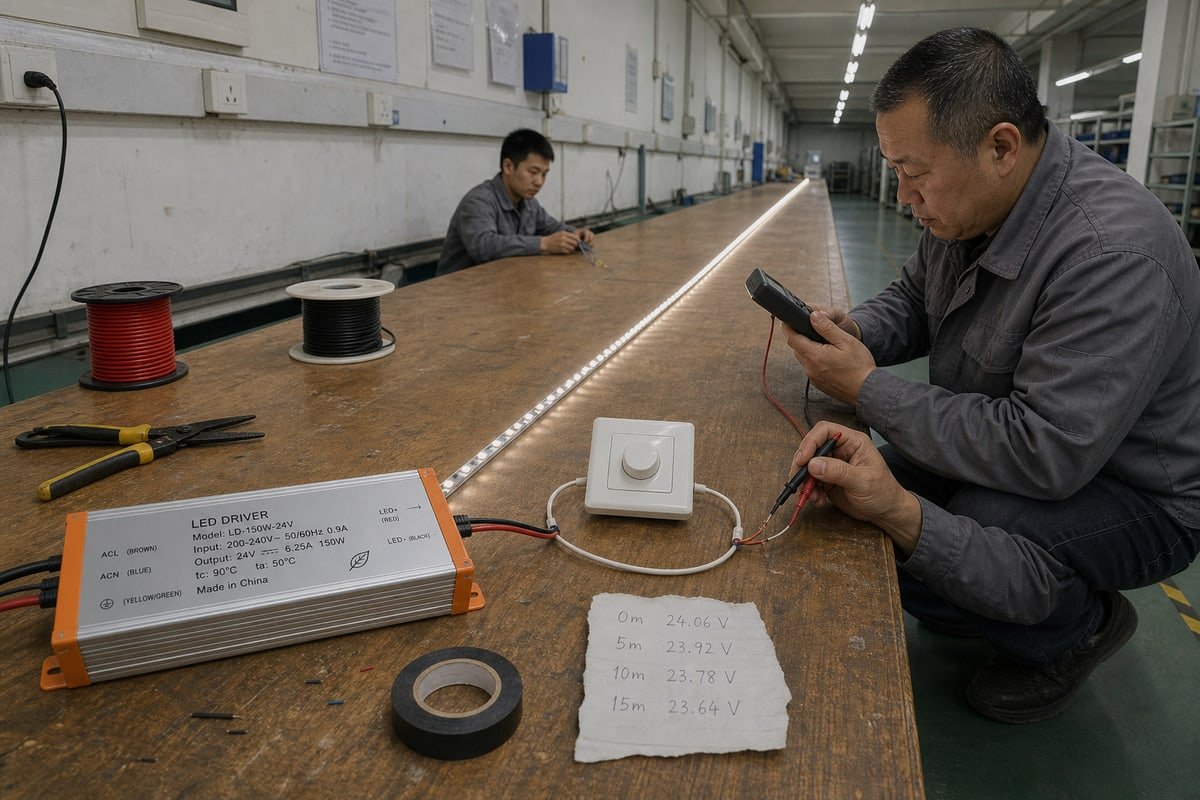
Cara tercepat untuk memperbaiki kedipan adalah berhenti menebak dan mulai mengeliminasi. Perbedaan utama adalah antara kedipan yang disebabkan peredup dan kedipan akibat pengiriman daya. Keduanya terlihat identik di mata, tetapi memerlukan perbaikan yang berlawanan. Berikut adalah urutan eliminasi yang kami rekomendasikan kepada klien teknik kami.
- Lewati peredup. Hubungkan driver langsung ke listrik utama. Jika kedipan hilang, masalahnya ada pada rantai peredupan 3. Jika tetap ada, periksa pengiriman daya sebagai gantinya.
- Verifikasi kecocokan listrik. Pastikan transformator LED tegangan rendah mengeluarkan 12V atau 24V yang benar, dan wattnya mencakup strip dengan ruang cadangan. Driver yang berjalan di batas maksimumnya dapat masuk ke perlindungan cegukan, yang terlihat seperti kedipan berirama.
- Periksa beban minimum peredup. Banyak peredup dinding memerlukan watt minimum untuk beroperasi. Strip pendek pada kecerahan rendah dapat berada di bawah ambang itu, sehingga peredup menyala dan mati secara siklik.
- Periksa setiap sambungan. Terminal longgar, sambungan korosi, dan konektor klip murah menciptakan kontak terputus-putus yang meniru masalah peredup dengan sempurna.
- Ukur tegangan di kedua ujung strip. Jika Anda melihat penurunan lebih dari sekitar 0,5V dari awal hingga akhir, penurunan tegangan berkontribusi pada kedipan. Perpendek jalur, perbesar kabel, atau beri daya dari kedua ujung.
- Ganti driver terakhir. Jika langkah satu hingga lima lolos dan kedipan tetap ada, ganti driver dengan unit yang secara eksplisit diberi peringkat untuk peredupan pemotongan fasa dan dikonfirmasi terhadap model peredup Anda.
Mengikuti urutan ini penting. Dalam catatan purna jual kami, sebagian besar “kegagalan driver” ternyata adalah masalah kabel, ukuran beban, atau beban minimum peredup yang tidak akan pernah diperbaiki oleh driver baru.
Sakelar peredup TRIAC mana yang benar-benar kompatibel dengan driver LED CV saya?
Memilih antara peredup fasa depan dan model tepi belakang adalah trade-off yang terus dipertimbangkan oleh para insinyur kami: keandalan penguncian mentah versus kinerja ujung rendah yang halus.
Peredup TRIAC yang kompatibel cocok dengan metode peredupan yang dinyatakan driver—tepi depan, tepi belakang, atau keduanya—memenuhi profil arus masukan driver, dan memiliki peringkat beban minimum yang dapat dipenuhi oleh strip yang terhubung. Selalu konfirmasi pemasangan terhadap daftar kompatibilitas peredup yang diuji oleh produsen driver.
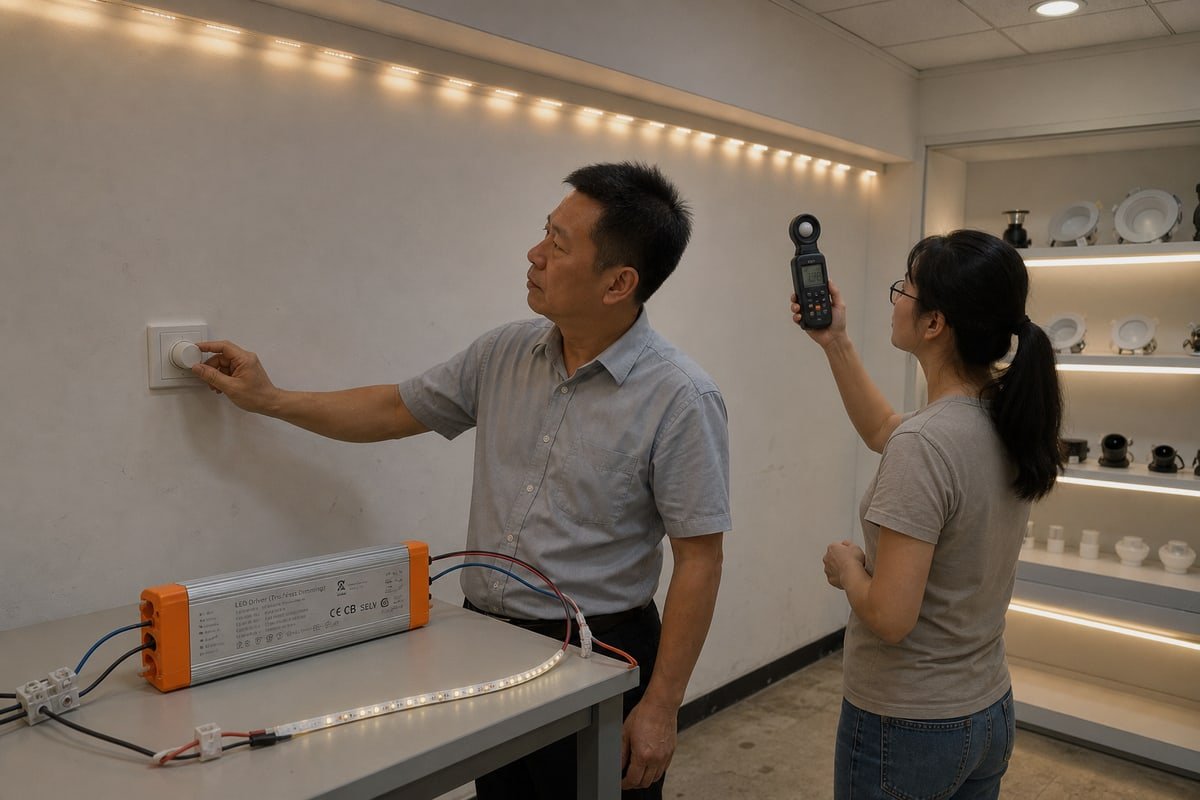
Kompatibilitas sakelar peredup adalah tempat sebagian besar proyek salah, jadi mulailah dengan perbandingan tepi depan vs tepi belakang. Kedua teknologi memotong gelombang AC secara berbeda, dan driver yang dirancang untuk satu jenis dapat berperilaku buruk pada jenis lainnya.
| Faktor | Tepi depan (fasa depan) | Tepi belakang (tipe ELV) |
|---|---|---|
| Cara memotong gelombang | Memotong bagian depan setiap setengah siklus | Memotong bagian belakang setiap setengah siklus |
| Target desain asli | Beban pijar dan magnetik | Beban elektronik tegangan rendah |
| Sensitivitas arus penahan | Tinggi—membutuhkan arus stabil untuk tetap terkunci | Rendah—menggunakan transistor, bukan TRIAC pengunci |
| Persyaratan beban minimum | Sering 25W atau lebih | Biasanya jauh lebih rendah |
| Perilaku peredupan ujung rendah | Rentan terhadap putus dan kilat | Biasanya lebih halus dan lebih senyap |
| Pemasangan terbaik | Driver yang secara eksplisit diberi peringkat untuk tepi depan | Desain driver yang dapat diredupkan ELV |
Sekarang izinkan saya menanggapi keberatan pembeli yang umum. Beberapa insinyur memberi tahu saya bahwa peredupan TRIAC secara inheren salah untuk strip LED, dan hanya solusi MOSFET atau tepi belakang yang dapat bebas kedipan. Saya memahami dari mana pandangan itu berasal—peredup pijar lama pada unit catu daya tegangan konstan 4 berkedip parah. Tetapi kesimpulan itu sudah ketinggalan zaman. Driver yang tahap masukannya dirancang untuk mendekode masukan pemotongan fasa, menyajikan arus stabil ke TRIAC, dan mengatur dengan bersih pada tingkat peredupan dalam dapat berkinerja sangat baik pada perangkat keras tepi depan 5. Spektrum sebenarnya berkisar dari “pengaturan generik lama yang berkedip” hingga “sistem kompatibel TRIAC yang dirancang dengan baik yang tidak berkedip.”
Aturan praktis yang kami berikan kepada distributor: jangan pernah memenuhi syarat dimmer sendirian. Penuhi syarat dimmer, driver, dan strip sebagai satu sistem, dan tanyakan kepada pemasok Anda untuk daftar kompatibilitas yang telah diuji sebelum menentukan spesifikasi apa pun.
Bagaimana cara saya memilih driver TRIAC CV yang andal untuk mencegah kedipan pada pesanan dalam jumlah besar?
Satu pelajaran dari bertahun-tahun mengekspor driver ke Eropa dan Asia Tenggara menonjol bagi saya: baris lembar data yang bertuliskan 24V tegangan konstan tidak memberi tahu apa pun tentang peredupan.
Pilih driver yang secara eksplisit diberi label 24V tegangan konstan, TRIAC/peredup fase-terpotong yang dapat diredupkan—bukan sekadar tegangan konstan. Verifikasi dukungan leading-edge dan trailing-edge, beban minimum dan maksimum, stabilitas peredupan ujung rendah, perilaku arus input, tanda keselamatan seperti CE, CB, dan SELV, lalu uji sampel kombinasi lengkap dimmer-driver-strip sebelum berkomitmen.
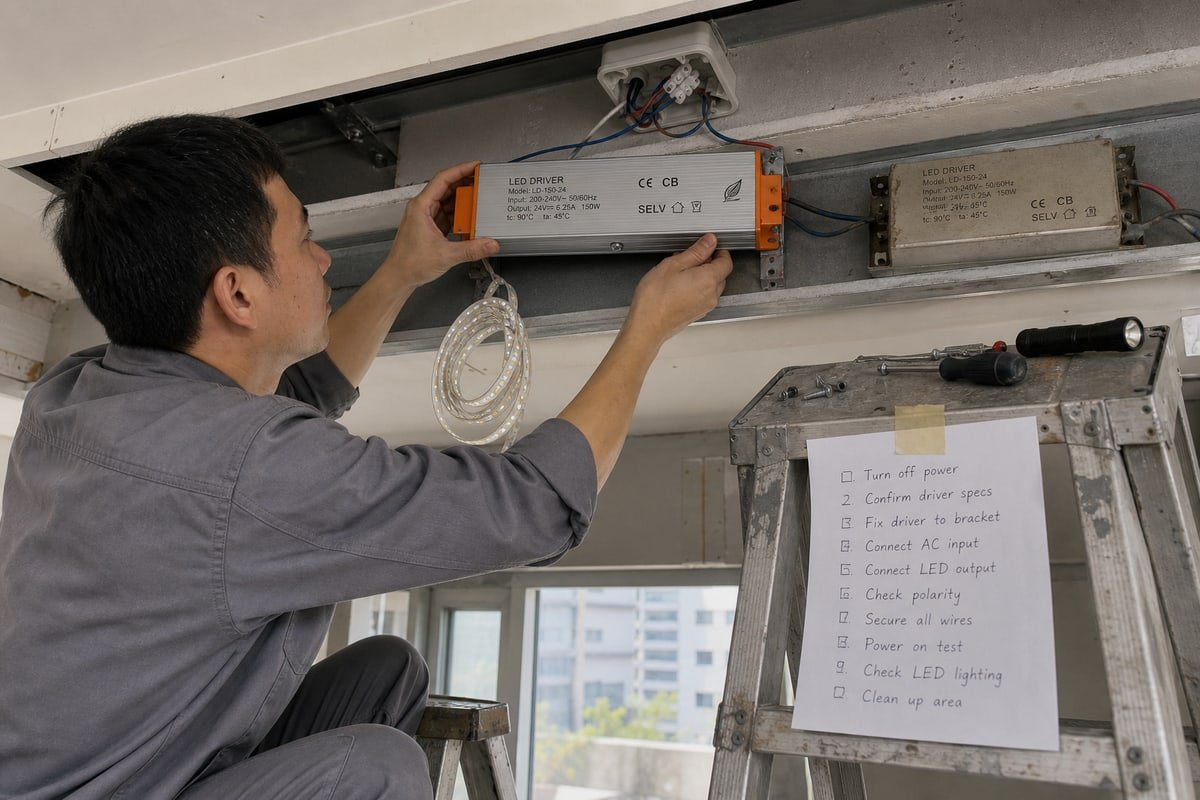
Inilah masalah tersembunyi yang paling banyak merugikan pembeli. Strip LED 24V dapat sepenuhnya kompatibel secara elektrik dengan driver CV 24V dan tetap berkedip saat diredupkan. Kompatibilitas tegangan dan kompatibilitas peredupan adalah dua hal yang berbeda. A catu daya tegangan konstan konvensional dapat menghasilkan DC 24V yang sangat baik dalam operasi normal, namun rangkaian inputnya mungkin sama sekali tidak cocok untuk bentuk gelombang fase-terpotong. Memasangnya di belakang dimmer TRIAC tidak secara ajaib menjadikannya driver yang dapat diredupkan TRIAC. Spesifikasinya harus menyatakan sesuatu seperti “24V tegangan konstan, TRIAC/peredup fase-terpotong yang dapat diredupkan”—bukan sekadar “catu daya tegangan konstan 24V.”
Enam pertanyaan yang harus diajukan kepada setiap pemasok
Sebelum pemesanan dalam jumlah besar, kami memberi tahu pembeli untuk melampaui “apakah ini dapat diredupkan TRIAC?” dan mengajukan enam pertanyaan ini sebagai gantinya:
- Apakah dirancang untuk leading-edge, trailing-edge, atau keduanya?
- Berapa beban minimum dan maksimum driver?
- Bagaimana bentuk gelombang arus input driver?
- Apakah mempertahankan regulasi yang stabil pada tingkat peredupan minimum yang Anda inginkan?
- Apakah strip LED benar-benar menarik daya yang cukup untuk rentang operasi driver?
- Apakah dimmer memiliki persyaratan beban minimum sendiri?
Daftar periksa kualifikasi pesanan dalam jumlah besar
| Titik Pemeriksaan | Apa yang perlu diverifikasi | Bendera merah |
|---|---|---|
| Label peredupan | Menyatakan TRIAC/peredup fase-terpotong yang dapat diredupkan secara eksplisit | Hanya menyatakan tegangan konstan |
| Tanda keselamatan | CE, CB, dan SELV tercetak pada rumah | Sertifikat hilang atau tidak dapat diverifikasi |
| Desain termal | Casing aluminium dengan alur pembuangan panas | Plastik tersegel tanpa jalur termal |
| Klaim bebas-kedip | Tanyakan apakah peredupan 0–100% berlaku untuk dimmer dan beban Anda | Klaim diberikan tanpa daftar dimmer yang diuji |
| Uji ujung rendah | Sampel diuji pada kecerahan minimum nyata Anda | Hanya diuji pada keluaran penuh |
| Ketentuan garansi | Garansi tertulis dihormati untuk kesalahan peredupan | Garansi mengecualikan perilaku peredupan |
Di sisi perangkat keras, kualitas fisik bangunan memberi tahu Anda banyak hal. Unit kami sendiri menggunakan rumah aluminium yang disikat dengan alur pembuangan panas berusuk, karena penyimpangan termal pada driver yang panas dapat menggeser perilaku penguncian dan menciptakan kedipan yang hanya muncul setelah pemanasan. Juga perlakukan pemasaran “0–100% bebas-kedip” sebagai klaim kompatibilitas, bukan jaminan universal—itu hanya berlaku dengan dimmer yang diuji di seluruh rentang beban yang dinyatakan. Kesimpulan B2B terkuat saya: jangan memenuhi syarat driver CV sebagai dapat diredupkan TRIAC hanya karena menerima dimmer TRIAC. Uji sebenarnya adalah apakah kombinasi lengkap dimmer, driver, dan strip LED tetap stabil di seluruh rentang peredupan yang Anda butuhkan.
Kesimpulan
Kedipan adalah ketidakcocokan sistem, bukan misteri. Cocokkan dimmer, driver, dan strip; uji rantai lengkap; dan hanya beli dari pemasok yang memenuhi syarat kombinasi lengkap.
Catatan kaki
- Menjelaskan fungsi tahap input dalam kontrol daya berbasis TRIAC. ↩︎
- Penjelasan teknis tentang kontrol fase-terpicu dan waktu konduksi. ↩︎
- URL asli Department of Energy adalah 404; ini adalah halaman otoritatif yang diperbarui yang menjelaskan dasar-dasar kedipan LED dan komponen sistem. ↩︎
- Standar EU Low Voltage Directive untuk peralatan listrik tegangan konstan. ↩︎
- Standar NEMA mengenai kompatibilitas peredupan untuk pencahayaan solid-state. ↩︎