Lewati ke konten










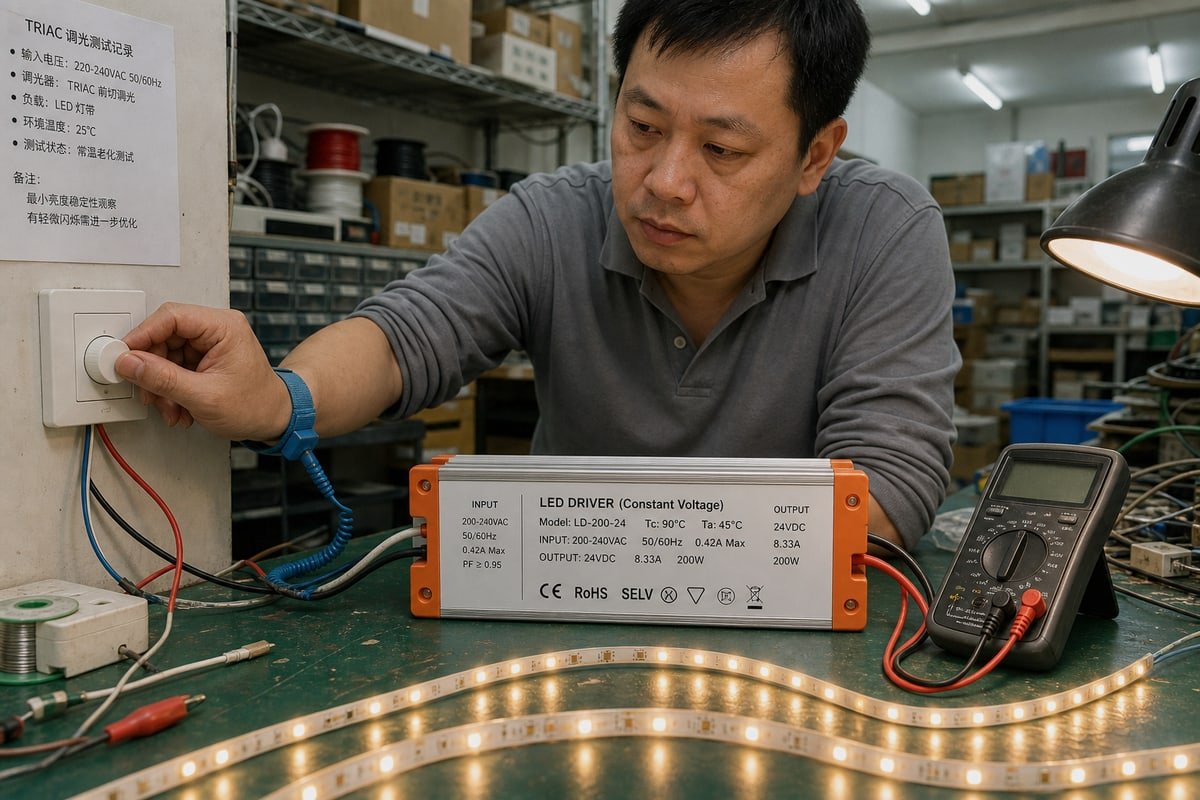
Proyek hotel tahun lalu, strip LED klien berkedip parah. Lab kami di Shenzhen menelusuri penyebabnya hingga persyaratan beban minimum untuk driver CV TRIAC — spesifikasi yang sebagian besar pembeli abaikan.
Driver LED tegangan konstan (CV) yang dapat diredupkan dengan TRIAC mungkin memerlukan beban terhubung minimum untuk operasi stabil dengan peredup potong-fase TRIAC. Jika total beban LED turun di bawah minimum yang ditentukan peredup, sistem dapat berkedip, berdengung, mati mendadak, atau beralih tidak andal. Selalu verifikasi peringkat beban peredup dan driver.
Satu catatan singkat tentang terminologi sebelum kita masuk lebih dalam. TRIAC biasanya berada di dalam peredup, bukan di dalam tahap keluaran tegangan konstan 1 dari driver LED. Jadi ketika orang mengatakan “driver CV TRIAC,” biasanya yang mereka maksud adalah driver CV yang dirancang untuk menerima input potong-fase TRIAC. Perbedaan itu membentuk seluruh artikel ini. Mari kita uraikan bagian demi bagian.
Apa persyaratan beban minimum untuk driver CV TRIAC dan mengapa hal itu penting untuk proyek saya?
Bulan lalu, seorang distributor pencahayaan di Singapura mengirim saya pesan WhatsApp: driver yang dapat diredupkan TRIAC 6W miliknya berkedip pada satu peredup tetapi berjalan sempurna pada peredup lain. Terminologi adalah biang keladinya.
Persyaratan beban minimum adalah watt terhubung terendah yang dibutuhkan peredup potong-fase TRIAC untuk menjaga TRIAC internalnya tetap terkunci dan menghantarkan. Ini penting karena beban di bawah ambang batas ini dapat menyebabkan berkedip, mati mendadak, atau peralihan tidak andal — bahkan ketika driver CV itu sendiri berfungsi penuh.
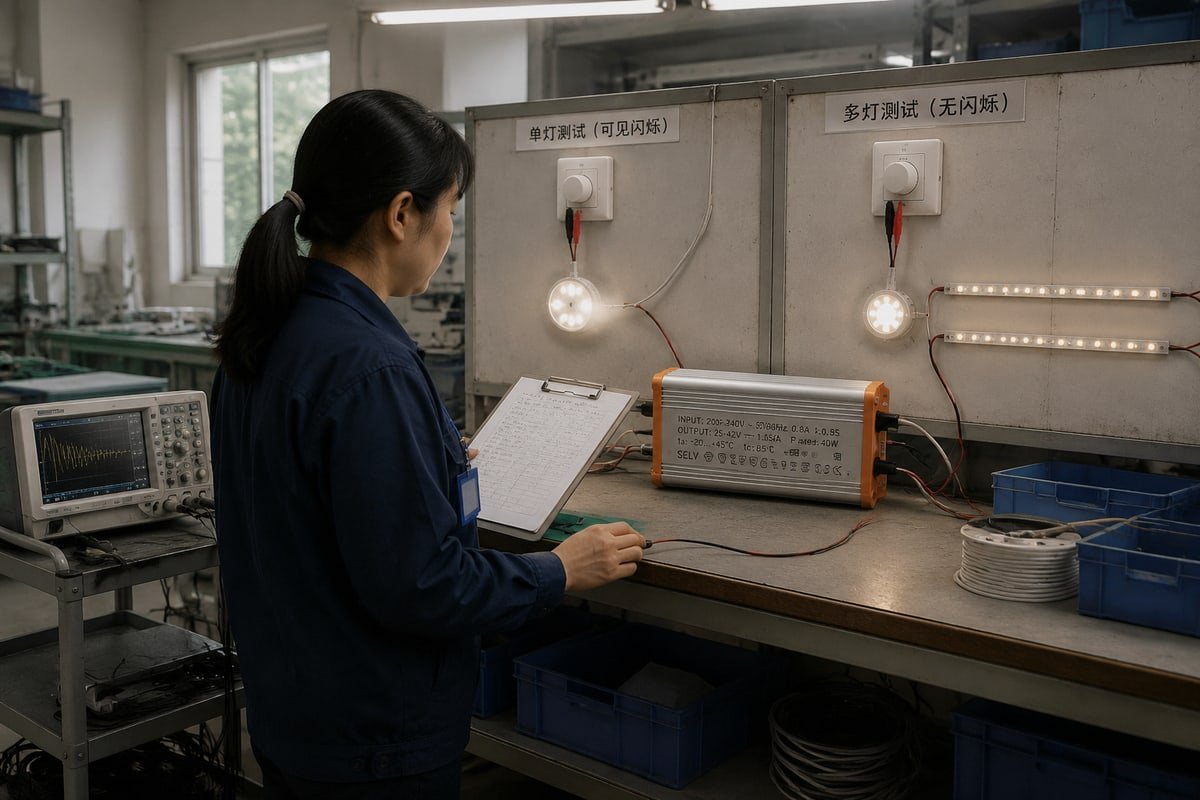
Inilah poin yang saya tekankan dengan sangat jelas kepada setiap pembeli: beban minimum peredup dan beban minimum driver LED adalah dua spesifikasi berbeda. Membingungkan keduanya menyebabkan sebagian besar kegagalan lapangan yang saya lihat.
Dua Spesifikasi, Dua Makna
Sebuah peredup mungkin menyatakan beban LED minimum 10W. Sebuah driver mungkin menyatakan beban keluaran minimum 2W. Angka-angka ini menggambarkan hal yang sepenuhnya berbeda. Yang pertama menyangkut apakah peredup dapat beroperasi dengan benar dengan beban listrik terhubung. Yang kedua menyangkut apakah driver dapat mengatur keluaran LED-nya dengan benar pada beban tertentu. Keduanya harus dipenuhi.
| Spesifikasi | Dimiliki Oleh | Apa yang Diatur | Contoh Umum |
|---|---|---|---|
| Beban LED minimum | Peredup dinding | Apakah TRIAC tetap terkunci sepanjang siklus AC | Minimum 10W |
| Beban keluaran minimum | Driver LED | Apakah driver mengatur keluaran DC-nya dengan bersih | Minimum 2W |
| Arus penahan | TRIAC di dalam peredup | Arus yang dibutuhkan untuk tetap menghantarkan | 10–50mA |
| Arus pengunci | TRIAC di dalam peredup | Arus yang dibutuhkan untuk mulai menghantarkan setiap setengah siklus | Bervariasi menurut perangkat |
Mengapa Watt Saja Tidak Menceritakan Keseluruhan Kisah
Inilah wawasan ahli yang selalu saya bagikan. Beban minimum bukan sekadar masalah watt. Ini adalah masalah perilaku listrik. Sebuah Pengatur kecerahan TRIAC tradisional dirancang berdasarkan beban resistif 2, seperti lampu pijar, yang menarik arus yang dapat diprediksi di seluruh bentuk gelombang AC. Sebuah driver CV LED berperilaku sangat berbeda. Tahap inputnya mungkin berisi rangkaian penyearah, filter EMI, kapasitor, elektronik switching, koreksi faktor daya aktif 3, dan pembatas arus masuk. Jadi driver LED 6W tidak serta-merta “terlihat seperti” beban resistif 6W bagi TRIAC. Itulah sebabnya dua driver 6W yang berbeda dapat berperilaku sepenuhnya berbeda pada peredup yang sama.
Ini juga menjelaskan mengapa peredup tepi depan 4 lebih kesulitan dengan beban elektronik kecil daripada peredup tepi belakang. Desain tepi belakang menggunakan MOSFET dan tidak memerlukan arus penahan, sehingga mereka mentolerir peredupan potong-fase daya rendah jauh lebih baik.
Bagaimana cara menghitung beban minimum yang diperlukan untuk pengaturan driver CV TRIAC saya?
Ketika kami menentukan spesifikasi driver untuk proyek multi-perlengkapan, kami selalu mempertimbangkan satu trade-off: menambah ruang watt menaikkan biaya komponen, tetapi beroperasi di tepi peredup berisiko panggilan ulang.
Jumlahkan watt input aktual setiap driver di sirkuit, lalu bandingkan totalnya dengan peringkat beban LED minimum dan maksimum peredup. Juga verifikasi beban keluaran minimum driver itu sendiri, jumlah driver maksimum, dan arus masuk agregat sebelum menyelesaikan desain.

Matematikanya sendiri sederhana. Penilaian di baliknya tidak. Ikuti proses ini, dan Anda akan menghindari kesalahan yang saya lihat dalam pertanyaan proyek setiap minggu.
- Temukan beban LED minimum yang dipublikasikan peredup. Peredup tepi depan lama sering menentukan 20W–40W. Kontrol potong-fase yang dioptimalkan LED modern dapat bekerja hingga 1W–3W. Jangan pernah berasumsi; baca lembar data.
- Temukan beban keluaran minimum driver. Beberapa driver mengiklankan tanpa beban minimum. Yang lain mendefinisikan jendela operasi nyata — satu lembar data driver CV peredup TRIAC 24V yang kami benchmark menunjukkan rentang beban 33–100W dengan konsumsi daya tanpa beban di bawah 1W. Itu adalah jendela yang ditentukan, bukan jaminan tanpa beban.
- Gunakan watt terukur aktual, bukan peringkat perlengkapan nominal. Pita LED sering menarik daya lebih sedikit dari yang disarankan pada labelnya.
- Periksa total terhadap peringkat minimum dan maksimum.
- Sisakan ruang kosong di bagian atas. Berjalan tepat pada minimum mengundang ketidakstabilan seiring komponen menua dan suhu berubah.
Contoh Kerja — Memenuhi Syarat dengan Benar
Jika peredup menentukan beban LED minimum 10W dan beban terhubung aktual adalah 6W, kombinasi tersebut berada di luar rentang operasi yang ditentukan peredup dan mungkin tidak stabil. Perhatikan saya mengatakan “mungkin,” bukan “pasti.” Beberapa peredup mentolerir beban di bawah minimum yang diterbitkan; yang lain tidak. Beroperasi di luar spesifikasi berarti pabrikan tidak lagi menjamin stabilitas peredupan.
Perangkap Multi-Driver
Ini penting untuk pencahayaan komersial. Bandingkan satu driver 6W dengan dua puluh driver 6W. Beban nominal berubah dari 6W menjadi 120W, tetapi karakteristik listrik lainnya juga berubah — terutama arus masuk agregat 5 dan interaksi dua puluh sirkuit input pada satu peredup. Jadi perhitungan yang benar tidak pernah hanya 6W × 20 = 120W.
| Periksa | Satu Driver 6W | Dua Puluh Driver 6W |
|---|---|---|
| Beban kondisi tunak | 6W | 120W |
| Beban minimum pengatur kecerahan | Kemungkinan di bawahnya | Nyaman di atasnya |
| Arus masuk agregat | Dapat diabaikan | Berpotensi kritis |
| Jumlah driver maksimum per peredup | Bukan masalah | Harus verifikasi dengan pabrikan |
| Pengujian kompatibilitas diperlukan | Ya. | Ya, pada jumlah penuh |
Masalah apa yang akan saya hadapi jika beban pencahayaan saya turun di bawah persyaratan minimum?
Tim QC kami pernah menghabiskan tiga hari mengejar kedipan yang hanya muncul setelah dua puluh menit waktu operasi. Penyebabnya mengajari kami betapa liciknya sirkuit dengan beban rendah.
Beban di bawah kebutuhan minimum dapat menyebabkan kedipan LED, dengung yang terdengar, perilaku menyala mendadak, zona mati di bagian atas rentang peredupan, bayangan saat dimatikan, dan putus pada kecerahan rendah. Beberapa gejala hanya muncul setelah peredup memanas dan arus penahannya meningkat.
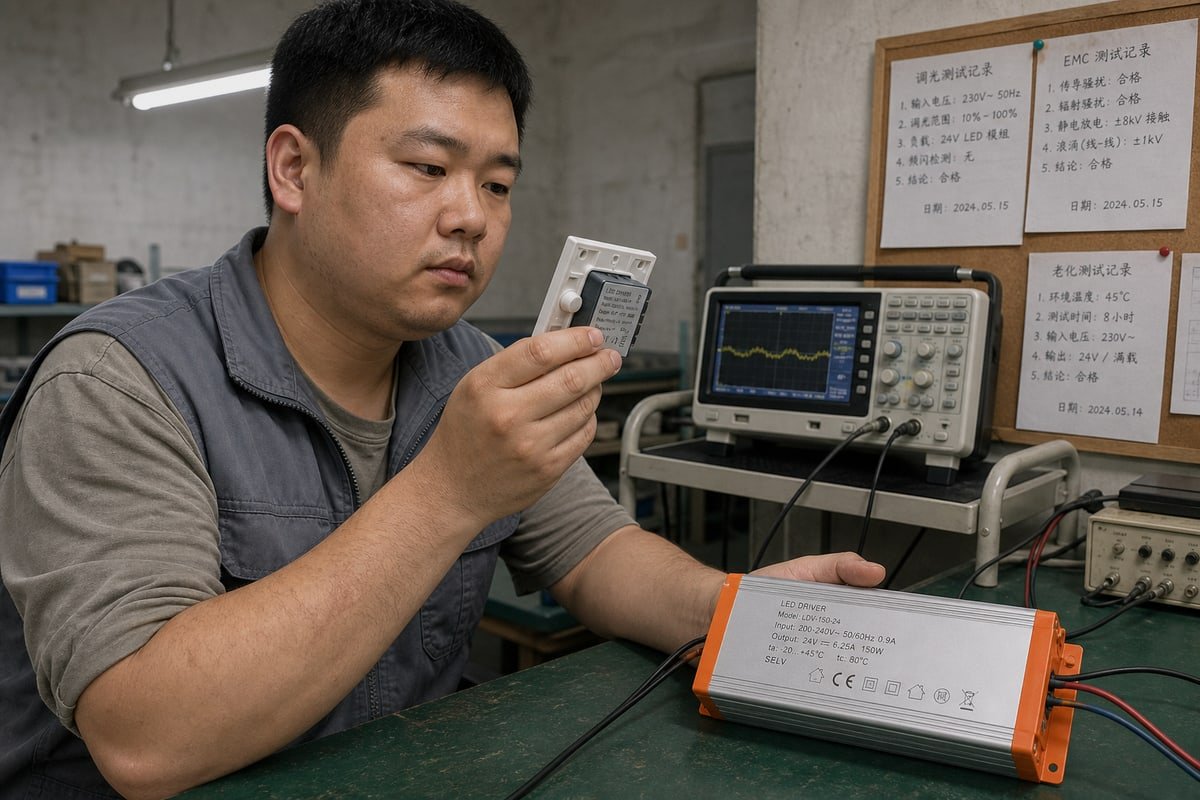
Detail pemanasan itu layak ditekankan. Persyaratan arus penahan TRIAC sensitif terhadap suhu dan biasanya meningkat seiring perangkat memanas. Jadi sistem yang tampak stabil saat start dapat mulai berkedip dua puluh menit kemudian. Jika pemasang Anda melaporkan “berfungsi baik pada awalnya,” curigai mekanisme ini.
Peta Gejala-ke-Penyebab
| Gejala | Kemungkinan penyebab |
|---|---|
| Kedipan pada tingkat rendah | Beban tidak cukup atau ketidakcocokan driver/peredup |
| Kedipan di seluruh rentang | Ketidakcocokan pemotongan fase atau input driver tidak stabil |
| Berbunyi | Interaksi listrik atau mekanis antara peredup dan driver |
| Padam saat meredup | Interaksi arus penahan TRIAC dan arus input |
| Tidak mau mati sepenuhnya | Arus bocor atau perilaku input driver |
| Berfungsi dengan beberapa perlengkapan tetapi tidak dengan satu | Beban di bawah minimum |
| Berfungsi dengan satu perlengkapan tetapi gagal dengan banyak | Arus masuk atau jumlah driver maksimum |
Beberapa dari ini memerlukan penjelasan tambahan. Perilaku pop-on berarti LED tetap gelap pada pengaturan peredup rendah dan menyala tiba-tiba lebih tinggi di slider. Zona mati berarti cahaya berada pada keluaran 100% di bagian atas perjalanan peredup. Ghosting — cahaya samar atau kedipan periodik dalam keadaan OFF — sering muncul dengan peredup pintar tanpa netral, yang menarik daya siaga melalui beban itu sendiri. Dan dengung audibel dapat berasal dari driver yang menggunakan PWM sisi sekunder, yang memantulkan pulsa arus frekuensi tinggi kembali ke sisi primer dan mengganggu deteksi zero-crossing TRIAC.
Haruskah Anda Menambahkan Beban Palsu?
Perbaikan lapangan umum adalah menambahkan beban palsu resistif atau flicker-fixer untuk mengangkat sirkuit di atas peringkat minimum peredup. Itu bisa berhasil, tetapi saya memberi setiap pembeli peringatan ini: menambahkan beban palsu dapat menyelesaikan ketidakstabilan beban minimum, tetapi juga meningkatkan konsumsi energi dan panas, dan tidak selalu menyelesaikan ketidakcocokan driver/peredup. Gunakan hanya ketika kedua pabrikan mengizinkannya. Ingat — masalah beban minimum bukanlah masalah kompatibilitas universal. Jika tahap input driver tidak kompatibel dengan bentuk gelombang peredup, watt lebih banyak tidak akan menyembuhkan kedipan. Juga perhatikan bahwa driver bebas kedip dengan sirkuit bleeder aktif internal memusatkan panas pada tingkat peredupan rendah, jadi manajemen termal penting bahkan ketika LED menarik hampir tidak ada daya.
Bagaimana cara menemukan pemasok driver CV TRIAC yang memenuhi kebutuhan beban minimum dan kustomisasi proyek saya?
Di lini produksi Shenzhen kami, setiap batch driver yang dapat diredupkan TRIAC diuji terhadap dinding dimmer nyata sebelum dikirim. Kebiasaan itu berasal dari pelajaran sulit dengan proyek ekspor di seluruh Eropa dan Asia Tenggara.
Pilih pemasok yang mempublikasikan spesifikasi beban minimum dan maksimum, menyediakan daftar kompatibilitas dimmer, menawarkan kustomisasi OEM/ODM untuk rentang beban dan sirkuit bleeder, serta menguji driver terhadap dimmer pemotong fase nyata. Minta sampel, laporan pengujian, dan dukungan teknis sebelum berkomitmen pada pesanan dalam jumlah besar.
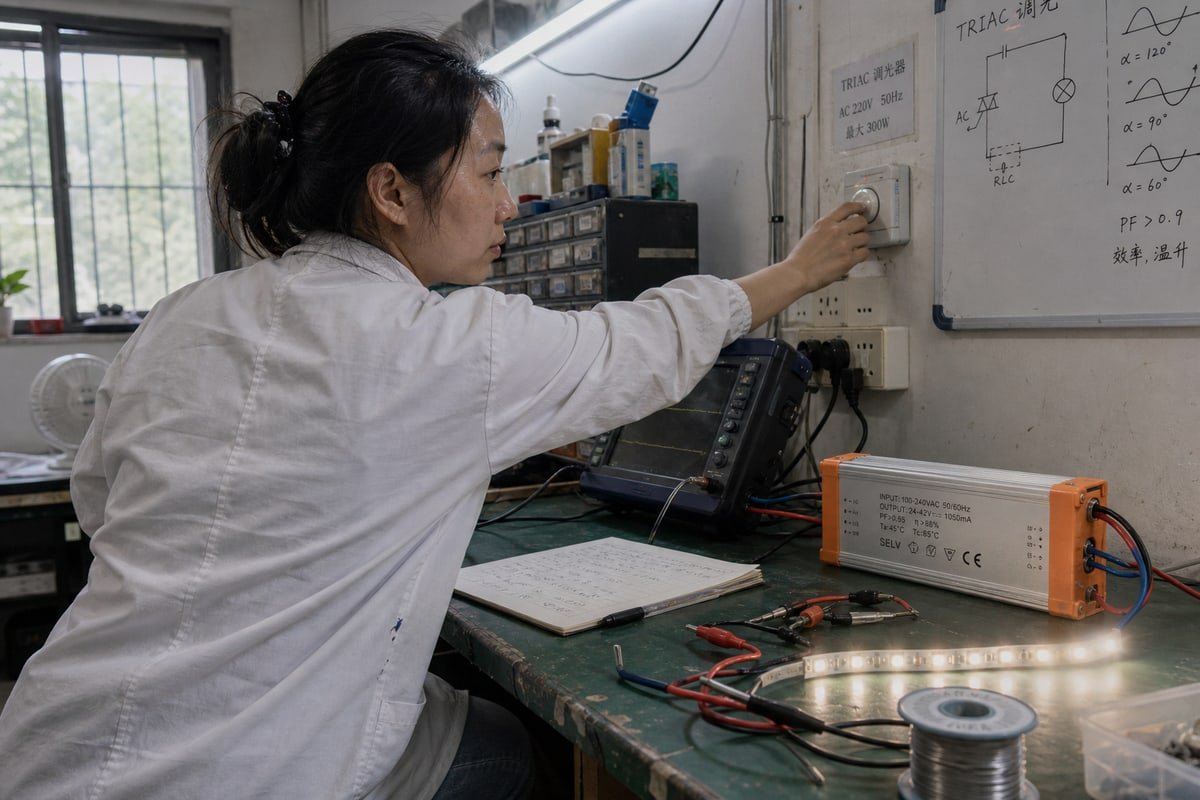
Di boqi, kami bekerja secara eksklusif dengan pemilik merek, grosir, dan produsen pencahayaan, jadi saya mengevaluasi pertanyaan pemasok dari kursi pembeli setiap hari. Manajer pengadaan seperti Olivia — salah satu klien jangka panjang kami di Singapura — peduli pada tiga hal: total biaya proyek, tenggat waktu yang ketat, dan akses ke teknologi desain terkini. Persyaratan beban minimum untuk driver CV TRIAC menyentuh ketiganya. Driver yang gagal dalam uji kompatibilitas setelah pemasangan menghancurkan anggaran dan jadwal.
Pertanyaan yang Memisahkan Pemasok Baik dari yang Berisiko
Jangan hanya bertanya, “Berapa watt yang dapat ditangani dimmer TRIAC ini?” Tanyakan keduanya: “Berapa beban LED minimum?” dan “Bagaimana perilaku input driver LED dengan dimmer ini?” Pertanyaan kedua adalah yang paling tidak bisa dijawab oleh sebagian besar pemasok. Mitra yang mampu harus memberi tahu Anda apakah driver mereka mendukung peredupan fase maju, apakah berfungsi juga dengan dimmer tepi belakang, bagaimana rangkaian bleeder menangani kondisi beban rendah, dan model dimmer spesifik mana yang telah mereka validasi. Saat kami mengembangkan driver OEM untuk klien Eropa, kami menguji stabilitas peredupan terhadap merek dimmer tepi depan yang umum di pasar itu — karena driver yang lulus di lingkungan listrik satu negara dapat berperilaku berbeda di negara lain.
Daftar Periksa Evaluasi Pemasok
| Hal-hal yang Perlu Diperiksa | Mengapa Hal Ini Penting | Bendera Merah |
|---|---|---|
| Spesifikasi beban min/maks yang dipublikasikan | Memungkinkan Anda merancang rangkaian dengan percaya diri | Lembar data yang samar atau hilang |
| Daftar kompatibilitas dimmer | Mengonfirmasi uji peredupan potong-fase dunia nyata | “Klaim ”berfungsi dengan semua dimmer TRIAC” |
| Kemampuan OEM/ODM | Rentang beban dan penyesuaian bleeder untuk pasar Anda | Hanya katalog satu-ukuran-untuk-semua |
| Sertifikasi (CE, CB) | Diperlukan untuk pasar UE dan ekspor | Sertifikat yang tidak dapat diverifikasi |
| Dukungan sampel dan pengujian | Memvalidasi rantai dimmer-driver-beban persis Anda | Penolakan untuk mengirim sampel pra-produksi |
| Dukungan teknis purna jual | Pemecahan masalah cepat melindungi jadwal Anda | Respons lambat atau kaku |
Pasar itu sendiri benar-benar membingungkan di sini. Beberapa panduan vendor bersikeras peredupan TRIAC masih membutuhkan beban 25W–40W, sementara beberapa pembuat driver mengiklankan tanpa beban minimum sama sekali. Kedua pernyataan bisa benar, karena keduanya menggambarkan produk berbeda dan bagian sistem yang berbeda. Kinerja beban minimum adalah spesifikasi khusus desain, bukan aturan TRIAC universal. Pemasok yang menjelaskan itu dengan jujur adalah pemasok yang dapat Anda percaya dengan merek Anda.
Kesimpulan
Rangkaian TRIAC yang kekurangan beban berkedip, berdengung, dan mati — dan perbaikannya dimulai dengan satu kebiasaan: periksa beban minimum dimmer, beban minimum driver, dan kompatibilitas nyata keduanya bersama-sama.
Catatan kaki
- Ringkasan Wikipedia tentang konfigurasi rangkaian LED dan karakteristik tahap keluaran. ↩︎
- Dokumentasi teknis dari produsen semikonduktor terkemuka mengenai karakteristik listrik TRIAC dan beban. ↩︎
- Entri Wikipedia otoritatif yang menjelaskan koreksi faktor daya aktif untuk beban elektronik. ↩︎
- Entri Wikipedia yang menjelaskan operasi dan perbedaan teknis antara jenis dimmer potong-fase. ↩︎
- Standar NEMA yang mendefinisikan karakteristik arus masuk dan persyaratan untuk peralatan pencahayaan LED. ↩︎