Vai al contenuto










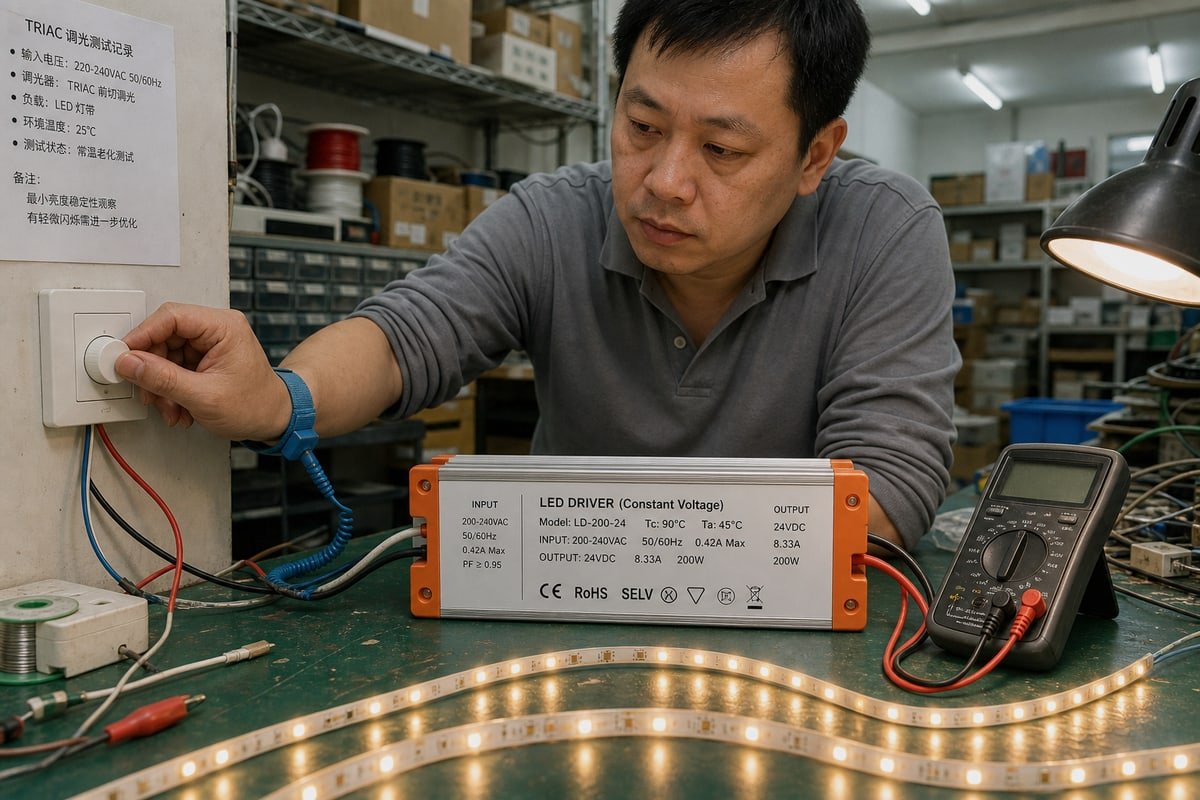
Le strisce LED di un cliente sfarfallavano gravemente in un progetto alberghiero l'anno scorso. Il nostro laboratorio di Shenzhen ha rintracciato il problema nei requisiti di carico minimo per i driver CV TRIAC — una specifica che la maggior parte degli acquirenti trascura.
Un driver LED a tensione costante (CV) dimmerabile TRIAC può richiedere un carico collegato minimo per un funzionamento stabile con un dimmer TRIAC a taglio di fase. Se il carico LED totale scende al di sotto del minimo specificato dal dimmer, il sistema può sfarfallare, ronzare, spegnersi o commutare in modo inaffidabile. Verificare sempre le valutazioni di carico sia del dimmer che del driver.
Una rapida nota sulla terminologia prima di approfondire. Il TRIAC normalmente si trova all'interno del dimmer, non all'interno dello stadio di uscita a tensione costante 1 del driver LED. Quindi quando le persone dicono “driver CV TRIAC,” di solito intendono un driver CV progettato per accettare un ingresso a taglio di fase TRIAC. Questa distinzione influenza tutto in questo articolo. Analizziamolo pezzo per pezzo.
Qual è il requisito di carico minimo per i driver CV TRIAC e perché è importante per il mio progetto?
Il mese scorso, un distributore di illuminazione a Singapore mi ha inviato un messaggio WhatsApp: i suoi driver dimmerabili TRIAC da 6W sfarfallavano su un dimmer ma funzionavano perfettamente su un altro. La terminologia era la causa.
Il requisito di carico minimo è la potenza collegata più bassa di cui un dimmer TRIAC a taglio di fase ha bisogno per mantenere il suo TRIAC interno in conduzione. Conta perché carichi al di sotto di questa soglia possono causare sfarfallio, interruzioni o commutazione inaffidabile — anche quando il driver CV stesso è pienamente funzionante.

Ecco il punto che rendo molto evidente con ogni acquirente: il carico minimo del dimmer e il carico minimo del driver LED sono due specifiche diverse. Confonderli causa la maggior parte dei guasti sul campo che vedo.
Due Specifiche, Due Significati
Un dimmer potrebbe dichiarare un carico LED minimo di 10W. Un driver potrebbe dichiarare un carico di uscita minimo di 2W. Questi numeri descrivono cose completamente diverse. Il primo riguarda se il dimmer può funzionare correttamente con il carico elettrico collegato. Il secondo riguarda se il driver può regolare correttamente la sua uscita LED a un carico particolare. Entrambi devono essere soddisfatti.
| Specifiche | Appartiene A | Cosa Regola | Esempio Tipico |
|---|---|---|---|
| Carico LED minimo | Il dimmer a parete | Se il TRIAC rimane in conduzione attraverso il ciclo CA | Minimo 10W |
| Carico di uscita minimo | Il driver LED | Se il driver regola la sua uscita CC in modo pulito | Minimo 2W |
| Corrente di mantenimento | Il TRIAC all'interno del dimmer | Corrente necessaria per rimanere in conduzione | 10–50mA |
| Corrente di latch | Il TRIAC all'interno del dimmer | Corrente necessaria per iniziare la conduzione in ogni semiciclo | Varia in base al dispositivo |
Perché i Soli Watt Non Raccontano Tutta la Storia
Ecco l'approfondimento da esperto che condivido sempre. Il carico minimo non è semplicemente un problema di wattaggio. È un problema di comportamento elettrico. Un tradizionale Regolatore di intensità a TRIAC è stato progettato attorno a un carico resistivo 2, come una lampada a incandescenza, che assorbe corrente prevedibile su tutta la forma d'onda CA. Un driver CV LED si comporta in modo molto diverso. Il suo stadio di ingresso può contenere circuiti raddrizzatori, filtri EMI, condensatori, elettronica di commutazione, correzione attiva del fattore di potenza 3, e limitazione della corrente di spunto. Quindi un driver LED da 6W non “appare” necessariamente come un carico resistivo da 6W al TRIAC. Ecco perché due driver da 6W diversi possono comportarsi in modo completamente diverso sullo stesso dimmer.
Questo spiega anche perché un dimmer a bordo anteriore 4 fatica di più con piccoli carichi elettronici rispetto a un dimmer a bordo posteriore. I design a bordo posteriore usano MOSFET e non necessitano di una corrente di mantenimento, quindi tollerano molto meglio il dimming a taglio di fase a bassa potenza.
Come calcolo il carico minimo necessario per la mia configurazione con driver TRIAC CV?
Quando specifichiamo driver per un progetto con più apparecchi, valutiamo sempre un compromesso: aggiungere margine di wattaggio aumenta il costo dei componenti, ma operare al limite del dimmer rischia richiami in garanzia.
Sommare la potenza di ingresso effettiva di ogni driver sul circuito, quindi confrontare il totale con le valutazioni di carico LED minimo e massimo del dimmer. Verificare anche il carico di uscita minimo del driver, il numero massimo di driver e la corrente di spunto aggregata prima di finalizzare il design.

La matematica in sé è semplice. Il giudizio dietro di essa non lo è. Segui questo processo ed eviterai gli errori che vedo nelle richieste di progetto ogni settimana.
- Trova il carico LED minimo pubblicato del dimmer. I dimmer legacy a bordo anteriore spesso specificano 20W–40W. I controlli a taglio di fase moderni ottimizzati per LED possono funzionare fino a 1W–3W. Non dare mai per scontato; leggi la scheda tecnica.
- Trova il carico di uscita minimo del driver. Alcuni driver dichiarano nessun carico minimo. Altri definiscono una finestra operativa reale — un datasheet di un driver CV dimmerabile TRIAC da 24V che abbiamo confrontato mostra un intervallo di carico di 33–100W con un consumo a vuoto inferiore a 1W. Questa è una finestra definita, non una garanzia di assenza di carico.
- Usa la potenza effettivamente misurata, non le valutazioni nominali dell'apparecchio. Il nastro LED spesso assorbe meno di quanto suggerisce la sua etichetta.
- Controlla i totali sia rispetto alle valutazioni minime che massime.
- Lasciare spazio in alto. Funzionare esattamente al minimo invita all'instabilità man mano che i componenti invecchiano e le temperature cambiano.
Esempio Pratico — Qualificato Correttamente
Se il dimmer specifica un carico LED minimo di 10W e il carico effettivamente collegato è di 6W, la combinazione è fuori dall'intervallo operativo specificato del dimmer e potrebbe essere instabile. Nota che ho detto “potrebbe,” non “sarà.” Alcuni dimmer tollerano carichi inferiori al loro minimo pubblicato; altri no. Operare fuori specifica significa semplicemente che il produttore non garantisce più la stabilità della regolazione.
La Trappola dei Multi-Driver
Questo conta per l'illuminazione commerciale. Confronta un driver da 6W contro venti driver da 6W. Il carico nominale cambia da 6W a 120W, ma cambiano anche altre caratteristiche elettriche — soprattutto la corrente di spunto aggregata 5 e l'interazione di venti circuiti di ingresso su un singolo dimmer. Quindi il calcolo corretto non è mai semplicemente 6W × 20 = 120W.
| Controllo | Singolo Driver da 6W | Venti Driver da 6W |
|---|---|---|
| Carico a regime | 6W | 120W |
| Carico minimo del dimmer | Probabilmente al di sotto | Comodamente al di sopra |
| Corrente di spunto aggregata | Trascurabile | Potenzialmente critica |
| Numero massimo di driver per dimmer | Non una preoccupazione | Deve essere verificato con il produttore |
| Test di compatibilità necessari | Sì | Sì, a piena quantità |
Quali problemi dovrò affrontare se il mio carico di illuminazione scende al di sotto del requisito minimo?
Il nostro team di controllo qualità una volta ha bruciato tre giorni inseguendo uno sfarfallio che appariva solo dopo venti minuti di funzionamento. La causa ci ha insegnato quanto possano essere subdoli i circuiti sotto-caricati.
Carichi inferiori al requisito minimo possono causare sfarfallio dei LED, ronzio udibile, comportamento di accensione improvvisa, zone morte nella parte alta della gamma di regolazione, immagini residue quando spenti e caduta di tensione a bassa luminosità. Alcuni sintomi compaiono solo dopo che il dimmer si riscalda e la sua corrente di mantenimento aumenta.

Quel dettaglio del riscaldamento merita enfasi. Il requisito di corrente di mantenimento di un TRIAC è sensibile alla temperatura e tipicamente aumenta man mano che il dispositivo si riscalda. Quindi un sistema che sembra stabile all'avvio può iniziare a sfarfallare venti minuti dopo. Se il tuo installatore segnala “funzionava bene all'inizio,” sospetta questo meccanismo.
Mappa Sintomo-Causa
| Sintomo | Causa possibile |
|---|---|
| Sfarfallio a livello basso | Carico insufficiente o incompatibilità driver/dimmer |
| Sfarfallio in tutto l'intervallo | Incompatibilità di taglio di fase o ingresso driver instabile |
| Ronzio | Interazione elettrica o meccanica tra dimmer e driver |
| Si spegne durante la regolazione | Interazione tra corrente di mantenimento TRIAC e corrente di ingresso |
| Non si spegne completamente | Corrente di dispersione o comportamento dell'ingresso del driver |
| Funziona con diversi apparecchi ma non con uno | Carico al di sotto del minimo |
| Funziona con un apparecchio ma fallisce con molti | Corrente di spunto o numero massimo di driver |
Alcuni di questi necessitano di spiegazioni extra. Il comportamento pop-on significa che i LED rimangono spenti a impostazioni basse del dimmer e si accendono bruscamente più in alto sul cursore. Una zona morta significa che la luce rimane al 100% di uscita nella parte superiore della corsa del dimmer. Il ghosting — un bagliore debole o lampeggi periodici nello stato OFF — appare spesso con dimmer smart senza neutro, che assorbono la loro potenza in standby attraverso il carico stesso. E il ronzio udibile può provenire da driver che usano PWM sul lato secondario, che riflette impulsi di corrente ad alta frequenza al lato primario e disturba il rilevamento del passaggio per lo zero del TRIAC.
Dovresti Aggiungere un Carico Fittizio?
Una soluzione comune sul campo è aggiungere un carico fittizio resistivo o un correttore di sfarfallio per portare il circuito sopra la valutazione minima del dimmer. Questo può funzionare, ma do a ogni acquirente questo avvertimento: aggiungere un carico fittizio può risolvere l'instabilità da carico minimo, ma aumenta anche il consumo energetico e il calore, e non risolve necessariamente l'incompatibilità driver/dimmer. Usalo solo quando entrambi i produttori lo consentono. Ricorda — un problema di carico minimo non è un problema di compatibilità universale. Se lo stadio di ingresso del driver è incompatibile con la forma d'onda del dimmer, più watt non cureranno lo sfarfallio. Nota anche che i driver senza sfarfallio con circuiti bleeder attivi interni concentrano il calore a bassi livelli di regolazione, quindi la gestione termica conta anche quando i LED assorbono quasi nulla.
Come posso trovare un fornitore di driver CV TRIAC che soddisfi il carico minimo e le esigenze di personalizzazione del mio progetto?
Sulla nostra linea di produzione a Shenzhen, ogni lotto di driver dimmerabili TRIAC viene testato contro una parete di dimmer reali prima della spedizione. Questa abitudine è nata da lezioni difficili con progetti di esportazione in Europa e Sud-Est asiatico.
Scegli un fornitore che pubblichi le specifiche di carico minimo e massimo, fornisca elenchi di compatibilità dei dimmer, offra personalizzazione OEM/ODM dei range di carico e dei circuiti di dispersione e testi i driver con dimmer reali a taglio di fase. Richiedi campioni, rapporti di test e supporto tecnico prima di impegnarti in ordini di grandi volumi.

Da boqi, lavoriamo esclusivamente con proprietari di marchi, grossisti e produttori di illuminazione, quindi valuto le domande dei fornitori dalla prospettiva dell'acquirente ogni giorno. I responsabili degli acquisti come Olivia — una nostra cliente di lunga data a Singapore — si preoccupano di tre cose: costo totale del progetto, scadenze strette e accesso alla tecnologia di progettazione attuale. I requisiti di carico minimo per i driver CV TRIAC toccano tutti e tre. Un driver che fallisce il test di compatibilità dopo l'installazione fa saltare sia il budget che la pianificazione.
Domande che Separano i Buoni Fornitori da Quelli Rischiosi
Non chiedere solo: “Quanti watt può gestire questo dimmer TRIAC?” Chiedi sia “Qual è il carico LED minimo?” sia “Come si comporta l'ingresso del driver LED con questo dimmer?” Quella seconda domanda è quella a cui la maggior parte dei fornitori non sa rispondere. Un partner capace dovrebbe dirti se il suo driver supporta la regolazione a fase diretta, se funziona anche con un dimmer a bordo di coda, come il suo circuito bleeder gestisce le condizioni di basso carico e quali modelli specifici di dimmer hanno validato. Quando sviluppiamo un driver OEM per un cliente europeo, testiamo la stabilità della regolazione contro i marchi di dimmer a bordo di attacco comuni in quel mercato — perché un driver che supera nell'ambiente elettrico di un paese può comportarsi diversamente in un altro.
Checklist di Valutazione del Fornitore
| Cosa verificare | Perché è importante | Bandiera Rossa |
|---|---|---|
| Specifiche pubblicate di carico min/max | Ti permette di progettare circuiti con sicurezza | Schede tecniche vaghe o mancanti |
| Lista di compatibilità dimmer | Conferma test reali di regolazione a taglio di fase | “Affermazioni ”Funziona con tutti i dimmer TRIAC" |
| Capacità OEM/ODM | Gamma di carico e taratura del bleeder per il tuo mercato | Solo catalogo taglia unica |
| Certificazioni (CE, CB) | Richieste per i mercati UE e di esportazione | Certificati non verificabili |
| Supporto per campioni e test | Valida la tua catena esatta dimmer-driver-carico | Rifiuto di inviare campioni pre-produzione |
| Supporto tecnico post-vendita | Risoluzione rapida dei problemi protegge la tua pianificazione | Risposte lente o scriptate |
Il mercato stesso è genuinamente confuso qui. Alcune guide dei fornitori insistono che la regolazione TRIAC richieda ancora 25W–40W di carico, mentre alcuni produttori di driver pubblicizzano nessun carico minimo. Entrambe le affermazioni possono essere vere, perché descrivono prodotti diversi e parti diverse del sistema. La prestazione di carico minimo è una specifica specifica del progetto, non una regola TRIAC universale. Un fornitore che spiega questo onestamente è un fornitore di cui puoi fidarti con il tuo marchio.
Conclusione
I circuiti TRIAC sotto-caricati sfarfallano, ronzano e si interrompono — e la soluzione inizia con un'abitudine: controlla il carico minimo del dimmer, il carico minimo del driver e la loro reale compatibilità insieme.
Note a piè di pagina
- Panoramica Wikipedia sulle configurazioni dei circuiti LED e le caratteristiche dello stadio di uscita. ↩︎
- Documentazione tecnica di un produttore leader di semiconduttori riguardo le caratteristiche elettriche e i carichi TRIAC. ↩︎
- Voce Wikipedia autorevole che spiega la correzione attiva del fattore di potenza per carichi elettronici. ↩︎
- Voce Wikipedia che spiega il funzionamento e le differenze tecniche tra i tipi di dimmer a taglio di fase. ↩︎
- Standard NEMA che definisce le caratteristiche di corrente di spunto e i requisiti per le apparecchiature di illuminazione LED. ↩︎