Vai al contenuto










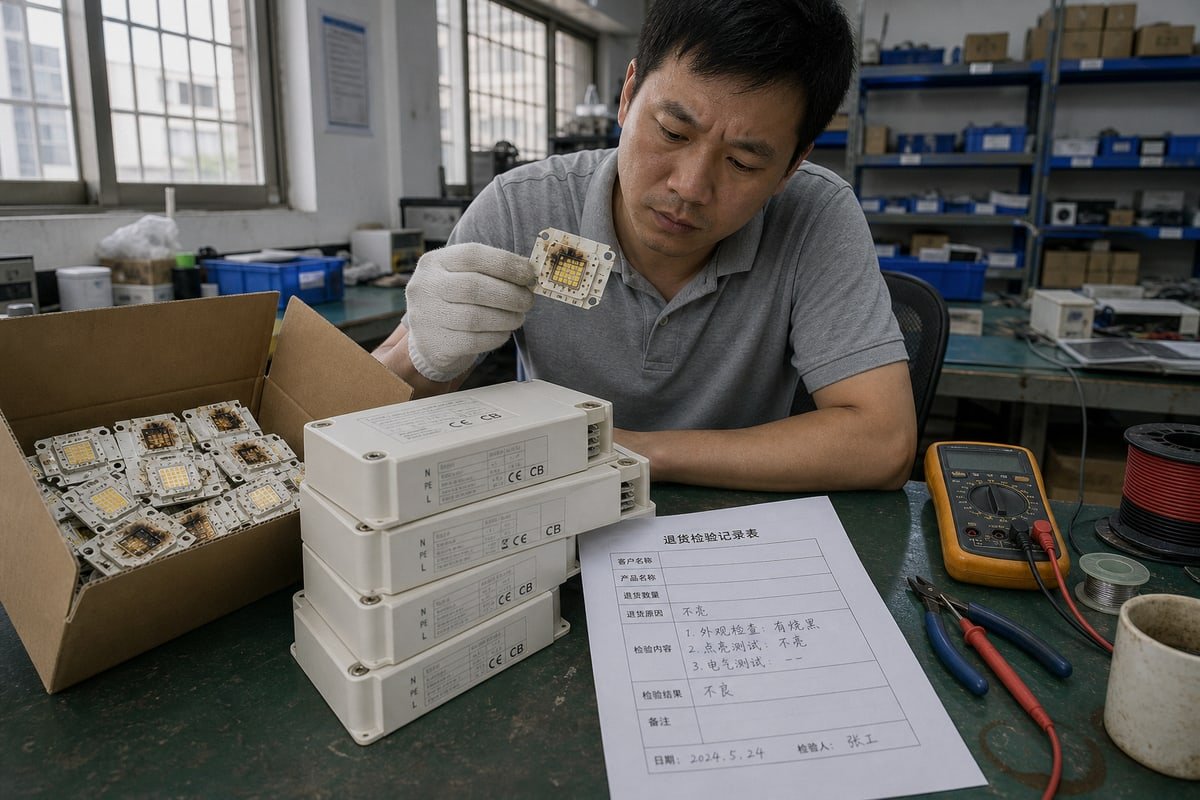
Un lotto restituito di moduli LED bruciati ha insegnato al nostro team di Shenzhen una dura verità: senza controllo a corrente costante 1, i moduli LED si surriscaldano silenziosamente. Ecco perché accade.
La corrente costante è preferita per i moduli LED progettati come carichi a corrente costante perché la tensione diretta di un LED varia con la temperatura e la corrente. Un driver a corrente costante regola la corrente invece di lasciarla salire, mantenendo un'emissione luminosa prevedibile, limitando lo stress termico e prolungando la durata del LED. Abbina prima la corrente, poi verifica la conformità della tensione.
Una precisazione è importante prima di andare oltre. La corrente costante non è preferita per ogni prodotto LED esistente. È preferita per i carichi LED progettati come carichi a corrente costante: moduli nudi, array COB e stringhe in serie. Le strisce LED con limitazione di corrente integrata sono un'altra storia. Questo articolo esamina la fisica, i vantaggi in termini di affidabilità, i costi e un metodo di selezione pratico. Iniziamo con la domanda principale.
Perché dovrei scegliere driver a corrente costante invece di tensione costante per i miei moduli LED?
Un responsabile acquisti a Singapore una volta mi chiese perché il suo fornitore insistesse su driver a corrente costanteper i moduli COB nudi. La nostra risposta si riduceva a una parola: fisica.
Scegli driver a corrente costante per moduli LED progettati come carichi a corrente costante, poiché i LED nudi non possono regolare la propria corrente. Un piccolo aumento di tensione crea un picco di corrente elevato. I driver a tensione costante sono adatti per strisce LED con limitazione di corrente integrata; i moduli nudi, i COB e le stringhe in serie richiedono corrente regolata.

Il concetto più importante qui è il comportamento a resistenza differenziale negativa del LED. Un LED non regola naturalmente la propria corrente. Una volta raggiunta la sua tensione diretta 2 , un aumento relativamente piccolo della tensione può produrre un aumento sproporzionatamente grande della corrente. La catena è questa: una corrente più alta aumenta la temperatura del LED, una temperatura più alta modifica la tensione diretta, il punto di lavoro si sposta e la corrente può salire ulteriormente. È esattamente il motivo per cui collegare un modulo LED nudo direttamente a una sorgente di tensione è pericoloso.
Un driver a corrente costante ben progettato spezza quella catena. Controlla la corrente, mentre la tensione del LED si stabilizza al valore richiesto dal carico entro il range operativo del driver. Sfatiamo subito un malinteso comune: un driver a corrente costante non impone una tensione fissa al LED. Il LED determina la sua tensione operativa; il driver regola la corrente.
Dove appartiene ciascun tipo di driver?
| Caratteristica | Corrente Costante (CC) | Tensione Costante (CV) |
|---|---|---|
| Uscita regolata | Corrente | Tensione |
| Specifica tipica | 350 mA, 500 mA, 700 mA | 12V, 24V |
| Applicazione tipica | Moduli LED nudi, COB, molti downlight | Strisce LED, moduli CV |
| Parametro di selezione primario | Corrente del LED | Tensione del LED |
| Parametro secondario | Range di tensione diretta/conformità | Corrente/potenza massima di carico |
| Limitazione di corrente | Integrata nel driver | Solitamente richiesta nel carico LED |
Quindi un driver a tensione costante non è sbagliato. È semplicemente lo strumento giusto per un'architettura diversa. I driver CC si abbinano naturalmente anche a un circuito in serie, perché la stessa corrente scorre attraverso ogni LED nella stringa mentre il driver regola la sua tensione di uscita per coprire la tensione diretta combinata.
In che modo la corrente costante migliora l’affidabilità e la durata dei miei progetti di illuminazione a LED?
Ogni lotto di driver sulla nostra linea passa attraverso un test di burn-in completo prima della spedizione. Questa abitudine è iniziata dopo aver studiato perché i guasti sul campo si concentrano attorno al calore, non alla luminosità.
La corrente costante migliora l'affidabilità prevenendo la fuga termica, mantenendo i LED entro la loro corrente massima assoluta e stabilizzando la temperatura di giunzione. Una corrente costante mantiene prevedibili il flusso luminoso e la consistenza del colore, riduce lo stress elettrico sul chip e tipicamente estende la durata del LED nell'intero range di temperatura operativa del dispositivo.
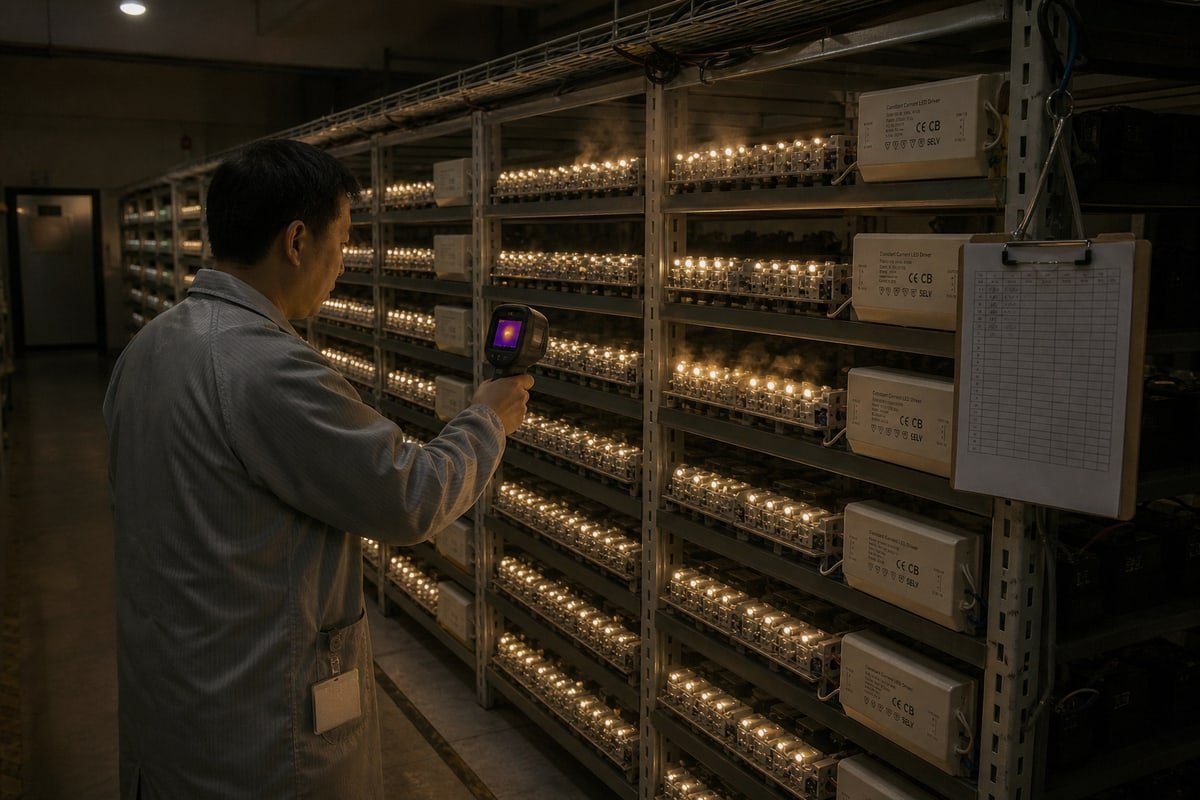
I LED hanno un coefficiente di temperatura negativo. Quando la giunzione si riscalda, la resistenza effettivamente diminuisce e il diodo assorbe più corrente alla stessa tensione. Su un'alimentazione non regolata, quel ciclo si autoalimenta fino al guasto del chip. Gli ingegneri chiamano questo fuga termica, ed è il più grande killer dei moduli sovralimentati. Un driver CC compensa automaticamente: mentre il LED si riscalda e la sua tensione diretta varia, il driver regola la sua tensione di uscita e mantiene la corrente al punto di impostazione. Questa è protezione da sovralimentazione integrata, che mantiene il chip entro la Corrente Massima Assoluta del produttore indipendentemente dalle fluttuazioni di ingresso.
Qualità della luce: benefici che puoi misurare
L'affidabilità non riguarda solo la sopravvivenza. I chip LED sono classificati a una corrente calibrata. Quando la corrente si allontana da quel punto di classificazione, la temperatura di colore 3 si sposta e una parete di downlight smette di corrispondere. La corrente regolata previene quella deriva della CCT e mantiene il flusso luminoso 4 uniforme su ogni modulo in una stringa in serie. I driver CC ben progettati riducono anche l'indice di sfarfallio e mitigano l'effetto stroboscopico, il che conta in fabbriche con macchinari rotanti o studi che usano telecamere ad alta velocità.
| Rischio di guasto o qualità | Come aiuta la corrente costante |
|---|---|
| Fuga termica | Mantiene la corrente fissa mentre la temperatura sale |
| Bruciatura del chip | Rispetta la corrente massima assoluta nominale |
| Deriva della CCT | Mantiene i LED alla loro corrente di binning calibrata |
| Luminosità irregolare | Stessa corrente attraverso ogni LED nella stringa |
| Sfarfallio | Indice di sfarfallio inferiore con un filtraggio di uscita adeguato |
Un bonus diagnostico nascosto
C'è un vantaggio che la maggior parte degli articoli salta. Poiché il driver mantiene la corrente costante, puoi monitorare la tensione diretta necessaria per mantenerla. Uno spostamento a lungo termine di quella tensione segnala l'invecchiamento dei LED o il degrado delle interconnessioni prima che il dispositivo fallisca effettivamente. Diversi nostri clienti ingegneristici in Germania e Giappone usano esattamente questo metodo per la manutenzione predittiva in apparecchi chiusi, dove la dissipazione del calore è più difficile.
Quali vantaggi in termini di costi posso aspettarmi passando a driver LED a corrente costante?
Il prezzo per watt è il primo numero che la maggior parte degli acquirenti ci cita alle fiere. Eppure i driver che sembrano più economici in un preventivo raramente sono i più economici lungo la vita di un progetto.
I driver a corrente costante riducono i costi eliminando i resistori limitatori di corrente che sprecano circa il 20–40% della potenza come calore, abbassando le bollette energetiche, riducendo i resi in garanzia da guasti da sovracorrente e compensando la caduta di tensione su lunghe tratte. Un migliore fattore di potenza e una THD inferiore facilitano anche i costi di conformità alle utenze.
Lasciami essere onesto sull'obiezione prima, perché i nostri distributori la sollevano spesso. Un driver CC può avere un prezzo unitario più alto di un driver a tensione costante di base, ed è meno flessibile se prevedi di aggiungere o rimuovere moduli in seguito, poiché è progettato attorno a una finestra specifica di corrente e tensione diretta. Entrambi i punti sono veri. Ma per apparecchi con configurazione fissa, che descrive la maggior parte dei downlight, pannelli e luminarie architetturali, la matematica del ciclo di vita favorisce fortemente la corrente costante.
Inizia con l'efficienza. I progetti CV limitati da resistori bruciano dal 20% al 40% della loro potenza come calore di scarto nei resistori. Questa è energia che il tuo cliente paga due volte: una volta al contatore, e di nuovo in dissipatori più grandi necessari per la dissipazione del calore. Un driver CC elimina completamente quei resistori.
Dove i risparmi si manifestano realmente
| Fattore di costo | Approccio CV limitato da resistori | Approccio a corrente costante |
|---|---|---|
| Energia sprecata nei resistori limitatori | 20–40% persi come calore | Essenzialmente eliminata |
| Dimensioni del dissipatore e dell'involucro | Più grandi, più costosi | Più piccoli, più economici |
| Lunghe tratte di cavi | La luminosità diminuisce con la caduta di tensione | Il driver aumenta la tensione per compensare |
| Resi in garanzia | Rischio di guasto da sovracorrente più alto | Corrente limitata al valore nominale |
| Conformità alla rete (PF, THD) | Spesso condizionamento di base | Condizionamento di potenza tipicamente superiore |
Il punto sulla caduta di tensione merita enfasi per le grandi installazioni. Su lunghe tratte o grandi array, un driver CC semplicemente aumenta la sua tensione di uscita per mantenere il flusso di ampere target, quindi l'ultimo apparecchio brilla quanto il primo. E poiché i driver CC di solito portano un condizionamento di potenza più sofisticato, aiutano i progetti a soddisfare i requisiti delle utenze per la Distorsione Armonica Totale e il fattore di potenza, che diversi nostri clienti europei ora specificano in ogni gara.
Come seleziono il driver a corrente costante giusto per le specifiche del mio modulo LED personalizzato?
Uno degli errori più costosi che ho visto fare a un cliente è stato ordinare i driver solo in base alla potenza. Trecento apparecchi sfarfallavano all'avvio a freddo perché la tensione di conformità non corrispondeva mai.
Seleziona un driver a corrente costante abbinando prima la corrente di pilotaggio specificata del modulo LED, poi confermando che la sua tensione diretta rientri nella finestra di conformità della tensione di uscita del driver su tutta la gamma di temperature operative. Infine, controlla le condizioni termiche, le esigenze di dimmerazione e le certificazioni di sicurezza. Non scegliere mai solo in base alla potenza.

Ecco la verità semplice che ripetiamo a ogni cliente OEM: la potenza ti dice quanta energia consuma il LED; non ti dice se il driver è elettricamente compatibile con il LED. La compatibilità vive in due numeri, ed ecco il processo che seguiamo quando sviluppiamo driver personalizzati.
- Abbina la corrente. Se il modulo specifica 700 mA, il driver deve regolare 700 mA. Nessun arrotondamento.
- Verifica la tensione di conformità. Un driver marcato 700 mA / 18–36 V non emette 36V continuamente. Regola 700 mA mentre la sua tensione fluttua a ciò di cui il carico ha bisogno, purché quel valore rimanga tra 18–36V.
- Aggiungi margine di temperatura. La tensione diretta non è un numero fisso. Si sposta con la temperatura di giunzione, quindi una lettura di Vf a temperatura ambiente non basta. Richiedi margine su tutta la gamma operativa reale, specialmente per COB ad alta potenza, apparecchi chiusi e installazioni ad alta temperatura ambiente.
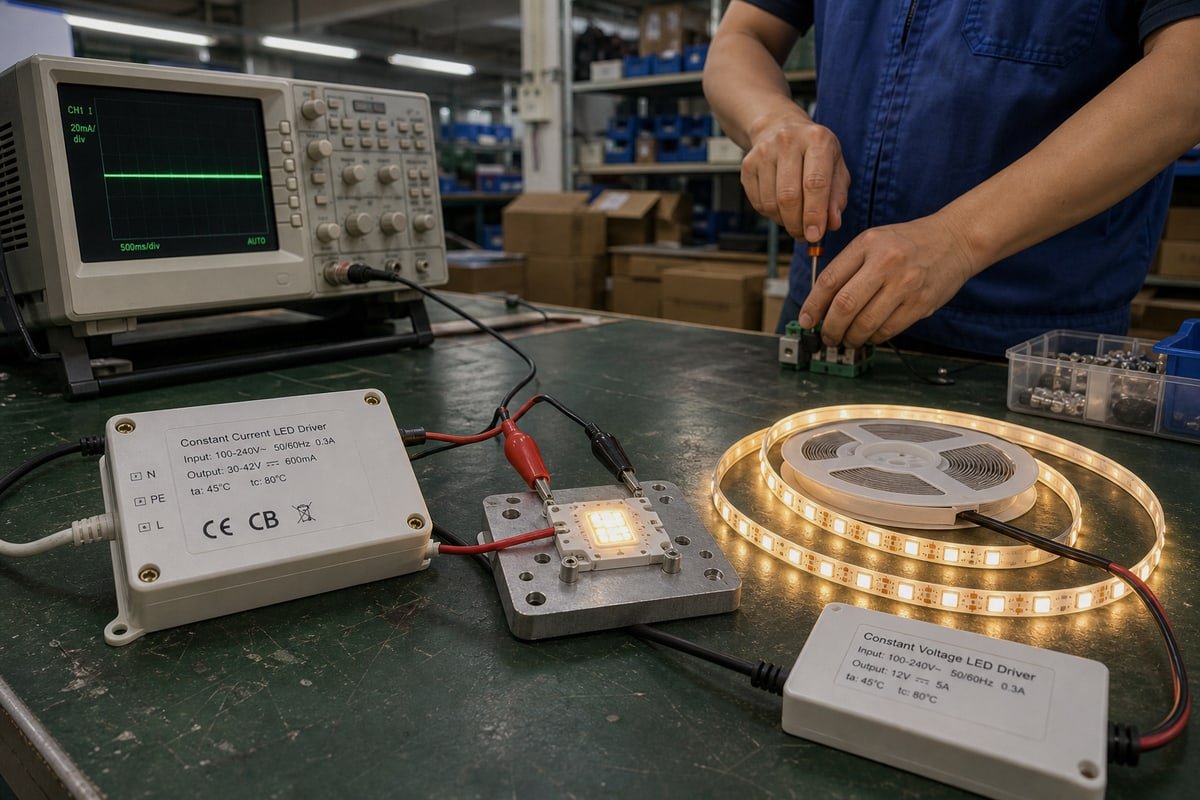
- Controlla dimmerazione, cablaggio e certificazioni. Confermare il protocollo di dimming, la disposizione dei terminali L, N e PE, e i marchi come CE e CB sull'etichetta, che è standard su ogni unità che lascia la nostra linea.
Un esempio pratico di abbinamento
Supponiamo che il tuo modulo necessiti di 700 mA a una tensione diretta nominale di 28V.
| Opzione driver | Corrente | Intervallo di tensione | Verdetto |
|---|---|---|---|
| Driver A | 700 mA | 10–25V | Non adatto: 28V supera la finestra |
| Driver B | 700 mA | 18–36V | Adatto: 28V rientra comodamente |
| Driver C | 700 mA | 30–60V | Non adatto: 28V è al di sotto del minimo |
La regola è semplice: la corrente del LED deve corrispondere, e la tensione diretta del LED deve rientrare nella finestra di regolazione del driver. Un'ultima avvertenza dell'ingegnere. I driver CC si abbinano naturalmente a un circuito in serie, ma mettere in parallelo stringhe di LED nudi su un singolo driver CC è rischioso, perché piccole differenze di tensione diretta causano una condivisione diseguale della corrente tra i rami. Progettare i rami in parallelo deliberatamente o evitarli.
Conclusione
La corrente non regolata distrugge silenziosamente i moduli LED. I driver a corrente costante interrompono quella catena. Abbina prima la corrente, verifica la conformità della tensione secondo, controlla il margine termico terzo — non selezionare mai solo in base alla potenza.
Note a piè di pagina
- Risorsa ingegneristica autorevole che spiega i principi e le applicazioni della regolazione a corrente costante nei circuiti elettrici. ↩︎
- Risorsa del Dipartimento dell'Energia degli Stati Uniti che spiega la fisica fondamentale dei LED e l'importanza della gestione della tensione. ↩︎
- Definizione standard della caratteristica della luce visibile, essenziale per comprendere il binning e la coerenza dei LED. ↩︎
- Panoramica tecnica della misura della potenza luminosa percepita, una metrica chiave delle prestazioni per i moduli LED. ↩︎