Ga naar de inhoud









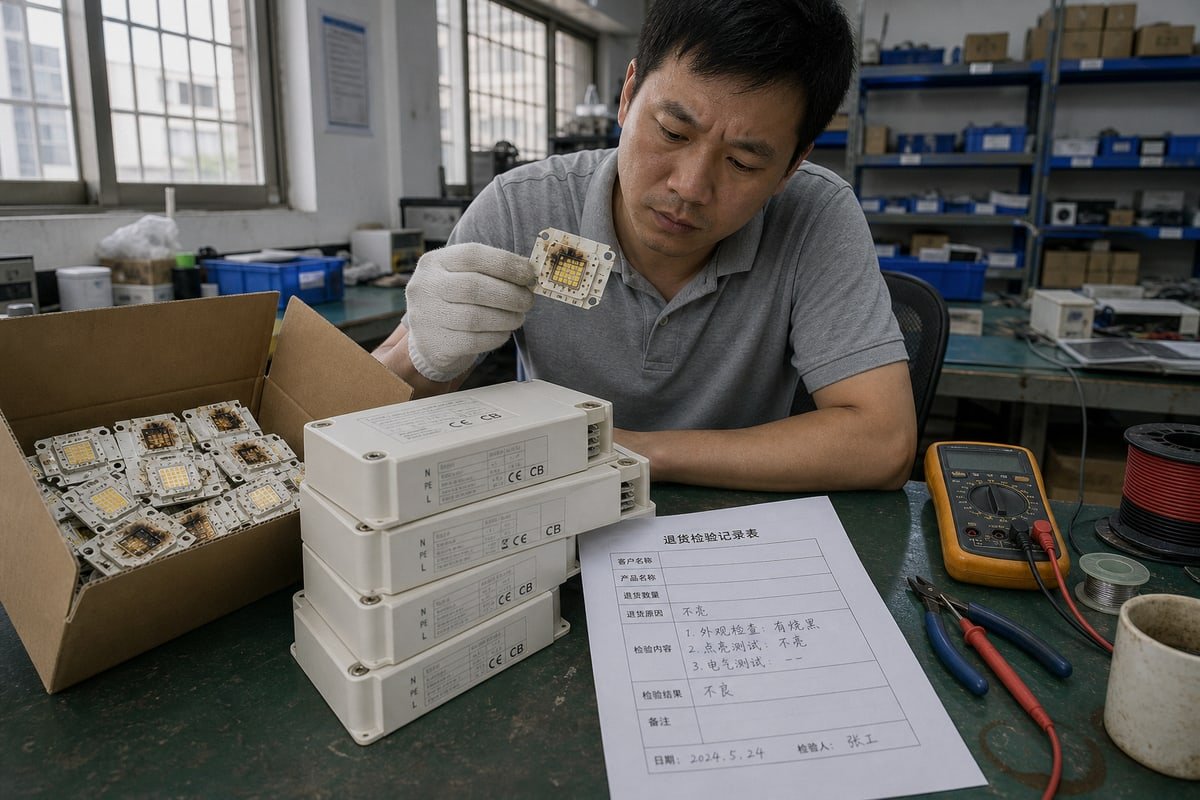
Een geretourneerde batch dode LED-modules leerde ons Shenzhen-team een harde les: zonder constante stroomregeling 1, koken LED-modules zichzelf stilletjes gaar. Hier is waarom dat gebeurt.
Constante stroom heeft de voorkeur voor LED-modules die zijn ontworpen als constante-stroombelastingen, omdat de doorlaatspanning van een LED verschuift met temperatuur en stroom. Een constante-stroomdriver regelt de stroom in plaats van deze te laten stijgen, waardoor een voorspelbare lichtopbrengst behouden blijft, thermische stress wordt beperkt en de levensduur van de LED wordt verlengd. Match eerst de stroom en controleer daarna de spanningscompatibiliteit.
Eén verduidelijking is belangrijk voordat we verder gaan. Constante stroom heeft niet voor elk LED-product op aarde de voorkeur. Het heeft de voorkeur voor LED-belastingen die zijn ontworpen als constante-stroombelastingen: kale modules, COB-arrays en serieschakelingen. LED-strips met ingebouwde stroombegrenzing zijn een ander verhaal. Dit artikel behandelt de fysica, de betrouwbaarheidswinsten, de kostenberekening en een praktische selectiemethode. Laten we beginnen met de kernvraag.
Waarom zou ik constante stroomdrivers verkiezen boven constante spanning voor mijn LED-modules?
Een inkoopmanager in Singapore vroeg me ooit waarom haar leverancier aandrong op constante-stroomdrivers voor kale COB-modules. Ons antwoord kwam neer op één woord: fysica.
Kies constante stroomdrivers voor LED-modules die ontworpen zijn als constante-stroombelastingen, omdat kale LED's hun eigen stroom niet kunnen reguleren. Een kleine spanningsstijging creëert een grote stroompiek. Constante spanningsdrivers zijn geschikt voor LED-strips met ingebouwde stroombegrenzing; kale modules, COB's en serieschakelingen hebben gereguleerde stroom nodig.
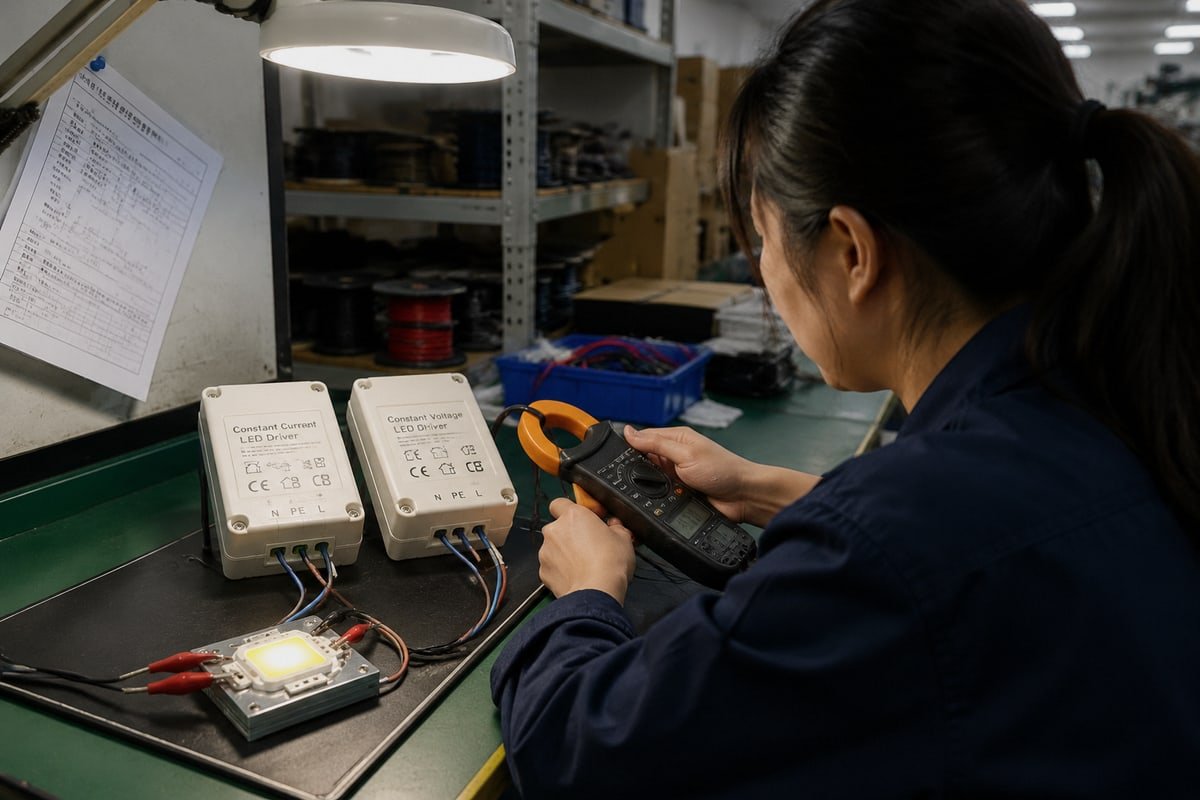
Het belangrijkste concept hier is het negatieve differentiële weerstandsgedrag van de LED. Een LED reguleert zijn eigen stroom niet van nature. Zodra de voorwaartse spanning 2 is bereikt, kan een relatief kleine spanningsstijging een onevenredig grote stroomstijging veroorzaken. De keten ziet er zo uit: hogere stroom verhoogt de LED-temperatuur, hogere temperatuur verandert de doorlaatspanning, het werkpunt verschuift en de stroom kan nog verder stijgen. Dat is precies waarom het direct aansluiten van een kale LED-module op een spanningsbron gevaarlijk is.
Een goed ontworpen constante-stroomdriver doorbreekt die keten. Het regelt de stroom, terwijl de LED-spanning zich vestigt op de waarde die de belasting vereist binnen het werkbereik van de driver. Laat me meteen een veelvoorkomend misverstand uit de weg ruimen: een constante-stroomdriver dwingt geen vaste spanning op de LED. De LED bepaalt zijn bedrijfsspanning; de driver regelt de stroom.
Waar hoort elk drivertype thuis?
| Kenmerk | Constante Stroom (CC) | Constante Spanning (CV) |
|---|---|---|
| Gereguleerde uitgang | Stroom | Spanning |
| Typische specificatie | 350 mA, 500 mA, 700 mA | 12V, 24V |
| Typische toepassing | Kale LED-modules, COB's, veel downlights | LED-strips, CV-modules |
| Primaire selectieparameter | LED-stroom | LED-spanning |
| Secundaire parameter | Doorlaatspanning/compatibiliteitsbereik | Maximale belastingsstroom/vermogen |
| Stroombegrenzing | Ingebouwd in driver | Meestal vereist binnen de LED-belasting |
Dus een constante-spanningsdriver is niet verkeerd. Het is simpelweg het juiste gereedschap voor een andere architectuur. CC-drivers passen ook van nature bij een serieschakeling, omdat dezelfde stroom door elke LED in de string stroomt terwijl de driver zijn uitgangsspanning aanpast om de gecombineerde doorlaatspanning te dekken.
Hoe verbetert constante stroom de betrouwbaarheid en levensduur van mijn LED-verlichtingsprojecten?
Elke driverbatch op onze lijn ondergaat een volledige burn-in-test voordat deze wordt verzonden. Die gewoonte begon nadat we bestudeerden waarom veldfouten zich concentreren rond hitte, niet rond helderheid.
Constante stroom verbetert de betrouwbaarheid door thermische runaway te voorkomen, LED's binnen hun absolute maximale stroomclassificatie te houden en de junctietemperatuur te stabiliseren. Stabiele stroom houdt de lichtstroom en kleurconsistentie voorspelbaar, vermindert elektrische stress op de chip en verlengt doorgaans de LED-levensduur over het bedrijfstemperatuurbereik van het armatuur.
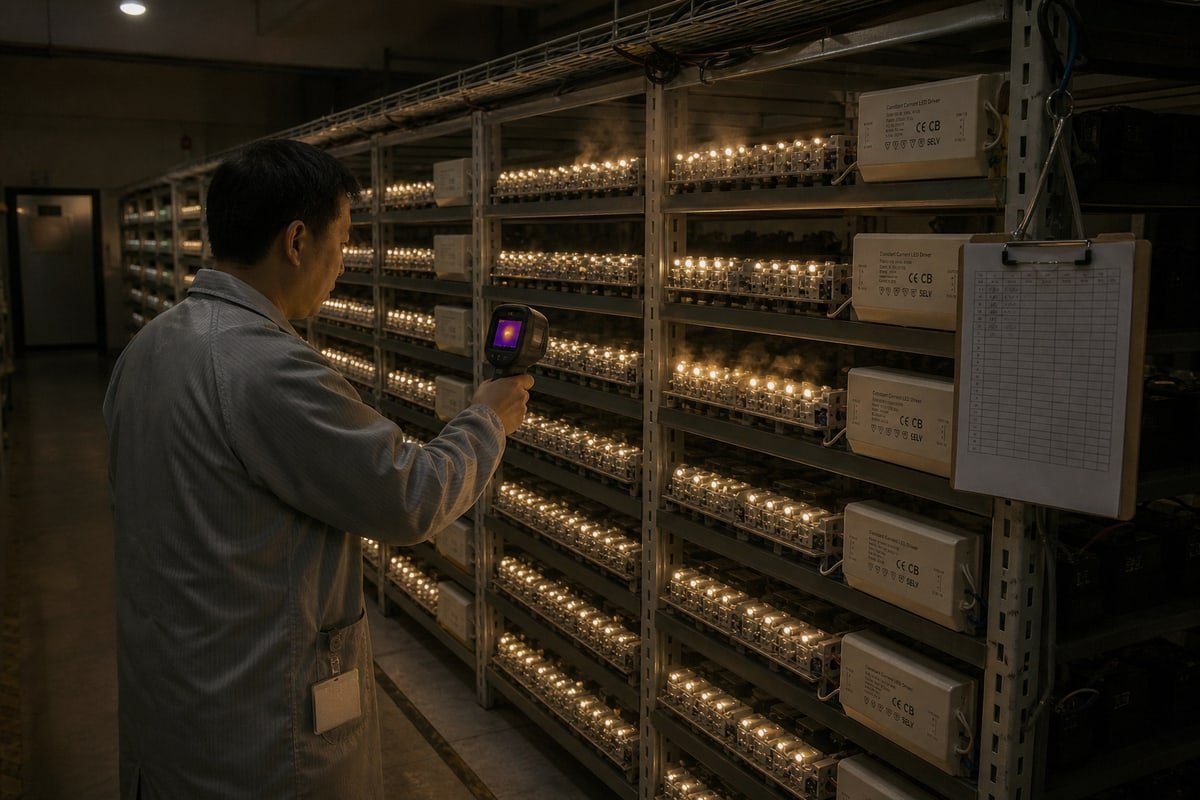
LED's hebben een negatieve temperatuurcoëfficiënt. Naarmate de junctie opwarmt, valt de weerstand effectief weg en trekt de diode meer stroom bij dezelfde spanning. Op een ongereguleerde voeding voedt die lus zichzelf totdat de chip faalt. Ingenieurs noemen dit thermische runaway, en het is de grootste killer van overgestuurde modules. Een CC-driver compenseert automatisch: naarmate de LED opwarmt en zijn doorlaatspanning afwijkt, past de driver zijn uitgangsspanning aan en houdt de stroom op het instelpunt. Dat is ingebouwde overdrive-bescherming, die de chip binnen de Absolute Maximum Current Rating van de fabrikant houdt, ongeacht ingangsfluctuaties.
Lichtkwaliteitsvoordelen die je kunt meten
Betrouwbaarheid gaat niet alleen over overleven. LED-chips worden gesorteerd op een gekalibreerde stroom. Wanneer de stroom afwijkt van dat sorteerpunt, verschuift de kleurtemperatuur 3 , en een muur van downlights stopt met matchen. Gereguleerde stroom voorkomt die CCT-drift en houdt de lichtstroom 4 uniform over elke module in een serieschakeling. Goed ontworpen CC-drivers verminderen ook de flikkerindex en beperken het stroboscopische effect, wat belangrijk is in fabrieken met roterende machines of studio's met hogesnelheidscamera's.
| Fout- of kwaliteitsrisico | Hoe constante stroom helpt |
|---|---|
| Thermische runaway | Houdt de stroom vast terwijl de temperatuur stijgt |
| Chipdoorbrand | Respecteert de absolute maximale stroomclassificatie |
| CCT-drift | Houdt LED's op hun gekalibreerde binning-stroom |
| Ongelijkmatige helderheid | Zelfde stroom door elke LED in de string |
| Flikkeren | Lagere flicker-index met goede uitgangsfiltering |
Een verborgen diagnostisch voordeel
Er is één voordeel dat de meeste artikelen overslaan. Omdat de driver de stroom constant houdt, kunt u de doorlaatspanning bewaken die nodig is om deze te handhaven. Een verschuiving op lange termijn in die spanning duidt op veroudering van LED's of degradatie van verbindingen voordat het armatuur daadwerkelijk uitvalt. Verschillende van onze technische klanten in Duitsland en Japan gebruiken precies deze methode voor voorspellend onderhoud in gesloten armaturen, waar warmteafvoer het moeilijkst is.
Welke kostenvoordelen kan ik verwachten bij de overstap naar constante stroom LED-drivers?
Prijs-per-watt is het eerste getal dat de meeste kopers ons op beurzen noemen. Toch zijn de drivers die op een offerte het goedkoopst lijken zelden het goedkoopst over de levensduur van een project.
Constante-stroom LED-drivers verlagen kosten door stroombegrenzende weerstanden te verwijderen die ongeveer 20–40% van het vermogen als warmte verspillen, waardoor energierekeningen dalen, garantieclaims door overstroomfouten verminderen, en spanningsval over lange afstanden wordt gecompenseerd. Betere arbeidsfactor en lagere THD verlagen ook de nalevingskosten voor nutsvoorzieningen.
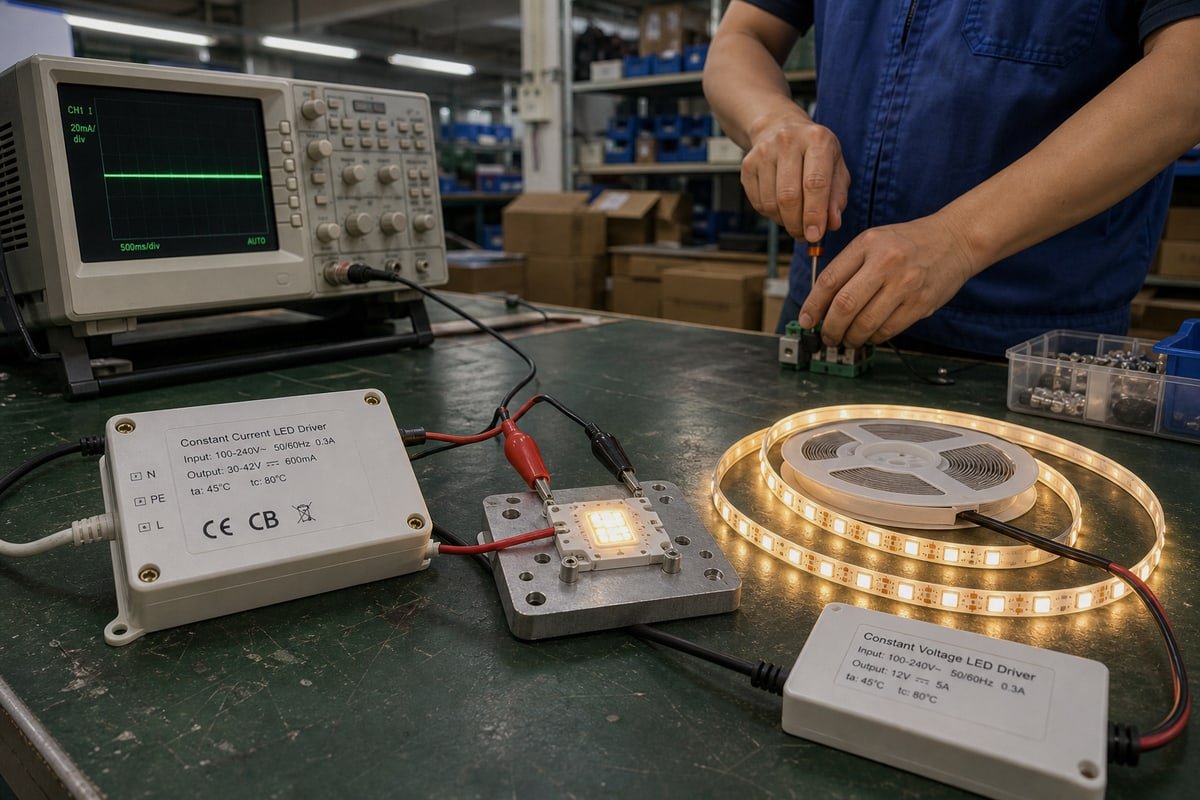
Laat me eerst eerlijk zijn over het bezwaar, omdat onze distributeurs het vaak naar voren brengen. Een CC-driver kan een hogere eenheidsprijs hebben dan een basis constante-spanning driver, en is minder flexibel als u later modules wilt toevoegen of verwijderen, omdat deze is ontworpen rond een specifieke stroom en doorlaatspanningsvenster. Beide punten zijn waar. Maar voor armaturen met een vaste configuratie, wat de meeste downlights, panelen en architecturale armaturen beschrijft, pleit de levenscyclusberekening sterk voor constante stroom.
Begin met efficiëntie. Weerstandsbegrensde CV-ontwerpen verbranden 20% tot 40% van hun vermogen als afvalwarmte in de weerstanden. Dat is energie die uw klant twee keer betaalt: eenmaal bij de meter, en opnieuw in grotere koellichamen die nodig zijn voor warmteafvoer. Een CC-driver elimineert die weerstanden volledig.
Waar de besparingen daadwerkelijk verschijnen
| Kostenfactor | Weerstandsbegrensde CV-benadering | Constante-stroom benadering |
|---|---|---|
| Energie verspild in begrenzingsweerstanden | 20–40% verloren als warmte | In wezen geëlimineerd |
| Koellichaam- en behuizingsgrootte | Groter, duurder | Kleiner, goedkoper |
| Lange kabelafstanden | Helderheid daalt met spanningsval | Driver verhoogt spanning om te compenseren |
| Garantieclaims | Hoger risico op overstroomfouten | Stroom begrensd op nominale waarde |
| Netcompliance (PF, THD) | Vaak basisconditionering | Doorgaans superieure vermogensconditionering |
Het punt over spanningsval verdient nadruk voor grote installaties. Op lange afstanden of grote arrays verhoogt een CC-driver simpelweg zijn uitgangsspanning om de beoogde stroomsterkte te handhaven, zodat het laatste armatuur net zo helder schijnt als het eerste. En omdat CC-drivers meestal geavanceerdere vermogensconditionering hebben, helpen ze projecten te voldoen aan nutseisen voor Total Harmonic Distortion en arbeidsfactor, wat verschillende van onze Europese klanten nu in elke aanbesteding specificeren.
Hoe selecteer ik de juiste constante stroomdriver voor mijn aangepaste LED-module specificaties?
Een van de duurste fouten die ik een klant heb zien maken, was het bestellen van drivers op basis van wattage alleen. Driehonderd armaturen flikkerden bij koude starts omdat de compliance-spanning nooit overeenkwam.
Selecteer een constante-stroom driver door eerst de gespecificeerde stroom van de LED-module te matchen, en bevestig vervolgens dat de doorlaatspanning binnen het uitgangsspannings-compliancevenster van de driver valt over het volledige bedrijfstemperatuurbereik. Controleer ten slotte thermische omstandigheden, dimbehoeften en veiligheidscertificeringen. Kies nooit op basis van wattage alleen.
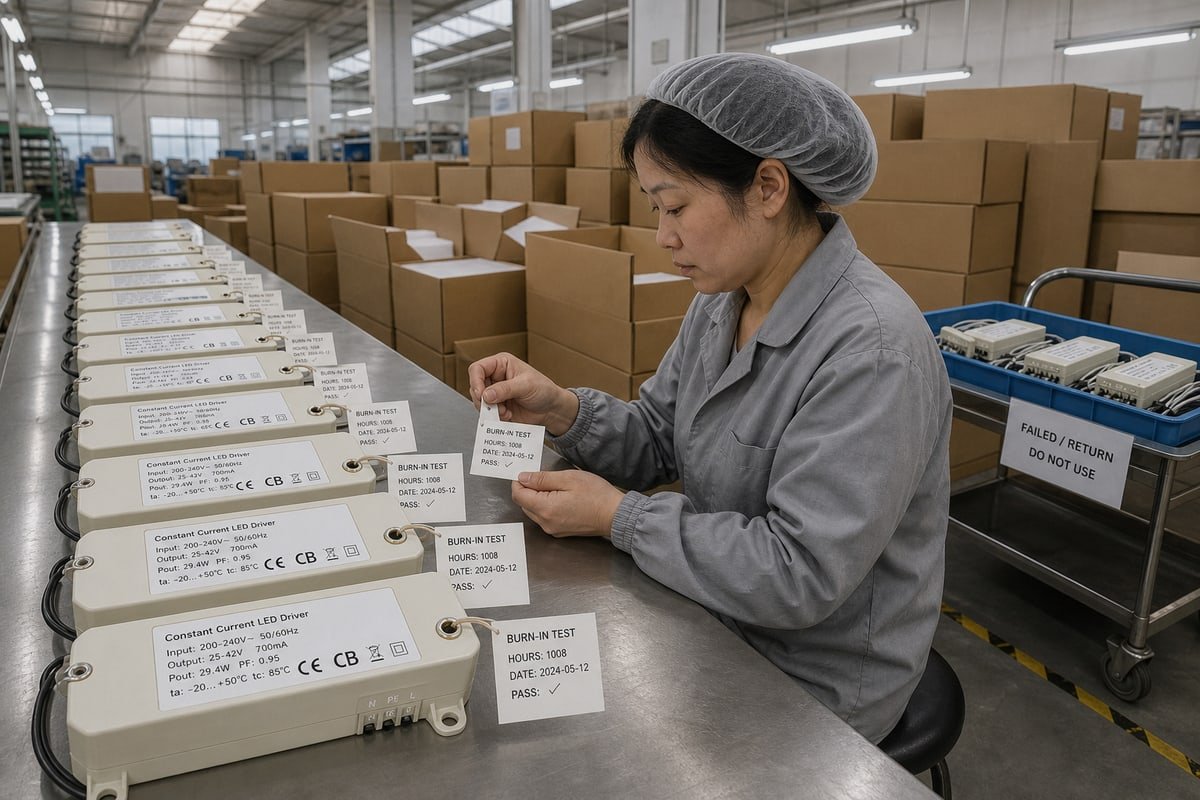
Hier is de simpele waarheid die we aan elke OEM-klant herhalen: wattage vertelt u hoeveel vermogen de LED verbruikt; het vertelt u niet of de driver elektrisch compatibel is met de LED. Compatibiliteit zit in twee getallen, en hier is het proces dat we volgen wanneer we aangepaste drivers ontwikkelen.
- Match de stroom. Als de module 700 mA specificeert, moet de driver 700 mA reguleren. Geen afronding.
- Controleer de compliance-spanning. Een driver gemarkeerd met 700 mA / 18–36 V levert niet continu 36V. Het reguleert 700 mA terwijl de spanning zweeft naar wat de belasting nodig heeft, op voorwaarde dat die waarde binnen 18–36V blijft.
- Voeg temperatuurmarge toe. Doorlaatspanning is geen vast getal. Het verschuift met de junctietemperatuur, dus een Vf-meting bij kamertemperatuur is niet voldoende. Eis headroom over het werkelijke bedrijfsbereik, vooral voor hoogvermogen COB's, gesloten armaturen en installaties met hoge omgevingstemperatuur.
- Controleer dimmen, bedrading en certificeringen. Bevestig het dimprotocol, de L-, N- en PE-klemindeling, en markeringen zoals CE en CB op het etiket, wat standaard is op elke eenheid die onze lijn verlaat.
Een uitgewerkt matchingsvoorbeeld
Stel dat uw module 700 mA nodig heeft bij een nominale doorlaatspanning van 28V.
| Driveroptie | Stroom | Spanningsbereik | Oordeel |
|---|---|---|---|
| Driver A | 700 mA | 10–25V | Niet geschikt: 28V overschrijdt het venster |
| Driver B | 700 mA | 18–36V | Geschikt: 28V valt comfortabel binnen het bereik |
| Driver C | 700 mA | 30–60V | Niet geschikt: 28V ligt onder het minimum |
De regel is eenvoudig: LED-stroom moet overeenkomen en de doorlaatspanning van de LED moet binnen het regelve- nster van de driver vallen. Een laatste waarschuwing van een ingenieur. CC-drivers combineren van nature met een serieschakeling, maar het parallel schakelen van kale LED-strengen op één CC-driver is riskant, omdat kleine verschillen in doorlaatspanning een ongelijke stroomverdeling tussen de takken veroorzaken. Ontwerp parallelle takken bewust of vermijd ze.
Conclusie
Ongereguleerde stroom vernietigt LED-modules stilletjes. Constante stroomdrivers doorbreken die keten. Match eerst de stroom, controleer daarna de spanningsnaleving, controleer ten derde de thermische marge — selecteer nooit alleen op wattage.
Voetnoten
- Gezaghebbende technische bron die de principes en toepassingen van constante stroomregeling in elektrische circuits uitlegt. ↩︎
- Bron van het Amerikaanse Ministerie van Energie die fundamentele LED-fysica en het belang van spanningsbeheer uitlegt. ↩︎
- Standaarddefinitie van het kenmerk van zichtbaar licht, essentieel voor het begrijpen van LED-binning en consistentie. ↩︎
- Technisch overzicht van de maat voor waargenomen lichtvermogen, een belangrijke prestatiemetriek voor LED-modules. ↩︎