Skip to content









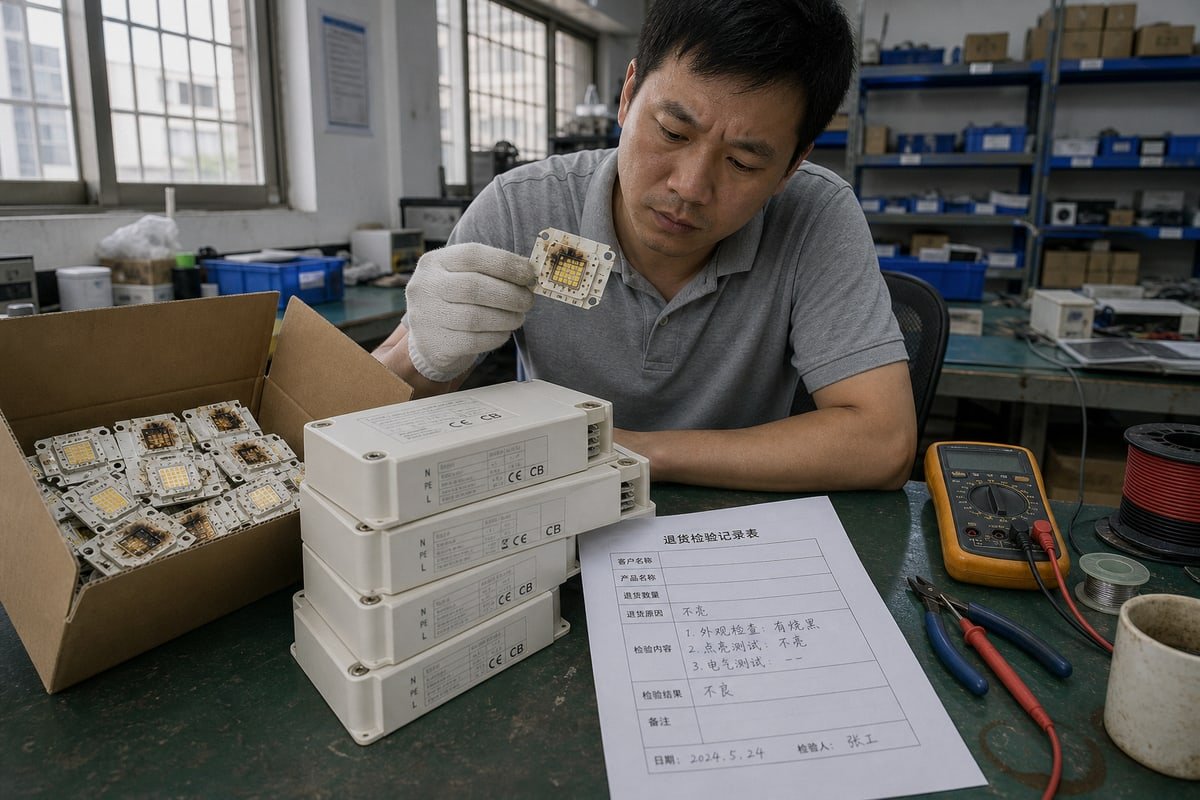
دفعة مرتجعة من وحدات LED التالفة علّمت فريقنا في شنتشن درسًا قاسيًا: بدون التحكم بالتيار الثابت 1, ، وحدات LED تحرق نفسها بصمت. إليك السبب وراء حدوث ذلك.
يُفضَّل التيار الثابت لوحدات LED المصممة كأحمال تيار ثابت لأن الجهد الأمامي للـ LED يتغير مع درجة الحرارة والتيار. منظم التيار الثابت يضبط التيار بدلاً من تركه يرتفع، محافظًا على مخرجات ضوئية متوقعة، ومحددًا الإجهاد الحراري، ومطيلًا عمر الـ LED. طابق التيار أولاً، ثم تحقق من توافق الجهد.
توضيح واحد مهم قبل المضي قدمًا. التيار الثابت ليس مفضلًا لكل منتج LED على وجه الأرض. إنه مفضل لأحمال LED المصممة كأحمال تيار ثابت: الوحدات العارية، مصفوفات COB، والسلاسل المتسلسلة. شرائط LED المزودة بعناصر تحديد تيار مدمجة قصة مختلفة. هذا المقال يستعرض الفيزياء، ومكاسب الموثوقية، وحسابات التكلفة، وطريقة اختيار عملية. لنبدأ بالسؤال الأساسي.
لماذا يجب أن أختار محركات التيار الثابت بدلاً من الجهد الثابت لوحدات الإضاءة LED الخاصة بي؟
مديرة مشتريات في سنغافورة سألتني يومًا لماذا أصرّ موردها على مشغل التيار الثابتللوحدات COB العارية. إجابتنا اختُصرت في كلمة واحدة: الفيزياء.
اختر محولات التيار الثابت لوحدات LED المصممة كأحمال تيار ثابت لأن مصابيح LED العارية لا يمكنها تنظيم تيارها الخاص. ارتفاع بسيط في الجهد يخلق زيادة كبيرة في التيار. محولات الجهد الثابت مناسبة لشرائط LED المزودة بحد تيار مدمج؛ الوحدات العارية، وCOBs، والسلاسل المتسلسلة تحتاج إلى تيار منظم.
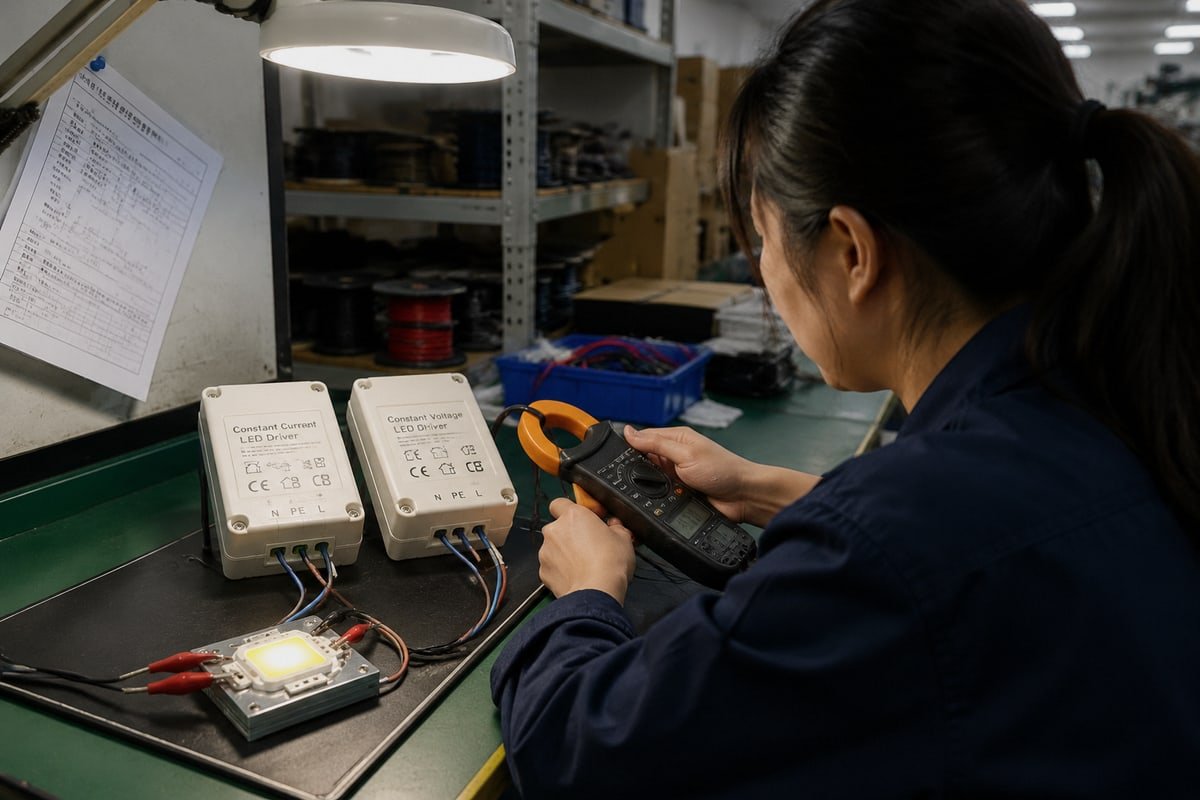
المفهوم الأهم هنا هو سلوك المقاومة التفاضلية السلبية للـ LED. الـ LED لا ينظم تياره بنفسه بشكل طبيعي. بمجرد جهد التوصيل 2 الوصول إليه، زيادة صغيرة نسبيًا في الجهد يمكن أن تنتج زيادة كبيرة بشكل غير متناسب في التيار. السلسلة تبدو هكذا: تيار أعلى يرفع حرارة الـ LED، حرارة أعلى تغيّر الجهد الأمامي، نقطة التشغيل تنتقل، والتيار يمكن أن يرتفع أكثر. لهذا تحديدًا توصيل وحدة LED عارية مباشرة بمصدر جهد خطير.
منظم تيار ثابت مصمم بشكل صحيح يكسر تلك السلسلة. يتحكم في التيار، بينما يستقر جهد الـ LED عند أي قيمة يتطلبها الحمل ضمن نطاق تشغيل المنظم. دعني أوضح مفهومًا خاطئًا شائعًا فورًا: منظم التيار الثابت لا يفرض جهدًا ثابتًا على الـ LED. الـ LED يحدد جهد تشغيله؛ المنظم ينظم التيار.
أين ينتمي كل نوع من المنظمات؟
| الميزة | تيار ثابت (CC) | جهد ثابت (CV) |
|---|---|---|
| مخرج منظم | التيار | الجهد الكهربائي |
| مواصفة نموذجية | 350 مللي أمبير، 500 مللي أمبير، 700 مللي أمبير | 12 فولت، 24 فولت |
| تطبيق نموذجي | وحدات LED عارية، COBs، العديد من الأضواء السفلية | شرائط LED، وحدات CV |
| معامل الاختيار الأساسي | تيار الـ LED | جهد الـ LED |
| معامل ثانوي | نطاق الجهد الأمامي/التوافق | أقصى تيار/طاقة للحمل |
| تحديد التيار | مدمج في المنظم | مطلوب عادةً داخل حمل الـ LED |
لذا منظم الجهد الثابت ليس خاطئًا. إنه ببساطة الأداة الصحيحة لبنية مختلفة. منظمات CC أيضًا تتناسب طبيعيًا مع الدائرة المتسلسلة، لأن نفس التيار يتدفق عبر كل LED في السلسلة بينما يضبط المنظم جهد خرجه لتغطية الجهد الأمامي المجمع.
كيف يعمل التيار الثابت على تحسين موثوقية وعمر مشاريع الإضاءة LED الخاصة بي؟
كل دفعة منظمات على خطنا تخضع لاختبار حرق كامل قبل الشحن. هذه العادة بدأت بعد أن درسنا لماذا تتركز حالات الفشل الميداني حول الحرارة، وليس السطوع.
التيار الثابت يحسن الموثوقية بمنع الانفلات الحراري، وإبقاء LEDs ضمن تصنيف التيار الأقصى المطلق، وتثبيت درجة حرارة الوصلة. التيار المستقر يحافظ على توقع التدفق الضوئي واتساق اللون، ويقلل الإجهاد الكهربائي على الشريحة، ويطيل عادةً عمر الـ LED عبر نطاق درجة حرارة تشغيل التركيبة.
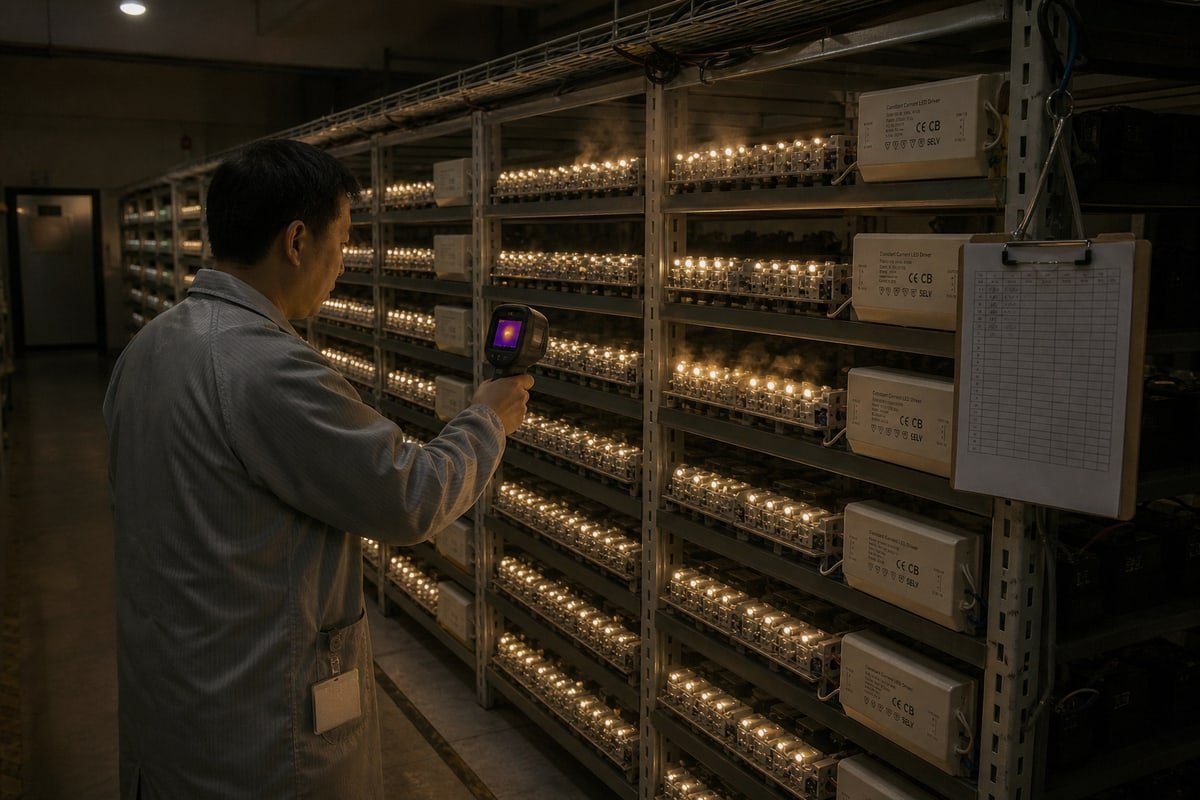
LEDs لها معامل حرارة سلبي. مع ارتفاع حرارة الوصلة، تنخفض المقاومة فعليًا ويسحب الدايود تيارًا أكبر عند نفس الجهد. على مصدر غير منظم، تلك الحلقة تغذي نفسها حتى تفشل الشريحة. المهندسون يسمون هذا الانفلات الحراري، وهو أكبر قاتل للوحدات المدفوعة بزيادة. منظم CC يعوض تلقائيًا: مع ارتفاع حرارة الـ LED وانجراف جهدها الأمامي، يضبط المنظم جهد خرجه ويحافظ على التيار عند نقطة الضبط. هذه حماية مدمجة من الدفع الزائد، تُبقي الشريحة داخل تصنيف التيار الأقصى المطلق للشركة المصنعة بغض النظر عن تقلبات الإدخال.
فوائد جودة الضوء التي يمكنك قياسها
الموثوقية ليست فقط عن البقاء. رقائق LED تُصنَّف عند تيار معاير. عندما ينحرف التيار عن نقطة التصنيف تلك، درجة حرارة اللون 3 تنتقل، وجدار من الأضواء السفلية يتوقف عن التطابق. التيار المنظم يمنع انجراف CCT ويحافظ على التدفق الضوئي 4 موحدًا عبر كل وحدة في سلسلة متسلسلة. منظمات CC المصممة جيدًا أيضًا تقلل مؤشر الوميض وتخفف التأثير الاصطرابي, ، وهو ما يهم في المصانع ذات الآلات الدوارة أو الاستوديوهات التي تستخدم كاميرات عالية السرعة.
| خطر الفشل أو الجودة | كيف يساعد التيار الثابت |
|---|---|
| الانفلات الحراري | يحافظ على ثبات التيار مع ارتفاع درجة الحرارة |
| احتراق الشريحة | يحترم الحد الأقصى المطلق لتصنيف التيار |
| انحراف درجة حرارة اللون (CCT drift) | يُبقي مصابيح LED عند تيار المعايرة الخاص بها |
| سطوع غير متساوٍ | نفس التيار عبر كل مصباح LED في السلسلة |
| الوميض | مؤشر وميض أقل مع ترشيح الإخراج المناسب |
مكافأة تشخيصية خفية
هناك فائدة واحدة تتجاهلها معظم المقالات. نظرًا لأن المُشغّل يحافظ على ثبات التيار، يمكنك مراقبة الجهد الأمامي اللازم للحفاظ عليه. يشير التحول طويل الأمد في هذا الجهد إلى تقدم عمر LED أو تدهور التوصيلات قبل فشل التركيب فعليًا. يستخدم العديد من عملائنا المهندسين في ألمانيا واليابان هذه الطريقة بالضبط للصيانة التنبؤية في التركيبات المغلقة، حيث يكون تبديد الحرارة أصعب.
ما هي المزايا التكلفية التي يمكن أن أتوقعها من التحول إلى مشغلات LED ذات التيار الثابت؟
السعر لكل واط هو الرقم الأول الذي يذكره معظم المشترين لنا في المعارض التجارية. ومع ذلك، فإن المُشغّلات التي تبدو الأرخص في عرض الأسعار نادرًا ما تكون الأرخص على مدى عمر المشروع.
تُخفض مُشغّلات التيار الثابت (CC) التكاليف عن طريق إزالة المقاومات المحددة للتيار التي تهدر حوالي 20–40% من الطاقة كحرارة، مما يخفض فواتير الطاقة، ويقلل مرتجعات الضمان من فشل التيار الزائد، ويعوض انخفاض الجهد على المسافات الطويلة. كما أن تحسين معامل القدرة وانخفاض التشوه التوافقي الكلي (THD) يخففان تكاليف الامتثال للمرافق.
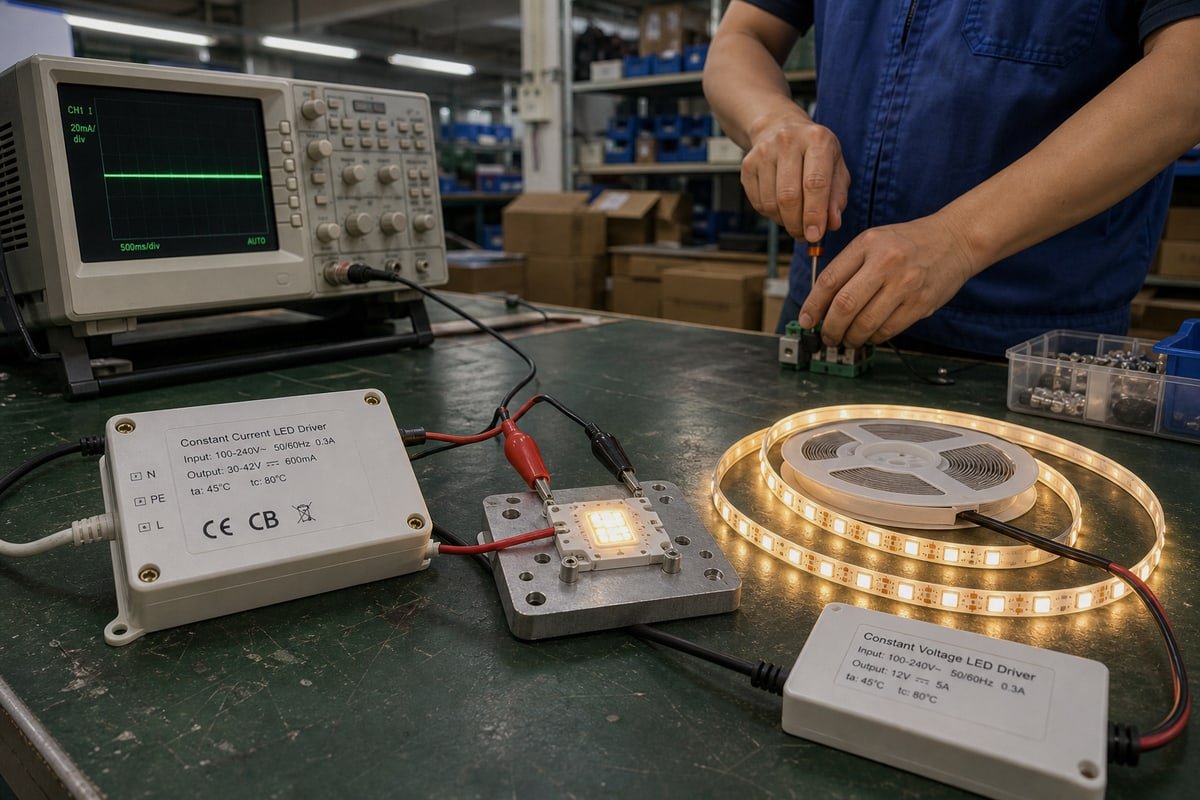
دعني أكون صريحًا بشأن الاعتراض أولاً، لأن موزعينا يثيرونه كثيرًا. يمكن أن يحمل مُشغّل التيار الثابت سعر وحدة أعلى من مُشغّل الجهد الثابت الأساسي، وهو أقل مرونة إذا كنت تخطط لإضافة أو إزالة وحدات لاحقًا، لأنه مصمم حول نافذة تيار وجهد أمامي محددة. كلا النقطتين صحيحتان. لكن بالنسبة للتركيبات ذات التكوين الثابت، الذي يصف معظم الأضواء الكاشفة السفلية والألواح والإنارة المعمارية، فإن حسابات دورة الحياة ترجح بقوة التيار الثابت.
ابدأ بالكفاءة. تحرق تصاميم الجهد الثابت المحدودة بالمقاومات 20% إلى 40% من طاقتها كحرارة مهدرة في المقاومات. هذه طاقة يدفعها عميلك مرتين: مرة عند العداد، ومرة أخرى في مشتتات حرارة أكبر اللازمة لتبديد الحرارة. مُشغّل التيار الثابت يلغي تلك المقاومات تمامًا.
أين تظهر التوفيرات فعليًا
| عامل التكلفة | نهج الجهد الثابت المحدود بالمقاومات | نهج التيار الثابت |
|---|---|---|
| الطاقة المهدرة في مقاومات التحديد | 20–40% مفقودة كحرارة | مُلغاة بشكل أساسي |
| حجم المشتت الحراري والغلاف | أكبر وأكثر تكلفة | أصغر وأرخص |
| مسافات الكابلات الطويلة | ينخفض السطوع مع انخفاض الجهد | يرفع المُشغّل الجهد للتعويض |
| مرتجعات الضمان | خطر فشل تيار زائد أعلى | التيار محدود عند القيمة المقدرة |
| الامتثال للشبكة (PF, THD) | غالبًا معالجة أساسية | معالجة طاقة فائقة عادةً |
نقطة انخفاض الجهد تستحق التركيز في التركيبات الكبيرة. على المسافات الطويلة أو المصفوفات الكبيرة، يرفع مُشغّل التيار الثابت ببساطة جهد خرجه للحفاظ على تدفق الأمبير المستهدف، لذا يتوهج آخر تركيب بسطوع الأول. ولأن مُشغّلات التيار الثابت تحمل عادةً معالجة طاقة أكثر تطورًا، فإنها تساعد المشاريع على تلبية متطلبات المرافق للتشوه التوافقي الكلي ومعامل القدرة، وهو ما يحدده العديد من عملائنا الأوروبيين الآن في كل مناقصة.
كيف أختار محرك التيار الثابت المناسب لمواصفات وحدة LED المخصصة لدي؟
أحد أغلى الأخطاء التي شاهدت عميلًا يرتكبها كان طلب مُشغّلات بناءً على الواط وحده. ثلاثمائة تركيب وميضت عند التشغيل البارد لأن جهد الامتثال لم يتطابق أبدًا.
اختر مُشغّل التيار الثابت بمطابقة تيار التشغيل المحدد لوحدة LED أولاً، ثم تأكد من أن جهدها الأمامي يقع داخل نافذة امتثال جهد الخرج للمُشغّل عبر نطاق درجة حرارة التشغيل الكامل. أخيرًا، تحقق من الظروف الحرارية واحتياجات التعتيم والشهادات السلامة. لا تختار أبدًا بناءً على الواط وحده.

إليك الحقيقة البسيطة التي نكررها لكل عميل OEM: الواط يخبرك بكمية الطاقة التي يستهلكها LED؛ لا يخبرك ما إذا كان المُشغّل متوافقًا كهربائيًا مع LED. التوافق يكمن في رقمين، وهذه هي العملية التي نتبعها عندما نطور مُشغّلات مخصصة.
- طابق التيار. إذا كانت الوحدة تحدد 700 مللي أمبير، يجب على المُشغّل تنظيم 700 مللي أمبير. بدون تقريب.
- تحقق من جهد الامتثال. مُشغّل مكتوب عليه 700 مللي أمبير / 18–36 فولت لا يخرج 36 فولت باستمرار. إنه ينظم 700 مللي أمبير بينما يطفو جهده إلى ما يحتاجه الحمل، بشرط أن تبقى القيمة داخل 18–36 فولت.
- أضف هامش درجة الحرارة. الجهد الأمامي ليس رقمًا ثابتًا. إنه يتغير مع درجة حرارة الوصلة، لذا فإن قراءة الجهد الأمامي عند درجة حرارة الغرفة ليست كافية. اطلب مساحة إضافية عبر نطاق التشغيل الفعلي، خاصةً لمصابيح COB عالية الطاقة والتركيبات المغلقة والمنشآت ذات درجات الحرارة المحيطة المرتفعة.
- تحقق من التعتيم والأسلاك والشهادات. أكد بروتوكول التعتيم وترتيب أطراف L و N و PE والعلامات مثل CE و CB على الملصق، وهو معيار على كل وحدة تغادر خط إنتاجنا.
مثال مطابق محلول
افترض أن الوحدة النمطية تحتاج إلى 700 مللي أمبير عند جهد أمامي اسمي قدره 28 فولت.
| خيار السائق | التيار | نطاق الجهد | الحكم |
|---|---|---|---|
| السائق أ | 700 مللي أمبير | 10–25 فولت | غير مناسب: 28 فولت يتجاوز النطاق |
| السائق ب | 700 مللي أمبير | 18–36 فولت | مناسب: 28 فولت يقع بشكل مريح داخل النطاق |
| السائق ج | 700 مللي أمبير | 30–60 فولت | غير مناسب: 28 فولت أقل من الحد الأدنى |
القاعدة بسيطة: يجب أن يتطابق تيار LED، ويجب أن يقع الجهد الأمامي لـ LED داخل نافذة تنظيم السائق. تحذير هندسي أخير. تتوافق سائقو التيار الثابت بشكل طبيعي مع دائرة متسلسلة، لكن توصيل سلاسل LED العارية بالتوازي على سائق تيار ثابت واحد محفوف بالمخاطر، لأن الاختلافات الصغيرة في الجهد الأمامي تسبب توزيعًا غير متساوٍ للتيار بين الفروع. صمم الفروع المتوازية عمدًا أو تجنبها.
خاتمة
التيار غير المنظم يدمر وحدات LED بصمت. سائقو التيار الثابت يكسرون هذه السلسلة. طابق التيار أولاً، وتحقق من امتثال الجهد ثانيًا، وافحص الهامش الحراري ثالثًا — لا تختار أبدًا بالقدرة الكهربائية وحدها.
الحواشي
- مورد هندسي موثوق يشرح مبادئ وتطبيقات تنظيم التيار الثابت في الدوائر الكهربائية. ↩︎
- مورد وزارة الطاقة الأمريكية يشرح فيزياء LED الأساسية وأهمية إدارة الجهد. ↩︎
- تعريف قياسي لخاصية الضوء المرئي، ضروري لفهم فرز LED والاتساق. ↩︎
- نظرة عامة تقنية على مقياس قوة الضوء المدركة، مقياس أداء رئيسي لوحدات LED. ↩︎