Lewati ke konten










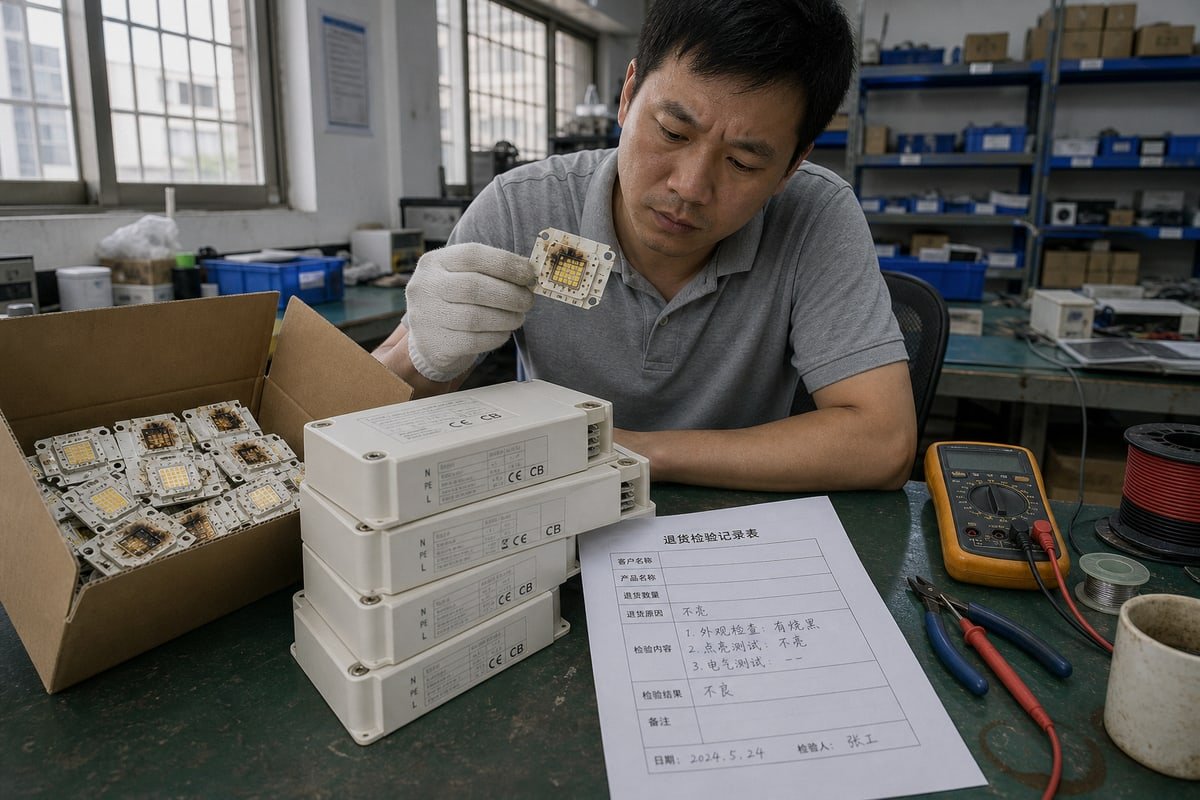
Satu batch modul LED mati yang dikembalikan mengajarkan tim Shenzhen kami sebuah kebenaran pahit: tanpa kontrol arus konstan 1, modul LED diam-diam memangsa dirinya sendiri. Inilah mengapa hal itu terjadi.
Arus konstan lebih disukai untuk modul LED yang dirancang sebagai beban arus konstan karena tegangan maju LED berubah seiring suhu dan arus. Driver arus konstan mengatur arus alih-alih membiarkannya naik, mempertahankan keluaran cahaya yang dapat diprediksi, membatasi tekanan termal, dan memperpanjang umur LED. Cocokkan arus terlebih dahulu, lalu verifikasi kepatuhan tegangan.
Satu klarifikasi penting sebelum kita melangkah lebih jauh. Arus konstan tidak lebih disukai untuk setiap produk LED di dunia. Arus konstan lebih disukai untuk beban LED yang dirancang sebagai beban arus konstan: modul telanjang, susunan COB, dan rangkaian seri. Strip LED dengan pembatas arus bawaan adalah cerita yang berbeda. Artikel ini membahas fisika, keuntungan keandalan, perhitungan biaya, dan metode pemilihan praktis. Mari kita mulai dengan pertanyaan inti.
Mengapa saya harus memilih driver arus konstan daripada tegangan konstan untuk modul LED saya?
Seorang manajer pengadaan di Singapura pernah bertanya mengapa pemasoknya bersikeras pada pengemudi arus konstanuntuk modul COB telanjang. Jawaban kami bermuara pada satu kata: fisika.
Pilih driver arus konstan untuk modul LED yang dirancang sebagai beban arus konstan karena LED telanjang tidak dapat mengatur arusnya sendiri. Kenaikan tegangan kecil menciptakan lonjakan arus besar. Driver tegangan konstan cocok untuk strip LED dengan pembatas arus bawaan; modul telanjang, COB, dan rangkaian seri memerlukan arus yang diatur.
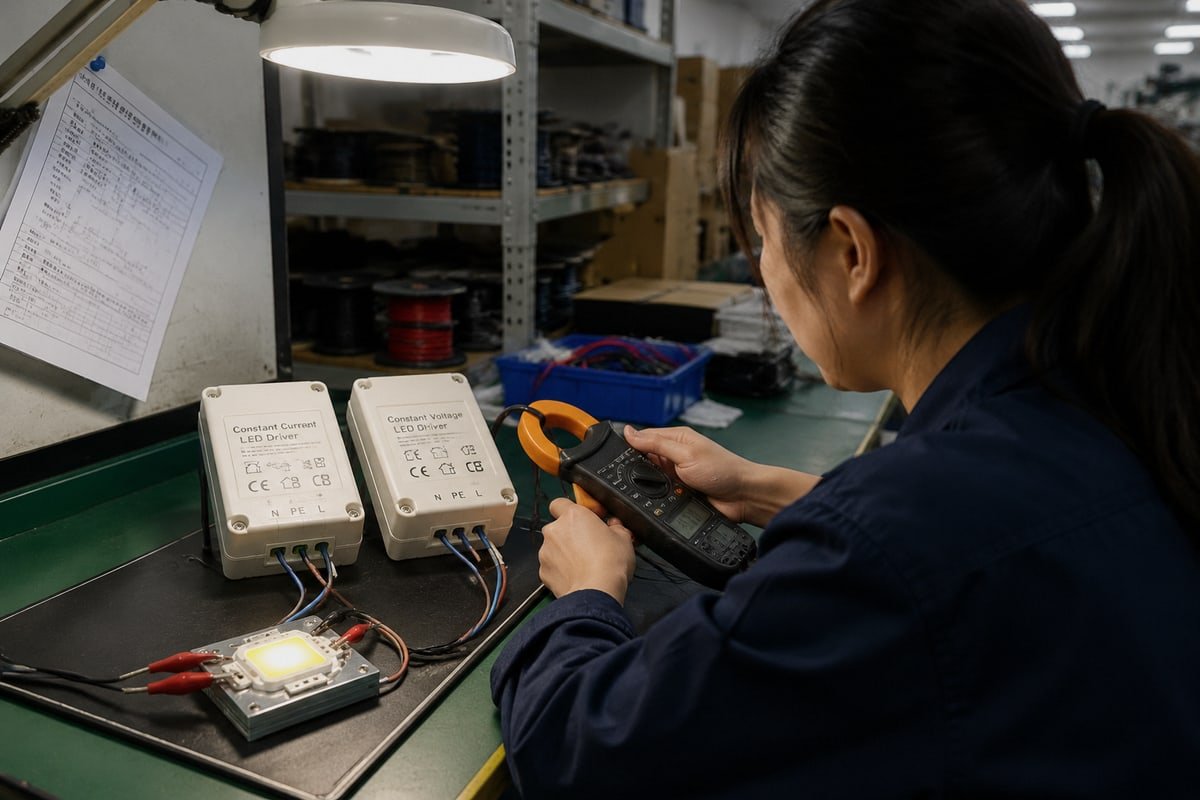
Konsep terpenting di sini adalah perilaku resistansi diferensial negatif LED. LED tidak secara alami mengatur arusnya sendiri. Setelah tegangan maju 2 tercapai, kenaikan tegangan yang relatif kecil dapat menghasilkan kenaikan arus yang tidak proporsional besar. Rantainya terlihat seperti ini: arus yang lebih tinggi menaikkan suhu LED, suhu yang lebih tinggi mengubah tegangan maju, titik operasi bergeser, dan arus dapat naik lebih jauh lagi. Itulah tepatnya mengapa menghubungkan modul LED telanjang langsung ke sumber tegangan berbahaya.
Driver arus konstan yang dirancang dengan baik memutus rantai itu. Ia mengontrol arus, sementara tegangan LED menetap pada nilai apa pun yang dibutuhkan beban dalam rentang operasi driver. Izinkan saya meluruskan kesalahpahaman umum segera: driver arus konstan tidak memaksa tegangan tetap ke LED. LED menentukan tegangan operasinya; driver mengatur arus.
Di mana setiap jenis driver ditempatkan?
| Fitur | Arus Konstan (CC) | Tegangan Konstan (CV) |
|---|---|---|
| Output yang diatur | Saat ini | Tegangan |
| Spesifikasi umum | 350 mA, 500 mA, 700 mA | 12V, 24V |
| Aplikasi umum | Modul LED telanjang, COB, banyak downlight | Strip LED, modul CV |
| Parameter pemilihan utama | Arus LED | Tegangan LED |
| Parameter sekunder | Rentang tegangan maju/kepatuhan | Arus/daya beban maksimum |
| Pembatasan arus | Bawaan dalam driver | Biasanya diperlukan dalam beban LED |
Jadi driver tegangan konstan tidak salah. Ia hanyalah alat yang tepat untuk arsitektur yang berbeda. Driver CC juga cocok secara alami dengan rangkaian seri, karena arus yang sama mengalir melalui setiap LED dalam rangkaian sementara driver menyesuaikan tegangan keluarannya untuk menutupi tegangan maju gabungan.
Bagaimana arus konstan meningkatkan keandalan dan umur pakai proyek pencahayaan LED saya?
Setiap batch driver di jalur kami melalui uji pembakaran penuh sebelum dikirim. Kebiasaan itu dimulai setelah kami mempelajari mengapa kegagalan lapangan berkumpul di sekitar panas, bukan kecerahan.
Arus konstan meningkatkan keandalan dengan mencegah pelarian termal, menjaga LED dalam peringkat arus maksimum absolut mereka, dan menstabilkan suhu sambungan. Arus yang stabil menjaga fluks bercahaya dan konsistensi warna tetap dapat diprediksi, mengurangi tekanan listrik pada chip, dan biasanya memperpanjang umur LED di seluruh rentang suhu operasi perlengkapan.
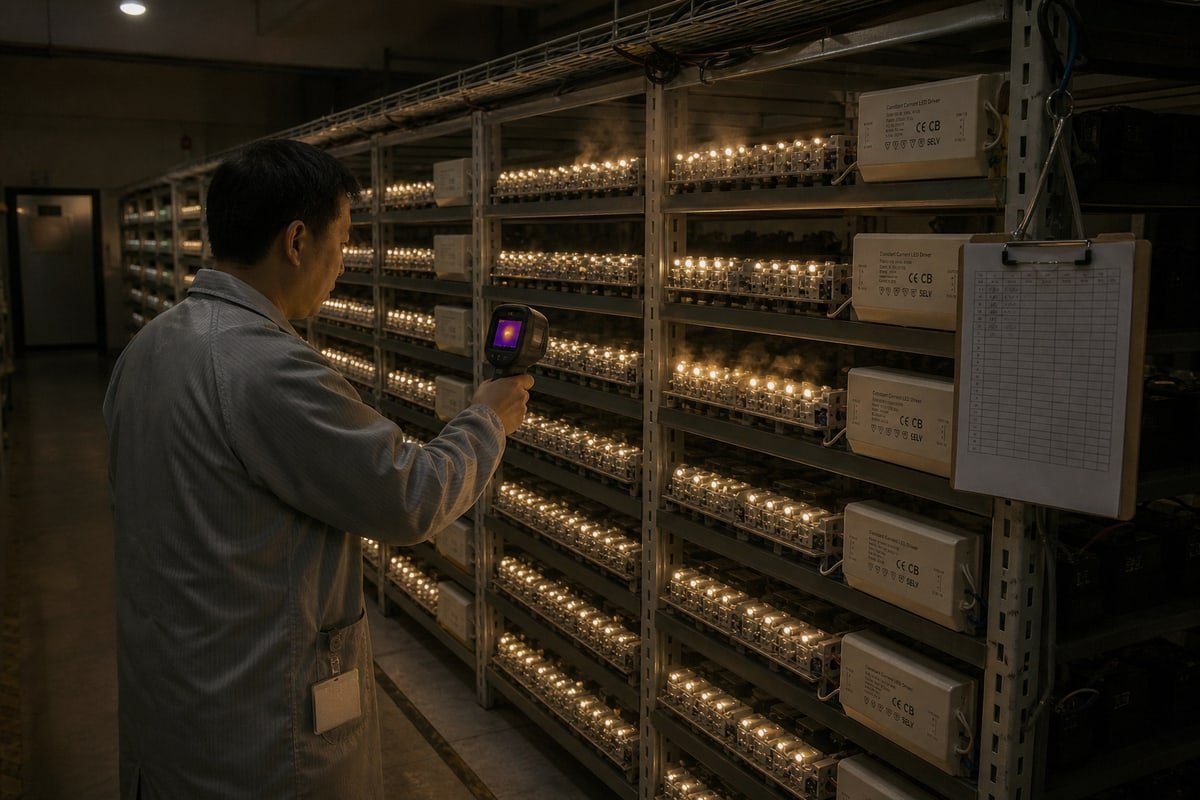
LED memiliki koefisien suhu negatif. Saat sambungan memanas, resistansi secara efektif turun dan dioda menarik lebih banyak arus pada tegangan yang sama. Pada pasokan yang tidak diatur, loop itu memberi makan dirinya sendiri sampai chip gagal. Insinyur menyebutnya pelarian termal, dan itu adalah pembunuh terbesar modul yang didorong berlebihan. Driver CC mengompensasi secara otomatis: saat LED memanas dan tegangan majunya bergeser, driver menyesuaikan tegangan keluarannya dan menahan arus pada titik setel. Itu adalah perlindungan dorongan berlebihan bawaan, menjaga chip di dalam Peringkat Arus Maksimum Absolut pabrikan terlepas dari fluktuasi input.
Kualitas cahaya yang dapat Anda ukur manfaatnya
Keandalan bukan hanya tentang kelangsungan hidup. Chip LED dikelompokkan pada arus yang dikalibrasi. Saat arus menyimpang dari titik pengelompokan itu, suhu warna 3 bergeser, dan dinding downlight berhenti cocok. Arus yang diatur mencegah pergeseran CCT itu dan menjaga fluks bercahaya 4 seragam di setiap modul dalam rangkaian seri. Driver CC yang dirancang dengan baik juga mengurangi indeks kedip dan mengurangi efek stroboskopik, yang penting di pabrik dengan mesin berputar atau studio yang menggunakan kamera kecepatan tinggi.
| Risiko kegagalan atau kualitas | Bagaimana arus konstan membantu |
|---|---|
| Pelarian termal | Menahan arus tetap saat suhu naik |
| Pembakaran chip | Menghormati peringkat arus maksimum absolut |
| Pergeseran CCT | Menjaga LED pada arus pengelompokan yang dikalibrasi |
| Kecerahan tidak merata | Arus yang sama melalui setiap LED dalam rangkaian |
| Kedipan | Indeks kedipan lebih rendah dengan penyaringan keluaran yang tepat |
Bonus diagnostik tersembunyi
Ada satu manfaat yang jarang dibahas oleh sebagian besar artikel. Karena driver menahan arus tetap konstan, Anda dapat memantau tegangan maju yang diperlukan untuk mempertahankannya. Pergeseran jangka panjang pada tegangan tersebut menandakan penuaan LED atau degradasi interkoneksi sebelum perlengkapan benar-benar gagal. Beberapa klien teknik kami di Jerman dan Jepang menggunakan metode ini untuk pemeliharaan prediktif pada perlengkapan tertutup, di mana pembuangan panas paling sulit dilakukan.
Apa saja keuntungan biaya yang dapat saya harapkan dari beralih ke driver LED arus konstan?
Harga per watt adalah angka pertama yang paling sering disebut pembeli kepada kami di pameran dagang. Namun driver yang terlihat paling murah dalam penawaran jarang menjadi yang paling murah sepanjang umur proyek.
Driver LED arus konstan memangkas biaya dengan menghilangkan resistor pembatas arus yang membuang sekitar 20–40% daya sebagai panas, menurunkan tagihan energi, mengurangi klaim garansi akibat kegagalan arus berlebih, dan mengompensasi penurunan tegangan pada jalur panjang. Faktor daya yang lebih baik dan THD yang lebih rendah juga meringankan biaya kepatuhan utilitas.
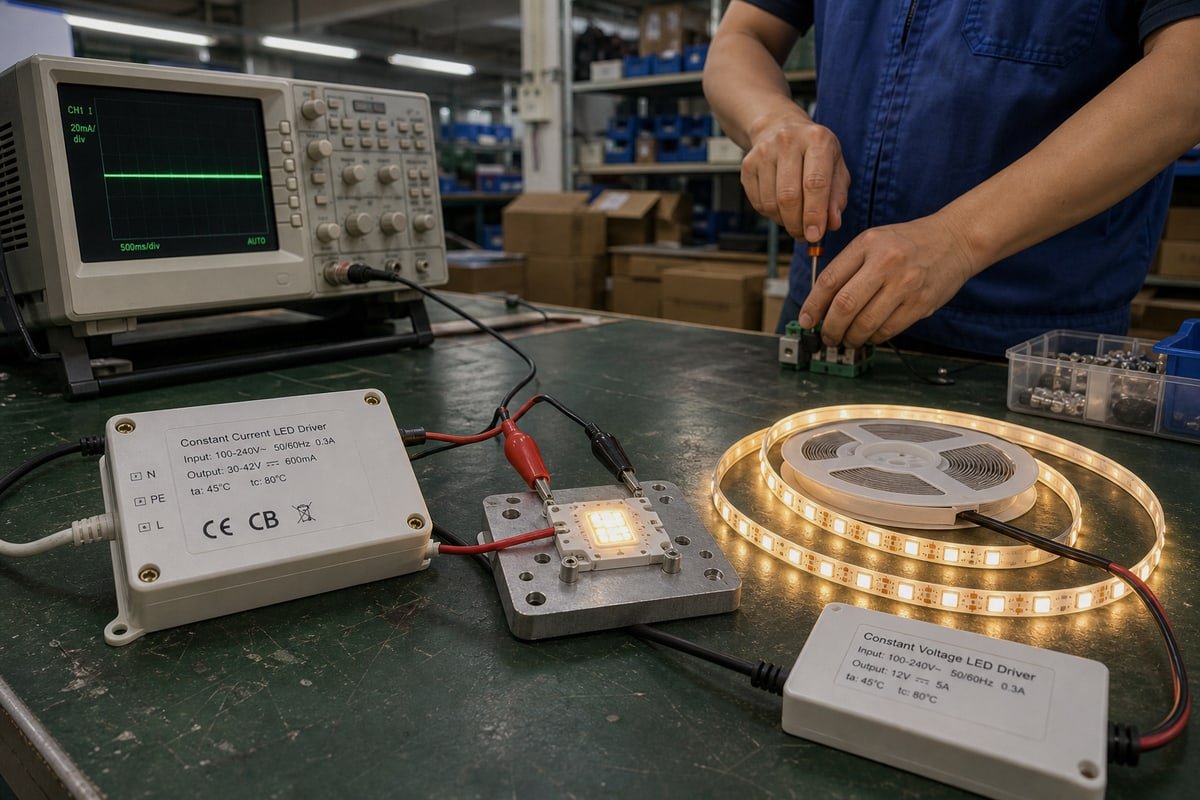
Izinkan saya jujur tentang keberatan itu terlebih dahulu, karena distributor kami sering mengangkatnya. Driver CC dapat memiliki harga unit lebih tinggi daripada driver tegangan konstan dasar, dan kurang fleksibel jika Anda berencana menambah atau menghapus modul nanti, karena dirancang di sekitar arus spesifik dan jendela tegangan maju. Kedua poin itu benar. Tetapi untuk perlengkapan dengan konfigurasi tetap, yang menggambarkan sebagian besar downlight, panel, dan luminer arsitektural, perhitungan siklus hidup sangat mendukung arus konstan.
Mulailah dengan efisiensi. Desain CV dengan resistor membakar 20% hingga 40% dayanya sebagai panas buangan di resistor. Itu adalah energi yang dibayar klien Anda dua kali: sekali di meteran, dan lagi dalam heatsink yang lebih besar yang diperlukan untuk pembuangan panas. Driver CC menghilangkan resistor tersebut sepenuhnya.
Di mana penghematan sebenarnya terlihat
| Faktor biaya | Pendekatan CV dengan resistor | Pendekatan arus konstan |
|---|---|---|
| Energi terbuang di resistor pembatas | 20–40% hilang sebagai panas | Pada dasarnya dihilangkan |
| Ukuran heatsink dan penutup | Lebih besar, lebih mahal | Lebih kecil, lebih murah |
| Jalur kabel panjang | Kecerahan turun seiring penurunan tegangan | Driver menaikkan tegangan untuk mengompensasi |
| Klaim garansi | Risiko kegagalan arus berlebih lebih tinggi | Arus dibatasi pada nilai terukur |
| Kepatuhan jaringan (PF, THD) | Seringkali pengkondisian dasar | Pengkondisian daya yang biasanya lebih unggul |
Poin penurunan tegangan layak ditekankan untuk instalasi besar. Pada jalur panjang atau susunan besar, driver CC hanya menaikkan tegangan keluarannya untuk menjaga arus target mengalir, sehingga perlengkapan terakhir menyala seterang yang pertama. Dan karena driver CC biasanya membawa pengkondisian daya yang lebih canggih, mereka membantu proyek memenuhi persyaratan utilitas untuk Distorsi Harmonik Total dan faktor daya, yang kini ditetapkan oleh beberapa klien Eropa kami dalam setiap tender.
Bagaimana cara saya memilih driver arus konstan yang tepat untuk spesifikasi modul LED kustom saya?
Salah satu kesalahan termahal yang pernah saya saksikan dilakukan klien adalah memesan driver hanya berdasarkan watt. Tiga ratus perlengkapan berkedip saat start dingin karena tegangan kepatuhan tidak pernah cocok.
Pilih driver arus konstan dengan mencocokkan arus penggerak yang ditentukan modul LED terlebih dahulu, lalu konfirmasi bahwa tegangan majunya berada dalam jendela kepatuhan tegangan keluaran driver di seluruh rentang suhu operasi. Terakhir, periksa kondisi termal, kebutuhan peredupan, dan sertifikasi keselamatan. Jangan pernah memilih hanya berdasarkan watt.

Inilah kebenaran sederhana yang kami ulangi kepada setiap klien OEM: watt memberi tahu Anda berapa banyak daya yang dikonsumsi LED; itu tidak memberi tahu Anda apakah driver kompatibel secara elektrik dengan LED. Kompatibilitas terletak pada dua angka, dan inilah proses yang kami ikuti saat mengembangkan driver khusus.
- Cocokkan arusnya. Jika modul menentukan 700 mA, driver harus mengatur 700 mA. Tanpa pembulatan.
- Verifikasi tegangan kepatuhan. Driver yang ditandai 700 mA / 18–36 V tidak mengeluarkan 36V secara terus-menerus. Driver tersebut mengatur 700 mA sementara tegangannya mengambang sesuai kebutuhan beban, asalkan nilainya tetap dalam 18–36V.
- Tambahkan margin suhu. Tegangan maju bukan angka tetap. Ia bergeser dengan suhu sambungan, sehingga pembacaan Vf pada suhu ruangan tidak cukup. Tuntut ruang cadangan di seluruh rentang operasi nyata, terutama untuk COB daya tinggi, perlengkapan tertutup, dan instalasi dengan suhu lingkungan tinggi.
- Periksa peredupan, kabel, dan sertifikasi. Konfirmasi protokol peredupan, susunan terminal L, N, dan PE, serta tanda seperti CE dan CB pada label, yang merupakan standar di setiap unit yang keluar dari lini kami.
Contoh pencocokan yang dikerjakan
Misalkan modul Anda membutuhkan 700 mA pada tegangan maju nominal 28V.
| Opsi driver | Saat ini | Rentang tegangan | Putusan |
|---|---|---|---|
| Driver A | 700 mA | 10–25V | Tidak cocok: 28V melebihi rentang |
| Driver B | 700 mA | 18–36V | Cocok: 28V berada dengan nyaman di dalam rentang |
| Driver C | 700 mA | 30–60V | Tidak cocok: 28V berada di bawah minimum |
Aturannya sederhana: arus LED harus sesuai, dan tegangan maju LED harus berada di dalam jendela regulasi driver. Satu peringatan terakhir dari seorang insinyur. Driver CC secara alami berpasangan dengan rangkaian seri, tetapi memparalelkan rangkaian LED telanjang pada satu driver CC berisiko, karena perbedaan kecil pada tegangan maju menyebabkan pembagian arus yang tidak merata antar cabang. Rancang cabang paralel dengan sengaja atau hindari.
Kesimpulan
Arus yang tidak diregulasi secara diam-diam merusak modul LED. Driver arus konstan memutus rantai itu. Cocokkan arus terlebih dahulu, verifikasi kepatuhan tegangan kedua, periksa margin termal ketiga — jangan pernah memilih hanya berdasarkan watt.
Catatan kaki
- Sumber daya teknik yang otoritatif menjelaskan prinsip dan aplikasi regulasi arus konstan dalam rangkaian listrik. ↩︎
- Sumber daya Departemen Energi AS menjelaskan fisika dasar LED dan pentingnya manajemen tegangan. ↩︎
- Definisi standar karakteristik cahaya tampak, penting untuk memahami binning dan konsistensi LED. ↩︎
- Tinjauan teknis tentang ukuran daya cahaya yang dirasakan, metrik kinerja utama untuk modul LED. ↩︎