Przejdź do treści










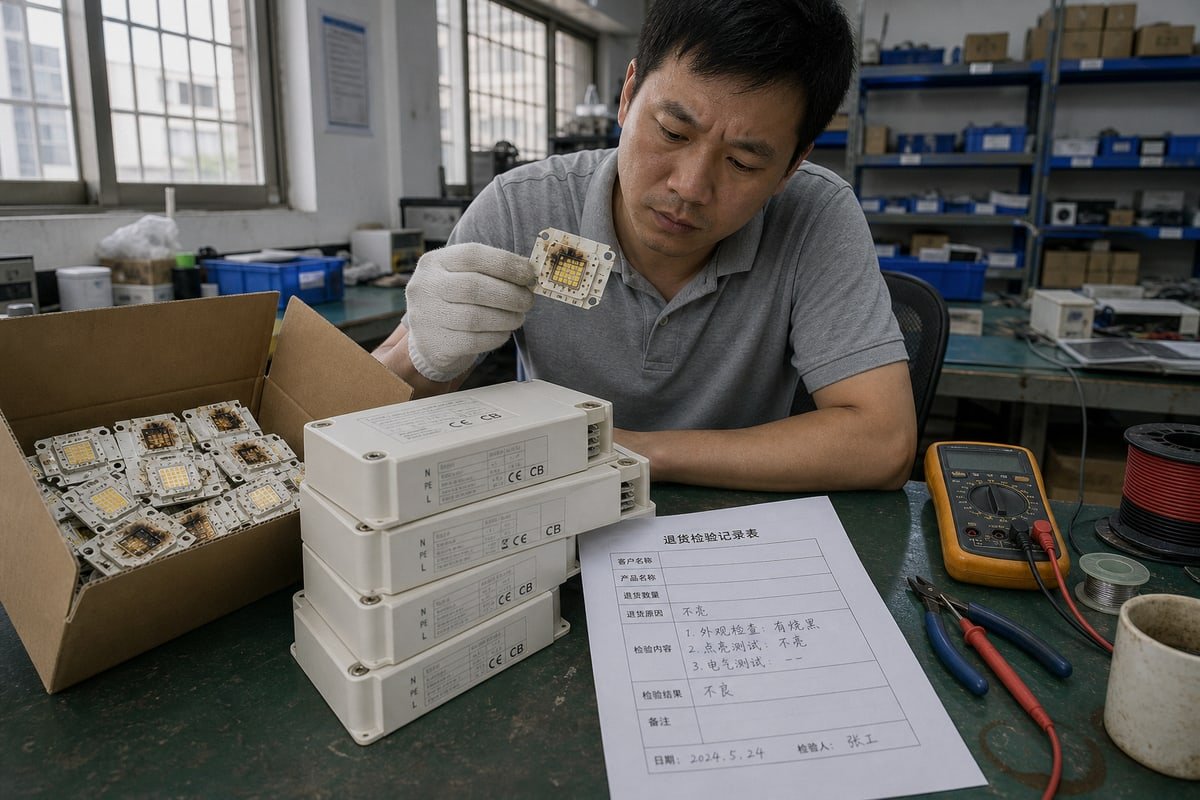
Zwrócona partia martwych modułów LED nauczyła nasz zespół w Shenzhen twardej lekcji: bez sterowania stałym prądem 1, moduły LED po cichu się przegrzewają. Oto dlaczego tak się dzieje.
Stały prąd jest preferowany dla modułów LED zaprojektowanych jako obciążenia o stałym prądzie, ponieważ napięcie przewodzenia diody LED zmienia się wraz z temperaturą i prądem. Sterownik stałoprądowy reguluje prąd zamiast pozwalać mu rosnąć, utrzymując przewidywalną moc świetlną, ograniczając naprężenia termiczne i wydłużając żywotność diod LED. Najpierw dopasuj prąd, a następnie sprawdź zgodność napięcia.
Jedno wyjaśnienie ma znaczenie, zanim przejdziemy dalej. Stały prąd nie jest preferowany dla każdego produktu LED na świecie. Jest preferowany dla obciążeń LED zaprojektowanych jako obciążenia o stałym prądzie: gołych modułów, układów COB i szeregowych łańcuchów. Taśmy LED z wbudowanym ograniczeniem prądu to inna historia. Ten artykuł omawia fizykę, korzyści w niezawodności, matematykę kosztów i praktyczną metodę wyboru. Zacznijmy od kluczowego pytania.
Dlaczego powinienem wybrać sterowniki o stałym prądzie zamiast stałego napięcia dla moich modułów LED?
Kierownik ds. zakupów w Singapurze zapytał mnie kiedyś, dlaczego jej dostawca nalega na sterownika stałoprądowegodla gołych modułów COB. Nasza odpowiedź sprowadzała się do jednego słowa: fizyka.
Wybierz sterowniki stałoprądowe dla modułów LED zaprojektowanych jako obciążenia stałoprądowe, ponieważ gołe diody LED nie mogą regulować własnego prądu. Niewielki wzrost napięcia powoduje duży skok prądu. Sterowniki stałonapięciowe nadają się do taśm LED z wbudowanym ograniczeniem prądu; gołe moduły, COB i łańcuchy szeregowe wymagają regulowanego prądu.
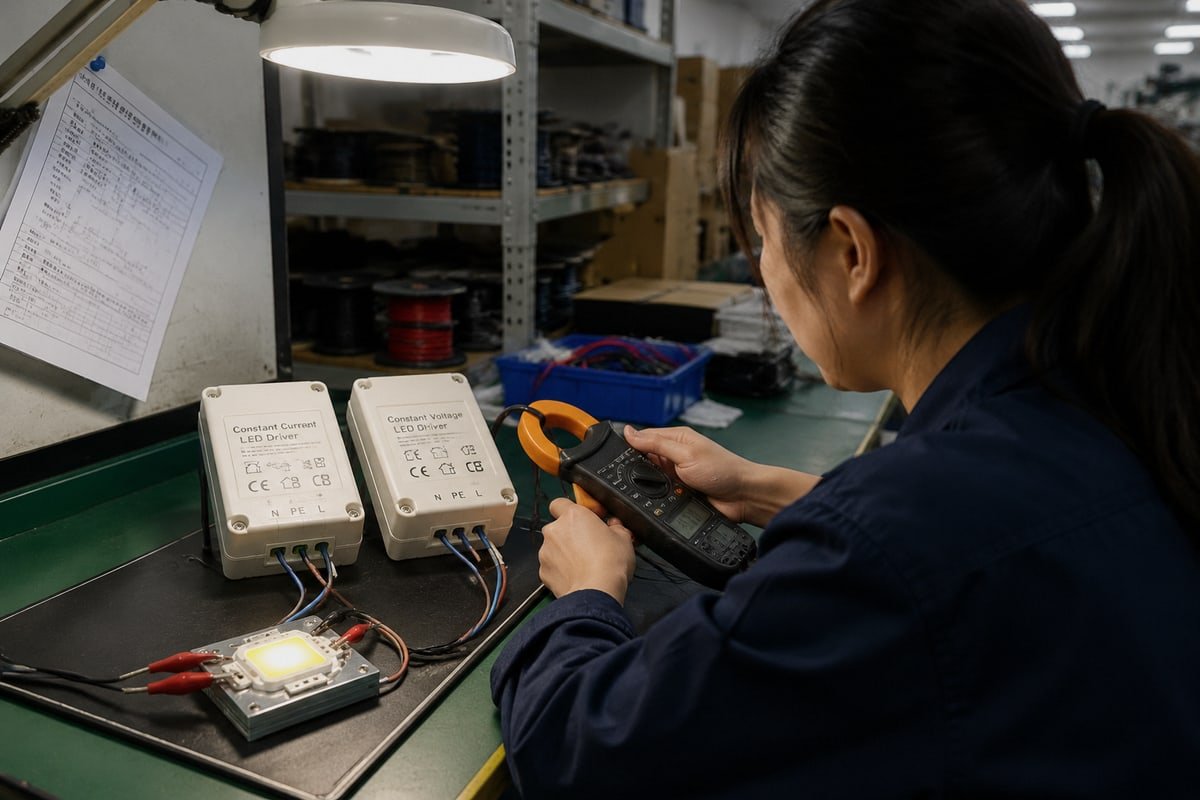
Najważniejszą koncepcją tutaj jest ujemna rezystancja różnicowa diody LED. Dioda LED nie reguluje naturalnie swojego prądu. Gdy jej napięcie przewodzenia 2 zostanie osiągnięte, stosunkowo niewielki wzrost napięcia może spowodować nieproporcjonalnie duży wzrost prądu. Łańcuch wygląda tak: wyższy prąd podnosi temperaturę diody LED, wyższa temperatura zmienia napięcie przewodzenia, punkt pracy się przesuwa, a prąd może wzrosnąć jeszcze bardziej. To właśnie dlatego podłączanie gołego modułu LED bezpośrednio do źródła napięcia jest niebezpieczne.
Odpowiednio zaprojektowany sterownik stałoprądowy przerywa ten łańcuch. Kontroluje prąd, podczas gdy napięcie diody LED osiada na wartości wymaganej przez obciążenie w zakresie pracy sterownika. Pozwól, że od razu obalę powszechne nieporozumienie: sterownik stałoprądowy nie wymusza stałego napięcia na diodzie LED. To dioda LED określa swoje napięcie robocze; sterownik reguluje prąd.
Gdzie pasuje każdy typ sterownika?
| Cecha | Stały prąd (CC) | Stałe napięcie (CV) |
|---|---|---|
| Regulowane wyjście | Prąd | Napięcie |
| Typowa specyfikacja | 350 mA, 500 mA, 700 mA | 12V, 24V |
| Typowe zastosowanie | Gołe moduły LED, COB, wiele lamp sufitowych | Taśmy LED, moduły CV |
| Główny parametr wyboru | Prąd diody LED | Napięcie diody LED |
| Parametr drugorzędny | Zakres napięcia przewodzenia/zgodności | Maksymalny prąd/moc obciążenia |
| Ograniczenie prądu | Wbudowane w sterownik | Zwykle wymagane w obciążeniu LED |
Więc sterownik stałonapięciowy nie jest błędny. Jest po prostu odpowiednim narzędziem dla innej architektury. Sterowniki CC naturalnie współpracują również z obwodem szeregowym, ponieważ ten sam prąd płynie przez każdą diodę LED w łańcuchu, podczas gdy sterownik dostosowuje swoje napięcie wyjściowe, aby pokryć łączne napięcie przewodzenia.
Jak stały prąd poprawia niezawodność i żywotność moich projektów oświetlenia LED?
Każda partia sterowników na naszej linii przechodzi pełny test wypalania przed wysyłką. Ten nawyk zaczął się po tym, jak zbadaliśmy, dlaczego awarie w terenie skupiają się wokół ciepła, a nie jasności.
Stały prąd poprawia niezawodność, zapobiegając ucieczce termicznej, utrzymując diody LED w granicach ich bezwzględnego maksymalnego prądu znamionowego i stabilizując temperaturę złącza. Stały prąd utrzymuje strumień świetlny i spójność kolorów przewidywalnymi, zmniejsza naprężenia elektryczne na chipie i zazwyczaj wydłuża żywotność diod LED w zakresie temperatur roboczych oprawy.
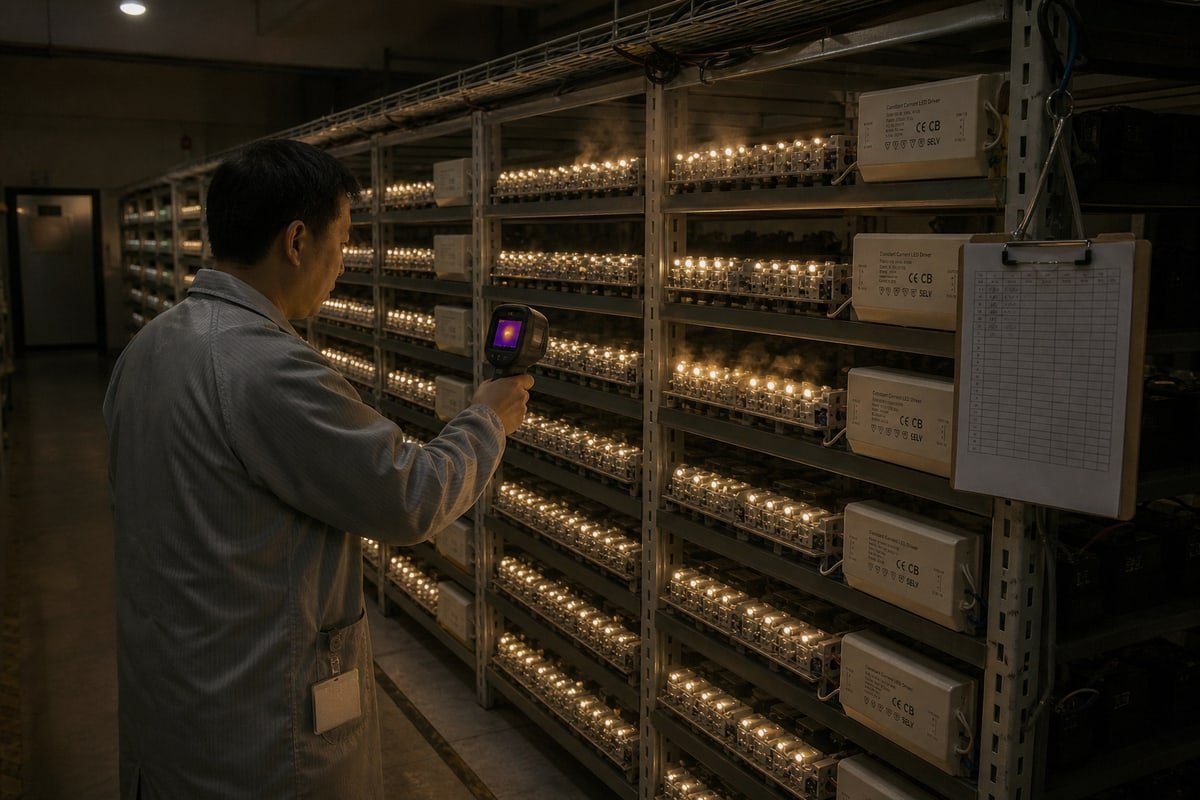
Diody LED mają ujemny współczynnik temperaturowy. Gdy złącze się nagrzewa, rezystancja efektywnie spada, a dioda pobiera więcej prądu przy tym samym napięciu. Przy nieregulowanym zasilaniu ta pętla napędza się sama, aż chip ulegnie awarii. Inżynierowie nazywają to ucieczką termiczną i jest to największy zabójca przeciążonych modułów. Sterownik CC kompensuje automatycznie: gdy dioda LED się nagrzewa, a jej napięcie przewodzenia dryfuje, sterownik dostosowuje swoje napięcie wyjściowe i utrzymuje prąd na wartości zadanej. To wbudowana ochrona przed przeciążeniem, utrzymująca chip w granicach bezwzględnego maksymalnego prądu znamionowego producenta niezależnie od wahań zasilania.
Korzyści w jakości światła, które możesz zmierzyć
Niezawodność to nie tylko przetrwanie. Chipy LED są sortowane przy skalibrowanym prądzie. Gdy prąd odbiega od tego punktu sortowania, temperatura barwowa 3 się przesuwa, a ściana lamp sufitowych przestaje być spójna. Regulowany prąd zapobiega temu dryfowi CCT i utrzymuje strumień świetlny 4 jednolity w każdym module w łańcuchu szeregowym. Dobrze zaprojektowane sterowniki CC również zmniejszają wskaźnik migotania i łagodzą efekt stroboskopowy, co ma znaczenie w fabrykach z wirującymi maszynami lub studiach używających kamer szybkich.
| Ryzyko awarii lub problemów z jakością | Jak pomaga stały prąd |
|---|---|
| Ucieczka termiczna | Utrzymuje stały prąd wraz ze wzrostem temperatury |
| Przepalenie układu | Respektuje bezwzględną maksymalną wartość prądu |
| Dryf CCT | Utrzymuje diody LED przy ich skalibrowanym prądzie binningu |
| Nierównomierna jasność | Ten sam prąd przez każdą diodę LED w łańcuchu |
| Migotanie | Niższy wskaźnik migotania przy odpowiednim filtrowaniu wyjścia |
Ukryty bonus diagnostyczny
Jest jedna korzyść, którą większość artykułów pomija. Ponieważ sterownik utrzymuje stały prąd, można monitorować napięcie przewodzenia potrzebne do jego utrzymania. Długoterminowe przesunięcie tego napięcia sygnalizuje starzenie się diod LED lub degradację połączeń, zanim oprawa faktycznie ulegnie awarii. Kilku naszych klientów inżynieryjnych w Niemczech i Japonii stosuje dokładnie tę metodę do konserwacji predykcyjnej w oprawach zamkniętych, gdzie odprowadzanie ciepła jest najtrudniejsze.
Jakie korzyści kosztowe mogę oczekiwać po przejściu na sterowniki LED o stałym prądzie?
Cena za wat to pierwsza liczba, którą większość kupujących podaje nam na targach. Jednak sterowniki, które wyglądają najtaniej w wycenie, rzadko są najtańsze w całym cyklu życia projektu.
Sterowniki LED o stałym prądzie obniżają koszty, eliminując rezystory ograniczające prąd, które marnują około 20–40% mocy jako ciepło, obniżając rachunki za energię, zmniejszając zwroty gwarancyjne z powodu awarii nadprądowych i kompensując spadki napięcia na długich trasach. Lepszy współczynnik mocy i niższe THD również zmniejszają koszty zgodności z wymogami zakładów energetycznych.
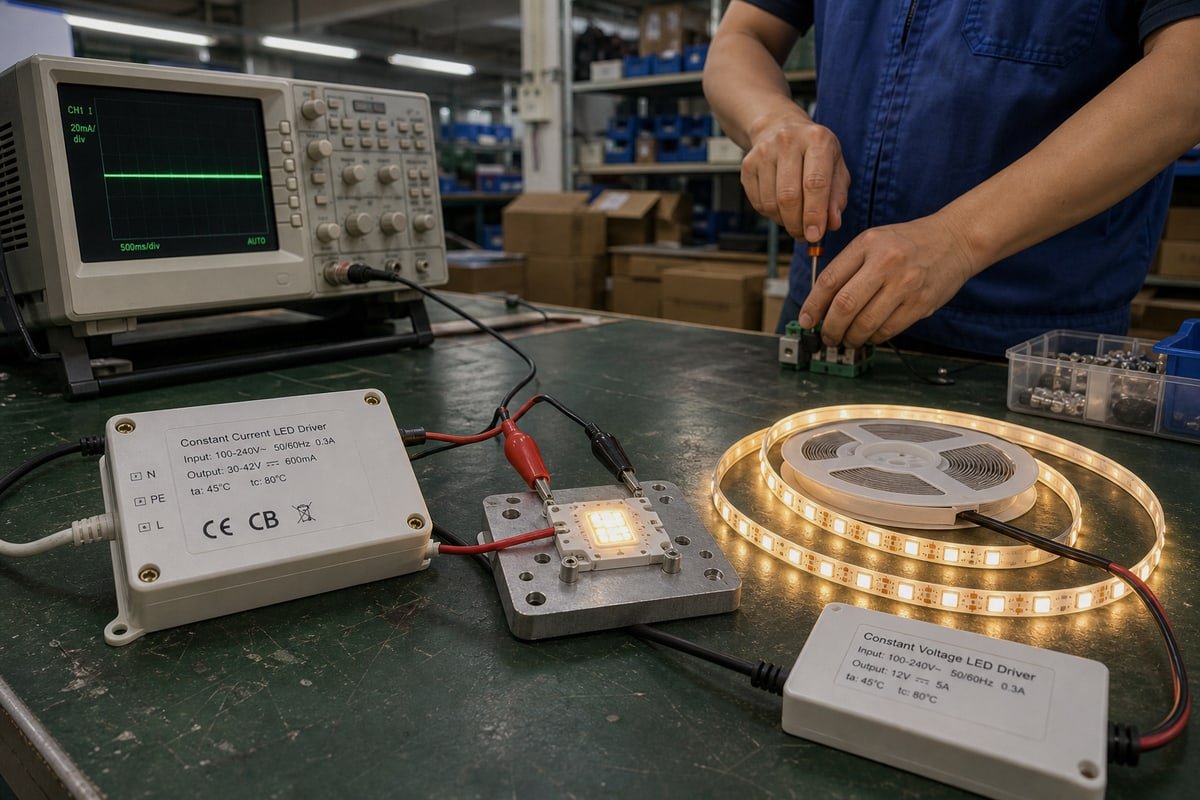
Pozwól, że najpierw uczciwie przedstawię zastrzeżenie, ponieważ nasi dystrybutorzy często je podnoszą. Sterownik CC może mieć wyższą cenę jednostkową niż podstawowy sterownik o stałym napięciu i jest mniej elastyczny, jeśli planujesz później dodawać lub usuwać moduły, ponieważ jest zaprojektowany pod konkretny prąd i zakres napięcia przewodzenia. Oba punkty są prawdziwe. Ale w przypadku opraw o stałej konfiguracji, co opisuje większość downlightów, paneli i opraw architektonicznych, matematyka cyklu życia zdecydowanie przemawia za stałym prądem.
Zacznijmy od wydajności. Konstrukcje CV z rezystorami ograniczającymi spalają 20–40% swojej mocy jako ciepło odpadowe w rezystorach. To energia, za którą klient płaci dwukrotnie: raz na liczniku, a drugi raz w większych radiatorach potrzebnych do odprowadzania ciepła. Sterownik CC całkowicie eliminuje te rezystory.
Gdzie faktycznie pojawiają się oszczędności
| Czynnik kosztowy | Podejście CV z rezystorami | Podejście ze stałym prądem |
|---|---|---|
| Energia marnowana w rezystorach ograniczających | 20–40% tracone jako ciepło | Zasadniczo wyeliminowane |
| Rozmiar radiatora i obudowy | Większy, droższy | Mniejszy, tańszy |
| Długie trasy kablowe | Jasność spada wraz ze spadkiem napięcia | Sterownik podnosi napięcie, aby skompensować |
| Zwroty gwarancyjne | Wyższe ryzyko awarii nadprądowych | Prąd ograniczony do wartości znamionowej |
| Zgodność z siecią (PF, THD) | Często podstawowe kondycjonowanie | Zazwyczaj lepsze kondycjonowanie mocy |
Punkt dotyczący spadku napięcia zasługuje na podkreślenie w przypadku dużych instalacji. Na długich trasach lub dużych układach sterownik CC po prostu podnosi napięcie wyjściowe, aby utrzymać docelowe natężenie prądu, więc ostatnia oprawa świeci tak jasno jak pierwsza. A ponieważ sterowniki CC zwykle mają bardziej zaawansowane kondycjonowanie mocy, pomagają projektom spełnić wymagania zakładów energetycznych dotyczące całkowitego zniekształcenia harmonicznego i współczynnika mocy, które kilku naszych europejskich klientów obecnie określa w każdym przetargu.
Jak dobrać odpowiedni sterownik stałoprądowy do specyfikacji mojego niestandardowego modułu LED?
Jednym z najdroższych błędów, jakie widziałem u klienta, było zamawianie sterowników wyłącznie według mocy. Trzysta opraw migotało przy zimnym rozruchu ponieważ napięcie zgodności nigdy nie pasowało.
Wybierz sterownik o stałym prądzie, dopasowując najpierw określony prąd roboczy modułu LED, a następnie potwierdzając, że jego napięcie przewodzenia mieści się w zakresie napięcia wyjściowego sterownika w pełnym zakresie temperatur roboczych. Na koniec sprawdź warunki termiczne, potrzeby ściemniania i certyfikaty bezpieczeństwa. Nigdy nie wybieraj wyłącznie według mocy.

Oto szczera prawda, którą powtarzamy każdemu klientowi OEM: moc mówi, ile energii zużywa dioda LED; nie mówi, czy sterownik jest elektrycznie kompatybilny z diodą LED. Kompatybilność kryje się w dwóch liczbach, a oto proces, który stosujemy przy opracowywaniu niestandardowych sterowników.
- Dopasuj prąd. Jeśli moduł określa 700 mA, sterownik musi regulować 700 mA. Bez zaokrągleń.
- Zweryfikuj napięcie zgodności. Sterownik oznaczony 700 mA / 18–36 V nie generuje ciągle 36 V. Reguluje 700 mA, podczas gdy jego napięcie płynie do wartości, jakiej wymaga obciążenie, pod warunkiem że wartość ta mieści się w zakresie 18–36 V.
- Dodaj margines temperaturowy. Napięcie przewodzenia nie jest stałą liczbą. Przesuwa się wraz z temperaturą złącza, więc odczyt Vf w temperaturze pokojowej nie wystarczy. Wymagaj zapasu w rzeczywistym zakresie roboczym, szczególnie w przypadku diod COB o wysokiej mocy, opraw zamkniętych i instalacji w wysokiej temperaturze otoczenia.
- Sprawdź ściemnianie, okablowanie i certyfikaty. Potwierdź protokół ściemniania, układ zacisków L, N i PE oraz oznaczenia takie jak CE i CB na etykiecie, która jest standardem na każdej jednostce opuszczającej naszą linię produkcyjną.
Przykład dopasowania
Załóżmy, że Twój moduł wymaga 700 mA przy nominalnym napięciu przewodzenia 28 V.
| Opcja sterownika | Prąd | Zakres napięcia | Werdykt |
|---|---|---|---|
| Sterownik A | 700 mA | 10–25 V | Nieodpowiedni: 28 V przekracza zakres |
| Sterownik B | 700 mA | 18–36 V | Odpowiedni: 28 V mieści się komfortowo w zakresie |
| Sterownik C | 700 mA | 30–60 V | Nieodpowiedni: 28 V jest poniżej minimum |
Zasada jest prosta: prąd LED musi być zgodny, a napięcie przewodzenia LED musi mieścić się w oknie regulacji sterownika. Ostatnie ostrzeżenie inżyniera. Sterowniki stałoprądowe naturalnie współpracują z obwodem szeregowym, ale równoległe łączenie gołych taśm LED na jednym sterowniku stałoprądowym jest ryzykowne, ponieważ małe różnice w napięciu przewodzenia powodują nierównomierny podział prądu między gałęziami. Projektuj gałęzie równoległe celowo lub ich unikaj.
Wniosek
Niekontrolowany prąd po cichu niszczy moduły LED. Sterowniki stałoprądowe przerywają ten łańcuch. Najpierw dopasuj prąd, potem sprawdź zgodność napięcia, na końcu margines termiczny — nigdy nie wybieraj tylko na podstawie mocy.
Przypisy
- Autorytatywne źródło inżynieryjne wyjaśniające zasady i zastosowania regulacji stałoprądowej w obwodach elektrycznych. ↩︎
- Zasób Departamentu Energii USA wyjaśniający podstawową fizykę LED i znaczenie zarządzania napięciem. ↩︎
- Standardowa definicja charakterystyki światła widzialnego, niezbędna do zrozumienia sortowania i spójności LED. ↩︎
- Przegląd techniczny miary postrzeganej mocy światła, kluczowego wskaźnika wydajności modułów LED. ↩︎