Pular para o conteúdo










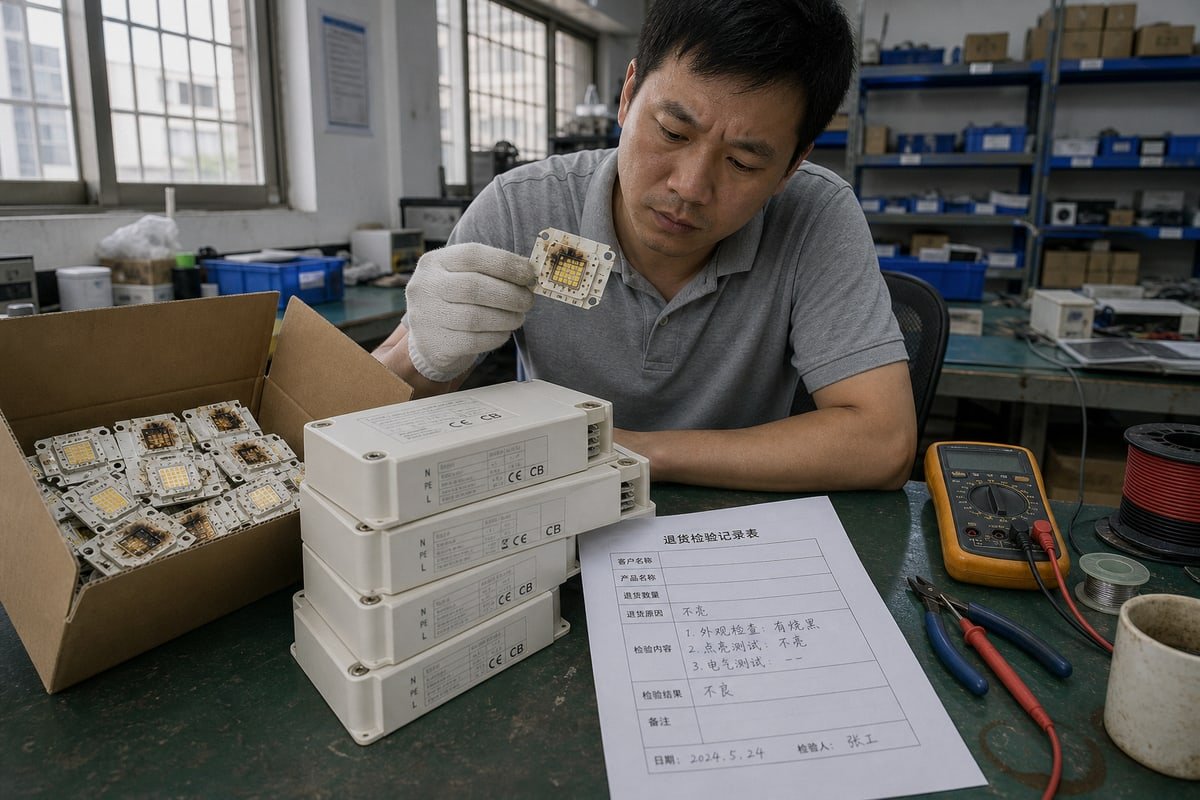
Um lote devolvido de módulos de LED mortos ensinou à nossa equipe de Shenzhen uma verdade dura: sem controle de corrente constante 1, os módulos de LED se queimam silenciosamente. Aqui está o porquê disso acontecer.
Corrente constante é preferida para módulos de LED projetados como cargas de corrente constante porque a tensão direta de um LED muda com a temperatura e a corrente. Um driver de corrente constante regula a corrente em vez de deixá-la subir, mantendo a saída de luz previsível, limitando o estresse térmico e prolongando a vida útil do LED. Combine a corrente primeiro, depois verifique a conformidade de tensão.
Um esclarecimento importa antes de prosseguirmos. Corrente constante não é preferida para todos os produtos de LED do planeta. Ela é preferida para cargas de LED projetadas como cargas de corrente constante: módulos nus, matrizes COB e strings em série. Fitas de LED com limitação de corrente integrada são uma história diferente. Este artigo aborda a física, os ganhos de confiabilidade, a matemática de custo e um método prático de seleção. Vamos começar com a questão central.
Por que devo escolher drivers de corrente constante em vez de tensão constante para meus módulos de LED?
Uma gerente de compras em Singapura uma vez me perguntou por que seu fornecedor insistia em drivers de corrente constantepara módulos COB nus. Nossa resposta se resumiu a uma palavra: física.
Escolha drivers de corrente constante para módulos de LED projetados como cargas de corrente constante, pois LEDs nus não conseguem regular sua própria corrente. Um pequeno aumento de tensão cria um pico de corrente grande. Drivers de tensão constante são adequados para fitas de LED com limitação de corrente integrada; módulos nus, COBs e cadeias em série precisam de corrente regulada.

O conceito mais importante aqui é o comportamento de resistência diferencial negativa do LED. Um LED não regula naturalmente sua própria corrente. Uma vez que sua tensão direta 2 é atingida, um aumento relativamente pequeno na tensão pode produzir um aumento desproporcionalmente grande na corrente. A cadeia funciona assim: corrente mais alta eleva a temperatura do LED, temperatura mais alta altera a tensão direta, o ponto de operação muda e a corrente pode subir ainda mais. É exatamente por isso que conectar um módulo de LED nu diretamente a uma fonte de tensão é perigoso.
Um driver de corrente constante bem projetado quebra essa cadeia. Ele controla a corrente, enquanto a tensão do LED se ajusta a qualquer valor que a carga exija dentro da faixa de operação do driver. Deixe-me eliminar um equívoco comum imediatamente: um driver de corrente constante não força uma tensão fixa no LED. O LED determina sua tensão de operação; o driver regula a corrente.
Onde cada tipo de driver se encaixa?
| Caraterística | Corrente Constante (CC) | Tensão Constante (CV) |
|---|---|---|
| Saída regulada | Atual | Tensão |
| Especificação típica | 350 mA, 500 mA, 700 mA | 12V, 24V |
| Aplicação típica | Módulos de LED nus, COBs, muitos downlights | Fitas de LED, módulos CV |
| Parâmetro de seleção primário | Corrente do LED | Tensão do LED |
| Parâmetro secundário | Faixa de tensão direta/conformidade | Corrente/carga máxima de potência |
| Limitação de corrente | Integrada ao driver | Geralmente necessária na carga de LED |
Então, um driver de tensão constante não está errado. Ele é simplesmente a ferramenta certa para uma arquitetura diferente. Drivers CC também combinam naturalmente com um circuito em série, porque a mesma corrente flui através de cada LED na string enquanto o driver ajusta sua tensão de saída para cobrir a tensão direta combinada.
Como a corrente constante melhora a confiabilidade e a vida útil dos meus projetos de iluminação LED?
Cada lote de drivers em nossa linha passa por um teste de burn-in completo antes do envio. Esse hábito começou depois que estudamos por que as falhas de campo se concentram em torno do calor, não do brilho.
Corrente constante melhora a confiabilidade prevenindo fuga térmica, mantendo os LEDs dentro de sua classificação máxima absoluta de corrente e estabilizando a temperatura da junção. Corrente estável mantém o fluxo luminoso e a consistência de cor previsíveis, reduz o estresse elétrico no chip e tipicamente estende a vida útil do LED em toda a faixa de temperatura operacional da luminária.
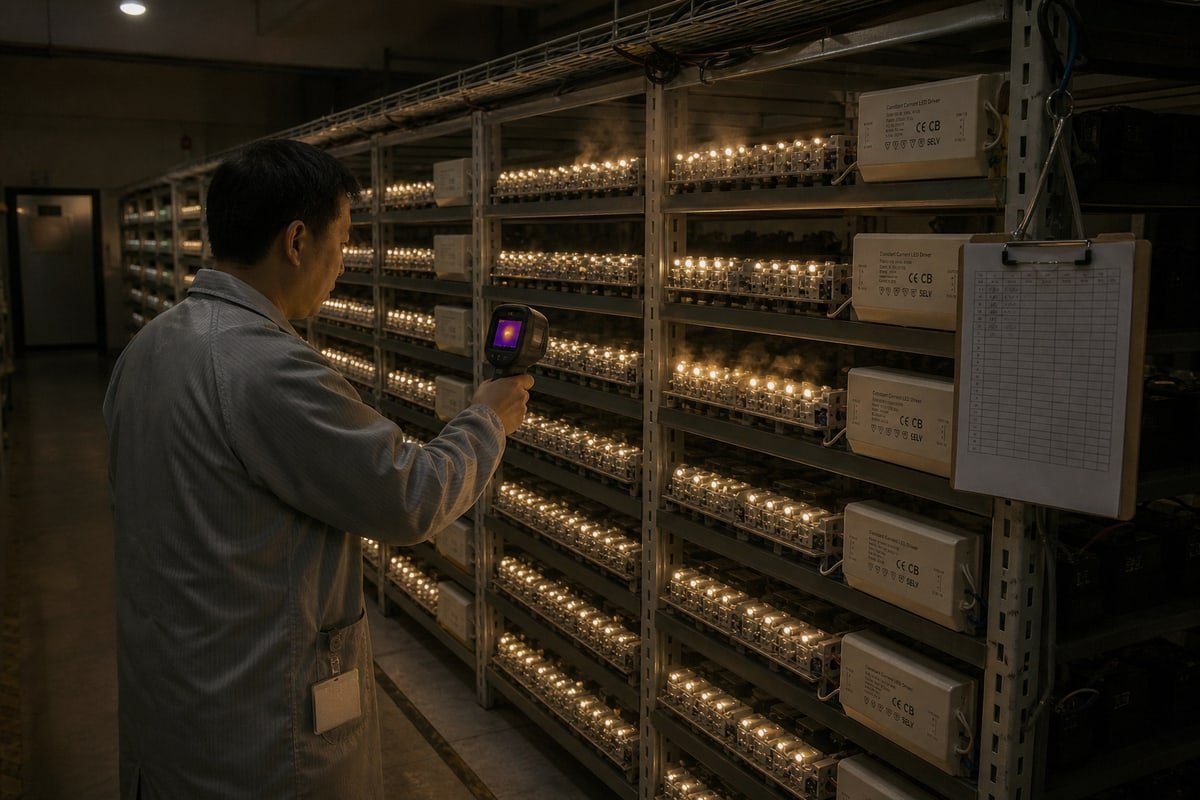
LEDs têm um coeficiente de temperatura negativo. À medida que a junção aquece, a resistência efetivamente cai e o diodo puxa mais corrente na mesma tensão. Em uma fonte não regulada, esse loop se alimenta até o chip falhar. Engenheiros chamam isso de fuga térmica, e é o maior assassino de módulos sobrecarregados. Um driver CC compensa automaticamente: à medida que o LED aquece e sua tensão direta varia, o driver ajusta sua tensão de saída e mantém a corrente no ponto de ajuste. Isso é proteção contra sobrecarga integrada, mantendo o chip dentro da Classificação Máxima Absoluta de Corrente do fabricante, independentemente de flutuações de entrada.
Benefícios de qualidade de luz que você pode medir
Confiabilidade não é apenas sobre sobrevivência. Chips de LED são classificados em uma corrente calibrada. Quando a corrente se desvia desse ponto de classificação, a temperatura de cor 3 muda, e uma parede de downlights deixa de combinar. Corrente regulada previne essa deriva de CCT e mantém o fluxo luminoso 4 uniforme em cada módulo em uma string em série. Drivers CC bem projetados também reduzem o índice de flicker e mitigam o efeito estroboscópico, o que importa em fábricas com maquinário rotativo ou estúdios que usam câmeras de alta velocidade.
| Risco de falha ou qualidade | Como a corrente constante ajuda |
|---|---|
| Fuga térmica | Mantém a corrente fixa conforme a temperatura aumenta |
| Queima do chip | Respeita a classificação de corrente máxima absoluta |
| Desvio de CCT | Mantém os LEDs na corrente de binning calibrada |
| Brilho irregular | Mesma corrente através de cada LED na cadeia |
| Cintilação | Índice de flicker mais baixo com filtragem de saída adequada |
Um bônus de diagnóstico oculto
Há um benefício que a maioria dos artigos ignora. Como o driver mantém a corrente constante, você pode monitorar a tensão direta necessária para mantê-la. Uma mudança de longo prazo nessa tensão sinaliza envelhecimento do LED ou degradação da interconexão antes que a luminária realmente falhe. Vários de nossos clientes de engenharia na Alemanha e no Japão usam exatamente esse método para manutenção preditiva em luminárias fechadas, onde a dissipação de calor é mais difícil.
Que vantagens de custo posso esperar ao mudar para drivers de LED de corrente constante?
Preço por watt é o primeiro número que a maioria dos compradores nos cita em feiras. No entanto, os drivers que parecem mais baratos em uma cotação raramente são os mais baratos ao longo da vida de um projeto.
Drivers de corrente constante reduzem custos ao eliminar resistores limitadores de corrente que desperdiçam cerca de 20–40% da energia como calor, reduzindo contas de energia, diminuindo devoluções de garantia por falhas de sobrecorrente e compensando quedas de tensão em longas distâncias. Melhor fator de potência e menor THD também facilitam os custos de conformidade com utilities.
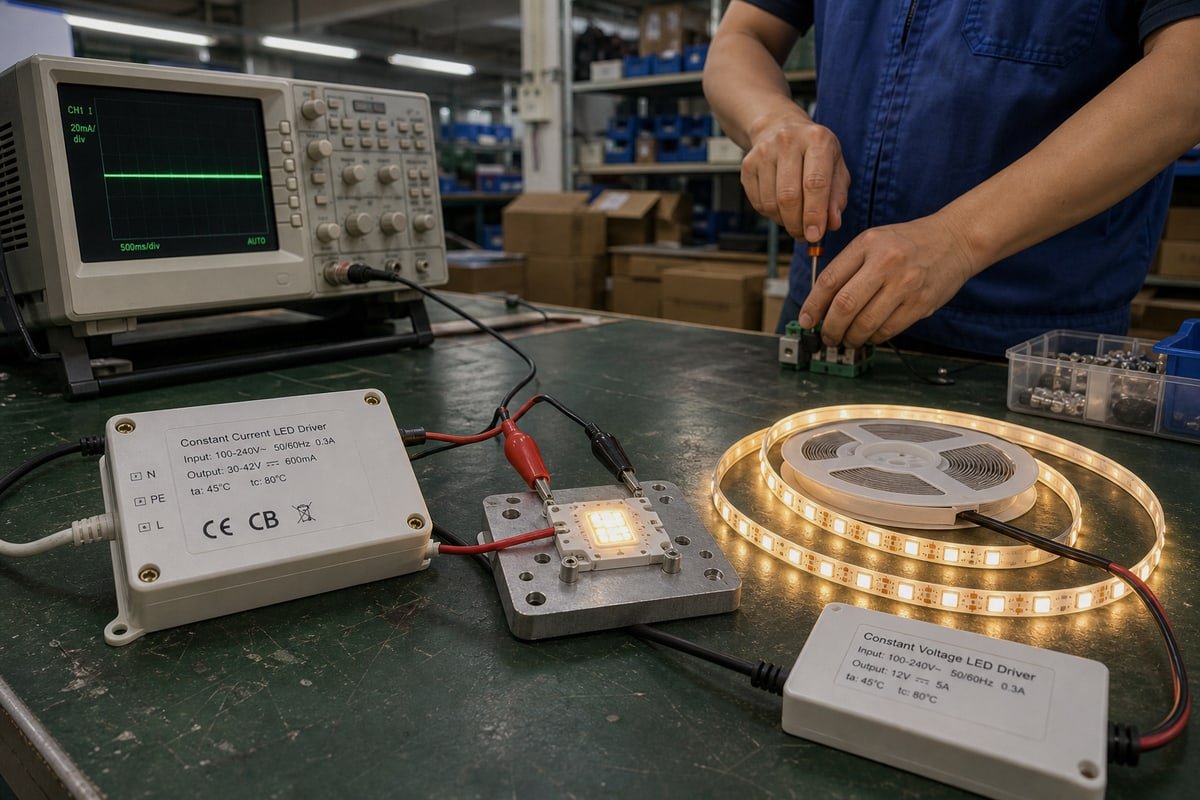
Deixe-me ser honesto sobre a objeção primeiro, porque nossos distribuidores a levantam com frequência. Um driver CC pode ter um preço unitário mais alto do que um driver de tensão constante básico, e é menos flexível se você planeja adicionar ou remover módulos depois, pois é projetado em torno de uma corrente específica e uma janela de tensão direta. Ambos os pontos são verdadeiros. Mas para luminárias com configuração fixa, que descreve a maioria dos downlights, painéis e luminárias arquitetônicas, a matemática do ciclo de vida favorece fortemente a corrente constante.
Comece pela eficiência. Projetos CV limitados por resistor queimam de 20% a 40% de sua energia como calor residual nos resistores. Essa é energia que seu cliente paga duas vezes: uma vez no medidor, e novamente em dissipadores de calor maiores necessários para a dissipação térmica. Um driver CC elimina esses resistores completamente.
Onde a economia realmente aparece
| Fator de custo | Abordagem CV limitada por resistor | Abordagem de corrente constante |
|---|---|---|
| Energia desperdiçada em resistores limitadores | 20–40% perdidos como calor | Essencialmente eliminada |
| Tamanho do dissipador e do invólucro | Maior, mais caro | Menor, mais barato |
| Longas distâncias de cabo | Brilho cai com a queda de tensão | Driver aumenta a tensão para compensar |
| Devoluções de garantia | Maior risco de falha por sobrecorrente | Corrente limitada ao valor nominal |
| Conformidade com a rede (PF, THD) | Frequentemente condicionamento básico | Tipicamente condicionamento de energia superior |
O ponto da queda de tensão merece destaque para grandes instalações. Em longas distâncias ou grandes matrizes, um driver CC simplesmente aumenta sua tensão de saída para manter a amperagem alvo fluindo, então a última luminária brilha tão intensamente quanto a primeira. E como drivers CC geralmente carregam condicionamento de energia mais sofisticado, eles ajudam projetos a atender requisitos de utilities para Distorção Harmônica Total e fator de potência, que vários de nossos clientes europeus agora especificam em toda licitação.
Como seleciono o driver de corrente constante certo para as especificações do meu módulo de LED personalizado?
Um dos erros mais caros que vi um cliente cometer foi pedir drivers apenas pela potência. Trezentas luminárias piscaram em partidas a frio porque a tensão de conformidade nunca correspondeu.
Selecione um driver de corrente constante combinando primeiro a corrente de acionamento especificada do módulo de LED, depois confirmando que sua tensão direta cai dentro da janela de conformidade de tensão de saída do driver em toda a faixa de temperatura operacional. Finalmente, verifique condições térmicas, necessidades de dimerização e certificações de segurança. Nunca escolha apenas pela potência.

Aqui está a verdade simples que repetimos a cada cliente OEM: potência diz quanta energia o LED consome; não diz se o driver é eletricamente compatível com o LED. A compatibilidade vive em dois números, e aqui está o processo que seguimos quando desenvolvemos drivers personalizados.
- Combine a corrente. Se o módulo especifica 700 mA, o driver deve regular 700 mA. Sem arredondamentos.
- Verifique a tensão de conformidade. Um driver marcado como 700 mA / 18–36 V não emite 36V continuamente. Ele regula 700 mA enquanto sua tensão flutua para o que a carga precisar, desde que esse valor permaneça entre 18–36V.
- Adicione margem de temperatura. A tensão direta não é um número fixo. Ela muda com a temperatura da junção, então uma leitura de Vf à temperatura ambiente não é suficiente. Exija folga em toda a faixa operacional real, especialmente para COBs de alta potência, luminárias fechadas e instalações em alta temperatura ambiente.
- Verifique o escurecimento, a fiação e as certificações. Confirme o protocolo de escurecimento, a disposição dos terminais L, N e PE, e marcas como CE e CB na etiqueta, que é padrão em cada unidade que sai da nossa linha.
Um exemplo prático de correspondência
Suponha que o seu módulo precise de 700 mA a uma tensão direta nominal de 28V.
| Opção de driver | Atual | Faixa de tensão | Veredito |
|---|---|---|---|
| Driver A | 700 mA | 10–25V | Não adequado: 28V excede a janela |
| Driver B | 700 mA | 18–36V | Adequado: 28V fica confortavelmente dentro |
| Driver C | 700 mA | 30–60V | Não adequado: 28V está abaixo do mínimo |
A regra é simples: a corrente do LED deve corresponder, e a tensão direta do LED deve cair dentro da janela de regulação do driver. Um último aviso de engenheiro. Drivers de corrente constante combinam naturalmente com um circuito em série, mas paralelizar strings de LED nuas em um único driver de corrente constante é arriscado, porque pequenas diferenças de tensão direta causam distribuição desigual de corrente entre os ramos. Projete ramos paralelos deliberadamente ou evite-os.
Conclusão
Corrente não regulada destrói silenciosamente módulos de LED. Drivers de corrente constante quebram essa cadeia. Corresponda a corrente primeiro, verifique a conformidade de tensão em segundo lugar, verifique a margem térmica em terceiro — nunca selecione apenas pela potência.
Notas de rodapé
- Recurso de engenharia autoritativo explicando os princípios e aplicações da regulação de corrente constante em circuitos elétricos. ↩︎
- Recurso do Departamento de Energia dos EUA explicando a física fundamental do LED e a importância do gerenciamento de tensão. ↩︎
- Definição padrão da característica da luz visível, essencial para entender o binning e a consistência de LEDs. ↩︎
- Visão geral técnica da medida de potência de luz percebida, uma métrica de desempenho chave para módulos de LED. ↩︎