Pular para o conteúdo










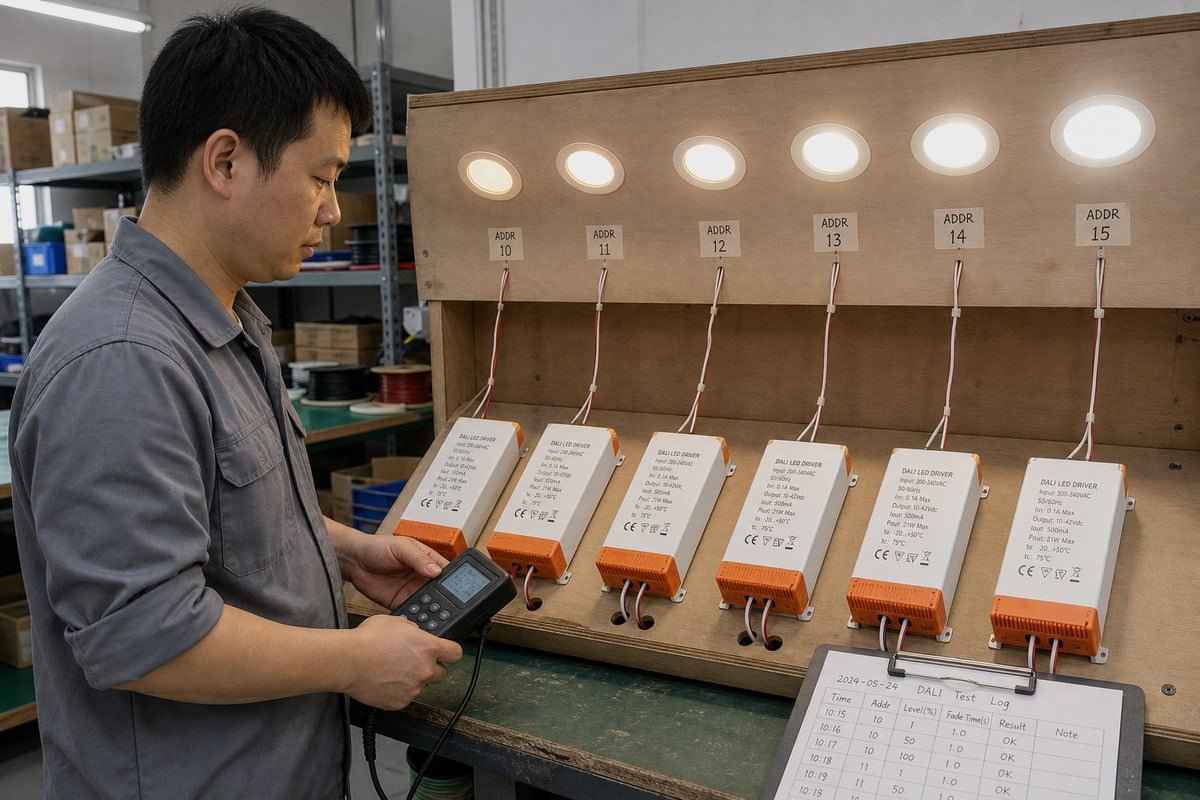
Compradores me perguntam sobre drivers DALI CC toda semana. Muitos ligaram um andar inteiro e depois descobriram que todos os downlights diminuíam juntos sistema de iluminação DALI 1. Nossa equipe de engenharia em Shenzhen resolve exatamente esse problema diariamente.
Controle de luminária individual com um driver DALI CC permite que cada luminária LED de corrente constante seja endereçada independentemente através de um sistema de iluminação DALI. O driver regula a corrente necessária do módulo de LED, enquanto sua interface DALI recebe comandos digitais, então múltiplas luminárias compartilham um barramento em diferentes níveis de brilho.
A ideia principal é simples. O endereço DALI pertence ao driver, não à luminária LED em si. A luminária se torna controlável individualmente porque seu driver tem seu próprio endereço. Deixe-me detalhar como isso funciona e o que você deve exigir de um fornecedor.
O Que Torna os Drivers CC DALI Diferentes dos Drivers de Dimming Padrão para Endereçamento Individual?
Há uma compensação que pesamos em todo projeto de driver: dimerização analógica é barata e simples, mas não pode mirar uma única luminária. Endereçamento digital custa mais, porém muda tudo.
Drivers DALI CC combinam um estágio de potência de corrente constante com uma interface de iluminação digital endereçável. Diferente de drivers de dimerização padrão, cada driver possui seu próprio endereço curto (0–63), então um controlador pode dimerizar uma luminária sem afetar outras no mesmo barramento de controle de dois fios.
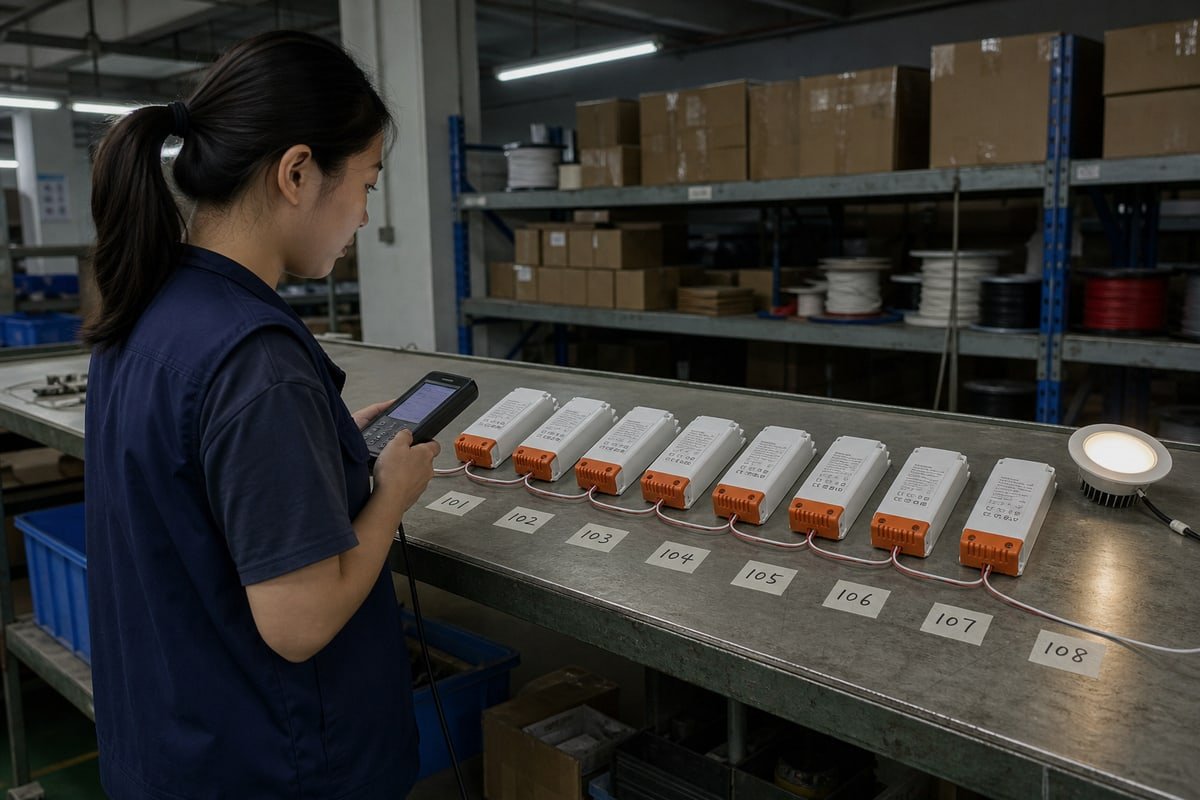
Pense no sistema como duas funções separadas. No lado do LED, o driver entrega uma corrente regulada ao módulo de LED. No lado do controle, um controlador DALI envia comandos pelo barramento, e o driver os interpreta. O comando DALI não regula diretamente a corrente do LED. A eletrônica de controle interna do driver interpreta o comando e ajusta a saída do LED de acordo. Nossa regra de especialistas na fábrica: CC determina como o LED é acionado eletricamente; DALI determina como esse driver é controlado digitalmente.
Um Barramento, Muitos Níveis de Brilho
Um circuito padrão de 0–10V oferece um nível de dimerização por trecho de fiação. Uma linha DALI suporta até 64 endereços curtos. Então o Driver A pode estar em 30%, o Driver B em 70%, o Driver C em 100% e o Driver D em 15% — todos na mesma rede. Você pode então colocar drivers em grupos definidos por software, como recepção, corredor e iluminação de vitrine. A fiação física não precisa mudar quando o zoneamento de controle muda.
| Caraterística | Driver DALI CC | Driver de dimerização padrão (0–10V / analógico) |
|---|---|---|
| Abordar | Endereçamento individual por driver (0–63) | Nenhum; o circuito inteiro diminui junto |
| Fiação de controle | Barramento de controle de dois fios, independente de polaridade em muitos projetos | Fios de dimerização dedicados por zona |
| Comportamento de dimerização | Curvas de dimerização logarítmicas padronizadas | Varia por fabricante, frequentemente linear |
| Agrupamento e cenas | Definido por software, rezoneado sem refiação | Fixo pela fiação física |
| Estágio de saída | Corrente fixa, tensão varia com a carga | Mesmo estágio CC, mas entrada de controle mais simples |
DT6 Geralmente é Suficiente para Luminárias Brancas Únicas
Para spots e downlights de cor única, um driver de corrente constante DT6 é o ajuste típico. Ele fornece um canal controlado apenas para brilho. DT8 é importante quando você precisa de branco ajustável ou RGBW sob um único endereço. Se uma luminária só precisa de controle de intensidade, especificar DT8 é superengenharia e adiciona custo que seu projeto não precisa.
Como Posso Confirmar a Compatibilidade DALI-2 Antes de Integrar Esses Drivers nos Meus Sistemas de Iluminação?
Uma lição que nossa equipe aprendeu cedo: uma folha de dados que diz “compatível com DALI” prova quase nada. Um cliente europeu devolveu amostras porque um driver DALI-1 mais antigo ignorou os comandos de consulta do controlador DALI-2 dele.
Confirme a compatibilidade DALI-2 solicitando a listagem de certificação DALI-2 do driver no banco de dados de produtos da DALI Alliance, verificando a conformidade com IEC 62386 para as partes relevantes e testando a troca de dados bidirecional com seu controlador pretendido antes de se comprometer com pedidos em volume.

Endereçamento individual não significa automaticamente flexibilidade ilimitada. A capacidade prática depende do tipo de dispositivo DALI 2, versão e recursos DALI, o controlador, o software de comissionamento e a implementação do driver. A certificação DALI-2 melhora a interoperabilidade, mas a capacidade real ainda varia entre fabricantes. Então não pare em “compatível com DALI”. Pressione o fornecedor por detalhes.
Perguntas que Valem a Pena Fazer Antes de Comprar
| Pergunta ao fornecedor | Por que é importante |
|---|---|
| O DALI-2 é suportado e certificado? | A certificação DALI-2 inclui testes de interoperabilidade mais rigorosos sob IEC 62386 |
| Qual tipo de dispositivo — DT6 ou DT8? | DT6 atende branco único; DT8 cobre branco ajustável e RGBW |
| Qual é a verdadeira faixa de dimerização? | “Dimerizável por DALI” não garante o mesmo nível mínimo em todo driver |
| O que acontece após uma falha no barramento? | O nível de falha do sistema define o comportamento da luminária quando o barramento cai |
| O que acontece quando a energia da rede é restaurada? | O nível de energia ao ligar afeta a segurança e a experiência do usuário |
| Ele suporta as cenas e os grupos necessários? | Nem toda implementação expõe todos os recursos |
| Ele reporta o status de volta? | A troca bidirecional de dados permite o monitoramento da saúde da luminária e o relato de falhas |
A comissionamento faz parte do design do sistema
A maior vantagem do DALI pode se tornar um risco de projeto. O sistema exige comissionamento adequado. Com um circuito básico comutado, o eletricista energiza a linha e as luzes acendem. Com luminárias DALI controladas individualmente, alguém deve corretamente: descobrir os dispositivos, atribuir endereços, criar grupos, configurar cenas, definir parâmetros, testar níveis mínimos e máximos e verificar o comportamento após uma interrupção de energia. Também confirme se a fonte de alimentação do barramento DALI está dimensionada para o número de dispositivos na linha. Para instalações comerciais maiores, trate o comissionamento como parte do design — não como uma reflexão tardia.
Posso personalizar os drivers CC DALI com minha própria marca para projetos de private-label?
Um gerente de compras de Singapura nos enviou uma mensagem no WhatsApp com um briefing simples: o logotipo dela na carcaça, a embalagem dela, os parâmetros padrão de dimerização dela. Seis semanas depois, as amostras com a marca dela foram enviadas de Shenzhen.
Sim. A maioria dos fabricantes de drivers DALI CC oferece serviços OEM/ODM, incluindo logotipos personalizados, cores de caixa de marca própria, etiquetas sob medida, embalagens e predefinições de parâmetros de firmware. Os requisitos típicos incluem um acordo assinado, arquivos de arte e uma quantidade mínima de pedido acordada durante o desenvolvimento colaborativo.
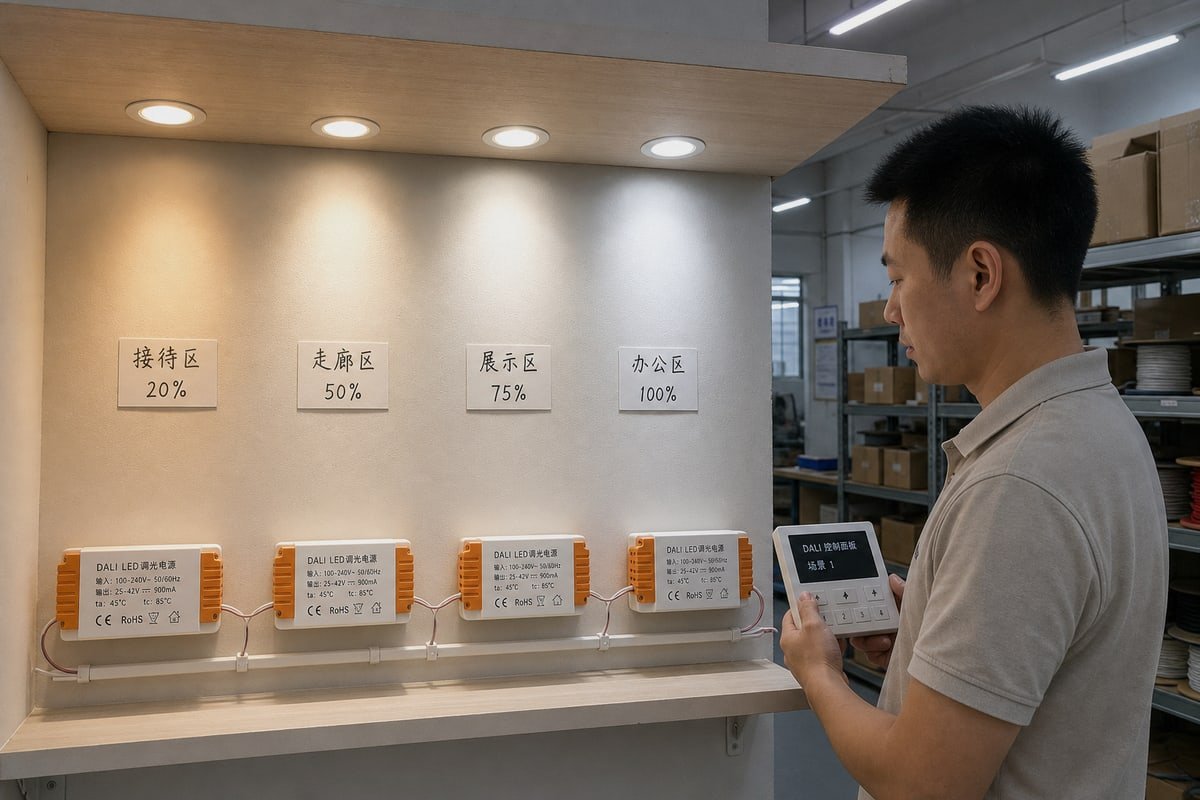
O trabalho de marca própria é mais do que uma troca de logotipo. Em nossos projetos OEM/ODM para proprietários de marcas e atacadistas na Europa, Sudeste Asiático e Austrália, a camada de branding e a camada técnica se movem juntas. Um driver que carrega seu nome também deve se comportar da maneira que seus controladores e instaladores esperam. É por isso que executamos a personalização como um processo estruturado, não como um trabalho de impressão.
Como um Projeto Típico de Marca Própria Funciona
- Briefing de requisitos. Confirmamos a faixa de corrente do LED, a janela de tensão direta, o tipo de dispositivo DALI e as certificações do mercado-alvo.
- Bloqueio de design. Cor da carcaça, posição do logotipo, layout do rótulo, diagramas de terminais e marcas como símbolos CE, CB e SELV são aprovados em provas de arte.
- Predefinições de firmware. Nível padrão de energia ao ligar, nível padrão de falha do sistema, nível mínimo de dimerização e curvas de dimerização logarítmicas são definidos conforme sua especificação.
- Amostragem. Você testa amostras com a marca com seu controlador pretendido, incluindo agrupamento, cenas e plataformas de integração de edifícios inteligentes 4 se relevante.
- Lote piloto. Uma pequena execução de produção valida o processo antes dos pedidos em volume.
- Produção em volume. Controle de qualidade total se aplica a cada lote, com documentação sob sua marca.
Para compradores enfrentando prazos apertados de projeto, a etapa de predefinição de firmware é a economia de tempo oculta. Se os drivers forem enviados com os padrões corretos, as equipes de comissionamento no local gastarão muito menos tempo ajustando parâmetros luminária por luminária. Isso reduz diretamente o custo total do projeto — geralmente o primeiro ponto de dor que um oficial de compras levanta comigo.
Que padrões de controle de qualidade devo exigir ao adquirir drivers CC DALI para controle de luminária única?
Durante uma inspeção pré-embarque em nossa instalação, um lote passou em todos os testes elétricos à temperatura ambiente, mas mostrou dimerização de nível mínimo instável em temperatura de carcaça elevada. Nós o pegamos porque o teste térmico é obrigatório em nossa linha.
Exigir teste de burn-in de 100%, verificação do protocolo DALI conforme IEC 62386, verificações da faixa de dimerização nos níveis mínimo e máximo, teste térmico na temperatura de invólucro nominal, testes de proteção para condições de curto-circuito, sobrecarga e sem carga, além de amostragem AQL documentada antes do envio.
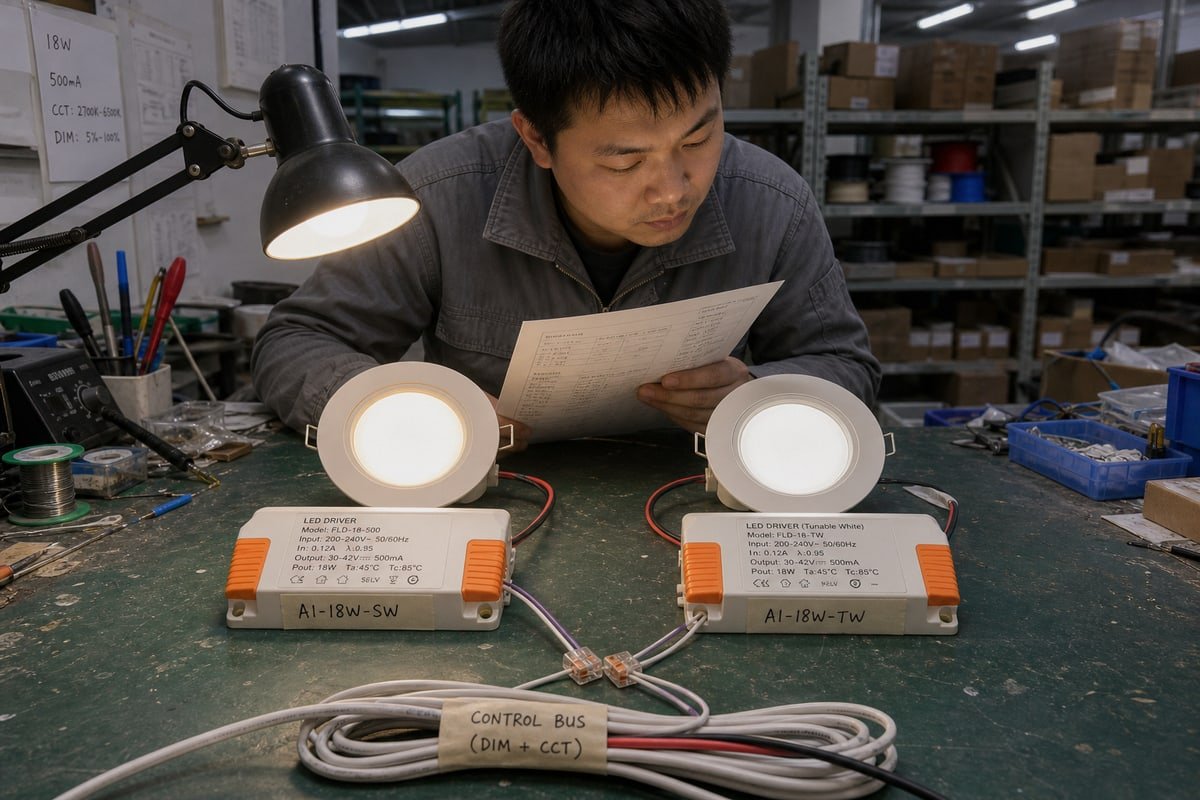
O controle de qualidade para um driver CC DALI tem duas metades, e ambas importam. A metade de energia prova que o driver opera o LED corretamente. A metade digital prova que o driver responde ao barramento corretamente. Um driver pode passar em uma e falhar na outra. Seus requisitos de QC devem forçar o fornecedor a testar ambas, em cada lote, sob condições realistas.
A Sequência de Seleção e QC que Recomendo
Siga esta ordem antes de qualquer outra coisa. Primeiro, corresponda a corrente de saída regulada do driver ao módulo de LED. Segundo, confirme se a tensão operacional real do LED está dentro da faixa de conformidade do driver. Terceiro, verifique se a potência operacional resultante está dentro da especificação do driver. Só então verifique a funcionalidade DALI, a faixa de dimerização, o desempenho térmico e a integração física — dimensões, furos de montagem, fiação e requisitos de IP.
| Ponto de verificação de QC | O que verifica | Risco de falha se ignorado |
|---|---|---|
| Precisão da corrente de saída | Corrente regulada corresponde à classificação e especificação do LED | LEDs superalimentados, depreciação precoce de lúmens |
| Teste de burn-in | Estabilidade sob carga sustentada | Falhas de campo no início da vida útil |
| Teste de endereçamento DALI | Endereçamento individual e resposta a comandos | Luminárias ignoram o software de comissionamento |
| Verificação do nível mínimo de dimerização | Saída real no nível baixo, não a alegação da folha de dados | Cintilação ou queda em cenas baixas |
| Teste térmico na tc nominal | Desempenho na temperatura real da carcaça | Derating, deriva, vida útil reduzida |
| Testes de proteção | Curto-circuito, sem carga, sobrecarga, corte térmico | Incidentes de segurança, danos à luminária |
| Comportamento em ciclos de energia | Nível correto após restauração da rede elétrica | Brilho incorreto após quedas de energia |
Por que as condições térmicas merecem atenção especial
Para downlights e spots, as condições térmicas do driver podem importar mais do que a temperatura nominal do ambiente. Um driver instalado em um vão de teto compacto, ou diretamente acima de um downlight de alta potência, pode operar significativamente mais quente do que o ambiente ao redor. A temperatura mais alta afeta a vida útil, a regulação de saída, o estresse dos componentes, o comportamento de dimerização e o derating de proteção. Portanto, a pergunta correta não é apenas “este driver pode alimentar meu LED?”. É: este driver pode alimentar meu LED na corrente e no nível de dimerização exigidos sob as condições térmicas reais da luminária?
Conclusão
Drivers CC DALI oferecem controle de luminária única ao combinar regulação precisa de corrente com endereçabilidade digital. Verifique primeiro a compatibilidade elétrica, depois os recursos DALI, e então exija um controle de qualidade rigoroso.
Notas de rodapé
- Fornece uma visão técnica abrangente do protocolo de interface de iluminação endereçável digital e sua história. ↩︎
- Organização oficial da indústria que define os tipos de dispositivos DALI e gerencia os padrões de certificação DALI-2. ↩︎
- O órgão internacional de normas responsável pela norma IEC 62386 que rege a estrutura DALI-2. ↩︎
- Autoridade técnica líder para padrões de eletrônica e comunicação usados em plataformas de integração de edifícios inteligentes. ↩︎