Vai al contenuto











Il mese scorso, il nostro laboratorio di Shenzhen ha testato su banco un lotto di Dimmer TRIAC 1 contro quaranta driver LED. Alcune coppie sfarfallavano gravemente. Quella incompatibilità costa denaro reale agli installatori — e questo articolo spiega perché.
Sì, i dimmer TRIAC possono essere usati con luci LED, ma solo quando il driver LED è specificamente progettato per il dimming TRIAC/forward-phase. L’etichetta “dimmabile” da sola non garantisce la compatibilità; verifica la classificazione del carico LED del dimmer, il carico minimo, la corrente di spunto e la lista di compatibilità del produttore.
La risposta breve nasconde molti dettagli ingegneristici. Il TRIAC sta sul lato del dimmer. Lo stadio di ingresso del driver LED stadio di ingresso 2 decide se quella forma d’onda tagliata può essere gestita correttamente. Qui sotto, analizzo il problema dello [sfarfallio](https://bo-qi.com/?p=6205), la selezione del driver, i requisiti di carico e l’approvvigionamento personalizzato — una domanda alla volta.
Perché le mie luci LED sfarfallano o ronzano quando uso un dimmer TRIAC?
Un distributore tedesco una volta ha rispedito un apparecchio sfarfallante al nostro banco QC. La lampadina era a posto. Il dimmer era a posto. L’accoppiamento era il problema — e questo è tipico.
Le luci LED sfarfallano o ronzano sui dimmer TRIAC quando lo stadio di ingresso elettronico del driver non può gestire la forma d’onda AC tagliata, o quando il carico LED scende sotto la corrente di mantenimento minima del dimmer. Progettazione del driver incompatibile, carico insufficiente e latch del TRIAC instabile sono le tre cause principali.

I dimmer TRIAC sono stati costruiti per lampadine a incandescenza. Un filamento a incandescenza è un carico resistivo semplice. Accetta felicemente il dimming a taglio di fase, dove il dimmer rimuove parte di ogni semiciclo AC. I LED sono diversi. Passano attraverso un driver elettronico 3, non un filamento nudo. Quel driver ha il suo circuito di ingresso, ed è qui che iniziano i problemi.
Il TRIAC Sta sul Lato del Dimmer
Ecco la distinzione su cui costruisco ogni formazione tecnica. Il TRIAC vive dentro il dimmer. Usa il controllo di fase sul fronte di salita per tagliare l’inizio di ogni forma d’onda AC. Il driver LED deve poi interpretare quel segnale distorto. Se lo stadio di ingresso del driver non è mai stato progettato per il dimming forward-phase, andrà in errore, ronzerà o lampeggerà.
C’è un secondo meccanismo. Un TRIAC ha bisogno di corrente sufficiente per agganciarsi e poi mantenere durante ogni semiciclo. Un piccolo carico LED potrebbe non fornirla. Il TRIAC si spegne, si riaccende, si spegne di nuovo — e vedi lo sfarfallio. I LED ad alta efficienza possono anche mostrare “ghosting,” un bagliore debole quando spenti, perché una piccola corrente di dispersione alimenta ancora l’elettronica interna del dimmer. La commutazione rapida può anche generare rumore elettrico ad alta frequenza che interferisce con la comunicazione su linea elettrica e i sensori smart-home sensibili.
Sintomi Comuni e le Loro Cause
| Sintomo | Causa possibile |
|---|---|
| Sfarfallio | Incompatibilità driver/dimmer, carico insufficiente, funzionamento TRIAC instabile |
| Ronzio | Interazione elettrica tra dimmer e driver, componenti magnetici o parti meccaniche |
| Dimming scarso ai livelli bassi | Uscita minima del driver, caratteristiche del dimmer o carico insufficiente |
| I LED si accendono debolmente quando spenti | Corrente di dispersione o comportamento di commutazione elettronica |
| Spegnimento casuale | Interazione tra corrente di mantenimento del TRIAC o ingresso del driver |
| Funziona con un apparecchio ma non con molti | Carico combinato, spunto o caratteristiche di controllo |
| Il dimmer si surriscalda in modo anomalo | Carico eccessivo, installazione scadente o accoppiamento dimmer/driver inadatto |
Quindi un carico LED da 20W non si comporta come un carico a incandescenza da 20W. Quella singola frase risolve la maggior parte dei ticket di supporto che vediamo dagli installatori.
Come scelgo driver LED pienamente compatibili con dimmer TRIAC?
Ogni volta che progettiamo un driver LED dimmabile, bilanciamo un dimming fluido ai livelli bassi con costo e dimensioni. Quel compromesso risiede nello stadio di ingresso, dove la compatibilità si vince o si perde.
Scegli un driver LED che elenchi esplicitamente il dimming TRIAC o forward-phase come metodo di controllo supportato. Verifica la curva di dimming del datasheet, il livello minimo di dimming e la lista di compatibilità del produttore, e testa su banco il driver con il tuo esatto modello di dimmer prima di impegnarti in ordini di volume.

La frase “driver LED compatibile TRIAC” è molto più utile di “driver LED dimmabile.” Un driver può essere genuinamente dimmabile ma progettato per un metodo di controllo completamente diverso. Questi metodi non sono intercambiabili, e confonderli è l’errore di approvvigionamento più comune che vediamo dai nuovi acquirenti.
Abbina Prima il Metodo di Controllo
Prima di confrontare prezzo o efficienza, conferma l’interfaccia di dimming. Ecco come si allineano le opzioni principali:
| Metodo di regolazione dell'intensità luminosa | Chiamato anche | Funziona con un dimmer TRIAC standard? |
|---|---|---|
| TRIAC / forward phase | Controllo di fase sul fronte di salita | Sì, quando esplicitamente classificato |
| Bordo d'uscita | Reverse phase, Electronic Low Voltage (ELV) | No — direzione di taglio di fase diversa |
| 0–10 V | Analogico a bassa tensione | No — richiede fili di controllo separati |
| DALI | Digitale indirizzabile | No — protocollo digitale |
| PWM | Modulazione di larghezza di impulso | No — controllo diretto del duty-cycle |
Un driver progettato per il controllo 0–10V o Pulse Width Modulation non risponderà correttamente a una forma d'onda di rete tagliata. Non abbinare mai un alimentatore non dimmerabile, o un driver progettato per un altro protocollo, con un dimmer a taglio di fase a parete.
TRIAC vs Trailing-Edge: La Risposta Onesta
I clienti spesso mi chiedono se i dimmer trailing-edge siano semplicemente “migliori” per i LED. La mia risposta onesta è più cauta. La regolazione trailing-edge spesso funziona meglio con alcuni driver elettronici perché riduce l'interazione tra il dimmer e l'ingresso capacitivo del driver, e offre un avvio più morbido. Tuttavia, non è universalmente migliore. Il metodo di regolazione specificato dal driver LED dovrebbe sempre avere priorità. Alcuni dimmer smart moderni usano persino una logica di taglio di fase adattiva — un microprocessore analizza il carico e passa automaticamente tra fase diretta e inversa per la migliore curva di regolazione.
Nel nostro lavoro di sviluppo per clienti di marchi europei e australiani, validiamo prestazioni senza sfarfallio su tutta la gamma di regolazione, non solo al 100% di uscita. Un driver che regola senza problemi dal 90% fino al 40% ma tremola al 10% non è un driver compatibile. È una futura lamentela.
Quali requisiti minimi di carico e potenza dovrei verificare prima di abbinare dimmer TRIAC a apparecchi LED?
Una responsabile acquisti a Singapore mi ha recentemente chiesto perché il suo ordine di LED da 20W si comportasse peggio dei vecchi alogeni da 60W che sostituiva. La mia risposta l'ha sorpresa: il carico era troppo piccolo.
Controlla il requisito di carico minimo del dimmer, la sua valutazione massima di carico LED e la corrente di spunto del driver prima dell'abbinamento. Molti dimmer TRIAC legacy necessitano di più corrente di quanto un piccolo carico LED possa fornire, causando sfarfallio, cadute o bagliori fantasma. La corrente di spunto totale conta più della potenza a regime.
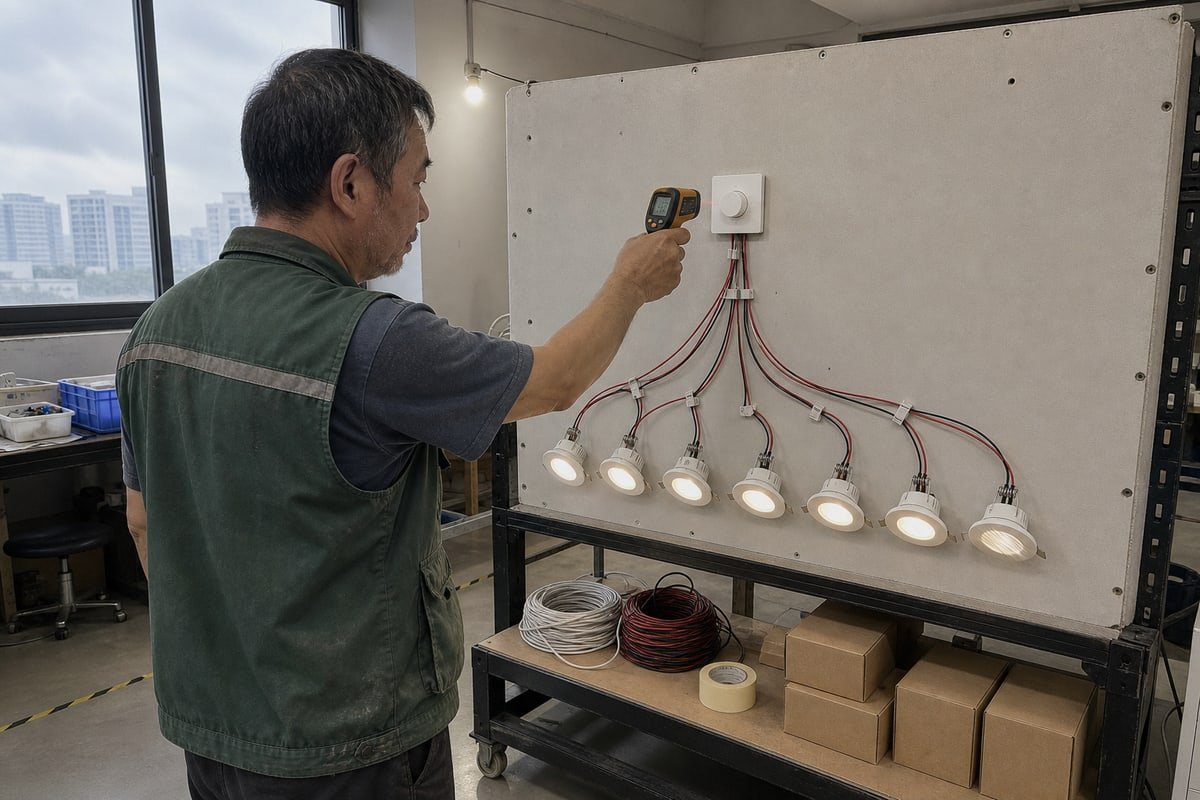
Il carico minimo è il problema nascosto nella maggior parte delle installazioni LED strane. I dimmer TRIAC più vecchi erano specificati per carichi a incandescenza di 25W, 40W o più. Sostituisci con una manciata di LED efficienti e il consumo totale potrebbe scendere sotto il livello necessario al TRIAC per attivarsi e rimanere in latch. Il risultato: lampeggio quando è “spento,” regolazione instabile ai minimi, o luci che non si spengono mai completamente.
La Trappola della Corrente di Spunto
Non guardare solo alla potenza nominale. Molti driver LED contengono un condensatore di ingresso. Quando l'alimentazione AC viene applicata per la prima volta, quel condensatore assorbe una breve e alta corrente di spunto. Quindi puoi avere un sistema dove la potenza a regime rientra comodamente nella valutazione del dimmer, ma la corrente di spunto all'avvio fa scattare la protezione o accorcia la vita del dimmer. Collega più driver a un solo dimmer e la corrente di spunto combinata si moltiplica. Questo è esattamente il motivo per cui “funziona con un apparecchio ma non con molti” appare nella nostra tabella di risoluzione dei problemi sopra. C'è anche un costo a lungo termine: la tensione tagliata dalla regolazione a taglio di fase aumenta la corrente di ripple all'interno del driver, che può accelerare il degrado dei condensatori elettrolitici in apparecchi scarsamente ventilati.
Una Lista di Controllo Pre-Installazione
- Leggi la valutazione del carico LED del dimmer. Alcuni prodotti pubblicizzano intervalli come 3W–200W per LED/CFL — questo supporto è specifico del prodotto, mai universale.
- Conferma il carico minimo. Somma la tua potenza LED effettiva e assicurati che superi la soglia.
- Controlla la scheda tecnica del driver per la corrente di spunto e riduci la valutazione del dimmer quando colleghi più driver.
- Per circuiti a potenza ultra-bassa, considera un modulo di bypass esterno o “shunt.” Gli installatori professionali li usano per fornire la corrente di mantenimento del TRIAC senza aggiungere emissione luminosa.
- Testa un circuito prima di estendere l'installazione completa.
La mia regola di settore dopo anni di progetti di esportazione: non selezionare mai un dimmer TRIAC basandosi solo sulla potenza LED. Selezionalo dal comportamento elettrico del driver LED. È lì che hanno origine la maggior parte dei problemi di compatibilità nel mondo reale.
Posso procurare driver LED personalizzati compatibili TRIAC per i miei prodotti di illuminazione a marchio privato?
All'inizio della nostra attività di esportazione, ho imparato che i driver standard raramente si adattano alle specifiche esatte di un marchio. Quella lezione ci ha spinto verso lo sviluppo collaborativo OEM/ODM, e ha cambiato il nostro modo di lavorare.
Sì, puoi procurarti driver LED compatibili TRIAC personalizzati per prodotti a marchio privato. Fornitori OEM/ODM specializzati possono tarare lo stadio di ingresso del driver, la curva di regolazione, il comportamento a carico minimo e l'alloggiamento secondo le tue specifiche, poi aggiungere il tuo logo e l'imballaggio per una fornitura chiavi in mano a marchio privato.

Per proprietari di marchi e grossisti, sviluppo personalizzato 4 risolve i problemi esatti descritti in questo articolo. Invece di scommettere se un driver generico si abbinerà ai dimmer che il tuo mercato già usa, specifichi l'abbinamento in anticipo. Nella nostra struttura di Shenzhen, iniziamo ogni progetto OEM chiedendo quali dimmer i clienti finali del cliente installano effettivamente — unità legacy a fase diretta nel Regno Unito, dimmer trailing-edge comuni in Germania e Svezia, o dimmer smart adattivi in Australia. Poi progettiamo lo stadio di ingresso del driver per quella realtà.
Cosa Può Essere Personalizzato
| Area di personalizzazione | Cosa regoliamo per i clienti a marchio privato |
|---|---|
| Progettazione dello stadio di ingresso | Compatibilità con regolazione a fase diretta, stabilità della corrente di mantenimento, circuiti bleeder |
| Curva di dimming | Comportamento lineare, logaritmico o personalizzato ai minimi per un controllo fluido dall'1% al 100% |
| Comportamento del carico | Tolleranza al carico minimo, limitazione della corrente di spunto per circuiti multi-driver |
| Conformità e mercati | Requisiti di tensione e sicurezza per le tue regioni di esportazione target |
| Branding | Loghi personalizzati, etichette, imballaggio ed estetica coordinata con i dimmer a parete |
Come Funziona la Collaborazione
Il processo è semplice. Condividete i vostri modelli di dimmer target, le potenze degli apparecchi e i requisiti di mercato. Noi realizziamo un prototipo, poi eseguiamo test di compatibilità su tutta la gamma di regolazione sul nostro banco QC — verificando stabilità di latch, shimmer a bassa intensità, rumore udibile e ghosting. Ricevete campioni di prova e una lista di compatibilità documentata che potete pubblicare con il vostro marchio. Per i team di approvvigionamento con scadenze strette, questo approccio parallelo supera la ricerca sequenziale per tentativi ed errori. Affronta anche la questione del costo totale: un singolo guasto sul campo e una spedizione di reso costano di solito più dell'intero divario di prezzo tra un driver generico e uno correttamente abbinato. Hardware pulito e minimalista — come una manopola dimmer rotativa tutta bianca abbinata a un driver tarato su di essa — sembra premium solo se la regolazione dietro è genuinamente priva di sfarfallio.
Conclusione
I dimmer TRIAC e le luci LED possono funzionare magnificamente insieme — ma solo quando lo stadio di ingresso del driver è progettato per la regolazione a taglio di fase. Verificate prima la compatibilità e le vostre installazioni rimarranno prive di sfarfallio.
Note a piè di pagina
- Panoramica tecnica del componente TRIAC e del suo ruolo nel controllo di potenza in corrente alternata. ↩︎
- Fonte autorevole per gli standard di ingegneria elettrica e i principi di progettazione dei circuiti. ↩︎
- Risorsa governativa ufficiale che definisce i componenti per illuminazione ad alta efficienza energetica e i requisiti dei driver. ↩︎
- Organismo internazionale di standardizzazione per la qualità manifatturiera e i processi di sviluppo prodotto. ↩︎