Hoppa till innehåll










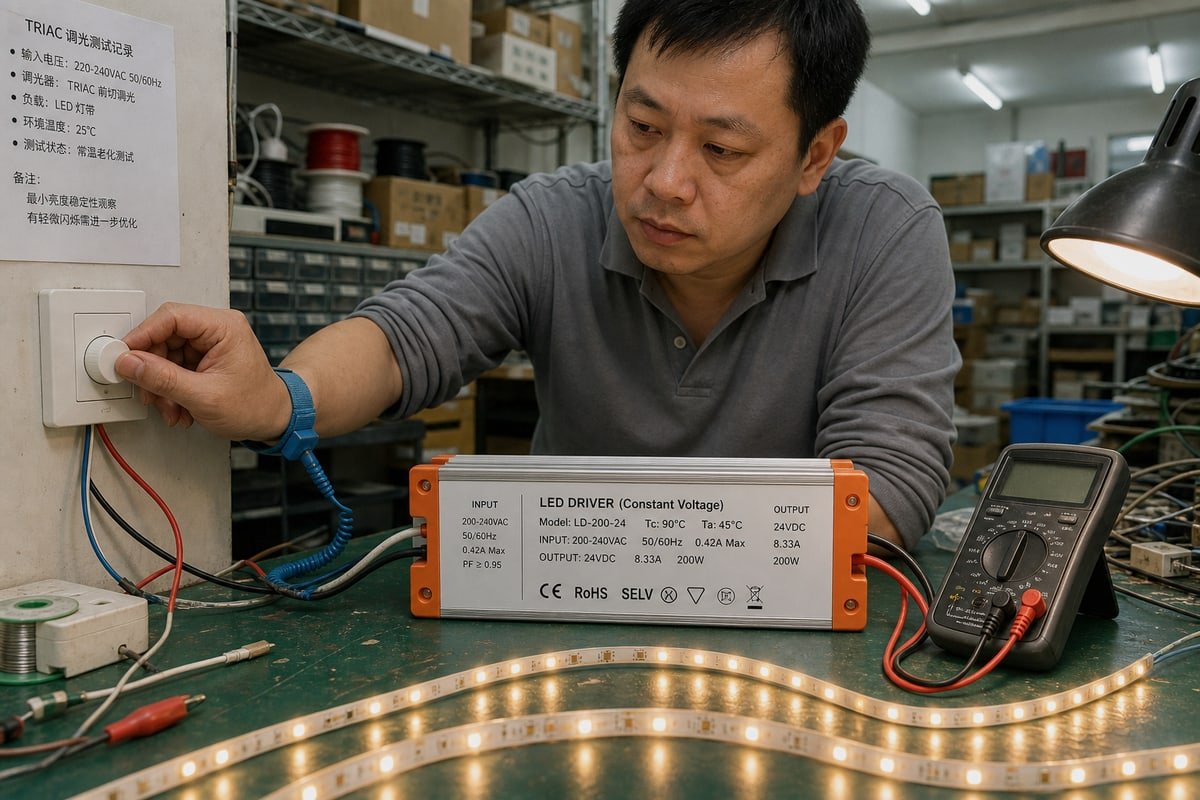
En kunds LED-remsor flimrade kraftigt på ett hotellprojekt förra året. Vårt labb i Shenzhen spårade det till minimilastkrav för TRIAC CV-drivdon — en specifikation som de flesta köpare förbiser.
Ett TRIAC-dimbart konstantspännings- (CV) LED-drivdon kan kräva en minsta ansluten last för stabil drift med en TRIAC-fasavsnittsdimmer. Om den totala LED-lasten understiger dimmerns angivna minimum kan systemet flimra, surra, tappa utsignalen eller växla opålitligt. Verifiera alltid både dimmerns och drivdonets lasteffekter.
En snabb notering om terminologi innan vi går djupare. TRIAC:en sitter normalt inuti dimmern, inte inuti konstantspänningsutgångssteget 1 i LED-drivdonet. Så när folk säger “TRIAC CV-drivdon” menar de vanligtvis ett CV-drivdon utformat för att acceptera TRIAC-fasavsnittsingång. Den distinktionen formar allt i den här artikeln. Låt oss bryta ner det bit för bit.
Vad är minimilastkravet för TRIAC CV-drivrutiner och varför spelar det roll för mitt projekt?
Förra månaden skickade en ljusdistributör i Singapore ett WhatsApp-meddelande till mig: hennes 6W TRIAC-dimbara drivdon flimrade på en dimmer men fungerade perfekt på en annan. Terminologin var boven.
Minimilastkravet är den lägsta anslutna wattstyrkan en TRIAC-fasavsnittsdimmer behöver för att hålla sin interna TRIAC låst och ledande. Det spelar roll eftersom laster under denna tröskel kan orsaka flimmer, tappad utsignal eller opålitlig växling — även när CV-drivdonet i sig är fullt funktionsdugligt.
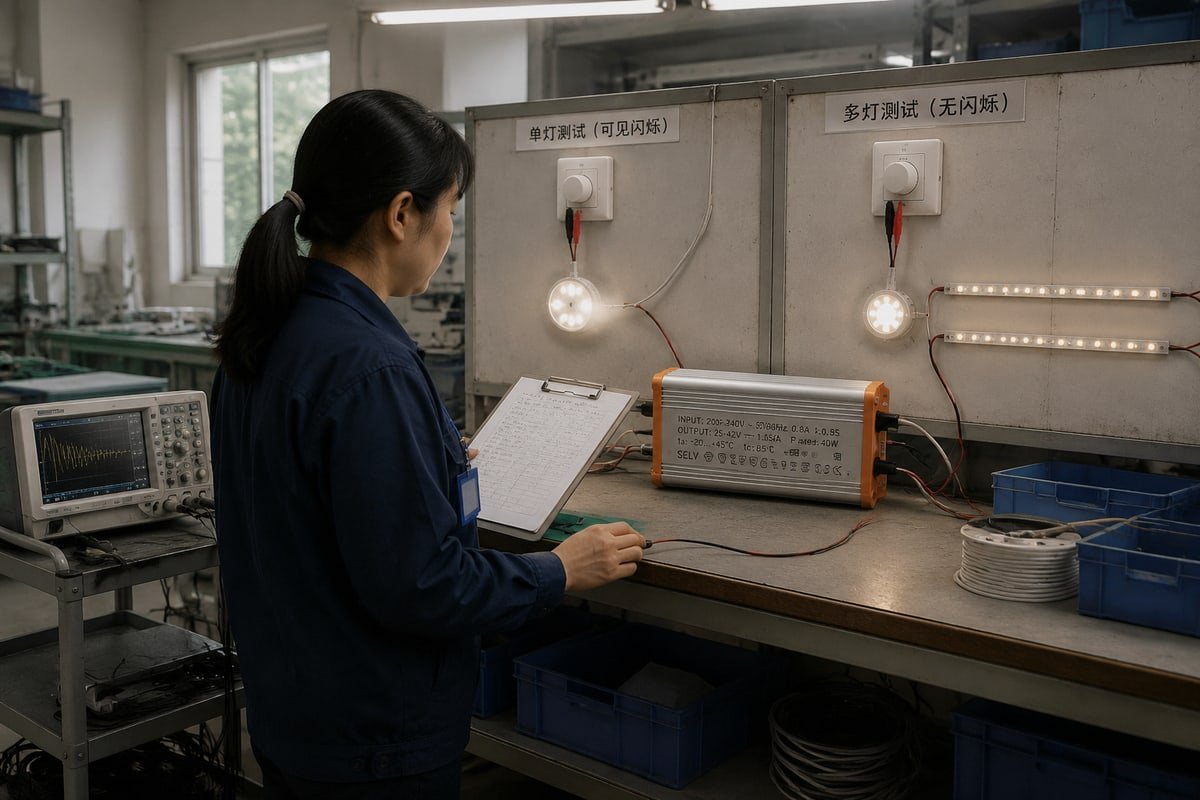
Det här är den punkt jag gör mycket framträdande med varje köpare: dimmerns minimilast och LED-drivdonets minimilast är två olika specifikationer. Att blanda ihop dem orsakar de flesta felfall jag ser.
Två specifikationer, två betydelser
En dimmer kan ange en minsta LED-last på 10W. Ett drivdon kan ange en minsta utlast på 2W. Dessa siffror beskriver helt olika saker. Det första gäller huruvida dimmern kan fungera korrekt med den anslutna elektriska lasten. Det andra gäller huruvida drivdonet kan reglera sin LED-utgång korrekt vid en viss last. Båda måste vara uppfyllda.
| Specifikation | Tillhör | Vad den styr | Typiskt exempel |
|---|---|---|---|
| Minsta LED-last | Väggdimmern | Huruvida TRIAC:en förblir låst genom AC-cykeln | Minst 10W |
| Minsta utlast | LED-drivdonet | Huruvida drivdonet reglerar sin DC-utgång rent | Minst 2W |
| Hållström | TRIAC:en inuti dimmern | Ström som krävs för att förbli ledande | 10–50 mA |
| Tändström | TRIAC:en inuti dimmern | Ström som krävs för att börja leda varje halvcykel | Varierar beroende på enhet |
Varför watt ensamt inte berättar hela historien
Här är den experttinsikt jag alltid delar. Minimilast är inte bara ett wattproblem. Det är ett elektriskt beteendeproblem. En traditionell TRIAC-dimmer var designad kring en resistiv last 2, som en glödlampa, som drar förutsägbar ström över hela AC-vågformen. En CV LED-drivdon beter sig mycket annorlunda. Dess ingångssteg kan innehålla likriktarkretsar, EMI-filtrering, kondensatorer, switchningselektronik, aktiv effektfaktorkorrigering 3, och inrush-strömbegränsning. Så ett 6W LED-drivdon “ser” inte nödvändigtvis ut som en 6W resistiv last för TRIAC:en. Det är därför två olika 6W-drivdon kan bete sig helt olika på samma dimmer.
Detta förklarar också varför en framkantsdimmer 4 kämpar mer med små elektroniska laster än en bakkantsdimmer. Bakkantskonstruktioner använder MOSFET:ar och behöver ingen hållström, så de tolererar lågeffekts-fasavsnittsdimning mycket bättre.
Hur beräknar jag den minsta last som behövs för min TRIAC CV-drivrutinskonfiguration?
När vi specar drivdon för ett projekt med flera armaturer väger vi alltid en avvägning: att lägga till wattheadroom höjer komponentkostnaden, men att köra på dimmerns gräns riskerar återbesök.
Summera den faktiska ingångseffekten för varje drivdon på kretsen, jämför sedan totalen mot dimmerns minsta och maximala LED-lastklassningar. Verifiera också drivdonets egen minsta utlast, maximala antal drivdon och aggregerad inrush-ström innan du slutför designen.

Matematiken i sig är enkel. Omdömet bakom den är det inte. Följ denna process, så undviker du de misstag jag ser i projektförfrågningar varje vecka.
- Hitta dimmerns publicerade minsta LED-last. Äldre framkantsdimmers specificerar ofta 20W–40W. Moderna LED-optimerade fasavsnittskontroller kan fungera ner till 1W–3W. Anta aldrig; läs databladet.
- Hitta drivrutinens minsta utgångslast. Vissa drivrutiner annonserar ingen minsta last. Andra definierar ett verkligt driftfönster — en 24V TRIAC-dimmbar CV-drivrutinsdatasheet vi benchmarkade visar ett 33–100W lastområde med under 1W tomgångsförbrukning. Det är ett definierat fönster, inte en garanti för tomgång.
- Använd faktisk uppmätt watt, inte nominella armaturbetyg. LED-remsor drar ofta mindre än vad etiketten antyder.
- Kontrollera totaler mot både minsta och högsta betyg.
- Lämna marginal. Att köra exakt på minimum inbjuder till instabilitet när komponenter åldras och temperaturer skiftar.
Arbetat exempel — korrekt kvalificerad
Om dimmern specificerar en 10W minsta LED-last och den faktiska anslutna lasten är 6W, är kombinationen utanför dimmerns specificerade driftområde och kan vara instabil. Notera att jag sa “kan”, inte “kommer”. Vissa dimmers tolererar laster under deras publicerade minimum; andra gör det inte. Att driva utanför specifikationen innebär helt enkelt att tillverkaren inte längre garanterar dimningsstabilitet.
Fällan med flera drivrutiner
Detta är viktigt för kommersiell belysning. Jämför en 6W-drivrutin mot tjugo 6W-drivrutiner. Den nominella lasten ändras från 6W till 120W, men det gör även andra elektriska egenskaper — särskilt aggregerad inkopplingsström 5 och interaktionen av tjugo ingångskretsar på en dimmer. Så den korrekta beräkningen är aldrig bara 6W × 20 = 120W.
| Kontrollera | Enkel 6W-drivrutin | Tjugo 6W-drivrutiner |
|---|---|---|
| Stationär last | 6W | 120W |
| Minsta belastning för dimmer | Troligen under det | Bekvämt över det |
| Aggregerad inkopplingsström | Försumbar | Potentiellt kritisk |
| Maximalt antal drivrutiner per dimmer | Inte ett bekymmer | Måste verifieras med tillverkaren |
| Kompatibilitetstestning behövs | Ja | Ja, vid full kvantitet |
Vilka problem kommer jag att stöta på om min belysningslast faller under minimikravet?
Vårt QC-team brände en gång tre dagar på att jaga ett flimmer som bara dök upp efter tjugo minuters drift. Orsaken lärde oss hur lömska underbelastade kretsar kan vara.
Belastningar under minimikravet kan orsaka LED-flimmer, hörbart surrande, pop-på-beteende, döda zoner överst i dimningsområdet, spökbilder när de är avstängda och bortfall vid låg ljusstyrka. Vissa symptom uppträder endast efter att dimmern har värmts upp och dess hållström har stigit.

Den uppvärmningsdetaljen förtjänar betoning. En TRIAC:s hållströmkrav är temperaturkänsligt och ökar typiskt när enheten värms upp. Så ett system som ser stabilt ut vid start kan börja flimra tjugo minuter senare. Om din installatör rapporterar “det fungerade bra från början”, misstänk denna mekanism.
Symptom-till-orsak-karta
| Symtom | Möjlig orsak |
|---|---|
| Flimmer vid låg nivå | Otillräcklig last eller drivrutin/dimmer-inkompatibilitet |
| Flimmer genom hela området | Fasavklippnings-inkompatibilitet eller instabil drivrutinsingång |
| Surrande | Elektrisk eller mekanisk interaktion mellan dimmer och drivrutin |
| Tappar ut under dimning | TRIAC-hållström- och ingångsström-interaktion |
| Stängs inte av helt | Läckström eller drivrutinsingångsbeteende |
| Fungerar med flera armaturer men inte en | Last under minimum |
| Fungerar med en armatur men misslyckas med många | Inkopplingsström eller maximalt antal drivrutiner |
Några av dessa behöver extra förklaring. Pop-on-beteende innebär att LED-lamporna förblir mörka vid låga dimmerinställningar och slår på abrupt högre upp på reglaget. En död zon innebär att ljuset sitter på 100%-utgång över den övre delen av dimmerns rörelse. Spökbild — svag glöd eller periodisk blinkning i AV-läget — visas ofta med neutralfria smarta dimmers, som drar sin standby-ström genom själva lasten. Och hörbart surrande kan komma från drivrutiner som använder sekundärsida PWM, vilket reflekterar högfrekventa strömpulser tillbaka till primärsidan och stör TRIAC:ens nollgenomgångsdetektering.
Bör du lägga till en dummy-last?
En vanlig fältfix är att lägga till en resistiv dummy-last eller en flimmerfixare för att lyfta kretsen över dimmerns minsta betyg. Det kan fungera, men jag ger varje köpare denna varning: att lägga till en dummy-last kan lösa minsta-last-instabilitet, men det ökar också energiförbrukning och värme, och det löser inte nödvändigtvis drivrutin/dimmer-inkompatibilitet. Använd det endast när båda tillverkarna tillåter det. Kom ihåg — ett minsta-last-problem är inte ett universellt kompatibilitetsproblem. Om drivrutinens ingångssteg är inkompatibelt med dimmerns vågform, kommer fler watt inte att bota flimret. Notera också att flimmerfria drivrutiner med interna aktiva bleeder-kretsar koncentrerar värme vid låga dimningsnivåer, så termisk hantering spelar roll även när LED-lamporna drar nästan ingenting.
Hur hittar jag en TRIAC CV-drivrutinsleverantör som uppfyller mitt projekts minimilast- och anpassningsbehov?
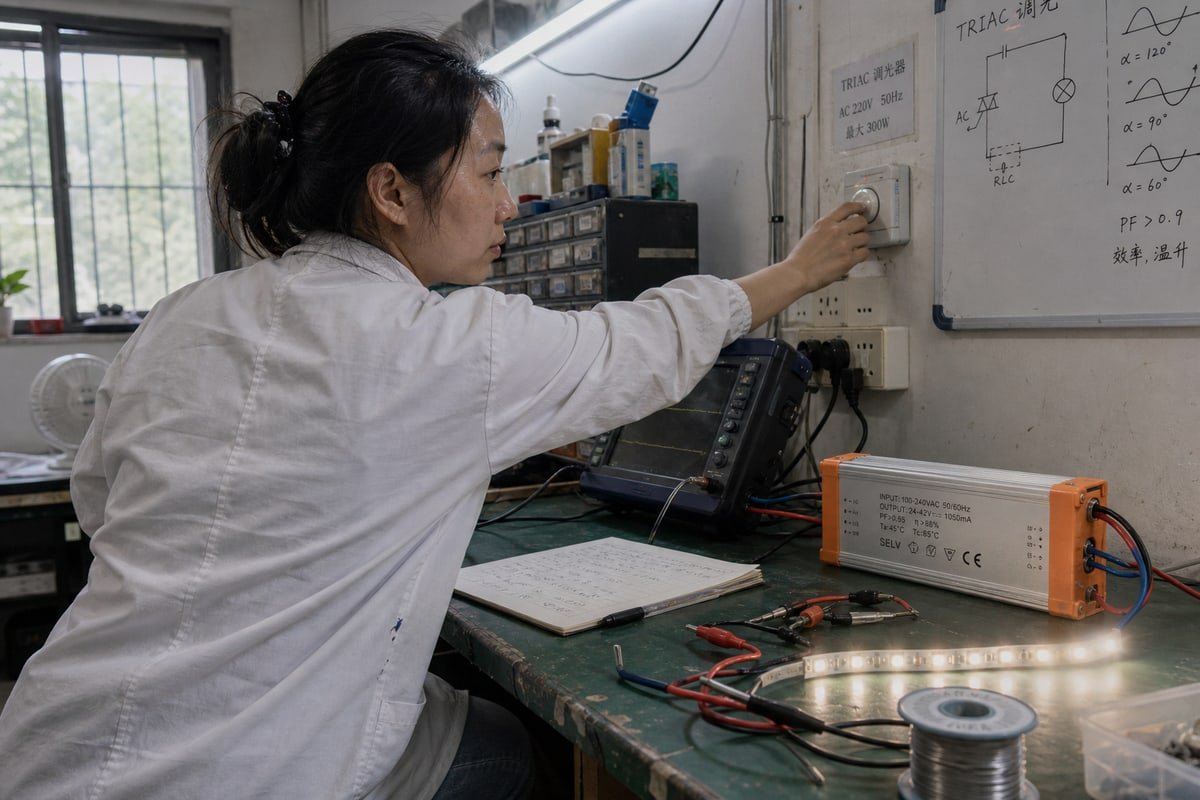
På vår produktionslinje i Shenzhen testas varje TRIAC-dimmbar drivrutinsbatch mot en vägg av riktiga dimmers innan leverans. Den vanan kom från hårda lärdomar med exportprojekt över Europa och Sydostasien.
Välj en leverantör som publicerar specifikationer för minsta och maximala belastning, tillhandahåller kompatibilitetslistor för dimmers, erbjuder OEM/ODM-anpassning av belastningsintervall och bleeder-kretsar, samt testar drivdon mot riktiga fasavklippta dimmers. Begär prover, testrapporter och teknisk support innan du förbinder dig till volymbeställningar.
På boqi arbetar vi uteslutande med varumärkesägare, grossister och ljustillverkare, så jag utvärderar leverantörsfrågor från köparens stol varje dag. Inköpschefer som Olivia — en av våra långsiktiga kunder i Singapore — bryr sig om tre saker: total projektkostnad, snäva deadlines och tillgång till aktuell designteknik. Minimilastkrav för TRIAC CV-drivrutiner berör alla tre. En drivrutin som misslyckas med kompatibilitetstestning efter installation spräcker både budgeten och tidplanen.
Frågor som skiljer bra leverantörer från riskfyllda
Fråga inte bara, “Hur många watt klarar denna TRIAC-dimmer?” Fråga både “Vad är minsta LED-last?” och “Hur beter sig LED-drivrutinens ingång med denna dimmer?” Den andra frågan är den som de flesta leverantörer inte kan svara på. En kompetent partner bör berätta om deras drivrutin stöder framkantsdimring, om den även fungerar med en bakkantsdimmer, hur dess bleeder-krets hanterar låglastförhållanden, och vilka specifika dimmermodeller de har validerat. När vi utvecklar en OEM-drivrutin för en europeisk kund, testar vi dimringsstabilitet mot de framkantsdimmermärken som är vanliga på den marknaden — eftersom en drivrutin som klarar sig i ett lands elektriska miljö kan bete sig annorlunda i ett annat.
Leverantörsutvärderingschecklista
| Vad man ska kontrollera | Varför det är viktigt | Röd flagga |
|---|---|---|
| Publicerade min/max-lastspecifikationer | Låter dig designa kretsar med förtroende | Vaga eller saknade datablad |
| Dimmerkompatibilitetslista | Bekräftar verkliga fasavklippta dimringstester | “Fungerar med alla TRIAC-dimmers”-påståenden |
| OEM/ODM-förmåga | Lastområde och bleeder-justering för din marknad | Endast en standardkatalog |
| Certifieringar (CE, CB) | Krävs för EU- och exportmarknader | Overifierbara certifikat |
| Prov- och testsupport | Validerar din exakta dimmer-drivrutin-lastkedja | Vägran att skicka förproduktionsprover |
| Eftermarknadsteknisk support | Snabb felsökning skyddar din tidplan | Långsamma eller manusbaserade svar |
Marknaden i sig är verkligen förvirrande här. Vissa leverantörsguider insisterar på att TRIAC-dimring fortfarande behöver 25W–40W last, medan vissa drivrutinstillverkare annonserar ingen minimilast alls. Båda påståendena kan vara sanna, eftersom de beskriver olika produkter och olika delar av systemet. Minimilastprestanda är en designspecifik specifikation, inte en universell TRIAC-regel. En leverantör som förklarar det ärligt är en leverantör du kan lita på med ditt varumärke.
Slutsats
Underbelastade TRIAC-kretsar flimrar, surrar och tappar ut — och lösningen börjar med en vana: kontrollera dimmerns minimilast, drivrutinens minimilast och deras verkliga kompatibilitet tillsammans.
Fotnoter
- Wikipedia-översikt över LED-kretskonfigurationer och utgångsstegsegenskaper. ↩︎
- Teknisk dokumentation från en ledande halvledartillverkare om TRIAC-elektriska egenskaper och laster. ↩︎
- Auktoritativ Wikipedia-post som förklarar aktiv effektfaktorkorrigering för elektroniska laster. ↩︎
- Wikipedia-post som förklarar drift och tekniska skillnader mellan fasavklippta dimmertyper. ↩︎
- NEMA-standard som definierar inrush-strömegenskaper och krav för LED-belysningsutrustning. ↩︎