Zum Inhalt wechseln










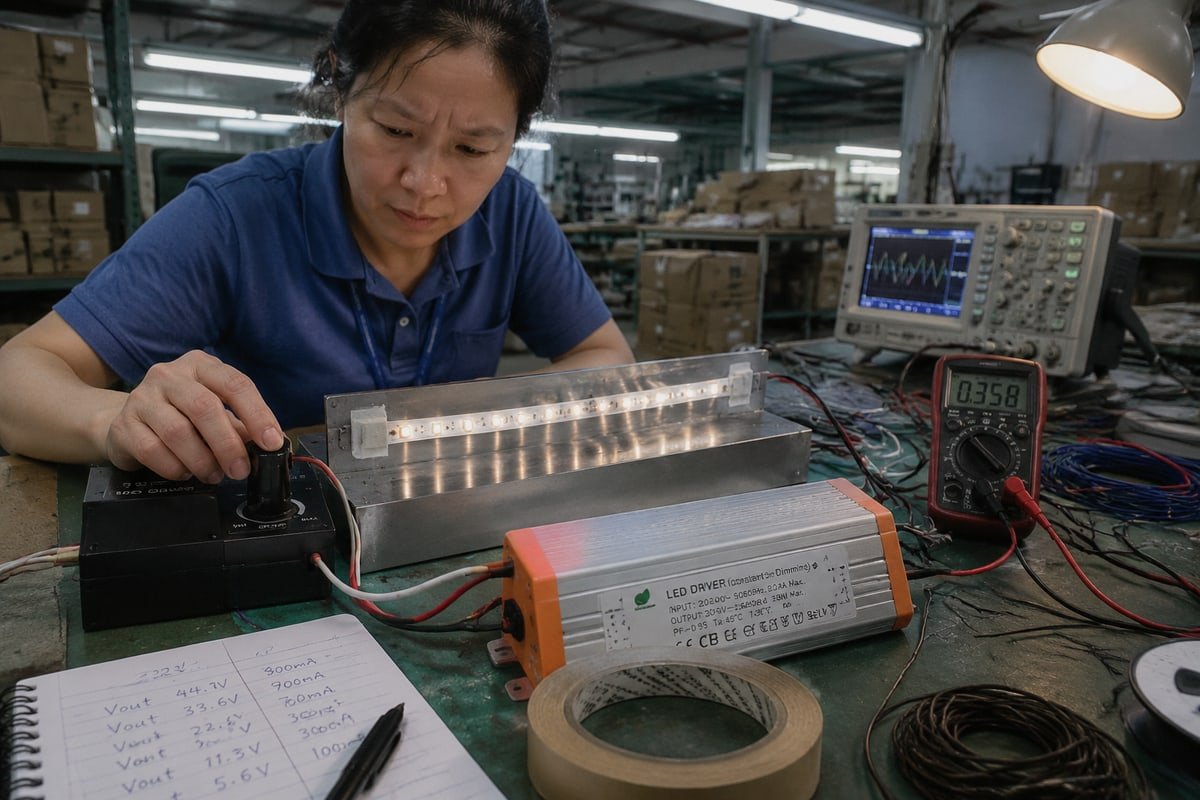
LED-Streifen flackern mit CV-TRIAC-Treibern häufiger als jede andere Beschwerde, die wir in unserer Treiberfabrik protokollieren. Es frustriert Installateure, untergräbt das Vertrauen in Projekte und verzögert Folgeaufträge.
LED-Streifen flackern mit CV-TRIAC-Treibern, wenn Dimmer, Treiber-Eingangsschaltung und LED-Last nicht richtig aufeinander abgestimmt sind. Der TRIAC schneidet die AC-Wellenform, und ein inkompatibler Treiber schafft es nicht, eine stabile DC-Regelung aufrechtzuerhalten – besonders bei niedrigen Dimmstufen, geringen Lasten oder bei falscher Leading-Edge/Trailing-Edge-Kombination.
Diese Antwort klingt einfach. Aber die Details sind entscheidend. Im Folgenden erläutere ich die tatsächlichen Ursachen, die funktionierenden Lösungen und wie Sie Produkte qualifizieren, bevor Sie in großen Mengen kaufen.
Was verursacht das Flackern meiner LED-Streifen, wenn ich CV-TRIAC-Treiber verwende?
Letztes Jahr führte unser QC-Team eine Flacker-Beschwerde eines Kunden aus Singapur auf eine einzige Ursache zurück: Die Eingangsstufe 1 des Treibers konnte den TRIAC nicht im leitenden Zustand halten. Dieser Fall hat diesen gesamten Abschnitt geprägt.
Flackern tritt auf, wenn die phasenangeschnittene Wellenform, die Eingangsstufe des Treibers, seine DC-Regelschleife und die LED-Last nicht synchron sind. Häufige Auslöser sind Haltestrom-Abfall, übermäßige Eingangskapazität, Leading-Edge/Trailing-Edge-Fehlanpassung, Hiccup-Schutz-Zyklen und Lasten unterhalb der Mindestlastanforderung des Treibers.

Die meisten Leute bezeichnen das als “TRIAC-Inkompatibilität”. Diese Bezeichnung ist zu vage, um etwas zu beheben. Die eigentliche Kette ist: phasenangeschnittene Wellenform → Treiber-Eingangsstufe → DC-Regelung und Steuerschleife → LED-Last. Flackern erscheint, wenn ein Glied dieser Kette versagt.
Die am meisten übersehene Ursache: Haltestrom
Ein TRIAC benötigt genug Strom, der durch ihn fließt, um während jedes AC-Halbzyklus leitend zu bleiben. Ein Treiber mit kleinem oder stark nichtlinearem Eingangsstrom kann den TRIAC frühzeitig abschalten oder unregelmäßig zünden lassen. Dies wird in der Nähe des unteren Dimmbereichs schlimmer, weil das Leitungsfenster 2 bereits kurz ist. Deshalb tritt Flackern oft nur unterhalb von etwa 20 % Helligkeit auf. Das System funktioniert bei voller Leistung einwandfrei, flackert, blinkt oder schimmert dann beim Herunterdimmen.
Die vollständige Liste der Flacker-Mechanismen
In unserem Labor sortieren wir Flacker-Beschwerden in die folgenden Mechanismen. Jeder hat eine andere Lösung, daher spart die richtige Identifizierung Wochen.
| Mechanismus | Was tatsächlich passiert | Typisches Symptom |
|---|---|---|
| Haltestrom-Abfall | Treiber zieht zu wenig Strom, um den TRIAC leitend zu halten | Blinken oder Pulsieren bei niedrigen Dimmstufen |
| Leading/Trailing-Edge-Fehlanpassung | Treiber kann den Phasenanschnitt-Stil des Dimmers nicht dekodieren | Flackern über den gesamten Bereich |
| EMI-Filter-Einschwingschwingung | Eingangskondensatoren schwingen bei jedem TRIAC-Trigger | Schimmern oder Brummen in der Nähe des mittleren Bereichs |
| Nulldurchgangs-Erkennungs-Jitter | Treiber liest die Zeitsteuerung der geschnittenen Wellenform falsch | Zufälliges, unregelmäßiges Flackern |
| Hiccup-Schutz-Zyklen | Überlastschutz startet den Treiber wiederholt neu | Langsames, rhythmisches Ein-Aus-Blinken |
| Ripple- vs. PWM-Schwebungsmuster | Gleichgerichteter AC-Ripple stört die interne PWM-Dimmfrequenz | Langsamer Roll- oder Stroboskopeffekt |
| Thermische Drift | Schwellwerte verschieben sich, wenn Komponenten heiß werden | Flackern, das nach dem Aufwärmen beginnt |
| Harmonische Verschmutzung | Andere nichtlineare Lasten erzeugen Kerben in der AC-Wellenform im Stromkreis | Flackern nur, wenn andere Geräte laufen |
| Spannungsabfall auf DC-Leitungen | Zu dünne Kabel oder lange Leitungen verursachen Sägezahn-Oszillationen | Flackern am entfernten Ende des Streifens |
| Reflektierte Impedanz-Fehlanpassung | Parasitäre Induktivität des Streifens stört die Ausgangsregelschleife | Instabilität bei sehr langen Streifen |
Beachten Sie, dass nur einige davon Dimmer-Probleme sind. Mehrere sind Stromversorgungsprobleme, die erst sichtbar werden, wenn das Dimmen die Systemreserve entfernt.
Wie kann ich Flackern in meinen TRIAC-dimmbaren LED-Streifen-Beleuchtungsprojekten beheben?
Ein Kunde in Vietnam schickte uns einmal drei “defekte” Treiber in unsere Werkstatt. Alle drei bestanden unsere Prüfstandstests. Sein eigentliches Problem war ein Spannungsabfall über eine lange Streckenführung vor Ort.
Beheben Sie Flackern durch Testen in dieser Reihenfolge: Dimmer überbrücken, Treiberspannung und -leistung mit dem Streifen abgleichen, Mindestlast des Dimmers bestätigen, jede Verbindung festziehen, Spannungsabfall entlang der Strecke messen und schließlich den Treiber durch ein phasenanschnitt-geeignetes CV-Gerät ersetzen.
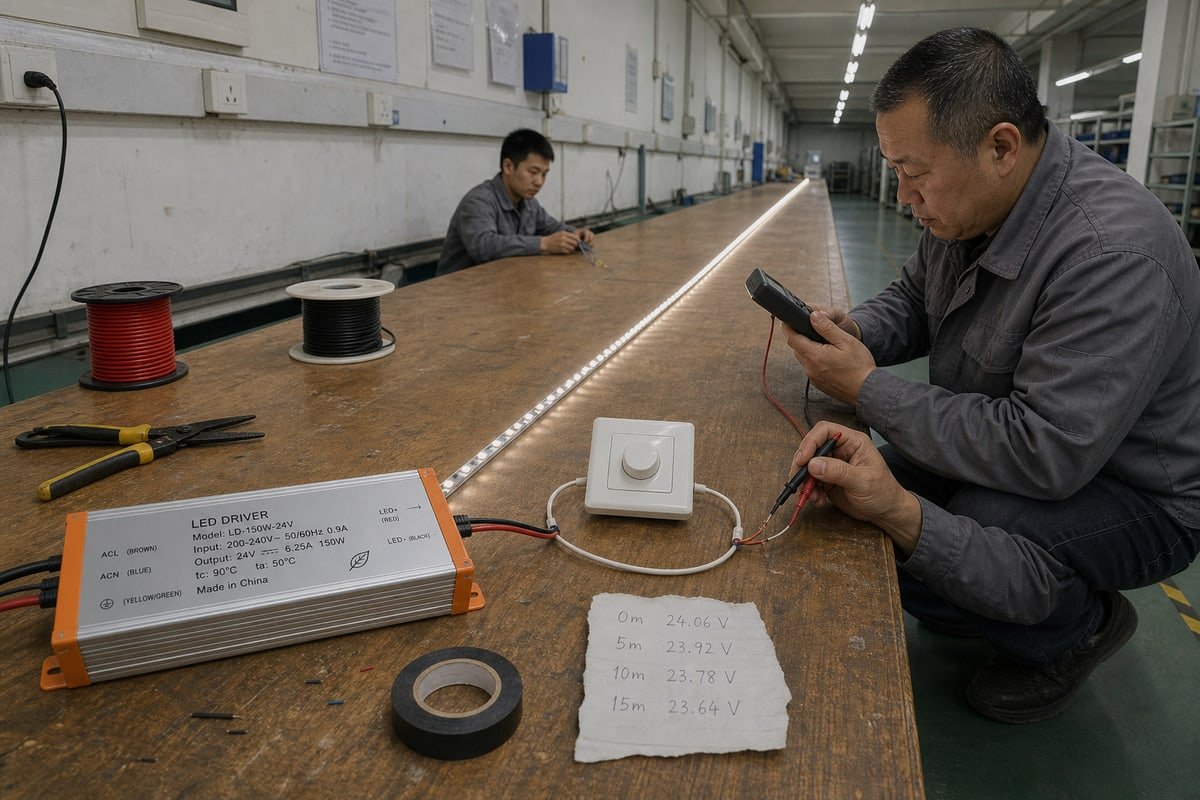
Der schnellste Weg, Flackern zu beheben, ist, mit dem Raten aufzuhören und mit dem Ausschließen zu beginnen. Der entscheidende Unterschied liegt zwischen dimmerinduziertem Flackern und Stromversorgungs-Flackern. Sie sehen für das Auge identisch aus, benötigen aber gegensätzliche Lösungen. Hier ist die Ausschlusssequenz, die wir unseren technischen Kunden empfehlen.
- Dimmer überbrücken. Den Treiber direkt an das Stromnetz anschließen. Wenn das Flackern verschwindet, liegt das Problem in der Dimmkette 3. Bleibt es bestehen, prüfen Sie stattdessen die Stromversorgung.
- Elektrische Übereinstimmung prüfen. Bestätigen Sie, dass der Niederspannungs-LED-Transformator die korrekten 12V oder 24V ausgibt und dass seine Leistung den Streifen mit Reserve abdeckt. Ein Treiber an seiner Leistungsgrenze kann in den Hiccup-Schutz übergehen, was wie rhythmisches Blinken aussieht.
- Mindestlast des Dimmers prüfen. Viele Wanddimmer benötigen eine Mindestleistung zum Betrieb. Ein kurzer Streifen bei niedriger Helligkeit kann unter dieser Schwelle liegen, sodass der Dimmer ein- und ausschaltet.
- Jede Verbindung prüfen. Lose Klemmen, korrodierte Verbindungsstellen und billige Clip-Steckverbinder erzeugen intermittierenden Kontakt, der Dimmerprobleme perfekt nachahmt.
- Spannung an beiden Enden des Streifens messen. Wenn Sie mehr als etwa 0,5V Abfall von Anfang bis Ende sehen, trägt der Spannungsabfall zum Flackern bei. Verkürzen Sie die Strecke, vergrößern Sie den Drahtquerschnitt oder speisen Sie Strom von beiden Enden ein.
- Treiber zuletzt tauschen. Wenn die Schritte eins bis fünf bestanden sind und das Flackern bleibt, ersetzen Sie den Treiber durch ein Gerät, das ausdrücklich für Phasenanschnitt-Dimmung ausgelegt und gegen Ihr Dimmer-Modell bestätigt ist.
Diese Reihenfolge einzuhalten ist wichtig. In unseren After-Sales-Aufzeichnungen entpuppen sich viele “Treiberausfälle” als Verkabelungs-, Lastdimensionierungs- oder Dimmer-Mindestlast-Probleme, die ein neuer Treiber nie behoben hätte.
Welche TRIAC-Dimmer-Schalter sind wirklich mit meinen CV-LED-Treibern kompatibel?
Die Wahl zwischen einem Phasenanschnitt-Dimmer und einem Modell mit Abschaltflanke ist ein Kompromiss, den unsere Ingenieure ständig abwägen: rohe Latch-Zuverlässigkeit gegenüber sanfter Tieflast-Leistung.
Kompatible TRIAC-Dimmer passen zur deklarierten Dimm-Methode des Treibers—Phasenanschnitt, Abschaltflanke oder beides—erfüllen das Eingangsstromprofil des Treibers und tragen eine Mindestlastbewertung, die der angeschlossene Streifen erfüllen kann. Bestätigen Sie die Paarung immer gegen die getestete Dimmer-Kompatibilitätsliste des Treiberherstellers.
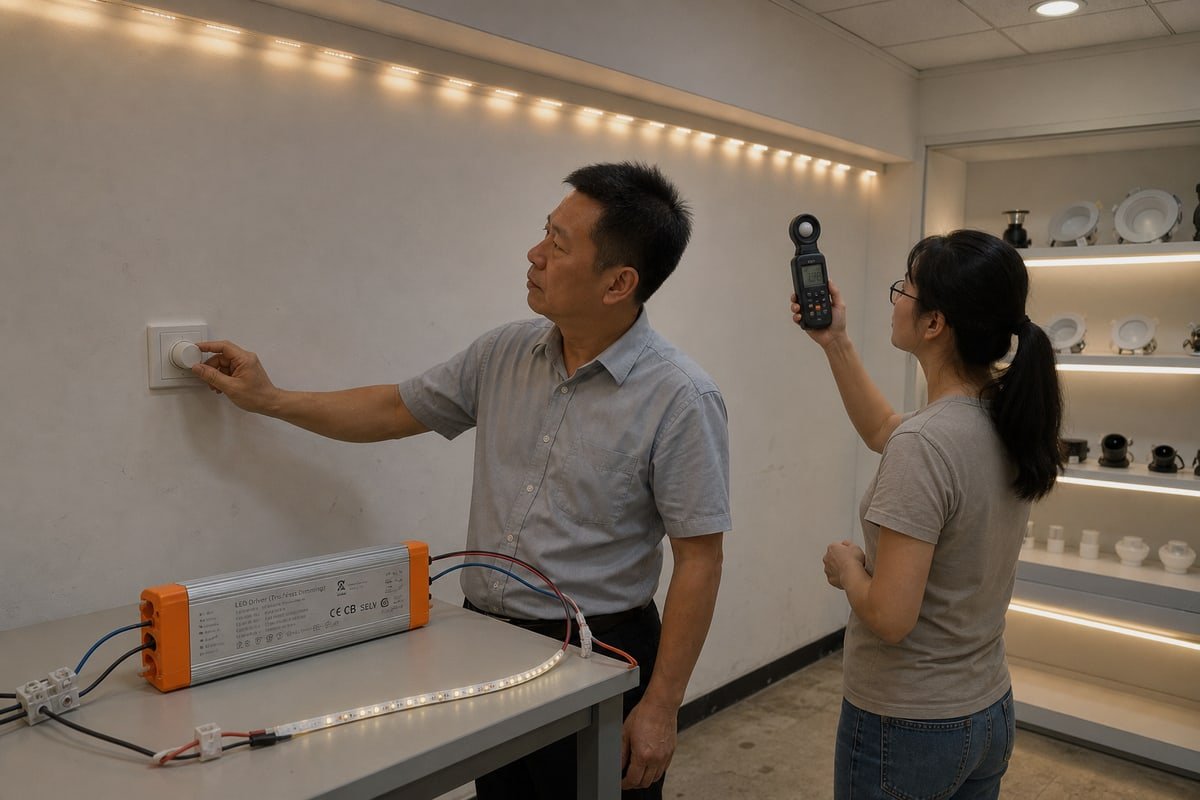
Die Kompatibilität des Dimmschalters ist, wo die meisten Projekte schiefgehen, also beginnen Sie mit dem Vergleich Phasenanschnitt vs. Abschaltflanke. Die beiden Technologien schneiden die AC-Wellenform unterschiedlich, und ein Treiber, der für eine ausgelegt ist, kann sich auf der anderen falsch verhalten.
| Faktor | Phasenanschnitt (Forward Phase) | Abschaltflanke (ELV-Typ) |
|---|---|---|
| Wie die Wellenform geschnitten wird | Schneidet die Vorderseite jeder Halbwelle | Schneidet die Rückseite jeder Halbwelle |
| Ursprüngliches Designziel | Glühlampen- und magnetische Lasten | Elektronische Niederspannungslasten |
| Haltestrom-Empfindlichkeit | Hoch—benötigt stabilen Strom, um gelatcht zu bleiben | Niedrig—verwendet Transistoren, keinen lachenden TRIAC |
| Mindestlastanforderung | Oft 25W oder mehr | In der Regel deutlich niedriger |
| Tieflast-Dimmverhalten | Neigt zu Dropout und Blitzen | Typischerweise sanfter und leiser |
| Beste Paarung | Treiber, die ausdrücklich für Phasenanschnitt bewertet sind | ELV-dimmbare Treiberdesigns |
Lassen Sie mich nun einen häufigen Kundeneinwand ansprechen. Einige Ingenieure sagen mir, TRIAC-Dimmung sei grundsätzlich falsch für LED-Streifen, und nur eine MOSFET- oder Abschaltflanken-Lösung könne flackerfrei sein. Ich verstehe, woher diese Sicht kommt—alte Glühlampendimmer an generischen Konstantspannungs-Netzteilen 4 flackern stark. Aber die Schlussfolgerung ist veraltet. Ein Treiber, dessen Eingangsstufe darauf ausgelegt ist, Phasenanschnitt-Eingang zu dekodieren, dem TRIAC einen stabilen Strom zu bieten und bei tiefen Dimmstufen sauber zu regeln, kann auf Phasenanschnitt-Hardware 5. sehr gut funktionieren. Das echte Spektrum reicht von “alten generischen Setups, die flackern” bis zu “technisch entwickelten TRIAC-kompatiblen Systemen, die das nicht tun.”
Die praktische Regel, die wir Händlern geben: Qualifizieren Sie niemals einen Dimmer allein. Qualifizieren Sie Dimmer, Treiber und Strip als ein System, und fragen Sie Ihren Lieferanten vor jeder Spezifikation nach seiner getesteten Kompatibilitätsliste.
Wie wähle ich einen zuverlässigen CV-TRIAC-Treiber aus, um Flackern bei Großbestellungen zu vermeiden?
Eine Lektion aus jahrelangem Export von Treibern nach Europa und Südostasien sticht für mich hervor: Eine Datenblattzeile mit „24V Konstantspannung“ sagt nichts über das Dimmen aus.
Wählen Sie einen Treiber, der ausdrücklich als „24V Konstantspannung, TRIAC/Phasenanschnitt-dimmbar“ gekennzeichnet ist – nicht nur als Konstantspannung. Verifizieren Sie Leading-Edge- und Trailing-Edge-Unterstützung, Mindest- und Maximallast, Dimmstabilität im unteren Bereich, Eingangsstromverhalten, Sicherheitskennzeichnungen wie CE, CB und SELV, und testen Sie dann die gesamte Dimmer-Treiber-Strip-Kombination als Muster, bevor Sie sich festlegen.
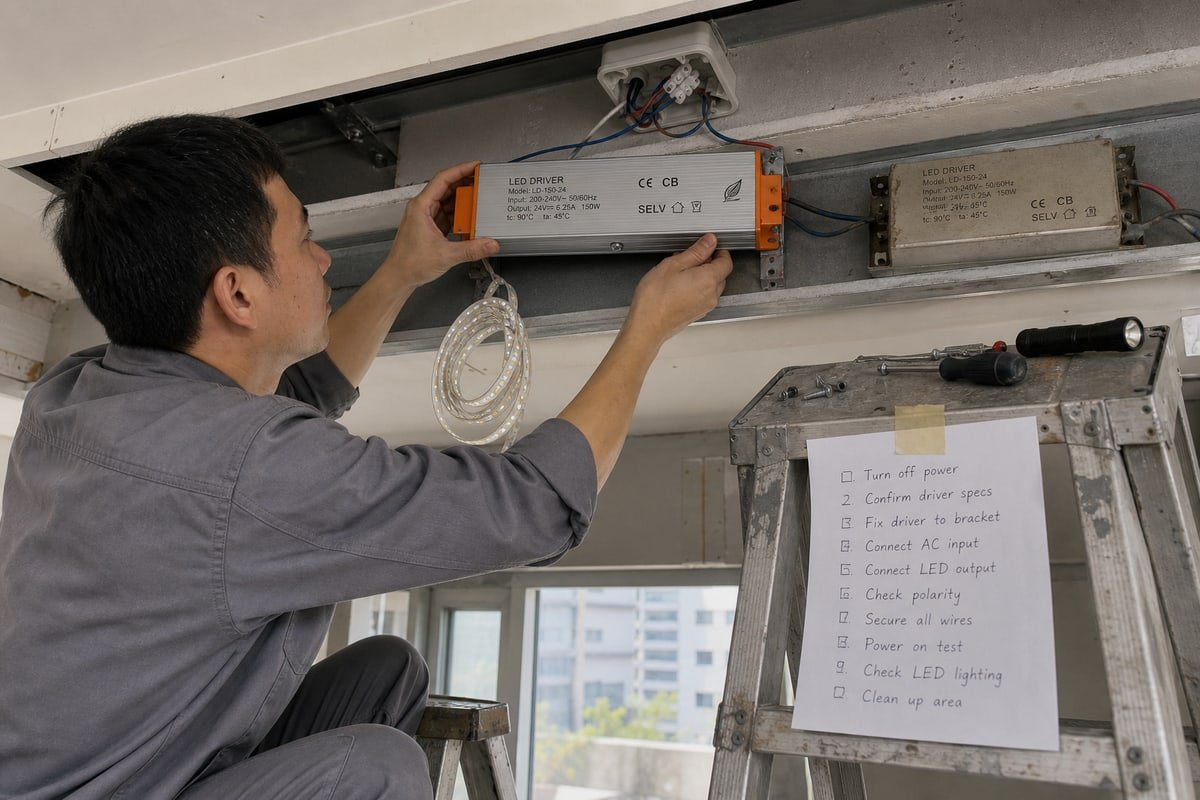
Hier ist das versteckte Problem, das Käufern am meisten Geld kostet. Ein 24V-LED-Strip kann elektrisch perfekt mit einem 24V-CV-Treiber kompatibel sein und beim Dimmen dennoch flackern. Spannungskompatibilität und Dimmkompatibilität sind zwei verschiedene Dinge. Ein herkömmliches Konstantspannungsnetzteil kann im Normalbetrieb ausgezeichnete 24V DC liefern, doch seine Eingangsschaltung kann für eine phasenangeschnittene Wellenform völlig ungeeignet sein. Es hinter einen TRIAC-Dimmer zu schalten, macht es nicht magisch zu einem TRIAC-dimmbaren Treiber. Die Spezifikation muss etwa “24V Konstantspannung, TRIAC/Phasenanschnitt-dimmbar” lauten – nicht einfach “24V Konstantspannungsnetzteil”.”
Die sechs Fragen, die Sie jedem Lieferanten stellen sollten
Vor jeder Großbestellung raten wir Käufern, über “Ist es TRIAC-dimmbar?” hinauszugehen und stattdessen diese sechs Fragen zu stellen:
- Ist es für Leading-Edge, Trailing-Edge oder beides ausgelegt?
- Was ist die Mindest- und Maximallast des Treibers?
- Wie ist die Eingangsstromwellenform des Treibers?
- Hält es eine stabile Regelung bei Ihrer vorgesehenen Mindest-Dimmstufe aufrecht?
- Zieht der LED-Strip tatsächlich genug Leistung für den Betriebsbereich des Treibers?
- Hat der Dimmer eine eigene Mindestlastanforderung?
Die Qualifikations-Checkliste für Großbestellungen
| Kontrollpunkt | Was ist zu überprüfen? | Warnsignal |
|---|---|---|
| Dimm-Kennzeichnung | Gibt TRIAC/Phasenanschnitt-dimmbar ausdrücklich an | Sagt nur Konstantspannung |
| Sicherheitskennzeichnungen | CE, CB und SELV auf dem Gehäuse aufgedruckt | Fehlende oder nicht verifizierbare Zertifikate |
| Thermische Konstruktion | Aluminiumgehäuse mit Kühlrippen | Versiegeltes Kunststoffgehäuse ohne Wärmepfad |
| Flackerfrei-Behauptungen | Fragen, ob 0–100%-Dimmen für Ihren Dimmer und Ihre Last gilt | Behauptung ohne getestete Dimmerliste |
| Untergrenzen-Test | Muster bei Ihrer tatsächlichen Mindesthelligkeit getestet | Nur bei voller Leistung getestet |
| Garantiebedingungen | Schriftliche Garantie deckt Dimmfehler ab | Garantie schließt Dimmverhalten aus |
Auf der Hardwareseite sagt die physische Verarbeitungsqualität viel aus. Unsere eigenen Geräte verwenden ein gebürstetes Aluminiumgehäuse mit gerippten Kühlrillen, da thermische Drift in einem heißen Treiber das Latch-Verhalten verschieben und Flackern erzeugen kann, das erst nach dem Aufwärmen auftritt. Behandeln Sie außerdem “0–100% flackerfrei”-Marketing als Kompatibilitätsaussage, nicht als universelle Garantie – sie gilt nur mit getesteten Dimmern über den angegebenen Lastbereich. Meine stärkste B2B-Erkenntnis: Qualifizieren Sie einen CV-Treiber nicht als TRIAC-dimmbar, nur weil er einen TRIAC-Dimmer akzeptiert. Der echte Test ist, ob die gesamte Dimmer-Treiber-LED-Strip-Kombination über Ihren gesamten geforderten Dimmbereich stabil bleibt.
Abschluss
Flackern ist eine System-Fehlanpassung, kein Mysterium. Passen Sie Dimmer, Treiber und Strip ab; testen Sie die gesamte Kette; und kaufen Sie nur von Lieferanten, die vollständige Kombinationen qualifizieren.
Fußnoten
- Erklärt die Funktion der Eingangsstufe bei TRIAC-basierter Leistungssteuerung. ↩︎
- Technische Erklärung von Phasenanschnittsteuerung und Leitungszeitsteuerung. ↩︎
- Die ursprüngliche Department-of-Energy-URL ist 404; dies ist die aktualisierte maßgebliche Seite, die LED-Flackergrundlagen und Systemkomponenten erklärt. ↩︎
- EU-Niederspannungsrichtlinien-Standards für Konstantspannungs-Elektrogeräte. ↩︎
- NEMA-Standard zur Dimmkompatibilität für Festkörperbeleuchtung. ↩︎