Vai al contenuto










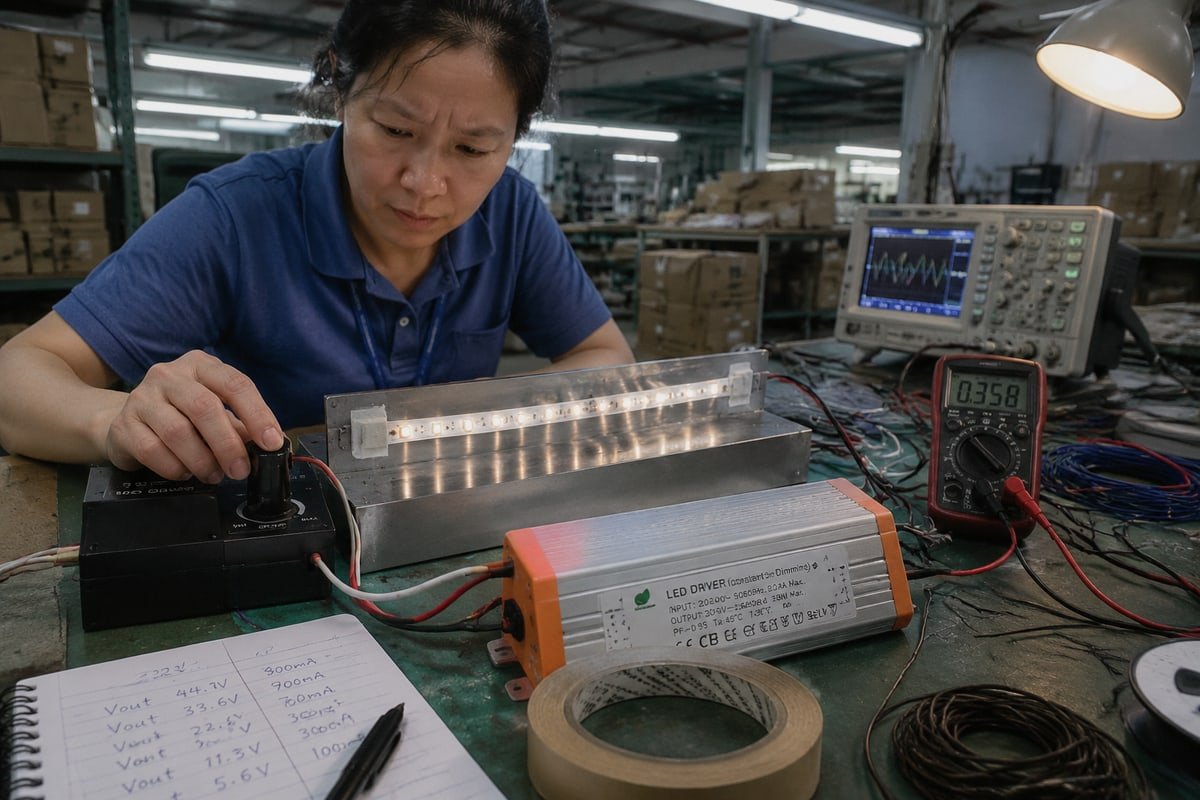
Le strisce LED sfarfallano con i driver CV TRIAC più di qualsiasi altro reclamo che registriamo nella nostra fabbrica di driver. Frustra gli installatori, mina la fiducia nel progetto e blocca gli ordini ripetuti.
Le strisce LED sfarfallano con i driver CV TRIAC quando il dimmer, il circuito di ingresso del driver e il carico LED non sono correttamente abbinati. Il TRIAC taglia la forma d'onda CA e un driver incompatibile non riesce a mantenere una regolazione CC stabile, soprattutto a livelli di dimmerazione bassi, con carichi ridotti o con un abbinamento errato tra bordo anteriore e bordo posteriore.
Questa risposta sembra semplice. Ma i dettagli contano. Di seguito, analizzo le cause reali, le soluzioni che funzionano e come qualificare i prodotti prima di acquistarli all'ingrosso.
Quali sono le cause dello sfarfallio delle mie strisce LED quando utilizzo driver TRIAC a tensione costante (CV)?
L'anno scorso il nostro team di controllo qualità ha ricondotto il reclamo di sfarfallio di un cliente di Singapore a una causa principale: lo stadio di ingresso 1 del driver non riusciva a mantenere il TRIAC in latch. Quel caso ha plasmato l'intera sezione.
Lo sfarfallio si verifica quando la forma d'onda tagliata in fase, lo stadio di ingresso del driver, il suo anello di regolazione CC e il carico LED escono dalla sincronia. I fattori scatenanti comuni includono caduta della corrente di mantenimento, eccessiva capacità di ingresso, disallineamento tra bordo anteriore e bordo posteriore, cicli di protezione hiccup e carichi inferiori al requisito minimo di carico del driver.
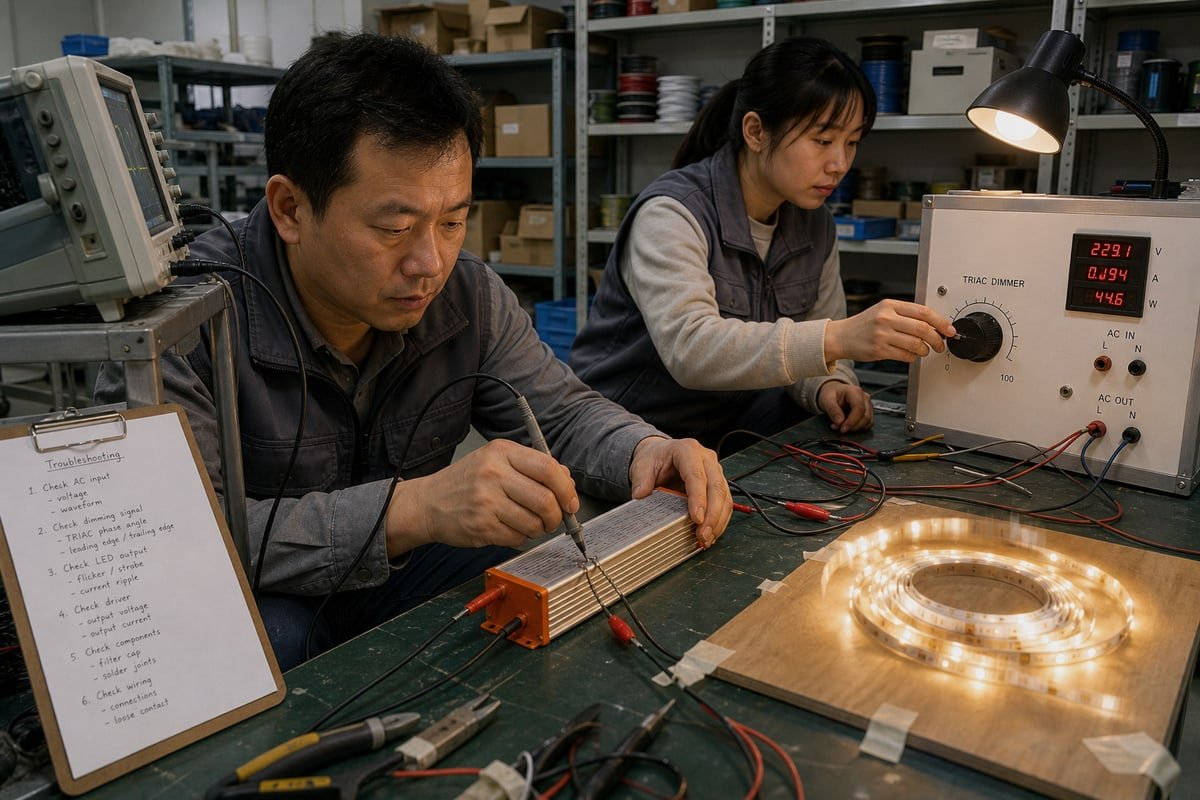
La maggior parte delle persone inquadra questo come “incompatibilità TRIAC”. Questo inquadramento è troppo vago per risolvere qualcosa. La catena reale è questa: forma d'onda tagliata in fase → stadio di ingresso del driver → regolazione CC e anello di controllo → carico LED. Lo sfarfallio appare quando qualsiasi anello di quella catena si rompe.
La causa più trascurata: corrente di mantenimento
Un TRIAC necessita di corrente sufficiente che lo attraversi per rimanere in latch durante ogni semiciclo CA. Un driver con una corrente di ingresso piccola o altamente non lineare può far spegnere il TRIAC prematuramente o farlo scattare in modo incoerente. Questo peggiora vicino al fondo dell'intervallo di dimmerazione, perché la finestra di conduzione 2 è già breve. Ecco perché lo sfarfallio appare spesso solo al di sotto di circa il 20% di luminosità. Il sistema funziona bene a piena potenza, poi lampeggia, scoppietta o tremola quando si abbassa la luce.
L'elenco completo dei meccanismi di sfarfallio
Nel nostro laboratorio, classifichiamo i reclami di sfarfallio nei meccanismi seguenti. Ognuno ha una soluzione diversa, quindi identificare quello giusto risparmia settimane.
| Meccanismo | Cosa succede realmente | Sintomo tipico |
|---|---|---|
| Caduta della corrente di mantenimento | Il driver assorbe troppa poca corrente per mantenere il TRIAC in latch | Lampeggio o scoppiettio a livelli di dimmerazione bassi |
| Disallineamento bordo anteriore/posteriore | Il driver non riesce a decodificare lo stile di taglio di fase del dimmer | Sfarfallio su tutto l'intervallo |
| Squillo dell'ingresso del filtro EMI | I condensatori di ingresso suonano a ogni scatto del TRIAC | Tremolio o ronzio vicino alla gamma media |
| Instabilità del rilevamento del passaggio per lo zero | Il driver legge male la temporizzazione della forma d'onda tagliata | Sfarfallio casuale e irregolare |
| Cicli di protezione hiccup | La protezione da sovraccarico riavvia il driver ripetutamente | Lampeggio lento e ritmico on-off |
| Schemi di battimento ripple vs PWM | Il ripple CA rettificato interferisce con la frequenza di dimmerazione PWM interna | Effetto di rotazione lenta o stroboscopico |
| Deriva termica | Le soglie di latch si spostano mentre i componenti si riscaldano | Sfarfallio che inizia dopo il riscaldamento |
| Inquinamento armonico | Altri carichi non lineari intaccano la forma d'onda CA sul ramo | Sfarfallio solo quando altre apparecchiature sono in funzione |
| Caduta di tensione sui tratti CC | Cavi sottodimensionati o tratti lunghi causano oscillazioni di abbassamento | Sfarfallio all'estremità lontana della striscia |
| Disallineamento dell'impedenza riflessa | L'induttanza parassita della striscia sconvolge l'anello di regolazione dell'uscita | Instabilità con strisce molto lunghe |
Nota che solo alcuni di questi sono problemi del dimmer. Diversi sono problemi di distribuzione dell'alimentazione che diventano visibili solo quando la dimmerazione rimuove il margine del sistema.
Come posso risolvere lo sfarfallio nei miei progetti di illuminazione a striscia LED dimmerabile TRIAC?
Un cliente in Vietnam una volta ha restituito tre driver “difettosi” al nostro laboratorio. Tutti e tre hanno superato i nostri test su banco. Il suo vero problema era la caduta di tensione su una lunga corsa di striscia sul sito di lavoro.
Risolvi lo sfarfallio testando in ordine: bypassa il dimmer, verifica che tensione e potenza del driver corrispondano alla striscia, conferma che il carico minimo del dimmer sia soddisfatto, serra ogni connessione, misura la caduta di tensione lungo la corsa e infine sostituisci il driver con un’unità CV classificata per taglio di fase.
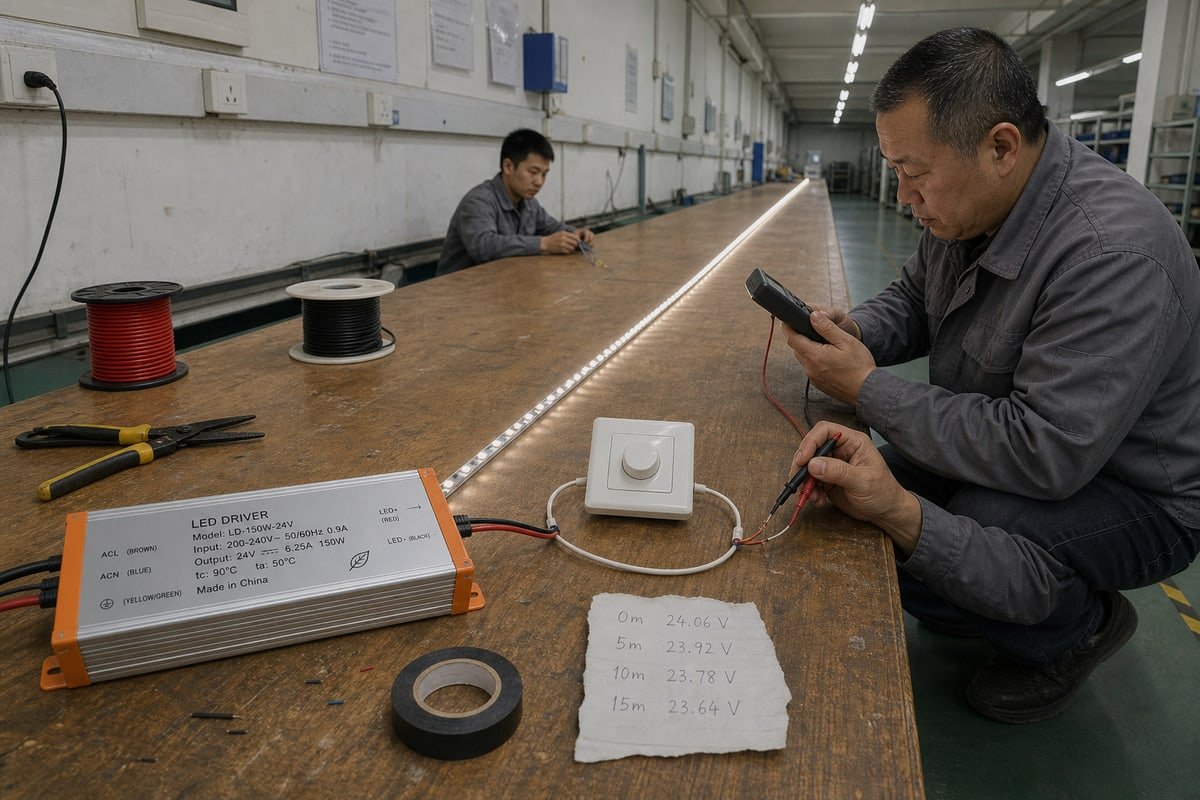
Il modo più rapido per risolvere lo sfarfallio è smettere di indovinare e iniziare a eliminare. La distinzione chiave è tra sfarfallio indotto dal dimmer e sfarfallio da erogazione di potenza. Sembrano identici all’occhio, ma richiedono soluzioni opposte. Ecco la sequenza di eliminazione che raccomandiamo ai nostri clienti ingegneri.
- Bypassa il dimmer. Collega il driver direttamente alla rete. Se lo sfarfallio scompare, il problema risiede nella catena di dimmerazione 3. Se persiste, guarda invece all’erogazione di potenza.
- Verifica la corrispondenza elettrica. Conferma che il trasformatore LED a bassa tensione fornisca i corretti 12V o 24V e che la sua potenza copra la striscia con margine. Un driver al suo limite può entrare in protezione a scatti, che sembra un lampeggio ritmico.
- Controlla il carico minimo del dimmer. Molti dimmer da parete richiedono una potenza minima per funzionare. Una striscia corta a bassa luminosità può scendere sotto quella soglia, quindi il dimmer si accende e spegne in ciclo.
- Ispeziona ogni connessione. Terminali allentati, giunzioni corrose e connettori a clip economici creano contatti intermittenti che imitano perfettamente i problemi del dimmer.
- Misura la tensione a entrambe le estremità della striscia. Se vedi più di circa 0,5V di caduta dall’inizio alla fine, il calo contribuisce allo sfarfallio. Accorcia la corsa, aumenta la sezione del filo o alimenta da entrambe le estremità.
- Sostituisci il driver per ultimo. Se i passaggi da uno a cinque superano il test e lo sfarfallio persiste, sostituisci il driver con un’unità esplicitamente classificata per la dimmerazione a taglio di fase e confermata rispetto al tuo modello di dimmer.
Seguire questo ordine è importante. Nei nostri registri post-vendita, una grande parte dei “guasti del driver” risulta essere problemi di cablaggio, dimensionamento del carico o carico minimo del dimmer che un nuovo driver non avrebbe mai risolto.
Quali interruttori dimmer TRIAC sono realmente compatibili con i miei driver LED a CV?
Scegliere tra un dimmer a taglio di fase anteriore e un modello a bordo di discesa è un compromesso che i nostri ingegneri valutano costantemente: affidabilità di aggancio grezza contro prestazioni fluide a basso livello.
I dimmer TRIAC compatibili corrispondono al metodo di dimmerazione dichiarato del driver—bordo anteriore, bordo di discesa o entrambi—soddisfano il profilo di corrente di ingresso del driver e portano una classificazione di carico minimo che la striscia collegata può soddisfare. Conferma sempre l’accoppiamento rispetto alla lista di compatibilità dei dimmer testati dal produttore del driver.
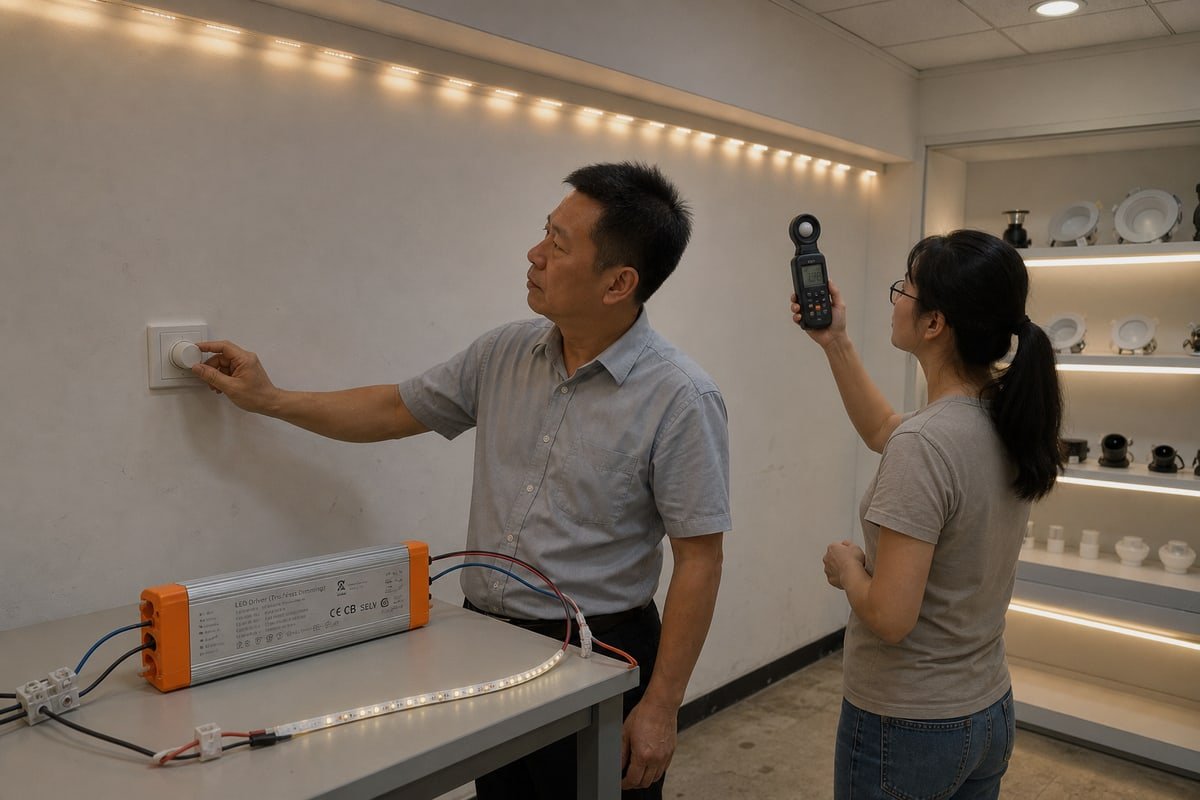
La compatibilità dell’interruttore dimmer è dove la maggior parte dei progetti sbaglia, quindi inizia con il confronto tra bordo anteriore e bordo di discesa. Le due tecnologie tagliano la forma d’onda CA in modo diverso, e un driver progettato per una può comportarsi male sull’altra.
| Fattore | Bordo anteriore (fase anteriore) | Bordo di discesa (tipo ELV) |
|---|---|---|
| Come taglia la forma d’onda | Taglia la parte anteriore di ogni semiciclo | Taglia la parte posteriore di ogni semiciclo |
| Obiettivo di progettazione originale | Carichi a incandescenza e magnetici | Carichi elettronici a bassa tensione |
| Sensibilità alla corrente di mantenimento | Alta—richiede corrente costante per rimanere agganciato | Bassa—usa transistor, non un TRIAC ad aggancio |
| Requisito minimo di carico | Spesso 25W o più | Di solito molto più basso |
| Comportamento di dimmerazione a basso livello | Propenso a cadute e lampeggi | Tipicamente più fluido e silenzioso |
| Migliore abbinamento | Driver esplicitamente classificati per bordo anteriore | Progettazioni di driver dimmerabili ELV |
Ora lascia che affronti un’obiezione comune degli acquirenti. Alcuni ingegneri mi dicono Regolazione dell'intensità luminosa tramite TRIAC è intrinsecamente sbagliato per le strisce LED, e che solo una soluzione MOSFET o a bordo di discesa può essere senza sfarfallio. Capisco da dove arriva quella visione—i dimmer a incandescenza legacy su unità generiche di alimentatore a tensione costante 4 sfarfallano gravemente. Ma la conclusione è superata. Un driver il cui stadio di ingresso è progettato per decodificare l’ingresso a taglio di fase, presentare una corrente stabile al TRIAC e regolare in modo pulito a livelli di dimmerazione profonda può funzionare molto bene su hardware a bordo anteriore 5. Lo spettro reale va da “vecchie configurazioni generiche che sfarfallano” a “sistemi compatibili TRIAC ingegnerizzati che non lo fanno.”
La regola pratica che diamo ai distributori: non qualificare mai un dimmer da solo. Qualifica dimmer, driver e strip come un unico sistema e chiedi al tuo fornitore la loro lista di compatibilità testata prima di specificare qualsiasi cosa.
Come scelgo un driver TRIAC a tensione costante affidabile per prevenire lo sfarfallio negli ordini all'ingrosso?
Una lezione appresa da anni di esportazione di driver in Europa e Sud-Est asiatico mi colpisce particolarmente: una riga di datasheet che riporta 24V a tensione costante non dice nulla sul dimming.
Scegli un driver esplicitamente etichettato come 24V a tensione costante, dimmerabile TRIAC/phase-cut—non solo a tensione costante. Verifica il supporto leading-edge e trailing-edge, il carico minimo e massimo, la stabilità del dimming a fondo scala, il comportamento della corrente in ingresso, i marchi di sicurezza come CE, CB e SELV, quindi testa un campione dell'intera combinazione dimmer-driver-striscia prima di impegnarti.
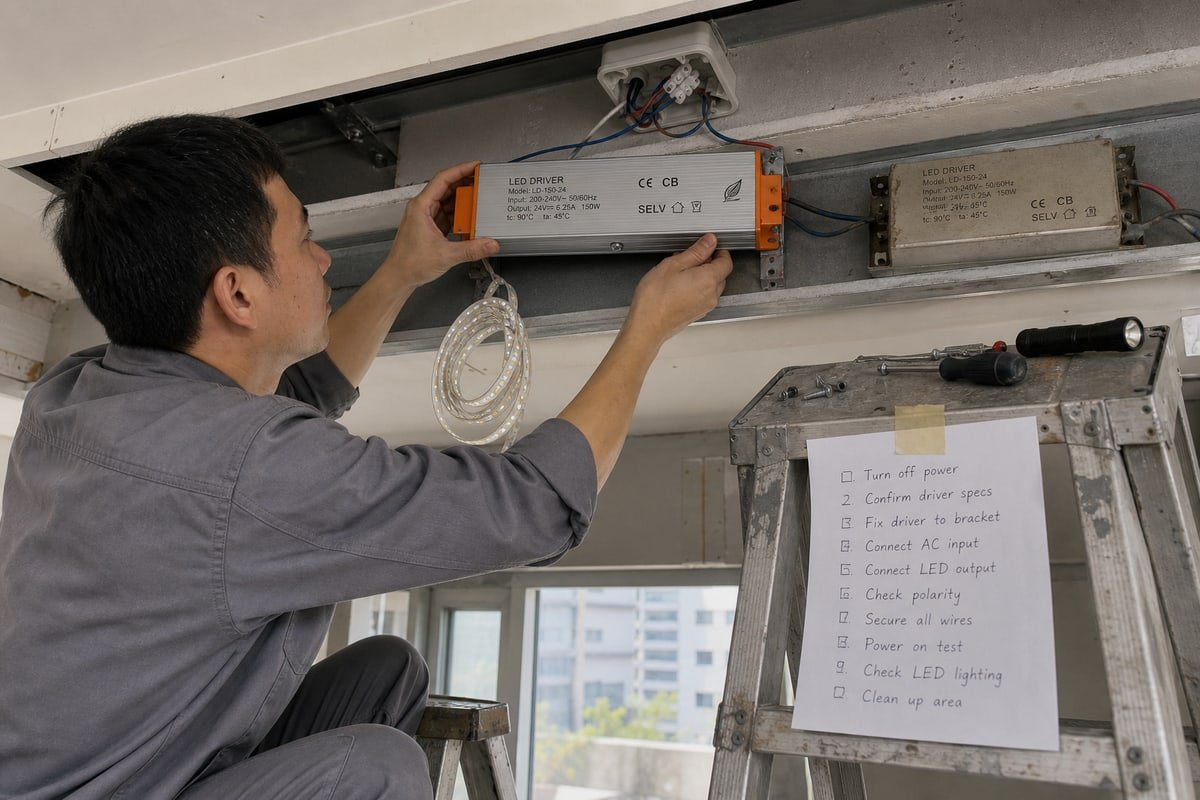
Ecco il problema nascosto che costa più soldi agli acquirenti. Una striscia LED da 24V può essere perfettamente compatibile elettricamente con un driver CV da 24V e comunque sfarfallare quando viene dimmerata. La compatibilità di tensione e la compatibilità di dimming sono due cose diverse. Un alimentatore a tensione costante convenzionale può produrre un'ottima uscita DC da 24V in funzionamento normale, ma il suo circuito di ingresso può essere completamente inadatto a una forma d'onda phase-cut. Collegarlo dietro a un dimmer TRIAC non lo rende magicamente un driver dimmerabile TRIAC. La specifica deve dire qualcosa come “24V a tensione costante, dimmerabile TRIAC/phase-cut”—non semplicemente “alimentatore a tensione costante 24V.”
Le sei domande da fare a ogni fornitore
Prima di qualsiasi ordine all'ingrosso, diciamo agli acquirenti di andare oltre “è dimmerabile TRIAC?” e di fare invece queste sei domande:
- È progettato per leading-edge, trailing-edge o entrambi?
- Qual è il carico minimo e massimo del driver?
- Qual è la forma d'onda della corrente in ingresso del driver?
- Mantiene una regolazione stabile al tuo livello di dimming minimo previsto?
- La striscia LED sta effettivamente assorbendo abbastanza potenza per l'intervallo operativo del driver?
- Il dimmer ha un requisito di carico minimo proprio?
La checklist di qualificazione per ordini all'ingrosso
| Punto di Controllo | Cosa verificare | Bandiera rossa |
|---|---|---|
| Etichetta di dimming | Dichiara esplicitamente dimmerabile TRIAC/phase-cut | Dice solo a tensione costante |
| Marchi di sicurezza | CE, CB e SELV stampati sull'alloggiamento | Certificati mancanti o non verificabili |
| Design termico | Alloggiamento in alluminio con scanalature di dissipazione del calore | Plastica sigillata senza percorso termico |
| Affermazioni flicker-free | Chiedi se il dimming 0–100% si applica al tuo dimmer e carico | Affermazione data senza lista di dimmer testati |
| Test a fondo scala | Campione testato alla tua luminosità minima reale | Testato solo a piena uscita |
| Termini di garanzia | Garanzia scritta onorata su guasti di dimming | La garanzia esclude il comportamento di dimming |
Sul lato hardware, la qualità costruttiva fisica dice molto. Le nostre unità usano un alloggiamento in alluminio spazzolato con scanalature a coste per la dissipazione del calore, perché la deriva termica in un driver caldo può spostare il comportamento di latch e creare sfarfallio che appare solo dopo il riscaldamento. Inoltre, tratta il marketing “0–100% flicker-free” come un'affermazione di compatibilità, non una garanzia universale—vale solo con dimmer testati nell'intervallo di carico dichiarato. Il mio punto B2B più forte: non qualificare un driver CV come dimmerabile TRIAC solo perché accetta un dimmer TRIAC. Il vero test è se la combinazione completa di dimmer, driver e striscia LED rimane stabile in tutto il tuo intervallo di dimming richiesto.
Conclusione
Lo sfarfallio è un disallineamento di sistema, non un mistero. Abbina dimmer, driver e striscia; testa l'intera catena; e compra solo da fornitori che qualificano combinazioni complete.
Note a piè di pagina
- Spiega la funzione dello stadio di ingresso nel controllo di potenza basato su TRIAC. ↩︎
- Spiegazione tecnica del controllo a fase fired e dei tempi di conduzione. ↩︎
- L'URL originale del Dipartimento dell'Energia è 404; questa è la pagina autorevole aggiornata che spiega i fondamenti dello sfarfallio LED e i componenti di sistema. ↩︎
- Standard della Direttiva Bassa Tensione UE per apparecchiature elettriche a tensione costante. ↩︎
- Standard NEMA riguardante la compatibilità di dimming per l'illuminazione a stato solido. ↩︎