Pular para o conteúdo










Cintilação, sliders mortos, brilho fantasma — já vi todas as falhas que um dimmer barato pode causar. Na nossa linha de produção, um dimmer 0-10V de alta qualidade é definido muito antes do envio.
Um dimmer 0-10V de alta qualidade oferece controle estável e sem cintilação, escurecimento suave em toda a faixa, compatibilidade verificada com drivers de LED, capacidade adequada de corrente de controle sink/source e proteção elétrica e térmica confiável. Crucialmente, o dimmer, o padrão de controle e o driver de LED devem funcionar como um sistema eletricamente compatível.
Esse último ponto é o que mais importa. Um rótulo 0-10V sozinho não garante nada. O dimmer envia um sinal de dimerização analógico 1, e os drivers do outro lado devem interpretá-lo corretamente. Neste guia, vou orientá-lo sobre certificações, verificação de controle de qualidade, as especificações técnicas que realmente importam e como se proteger nos termos de garantia. Estas são as quatro perguntas que nossos compradores em Singapura, Alemanha e Austrália nos fazem com mais frequência, então vou respondê-las da mesma forma que respondo cara a cara em feiras comerciais — diretamente.
Que certificações devo procurar ao adquirir um dimmer 0-10V de alta qualidade?
Na primavera passada, um distribuidor alemão pediu nosso arquivo técnico CE completo antes de discutir preços. Jogada inteligente — esse único pedido elimina fornecedores fracos mais rápido do que qualquer outra coisa.
Procure a listagem UL ou ETL para a América do Norte, CE e RoHS para a Europa, e conformidade com o Anexo E da IEC 60929 para a interface de controle 1-10V/0-10V. Também confirme a conformidade com a fiação Classe 2 e, para projetos nos EUA, a convenção de cores rosa e roxo para fios de controle da NEC 2022.

As certificações se dividem em dois grupos, e os compradores frequentemente os confundem. O primeiro grupo cobre segurança e acesso ao mercado. O segundo grupo cobre a interface de controle em si. Você precisa de ambos, e eles respondem a perguntas diferentes.
Certificações de acesso ao mercado por região
Nossos mercados de exportação vão do Japão à Finlândia, então mantemos um mapa de certificações para cada família de produtos. Aqui está a versão resumida para dimmers de parede usados em controles de iluminação comercial:
| Certificação | Região | O que ela realmente verifica |
|---|---|---|
| Listagem UL / ETL | EUA, Canadá | Segurança elétrica: risco de incêndio, choque e térmico sob condições de falha |
| CE (LVD + EMC) | UE (Itália, França, Alemanha, etc.) | Conformidade autodeclarada com as diretivas de baixa tensão e eletromagnéticas |
| RoHS | UE e além | Restrição de substâncias perigosas em componentes e solda |
| UKCA | Reino Unido | Equivalente britânico do CE após o Brexit |
| RCM | Austrália, Nova Zelândia | Conformidade de segurança e EMC para o mercado australiano |
| PSE | Japão | Lei japonesa de segurança de aparelhos elétricos |
Normas que regem o sinal de controle
A interface 0-10V remonta à IEC 60929 Anexo E 2, que originalmente definiu a interface analógica 1-10V para reatores fluorescentes. Muitos produtos LED ainda seguem sua lógica elétrica hoje. Na América do Norte, o circuito de controle de baixa tensão normalmente deve atender aos padrões de fiação Classe 2 3, que limitam a energia no lado do controle para que a fiação seja segura de rotear sem conduíte em muitos casos. E desde o Código Elétrico Nacional 4, de 2022, dimmers de qualidade usam fios de controle rosa e roxo. Isso evita confusão perigosa com fios neutros cinza durante a instalação — um pequeno detalhe que sinaliza uma fábrica séria.
Documentos a solicitar antes de fazer o pedido
Peça os números reais dos certificados, não fotos de logotipos. Os números UL e ETL podem ser verificados em bancos de dados públicos 5. Para CE, solicite a Declaração de Conformidade junto com os relatórios de teste EMC e LVD subjacentes. Quando um fornecedor hesitar em qualquer um desses, afaste-se.
Como posso verificar o processo de controle de qualidade de um fornecedor antes de fazer um pedido em massa?
Nossa sala de envelhecimento funciona 24 horas por dia. Cada lote de dimmers cicla de zero à saída total por horas antes da embalagem, porque falhas detectadas aqui nunca chegam a um canteiro de obras.
Verifique o controle de qualidade solicitando os procedimentos de IQC, em processo e OQC do fornecedor, revisando os registros de burn-in e testes de envelhecimento, testando amostras douradas contra suas cargas de projeto, agendando uma auditoria de fábrica ou inspeção de terceiros e confirmando a rastreabilidade do lote antes de se comprometer com um pedido em massa.
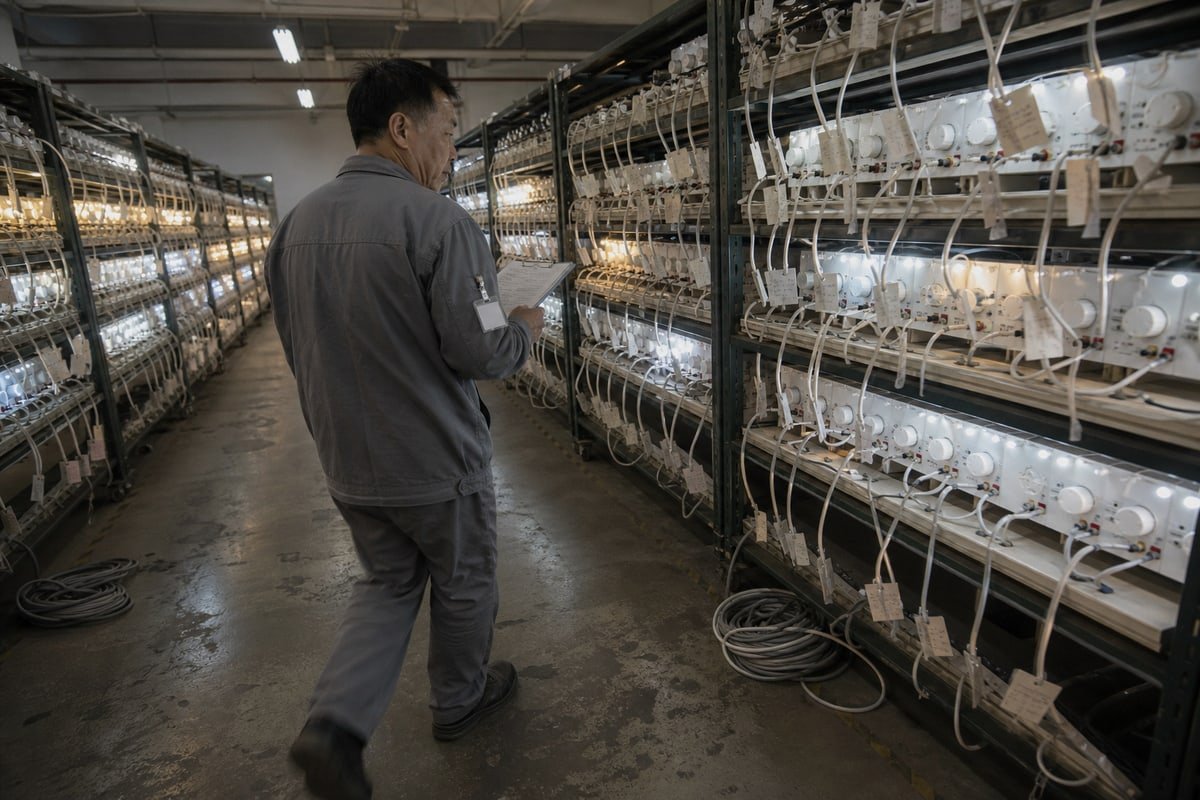
Um folheto pode afirmar qualquer coisa. Um processo deixa evidências. Quando distribuidores visitam nossa instalação, mostro evidências, e você deve exigir o mesmo de qualquer fornecedor. Aqui está a sequência de verificação que recomendo, na ordem que custa menos para você:
- Solicite o fluxograma de controle de qualidade. Uma fábrica real documenta a inspeção de recebimento (IQC) para componentes, verificações em processo (IPQC) na linha e inspeção de saída (OQC) antes da embalagem. Se a resposta for um vago “testamos tudo”, isso é um sinal de alerta.
- Peça registros de burn-in e envelhecimento. Cada unidade deve passar por um ciclo de envelhecimento energizado. Para dimmers 0-10V, também verificamos a tensão de saída em múltiplas posições do botão, porque um sinal de dimerização analógico com deriva causa brilho desigual entre as luminárias mais tarde.
- Teste amostras douradas com seus drivers reais. Não teste o dimmer isoladamente. Conecte-o aos drivers LED exatos que seu projeto usa e verifique desempenho sem cintilação em saída baixa, brilho total e em todos os pontos intermediários.
- Verifique a construção física. Em nossos modelos rotativos brancos, o OQC inclui torque de rotação do botão, acabamento da face e o ajuste da ranhura embutida ao redor do botão. Botões soltos e chanfros irregulares revelam ferramentas imprecisas — e ferramentas imprecisas geralmente significam circuitos imprecisos.
- Agende uma auditoria ou inspeção de terceiros. Um tour em vídeo pela fábrica não custa nada. Uma inspeção pré-embarque contra um AQL acordado custa pouco e economiza muito.
- Confirme a rastreabilidade do lote. Se uma unidade falhar no segundo ano, a fábrica deve rastrear sua data de produção, lotes de componentes e registros de teste. Sem rastreabilidade, não há responsabilidade.
Execute esta sequência uma vez e você saberá mais sobre seu fornecedor do que cem e-mails poderiam lhe dizer.
Quais especificações técnicas importam mais ao escolher um dimmer 0-10V para meus projetos?
Anos atrás, um cliente de engenharia na Tailândia conectou sessenta drivers a um dimmer e culpou nosso produto quando as luminárias dimerizaram de forma desigual. A causa real? Sobrecarga de corrente de controle. Nunca esqueci isso.
As especificações mais importantes são a capacidade de corrente de controle sink/source, o número máximo de drivers, o nível mínimo de dimerização, a capacidade de desligamento total (dim-to-off), as classificações de carga e tensão, curvas de dimerização lineares ou logarítmicas selecionáveis e recursos de proteção, como comutação por cruzamento de zero e imunidade a surtos. A compatibilidade com seus drivers de LED importa mais do que qualquer número isolado.
Deixe-me começar com a especificação que a maioria dos artigos genéricos ignora completamente, porque causou o incidente na Tailândia.
Corrente de sinking e sourcing: o limite oculto
Um dimmer 0-10V não simplesmente “envia uma tensão” para um número ilimitado de drivers. Dependendo da arquitetura, cada driver conectado consome corrente do — ou contribui com corrente para — o loop de controle. É isso que corrente de sinking e sourcing significa na prática. Sobrecarregue o loop, e o dimmer não conseguirá mais manter a tensão de controle pretendida. Os sintomas parecem aleatórios, mas não são: luzes que nunca atingem brilho total, luminárias dimerizando de forma diferente entre si, um fundo instável, resposta não linear ou comportamento do sistema que muda no momento em que você adiciona mais drivers. Unidades de nível profissional são classificadas para controlar 50 ou mais luminárias sem degradação de sinal, mas apenas quando a matemática de corrente funciona.
Não julgue um dimmer 0-10V apenas pelo rótulo 0-10V. Verifique o padrão de controle, corrente de sink/source, número máximo de drivers, nível mínimo de dimerização, compatibilidade com drivers e se é necessário comutação ON/OFF separada.

A lista de verificação de especificações
| Especificação | Por que é importante | O que perguntar ao fornecedor |
|---|---|---|
| Corrente de sink/source | Determina quantos drivers um dimmer pode controlar com precisão | mA nominal e contagem máxima de drivers |
| Nível mínimo de dimerização | Fundo ruim revela dimmers baratos; boas unidades atingem 5% ou menos suavemente | Desempenho de fundo testado com seu modelo de driver |
| Capacidade de desligar até apagar | 0V verdadeiro apaga as luzes completamente; sistemas 1-10V frequentemente deixam um brilho fantasma | Se é necessária comutação separada de tensão de linha |
| Classificação de carga e tensão | Produtos comerciais comumente classificados em torno de 120V 10A / 277V 5A; dimmers de parede líderes suportam até 960W / 8A | Potência nominal por tensão e qualquer redução para múltiplos grupos |
| Curva de dimerização | Seleção de curva linear vs logarítmica corresponde à percepção não linear de brilho do olho | Se a curva é selecionável |
| Comutação por cruzamento de zero | Relé engata na tensão mais baixa, sobrevivendo à corrente de inrush do driver LED | Tipo de relé e classificação de inrush |
| Proteção e isolamento | ESD, proteção contra surtos e isolamento galvânico entre os lados CA e CC previnem falhas catastróficas | Quais proteções estão incorporadas |
| Integridade do sinal | Condicionamento ativo de sinal remove EMI; compensação de queda de tensão importa em longos trechos de controle | Comprimento máximo recomendado do cabo de controle |
Mais um ponto sobre compatibilidade com drivers LED: configurações de ajuste de alto nível permitem que instaladores corrijam incompatibilidades no local, e memória predefinida melhora a usabilidade diária. Nenhum substitui testes em nível de sistema antes de comprar um dimmer 0-10V de alta qualidade em volume.
Como posso garantir que meu fornecedor honre as garantias e os compromissos de suporte pós-venda?
Manter stock de reposição sobressalente no nosso armazém custa-nos dinheiro todos os meses. Aceitamos esse custo, porque uma reclamação de garantia respondida em dias — não em semanas — mantém os distribuidores leais.
Obtenha os termos de garantia por escrito antes de encomendar, incluindo o período de garantia, o limite de taxa de falhas, o processo de substituição e o tempo de resposta. Teste o comportamento pós-venda do fornecedor com pequenos problemas primeiro, mantenha registos datados de cada compromisso e escolha fornecedores que atribuam um contacto nomeado para suporte técnico.

A reclamação mais comum que ouço de compradores que mudam para nós não é sobre a qualidade do produto. É sobre fornecedores que prometeram cobertura de garantia durante a fase de vendas e depois desapareceram após a transferência bancária ser liquidada. Pode evitar isso, mas deve fazê-lo antes da primeira encomenda em massa, não após a primeira falha.
Comece pelo contrato. Uma garantia que vive apenas numa mensagem de WhatsApp é uma sugestão, não um compromisso. Coloque o período de garantia, a definição de defeito, o limite de taxa de falhas e a solução — reparação, substituição ou crédito — no acordo de venda ou nos termos da fatura pró-forma. Depois defina o processo: quem envia a unidade defeituosa de volta, quem paga o frete e quantos dias úteis até uma resolução. Nos nossos próprios contratos, detalhamos o procedimento de substituição linha por linha, porque termos vagos favorecem sempre o vendedor.
Em seguida, teste o comportamento cedo. Encomende amostras e depois levante deliberadamente uma pequena questão técnica — talvez sobre o nível mínimo de regulação com um driver específico. Cronometre a resposta. Um fornecedor que demora dez dias a responder a uma pergunta pré-venda demorará mais após a venda.
| O que verificar | Bandeira vermelha | Bom sinal |
|---|---|---|
| Documentação de garantia | Apenas promessas verbais | Termos escritos no contrato |
| Tempo de resposta | Respostas param após o pagamento | Contacto nomeado, responde dentro de 1–2 dias úteis |
| Processo de substituição | “Envie de volta e veremos” | Etapas RMA definidas, stock sobressalente mantido para trocas rápidas |
| Suporte técnico | Representante de vendas não consegue responder a questões de engenharia | Acesso direto a um engenheiro para problemas de compatibilidade |
| Histórico | Nenhuma referência oferecida | Distribuidores existentes dispostos a falar consigo |
Finalmente, mantenha registos datados de cada compromisso. Se surgir uma disputa, a documentação decide-a.
Conclusão
Um dimerizador 0-10V de alta qualidade prova-se como um sistema: certificações verificadas, controlo de qualidade transparente, especificações honestas e termos de garantia por escrito. Verifique essas quatro áreas e os seus projetos permanecerão sem cintilação.
Notas de rodapé
- Visão geral técnica do protocolo de sinalização analógica 0-10V para iluminação. ↩︎
- A norma internacional que define as características elétricas do controlo 0-10V. ↩︎
- Normas de segurança para circuitos de baixa tensão para prevenir incêndios e choques. ↩︎
- A norma primária dos EUA para design e instalação elétrica segura. ↩︎
- Diretório oficial para verificar certificação de segurança e informações de listagem. ↩︎