





闪烁、滑块失灵、鬼影发光——我见过廉价调光器能引起的每一种故障。在我们的生产线上,高品质的0-10V调光器在发货前很久就已定义明确。.
高品质0-10V调光器提供稳定、无闪烁的控制,全范围内平滑调光,经过验证的LED驱动器兼容性,足够的灌/拉控制电流能力,以及可靠的电气和热保护。至关重要的是,调光器、控制标准和LED驱动器必须作为一个电气兼容的系统协同工作。.
最后一点最为重要。仅凭0-10V标签并不能保证任何东西。调光器发送一个 模拟调光信号 1, ,而另一端的驱动器必须正确解读它。在本指南中,我将带您了解认证、质量控制验证、真正重要的技术规格,以及如何在保修条款上保护自己。这些是我们在新加坡、德国和澳大利亚的买家最常问的四个问题,所以我会像在展会上隔着桌子回答他们那样直接回答。.
在采购高质量的0-10V调光器时,我应该关注哪些认证?
去年春天,一位德国分销商在讨论价格之前要求提供我们完整的CE技术文件。明智之举——这一要求比任何其他方式都能更快地筛选出实力不足的供应商。.
寻找北美市场的UL或ETL认证,欧洲市场的CE和RoHS认证,以及1-10V/0-10V控制接口符合IEC 60929附录E的要求。同时确认Class 2布线合规性,对于美国项目,还需符合2022年NEC规定的粉色和紫色控制线颜色惯例。.

认证分为两组,买家常常混淆。第一组涵盖安全和市场准入。第二组涵盖控制接口本身。您两者都需要,它们回答不同的问题。.
按地区划分的市场准入认证
我们的出口市场从日本延伸到芬兰,因此我们为每个产品系列保留一份认证地图。以下是用于商业照明控制的壁装调光器的简要版本:
| 认证 | 地区 | 实际验证内容 |
|---|---|---|
| UL / ETL认证 | 美国、加拿大 | 电气安全:故障条件下的火灾、电击和热风险 |
| CE(LVD + EMC) | 欧盟(意大利、法国、德国等) | 自我声明符合低压和电磁指令 |
| RoHS | 欧盟及其他地区 | 组件和焊料中危险物质的限制 |
| UKCA | 英国 | 脱欧后英国的CE等效认证 |
| RCM | 澳大利亚、新西兰 | 澳大利亚市场的安全和EMC合规性 |
| PSE | 日本 | 日本电气用品安全法 |
控制信号的标准
0-10V接口可追溯到 IEC 60929附录E 2, ,该标准最初定义了用于荧光灯镇流器的1-10V模拟接口。许多LED产品至今仍遵循其电气逻辑。在北美,低压控制电路通常必须满足 Class 2布线标准 3, ,该标准限制了控制侧的功率,使布线在许多情况下无需导管即可安全铺设。自2022年 国家电气规范 4, 起,优质调光器使用粉色和紫色控制线。这可以防止安装过程中与灰色中性线发生危险混淆——这是一个表明工厂严谨的小细节。.
订购前需要索取的文件
索取实际的证书编号,而不是标志的照片。UL和ETL编号可以在 公共数据库 5. 中验证。对于CE,请索取符合性声明以及相关的EMC和LVD测试报告。当供应商在这些方面犹豫不决时,请转身离开。.
在下批量订单前,如何验证供应商的质量控制流程?
我们的老化房全天24小时运行。每个调光器批次在包装前都会循环从零到满输出数小时,因为在这里发现的故障永远不会到达施工现场。.
通过索取供应商的IQC、制程和OQC程序、审查烧机和老化测试记录、针对您的项目负载测试金样、安排工厂审核或第三方检验,并在承诺批量订单前确认批次可追溯性,来验证质量控制。.
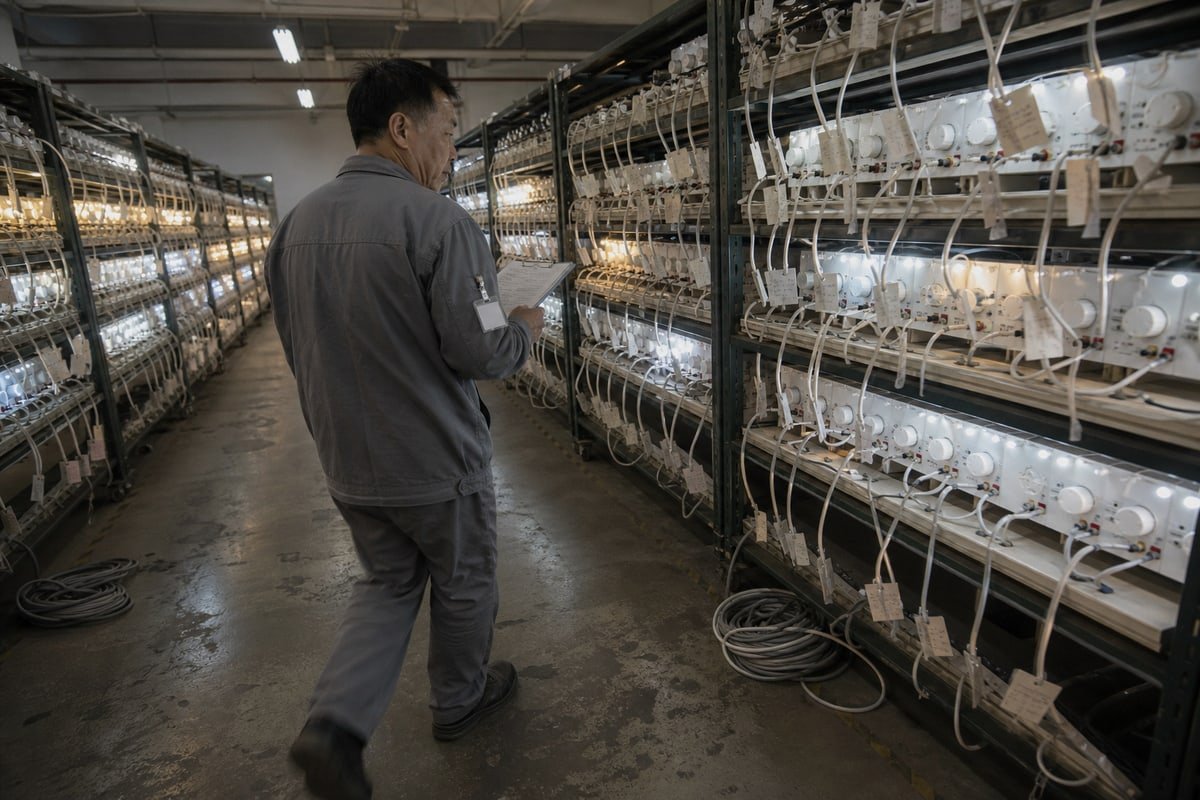
宣传册可以声称任何东西。流程会留下证据。当分销商参观我们的工厂时,我会向他们展示证据,您也应该向任何供应商要求同样的做法。以下是我推荐的验证顺序,按成本最低的顺序排列:
- 索取QC流程图。. 真正的工厂会记录组件进料检验(IQC)、生产线上的制程检验(IPQC)以及包装前的出货检验(OQC)。如果答案是模糊的“我们测试所有东西”,那就是一个危险信号。.
- Ask for burn-in and aging records. Every unit should run a powered aging cycle. For 0-10V dimmers, we also verify the output voltage at multiple knob positions, because a drifting analog dimming signal causes uneven brightness across fixtures later.
- Test golden samples with your actual drivers. Do not test the dimmer alone. Connect it to the exact LED drivers your project uses, then check flicker-free performance at low output, full brightness, and everywhere between.
- Check the physical build. On our white rotary models, OQC includes knob rotation torque, faceplate finish, and the fit of the inset groove around the knob. Loose knobs and uneven bevels reveal sloppy tooling — and sloppy tooling usually means sloppy circuits.
- Arrange an audit or third-party inspection. A video factory tour costs nothing. A pre-shipment inspection against an agreed AQL costs a little and saves a lot.
- Confirm batch traceability. If a unit fails in year two, the factory should trace its production date, component lots, and test records. No traceability means no accountability.
Run this sequence once, and you will know more about your supplier than a hundred emails could tell you.
在为我的项目选择0-10V调光器时,哪些技术规格最重要?
Years ago, an engineering client in Thailand connected sixty drivers to one dimmer and blamed our product when fixtures dimmed unevenly. The real cause? Control-current overload. I never forgot it.
最重要的规格包括灌电流/拉电流控制能力、最大驱动数量、最低调光水平、调光至关闭功能、负载和电压额定值、可选线性或对数调光曲线,以及过零切换和浪涌抗扰等保护特性。与您的LED驱动器的兼容性比任何单一数字都更为重要。.
Let me start with the specification most generic articles miss entirely, because it caused that Thailand incident.
Sinking and sourcing current: the hidden limit
A 0-10V dimmer does not simply “send a voltage” to an unlimited number of drivers. Depending on the architecture, every connected driver draws current from — or contributes current to — the control loop. That is what sinking and sourcing current means in practice. Overload the loop, and the dimmer can no longer hold the intended control voltage. The symptoms look random but are not: lights that never reach full brightness, fixtures dimming differently from each other, an unstable bottom end, non-linear response, or system behavior that changes the moment you add more drivers. Professional-grade units are rated to control 50 or more fixtures without signal degradation, but only when the current math works.
Don’t judge a 0-10V dimmer by its 0-10V label alone. Check the control standard, sink/source current, maximum number of drivers, minimum dimming level, driver compatibility, and whether separate ON/OFF switching is required.
The specification checklist
| 规格 | 为何这很重要 | What to ask the supplier |
|---|---|---|
| Sink/source current | Determines how many drivers one dimmer can control accurately | Rated mA and maximum driver count |
| Minimum dimming level | Poor low-end reveals cheap dimmers; good units reach 5% or lower smoothly | Tested low-end performance with your driver model |
| Dim-to-off capability | True 0V turns lights fully off; 1-10V systems often leave a ghosting glow | Whether separate line-voltage switching is required |
| Load and voltage rating | Commercial products commonly rate around 120V 10A / 277V 5A; leading wall dimmers handle up to 960W / 8A | Rated wattage per voltage, and any multi-gang derating |
| Dimming curve | Linear vs logarithmic curve selection matches the eye’s non-linear brightness perception | Whether the curve is selectable |
| Zero-crossing switching | Relay engages at lowest voltage, surviving LED driver inrush current | Relay type and inrush rating |
| Protection and isolation | ESD, surge protection, and galvanic isolation between AC and DC sides prevent catastrophic failure | Which protections are built in |
| Signal integrity | Active signal conditioning strips EMI; voltage drop compensation matters on long control runs | Maximum recommended wire run length |
One more point on LED driver compatibility: high-end trim settings let installers correct mismatches on site, and preset memory improves daily usability. Neither replaces system-level testing before you buy a high-quality 0-10V dimmer in volume.
我如何确保供应商履行保修和售后支持承诺?
Holding spare replacement stock in our warehouse costs us money every month. We accept that cost, because a warranty claim answered in days — not weeks — keeps distributors loyal.
Get warranty terms in writing before ordering, including the warranty period, failure-rate threshold, replacement process, and response time. Test the supplier’s after-sales behavior with small issues first, keep dated records of every commitment, and choose suppliers who assign a named contact for technical support.
The most common complaint I hear from buyers switching to us is not about product quality. It is about suppliers who promised warranty coverage during the sales stage, then disappeared after the wire transfer cleared. You can prevent that, but you must do it before the first bulk order, not after the first failure.
Start with the contract. A warranty that lives only in a WhatsApp message is a suggestion, not a commitment. Put the warranty period, the defect definition, the failure-rate threshold, and the remedy — repair, replacement, or credit — into the sales agreement or the proforma invoice terms. Then define the process: who ships the failed unit back, who pays freight, and how many working days until a resolution. In our own contracts, we spell out the replacement procedure line by line, because vague terms always favor the seller.
Next, test behavior early. Order samples, then deliberately raise a small technical question — perhaps about minimum dimming level with a specific driver. Time the response. A supplier who takes ten days to answer a pre-sale question will take longer after the sale.
| What to verify | Red flag | Good sign |
|---|---|---|
| Warranty documentation | Verbal promises only | Terms written into the contract |
| Response time | Replies stop after payment | Named contact, replies within 1–2 working days |
| Replacement process | “Send it back and we will see” | Defined RMA steps, spare stock held for fast swaps |
| Technical support | Sales rep cannot answer engineering questions | Direct access to an engineer for compatibility issues |
| Track record | No references offered | Existing distributors willing to speak with you |
Finally, keep dated records of every commitment. If a dispute ever comes, documentation decides it.
结论
A high-quality 0-10V dimmer proves itself as a system: verified certifications, transparent quality control, honest specifications, and warranty terms in writing. Check those four areas, and your projects stay flicker-free.
脚注
- Technical overview of the 0-10V analog signaling protocol for lighting. ↩︎
- The international standard defining the electrical characteristics of 0-10V control. ↩︎
- Safety standards for low-voltage circuits to prevent fire and shock. ↩︎
- The primary US standard for safe electrical design and installation. ↩︎
- Official directory for verifying safety certification and listing information. ↩︎