Ir al contenido










Parpadeo, deslizadores muertos, resplandor fantasma — he visto cada fallo que un atenuador barato puede causar. En nuestra línea de producción, un atenuador 0-10V de alta calidad se define mucho antes del envío.
Un atenuador 0-10V de alta calidad ofrece un control estable y sin parpadeos, una atenuación suave en todo el rango, compatibilidad verificada con el driver LED, capacidad adecuada de corriente de control sink/source, y protección eléctrica y térmica confiable. Fundamentalmente, el atenuador, el estándar de control y el driver LED deben funcionar como un sistema eléctricamente compatible.
Ese último punto es el que más importa. Una etiqueta 0-10V por sí sola no garantiza nada. El atenuador envía una señal de atenuación analógica 1, y los drivers en el otro extremo deben interpretarla correctamente. En esta guía, te explicaré las certificaciones, la verificación del control de calidad, las especificaciones técnicas que realmente importan y cómo protegerte en los términos de garantía. Estas son las cuatro preguntas que nuestros compradores en Singapur, Alemania y Australia nos hacen con más frecuencia, así que las responderé de la misma manera en que las respondo al otro lado de la mesa en ferias comerciales — directamente.
¿Qué certificaciones debería buscar al adquirir un atenuador 0-10V de alta calidad?
La primavera pasada, un distribuidor alemán pidió nuestro archivo técnico CE completo antes de discutir precios. Movimiento inteligente — esa sola solicitud filtra a los proveedores débiles más rápido que cualquier otra cosa.
Busque la certificación UL o ETL para América del Norte, CE y RoHS para Europa, y conformidad con IEC 60929 Anexo E para la interfaz de control 1-10V/0-10V. También confirme el cumplimiento del cableado Clase 2 y, para proyectos en EE. UU., la convención de colores rosa y púrpura para cables de control según NEC 2022.

Las certificaciones se dividen en dos grupos, y los compradores a menudo las confunden. El primer grupo cubre seguridad y acceso al mercado. El segundo grupo cubre la interfaz de control en sí misma. Necesitas ambos, y responden preguntas diferentes.
Certificaciones de acceso al mercado por región
Nuestros mercados de exportación se extienden desde Japón hasta Finlandia, así que mantenemos un mapa de certificaciones para cada familia de productos. Aquí está la versión corta para atenuadores de montaje en pared utilizados en controles de iluminación comercial:
| Certificación | Región | Qué verifica realmente |
|---|---|---|
| Listado UL / ETL | EE. UU., Canadá | Seguridad eléctrica: riesgo de incendio, descarga y térmico bajo condiciones de falla |
| CE (LVD + EMC) | UE (Italia, Francia, Alemania, etc.) | Conformidad autodeclarada con directivas de baja tensión y electromagnéticas |
| RoHS | UE y más allá | Restricción de sustancias peligrosas en componentes y soldadura |
| UKCA | Reino Unido | Equivalente británico de CE después del Brexit |
| RCM | Australia, Nueva Zelanda | Cumplimiento de seguridad y EMC para el mercado australiano |
| PSE | Japón | Ley japonesa de seguridad de aparatos eléctricos |
Normas que rigen la señal de control
La interfaz 0-10V se remonta a IEC 60929 Anexo E 2, que originalmente definió la interfaz analógica 1-10V para balastos fluorescentes. Muchos productos LED aún siguen su lógica eléctrica hoy en día. En América del Norte, el circuito de control de baja tensión típicamente debe cumplir con estándares de cableado Clase 2 3, que limitan la potencia en el lado de control para que el cableado sea seguro de instalar sin conducto en muchos casos. Y desde el Código Eléctrico Nacional 4, de 2022, los atenuadores de calidad usan cables de control rosa y morado. Eso evita una confusión peligrosa con los cables neutros grises durante la instalación — un pequeño detalle que indica una fábrica seria.
Documentos a solicitar antes de ordenar
Pide los números de certificado reales, no fotos de logotipos. Los números UL y ETL se pueden verificar en bases de datos públicas 5. Para CE, solicita la Declaración de Conformidad junto con los informes de prueba EMC y LVD subyacentes. Cuando un proveedor duda en cualquiera de estos, aléjate.
¿Cómo puedo verificar el proceso de control de calidad de un proveedor antes de realizar un pedido al por mayor?
Nuestra sala de envejecimiento funciona 24 horas al día. Cada lote de atenuadores cicla de cero a salida completa durante horas antes del empaque, porque los fallos detectados aquí nunca llegan a un sitio de trabajo.
Verifica el control de calidad solicitando los procedimientos IQC, en proceso y OQC del proveedor, revisando los registros de pruebas de quemado y envejecimiento, probando muestras doradas contra tus cargas de proyecto, organizando una auditoría de fábrica o inspección de terceros, y confirmando la trazabilidad del lote antes de comprometerte con un pedido al por mayor.
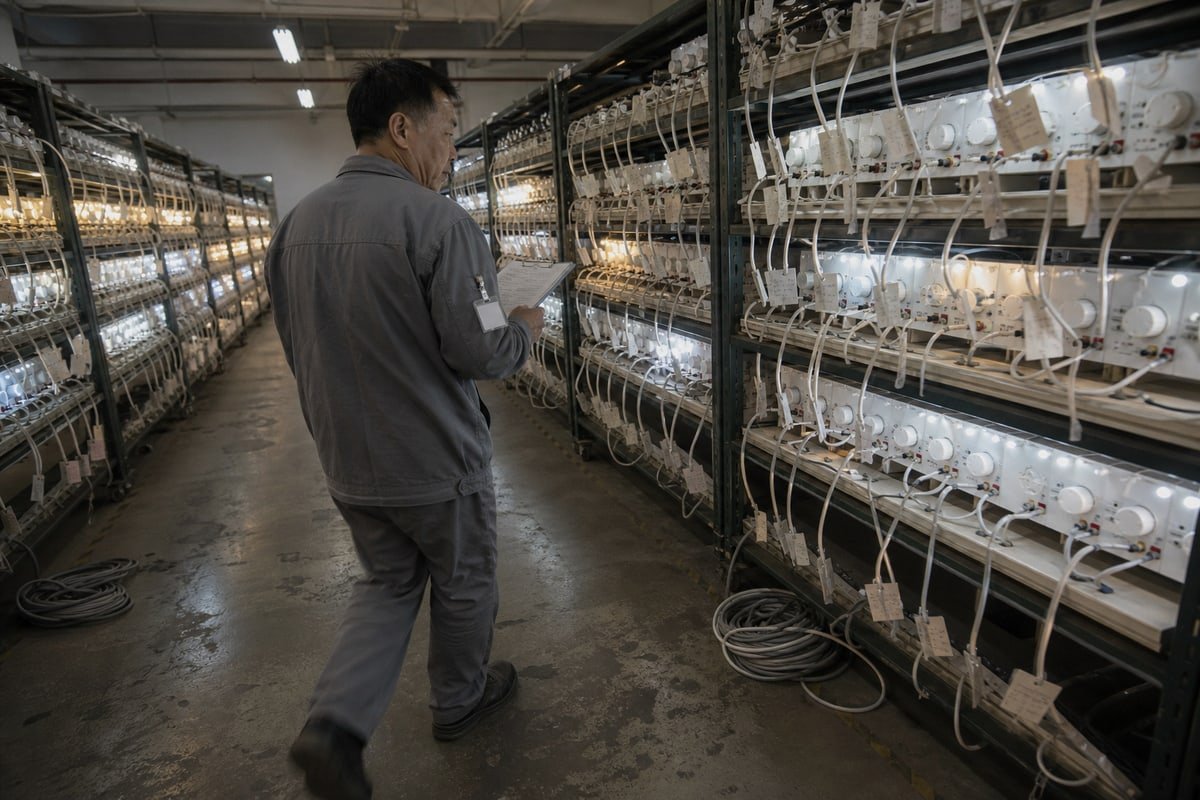
Un folleto puede afirmar cualquier cosa. Un proceso deja evidencia. Cuando los distribuidores visitan nuestras instalaciones, les muestro evidencia, y deberías exigir lo mismo de cualquier proveedor. Aquí está la secuencia de verificación que recomiendo, en el orden que te cuesta menos:
- Solicita el diagrama de flujo de control de calidad. Una fábrica real documenta la inspección de entrada (IQC) para componentes, controles en proceso (IPQC) en la línea e inspección de salida (OQC) antes del empaque. Si la respuesta es un vago “probamos todo”, eso es una señal de alerta.
- Solicite registros de burn-in y envejecimiento. Cada unidad debe pasar un ciclo de envejecimiento con alimentación. Para atenuadores de 0-10V, también verificamos el voltaje de salida en múltiples posiciones de la perilla, porque una señal de atenuación analógica que se desvía causa brillo desigual entre las luminarias más adelante.
- Pruebe muestras doradas con sus controladores reales. No pruebe el atenuador solo. Conéctelo a los controladores LED exactos que usa su proyecto y luego verifique rendimiento sin parpadeo a baja salida, brillo máximo y en todo punto intermedio.
- Revise la construcción física. En nuestros modelos rotativos blancos, el OQC incluye el torque de rotación de la perilla, el acabado de la placa frontal y el ajuste de la ranura interior alrededor de la perilla. Perillas sueltas y biseles desiguales revelan un moldeado descuidado, y un moldeado descuidado generalmente significa circuitos descuidados.
- Organice una auditoría o inspección de terceros. Un recorrido en video por la fábrica no cuesta nada. Una inspección previa al envío contra un AQL acordado cuesta poco y ahorra mucho.
- Confirme la trazabilidad del lote. Si una unidad falla en el segundo año, la fábrica debe rastrear su fecha de producción, lotes de componentes y registros de prueba. Sin trazabilidad, no hay responsabilidad.
Ejecute esta secuencia una vez y sabrá más sobre su proveedor que lo que cien correos electrónicos podrían decirle.
¿Qué especificaciones técnicas importan más al elegir un atenuador de 0-10V para mis proyectos?
Hace años, un cliente de ingeniería en Tailandia conectó sesenta controladores a un atenuador y culpó a nuestro producto cuando las luminarias se atenuaron de manera desigual. ¿La causa real? Sobrecarga de corriente de control. Nunca lo olvidé.
Las especificaciones más importantes son la capacidad de corriente de control sink/source, el número máximo de drivers, el nivel mínimo de atenuación, la capacidad de atenuación hasta apagado, las clasificaciones de carga y voltaje, las curvas de atenuación lineales o logarítmicas seleccionables, y las funciones de protección como la conmutación por cruce por cero y la inmunidad a sobretensiones. La compatibilidad con sus drivers LED importa más que cualquier número individual.
Permítanme comenzar con la especificación que la mayoría de los artículos genéricos omiten por completo, porque causó ese incidente en Tailandia.
Corriente de sumidero y fuente: el límite oculto
Un atenuador de 0-10V no simplemente “envía un voltaje” a un número ilimitado de controladores. Dependiendo de la arquitectura, cada controlador conectado extrae corriente del — o contribuye corriente al — bucle de control. Eso es lo que significa corriente de sumidero y fuente en la práctica. Sobrecargue el bucle y el atenuador ya no podrá mantener el voltaje de control previsto. Los síntomas parecen aleatorios pero no lo son: luces que nunca alcanzan el brillo máximo, luminarias que se atenúan de manera diferente entre sí, un extremo inferior inestable, respuesta no lineal o un comportamiento del sistema que cambia en cuanto agrega más controladores. Las unidades de grado profesional están clasificadas para controlar 50 o más luminarias sin degradación de señal, pero solo cuando el cálculo de corriente funciona.
No juzgue un atenuador de 0-10V solo por su etiqueta de 0-10V. Verifique el estándar de control, corriente de sumidero/fuente, número máximo de controladores, nivel mínimo de atenuación, compatibilidad con controladores y si se requiere conmutación ON/OFF separada.

La lista de verificación de especificaciones
| Especificación | Por qué es importante | Qué preguntar al proveedor |
|---|---|---|
| Corriente de sumidero/fuente | Determina cuántos controladores puede controlar con precisión un atenuador | mA nominales y número máximo de controladores |
| Nivel mínimo de atenuación | Un extremo inferior deficiente revela atenuadores baratos; las buenas unidades alcanzan 5% o menos de manera suave | Rendimiento de extremo inferior probado con su modelo de controlador |
| Capacidad de apagado por atenuación | Un 0V verdadero apaga las luces por completo; los sistemas de 1-10V a menudo dejan un brillo fantasma | Si se requiere conmutación de voltaje de línea separada |
| Clasificación de carga y voltaje | Los productos comerciales comúnmente se clasifican alrededor de 120V 10A / 277V 5A; los atenuadores de pared líderes manejan hasta 960W / 8A | Vataje nominal por voltaje y cualquier reducción por múltiples grupos |
| Curva de atenuación | La selección de curva lineal vs logarítmica coincide con la percepción no lineal de brillo del ojo | Si la curva es seleccionable |
| Conmutación por cruce por cero | El relé se activa al voltaje más bajo, soportando la corriente de irrupción del controlador LED | Tipo de relé y clasificación de irrupción |
| Protección y aislamiento | Protección ESD, contra sobretensiones y aislamiento galvánico entre los lados de CA y CC previenen fallas catastróficas | Qué protecciones están integradas |
| Integridad de señal | El acondicionamiento activo de señal elimina EMI; la compensación de caída de voltaje importa en recorridos de control largos | Longitud máxima recomendada del cable de control |
Un punto más sobre la compatibilidad con controladores LED: los ajustes de recorte de gama alta permiten a los instaladores corregir desajustes en el sitio, y la memoria de presets mejora la usabilidad diaria. Ninguno reemplaza las pruebas a nivel de sistema antes de comprar un atenuador de 0-10V de alta calidad en volumen.
¿Cómo me aseguro de que mi proveedor cumpla con las garantías y los compromisos de soporte postventa?
Mantener stock de repuestos en nuestro almacén nos cuesta dinero cada mes. Aceptamos ese costo, porque una reclamación de garantía respondida en días — no semanas — mantiene leales a los distribuidores.
Obtenga los términos de garantía por escrito antes de realizar el pedido, incluido el período de garantía, el umbral de tasa de fallos, el proceso de reemplazo y el tiempo de respuesta. Pruebe el comportamiento de posventa del proveedor con problemas pequeños primero, conserve registros fechados de cada compromiso y elija proveedores que asignen un contacto designado para soporte técnico.

La queja más común que escucho de los compradores que cambian a nosotros no es sobre la calidad del producto. Es sobre proveedores que prometieron cobertura de garantía durante la etapa de ventas y luego desaparecieron después de que se liquidó la transferencia bancaria. Puede prevenirlo, pero debe hacerlo antes del primer pedido al por mayor, no después de la primera falla.
Comience con el contrato. Una garantía que solo existe en un mensaje de WhatsApp es una sugerencia, no un compromiso. Incluya el período de garantía, la definición de defecto, el umbral de tasa de fallos y la solución (reparación, reemplazo o crédito) en el acuerdo de venta o en los términos de la factura proforma. Luego defina el proceso: quién envía la unidad defectuosa de vuelta, quién paga el flete y cuántos días hábiles hasta una resolución. En nuestros propios contratos, detallamos el procedimiento de reemplazo línea por línea, porque los términos vagos siempre favorecen al vendedor.
A continuación, pruebe el comportamiento temprano. Solicite muestras y luego plantee deliberadamente una pequeña pregunta técnica, quizás sobre el nivel mínimo de atenuación con un controlador específico. Mida el tiempo de respuesta. Un proveedor que tarda diez días en responder una pregunta previa a la venta tardará más después de la venta.
| Qué hay que comprobar | Señal de alerta | Buena señal |
|---|---|---|
| Documentación de garantía | Solo promesas verbales | Términos escritos en el contrato |
| Tiempo de respuesta | Las respuestas se detienen después del pago | Contacto designado, responde en 1–2 días hábiles |
| Proceso de reemplazo | “Envíelo de vuelta y veremos” | Pasos RMA definidos, stock de repuesto disponible para intercambios rápidos |
| Soporte técnico | El representante de ventas no puede responder preguntas de ingeniería | Acceso directo a un ingeniero para problemas de compatibilidad |
| Historial | No se ofrecen referencias | Distribuidores existentes dispuestos a hablar con usted |
Finalmente, conserve registros fechados de cada compromiso. Si surge una disputa, la documentación la decide.
Conclusión
Un atenuador 0-10V de alta calidad se demuestra como sistema: certificaciones verificadas, control de calidad transparente, especificaciones honestas y términos de garantía por escrito. Verifique esas cuatro áreas y sus proyectos permanecerán sin parpadeos.
Notas al pie
- Descripción técnica del protocolo de señalización analógica 0-10V para iluminación. ↩︎
- El estándar internacional que define las características eléctricas del control 0-10V. ↩︎
- Estándares de seguridad para circuitos de bajo voltaje para prevenir incendios y descargas. ↩︎
- El estándar principal de EE. UU. para diseño e instalación eléctrica segura. ↩︎
- Directorio oficial para verificar la certificación de seguridad y la información de listado. ↩︎