Skip to content










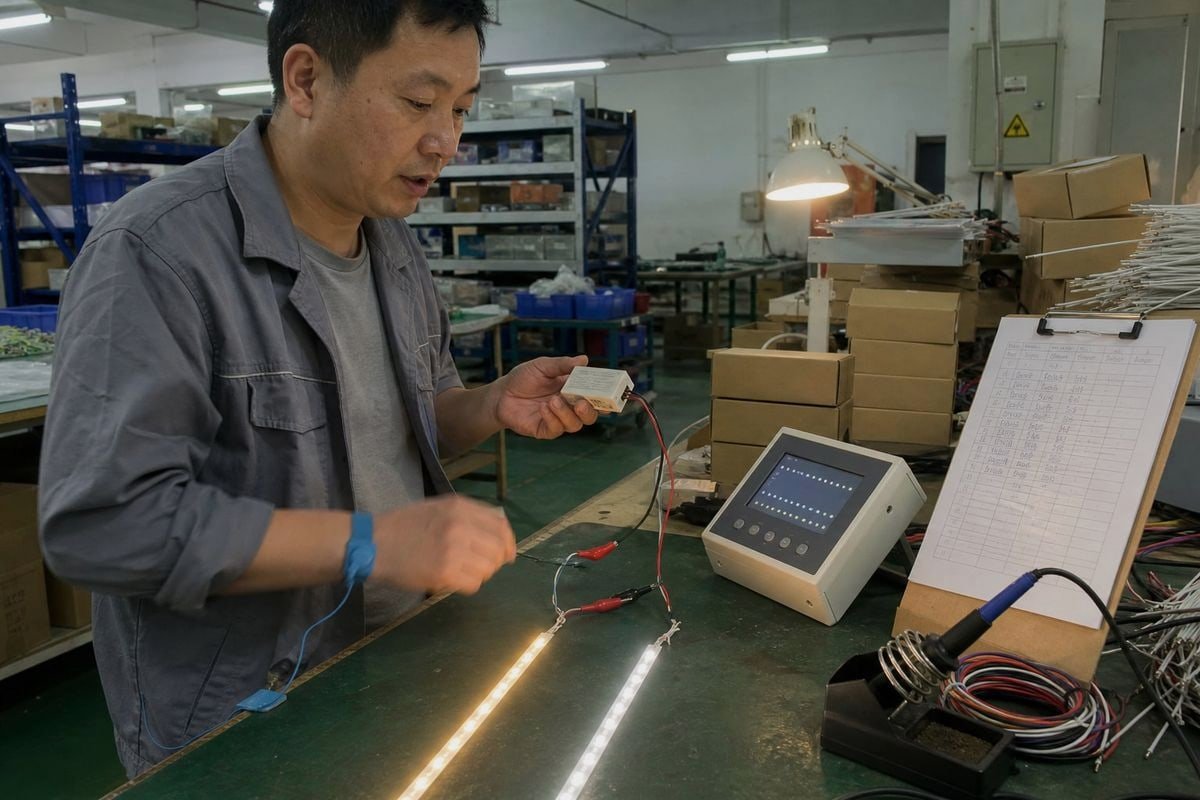
Buyers often ask me whether DT8 matters for tunable white [CC driver](https://bo-qi.com/?p=6211)s. Pick wrong, and your DALI bus fills up, commissioning drags on, and CCT scenes fall apart. On our production line, we solved this the hard way.
Yes, DT8 is highly relevant for tunable white CC drivers. DT8 is the DALI-2 device type for color control, and CC refers to constant-current output. With the Tc color type, DT8 lets one DALI short address adjust brightness and Correlated Color Temperature while the driver coordinates warm-white and cool-white channels.
That is the short answer. Now let me unpack what DT8 really does, when you can skip it, how to verify controller compatibility, and what happens if you ignore it.
What Does DT8 Actually Mean for My Tunable White Projects?
During a firmware review last year, our engineers caught a subtle point: the DALI spec defines the control model, but our driver implements the channel mixing. That distinction shapes everything below.
DT8 is the DALI device type defined in IEC 62386-209 for color control. For tunable white, it uses the Tc color type, which lets the lighting control system send an absolute color temperature in Kelvin. The driver then translates that setpoint into warm and cool channel currents internally.
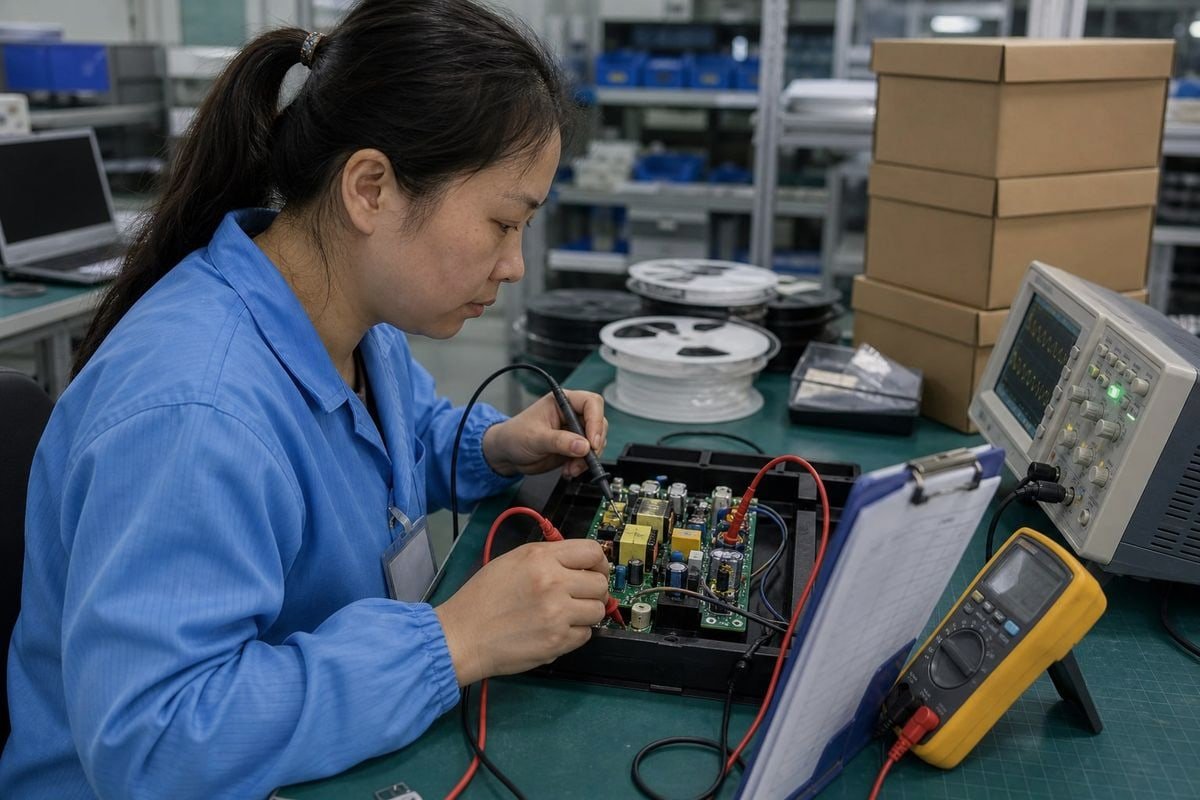
Let me be precise here, because I see a lot of sloppy language in datasheets. DT8 itself does not “manage two LED outputs.” DT8 defines a coordinated color-temperature control 1 model. The specific CC driver you buy is what executes that model across its multi-channel LED outputs. When we develop a DT8 tunable white CC driver at our factory, most of the engineering effort goes into that translation layer, not the protocol itself.
The Core Terms, Untangled
Buyers mix these terms up constantly, so here is a clean breakdown:
| Term | What It Actually Means |
|---|---|
| DT8 | The DALI-2 device type for color control, per IEC 62386-209 |
| Tc | The DT8 color type used for tunable white / CCT control |
| CC | Constant-current output architecture on the driver’s LED side |
| Warm + cool channels | The physical LED outputs that blend to create the CCT range |
| Single short address | The practical advantage: one address controls both level and color |
Why One Address Changes the Math
A DALI loop is limited to 64 short addresses. With DALI Device Type 6, a two-channel tunable white fixture usually consumes two addresses. With DT8, it consumes one. On a large office floor, that effectively doubles your fixture capacity per bus. It also means brightness and CCT changes travel as one unified command, so grouped fixtures shift together without the visual “popcorn” effect you get when two separately addressed channels update at slightly different moments.
This is also why DT8 became the foundation for Human Centric Lighting. Circadian rhythm lighting schedules need to sweep CCT smoothly across dozens of fixtures at once. DT8 makes that a standard command, not a custom hack.
Do I Need DT8 Support If I’m Only Using Constant Current Drivers?
A distributor in Singapore once asked me this exact question over WhatsApp, convinced that “CC” and “DT8” were competing options. They are not. One is electrical; the other is protocol.
Yes, if the CC driver runs tunable white, DT8 support is usually worth it. Constant current describes how the driver powers LED strings; DT8 describes how it is controlled. A DT8 CC driver combines regulated current output with standardized single-address CCT control.
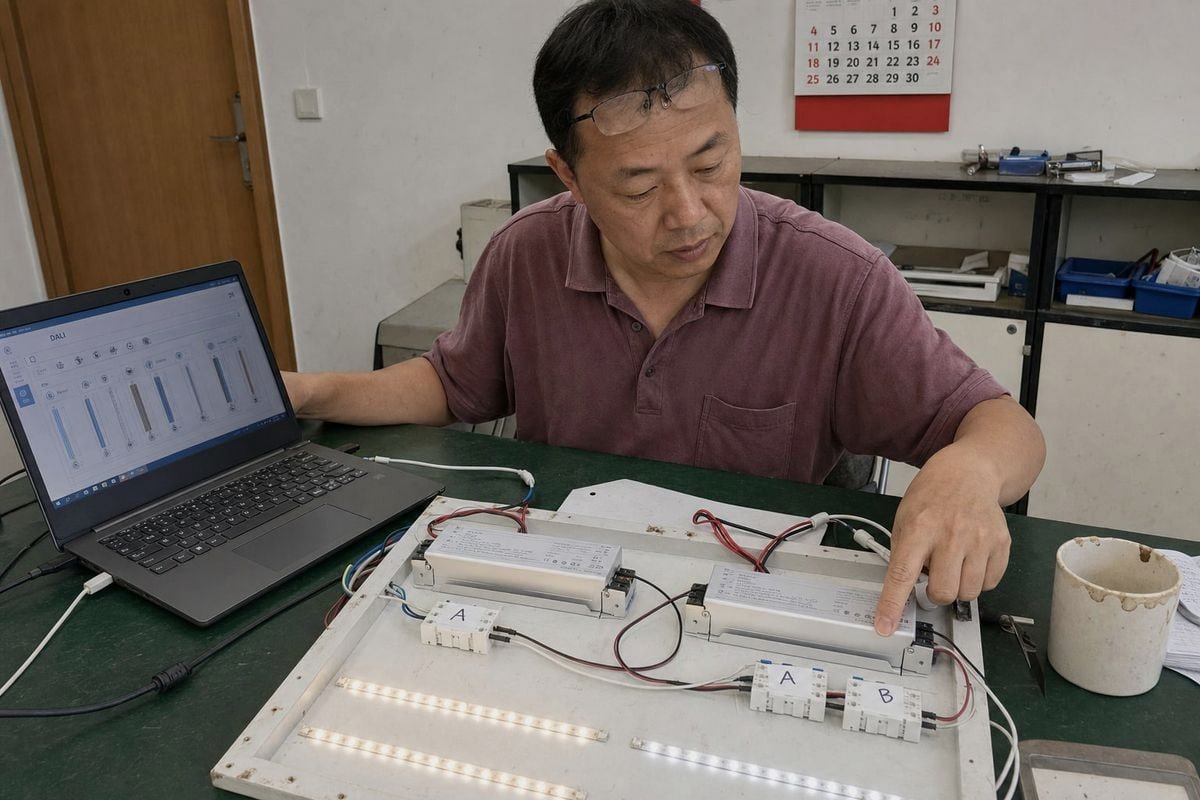
Constant current matters because most tunable white light engines use series LED strings that need regulated current, not a fixed voltage. DT8 sits on top of that electrical architecture. So the real question is not “CC or DT8” but “DT8 or DT6 on my CC driver.” Here is how I frame it for engineering companies we supply:
| Factor | DT8 (Tc) | DALI Device Type 6 |
|---|---|---|
| Addresses per tunable fixture | One single short address | Typically two |
| Color mixing | Inside the driver | In the controller logic |
| CCT command | Absolute Kelvin value | Two separate level commands |
| Commissioning effort | Lower | Higher, needs channel pairing |
| Legacy DALI-1 support | Limited | Broad |
| Best fit | HCL, dynamic white scenes | Simple dimming, legacy systems |
When DT6 Still Makes Sense
I will be honest about the trade-off. If your project only needs basic dimming, or your controller stack is older and only speaks DT6, forcing DT8 buys you nothing. That is why several of our multi-channel LED drivers ship with a DT6-emulation mode. The same hardware can be reconfigured as two separate DALI addresses to stay compatible with legacy DALI-1 controllers. You keep one stock item and cover both project types.
The Hidden Cost Angle
DT8 also cuts hardware. You do not need dual-address drivers or an external color-control module in the cabinet. For the lighting factories we work with in Vietnam and Thailand, that saves cabinet space and reduces the bill of materials on every tunable fixture. Fewer parts also means fewer commissioning errors on site.
How Can I Tell If My DALI Controller Is DT8-Compatible?
One lesson I learned early in exporting to Germany and the UK: never trust the word “DALI” alone on a controller datasheet. That single word has caused more site delays than any wiring fault I have seen.
Check the controller datasheet for explicit DT8 or IEC 62386-209 support, look for DALI-2 certification with color control listed, and confirm the software offers Tc or Kelvin-based commands. If the interface only shows two-channel percentage sliders, it is likely DT6 only.
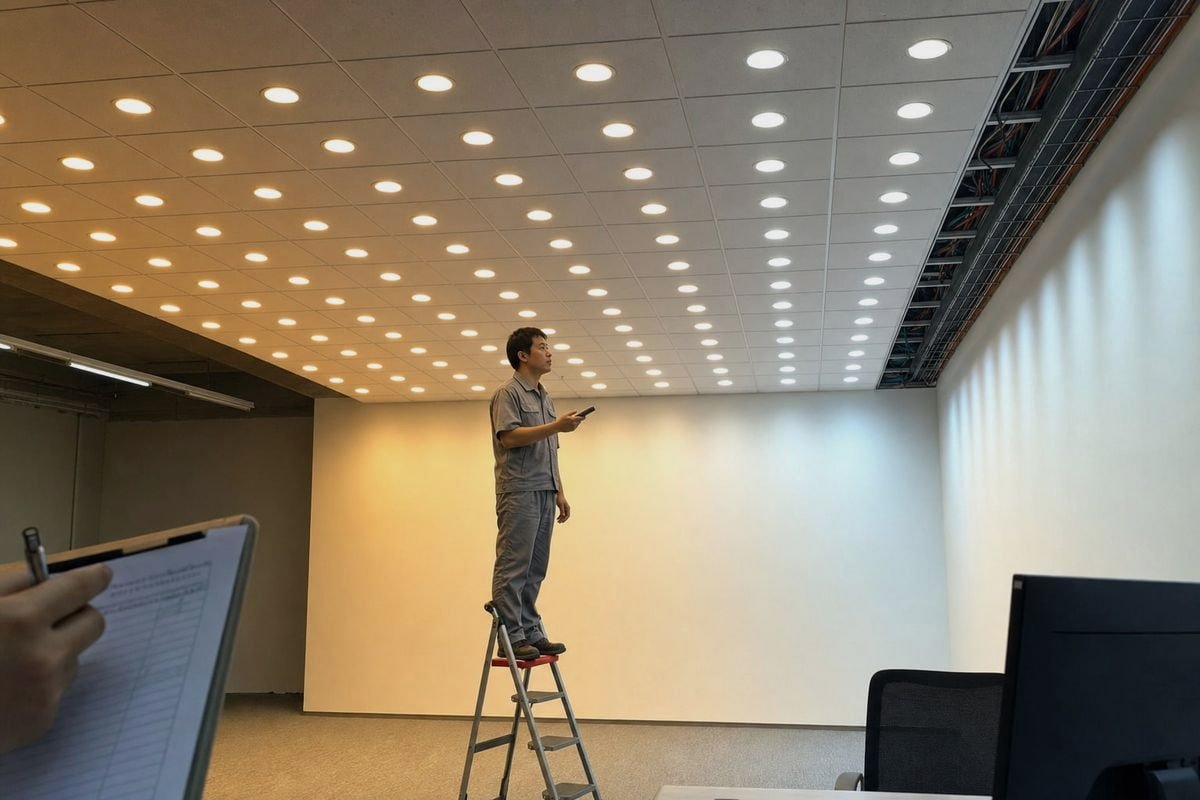
Compatibility is an ecosystem question. A DT8 driver only delivers its advantages when the controller, gateway, and commissioning software all understand the same color-control commands. Here is the verification process I walk our clients through before they place a project order:
- Read the fine print, not the headline. Search the controller documentation for “DT8,” “device type 8,” “Tc,” or “IEC 62386-209.” A generic “DALI compatible” claim is not enough.
- Check the DALI-2 certification database. Certified DALI-2 products 2 list their supported device types. If DT8 is not listed, assume it is absent.
- Inspect the commissioning software. Genuine DT8 support shows a Kelvin or CCT field during LED driver commissioning. If you only see channel A and channel B sliders, the system is treating your fixture as DT6.
- Verify the gateway layer. In BMS integrations, a KNX or BACnet gateway 3 must pass color-temperature commands through. Some older gateways strip them.
- Run a bench test before rollout. We always recommend a one-fixture proof of concept. Our tech support team frequently joins these tests remotely for clients in Australia and Italy, because a thirty-minute bench check beats a week of on-site debugging.
Interoperability is actually one of DT8’s quiet strengths. Because the driver converts the incoming absolute setpoint into the correct channel currents, you can mix tunable white luminaires from multiple vendors on one network and still get consistent CCT behavior. That only works, however, when every device on the chain genuinely speaks the DALI-2 standard.
Will Skipping DT8 Compliance Cause Problems in My Lighting Installations?
Weighing cost against risk is my daily job when quoting projects. Skipping DT8 rarely fails on day one. It fails in year two, when the client asks for circadian scheduling.
Skipping DT8 can cause real problems in tunable white installations: doubled address consumption on the 64-address DALI bus, unsynchronized color shifts, harder commissioning, and no standardized path to Human Centric Lighting. For static-white or basic dimming projects, however, skipping DT8 is harmless.
Let me break the risk down by project type, because “it depends” is useless without specifics:
| Project Scenario | Risk of Skipping DT8 | Why |
|---|---|---|
| Large office with HCL scheduling | High | Address pool halves; CCT sweeps desynchronize across groups |
| Retail or hospitality with dynamic white scenes | High | Scene recall needs unified level-plus-CCT commands |
| Small tunable white room, one controller | Medium | Workable with DT6, but commissioning takes longer |
| Static white, dimming only | Low | DT8 adds nothing; DT6 or 0-10V is fine |
The Problems That Actually Show Up on Site
First, address exhaustion. Two addresses per fixture means a 64-address loop caps out around 32 tunable fixtures. Projects grow, and re-segmenting a bus after handover is painful. Second, coordination. With separately addressed channels, brightness and CCT updates arrive as separate commands, which produces visible stepping during transitions. Third, future-proofing. Circadian rhythm lighting and other Human Centric Lighting features 4 are being specified more often in European tenders we quote. Retrofitting DT8 later means swapping drivers, not just software.
What Compliance Alone Will Not Fix
Here is the objection I respect: DT8 branding does not guarantee quality. That is true. Deep dimming down to low levels, flicker performance, and smooth color separation depend on driver design, not the protocol label. Advanced implementations go further, with independent CCT mapping curves so color transitions stay linear even when the intensity curve is logarithmic, channel-specific thermal foldback that dims only the overheating color component, and micro-staggered channel activation to tame inrush current in high-density installs. When we design our DALI dimmable LED drivers, these details take far more validation time than DT8 conformance itself. Judge the driver, not just the badge.

Conclusion
DT8 standardizes CCT control, saves DALI addresses, and moves mixing intelligence into the driver. For tunable white CC drivers, it is not optional polish. It is the smart default.
Footnotes
- Official DALI Alliance page explaining DT8 color control and IEC 62386-209 standards. ↩︎
- Official registry for verifying the certification status and device types of DALI-2 hardware. ↩︎
- Technical overview of the KNX protocol used in building management system integrations. ↩︎
- Industry resource explaining the implementation of circadian rhythm lighting in modern buildings. ↩︎