Aller au contenu










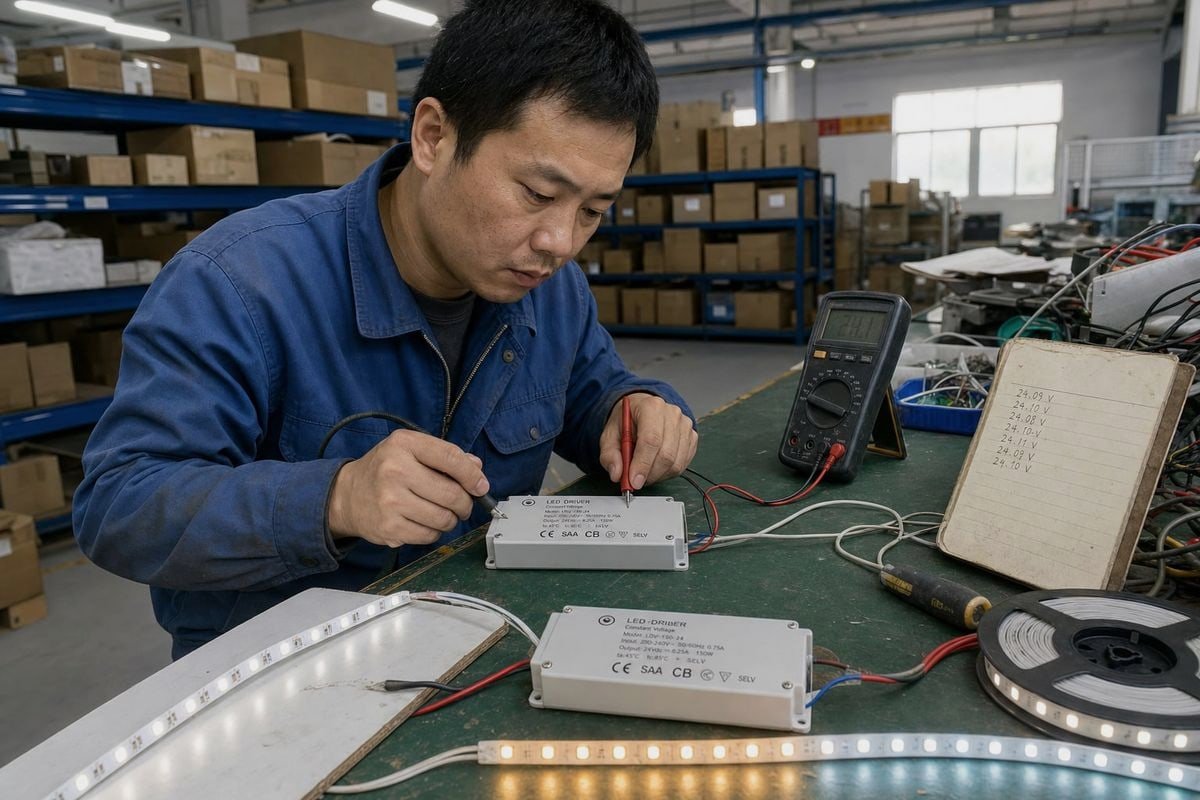
Les pilotes DALI DT6 / DT8 pour drivers CV prêtent à confusion chez de nombreux acheteurs. Je le constate chaque semaine sur notre ligne de production, où un mauvais choix de protocole peut bloquer tout un projet d'éclairage.
Le DALI DT6 pour drivers CV gère le gradation standard monochrome selon la norme IEC 62386-207, tandis que le DT8 (IEC 62386-209) contrôle plusieurs canaux—comme le blanc chaud et le blanc froid—pour le blanc réglable ou le mélange de couleurs RVB. Choisissez le DT6 pour un contrôle de luminosité uniquement ; choisissez le DT8 pour l'ajustement de la température de couleur.
Voilà la réponse courte. Mais les détails comptent plus que les étiquettes. Laissez-moi vous expliquer comment choisir, vérifier et approvisionner ces drivers correctement.
Comment choisir entre les protocoles DT6 et DT8 pour mon projet de driver CV ?
Au printemps dernier, un acheteur ingénieur de Singapour a demandé à notre équipe “ la version DT8, parce qu'elle est plus récente ”. Nous avons dû lui expliquer que son projet de bande LED monochrome ne nécessitait que le DT6.
Choisissez DT6 lorsque vous avez besoin d’un variateur à canal unique pour une sortie à tension constante, comme une bande LED blanc fixe. Choisissez DT8 lorsque vous avez besoin d’un contrôle de blanc réglable ou d’un mélange de couleurs RVB, car DT8 gère plusieurs canaux sous une seule adresse DALI.
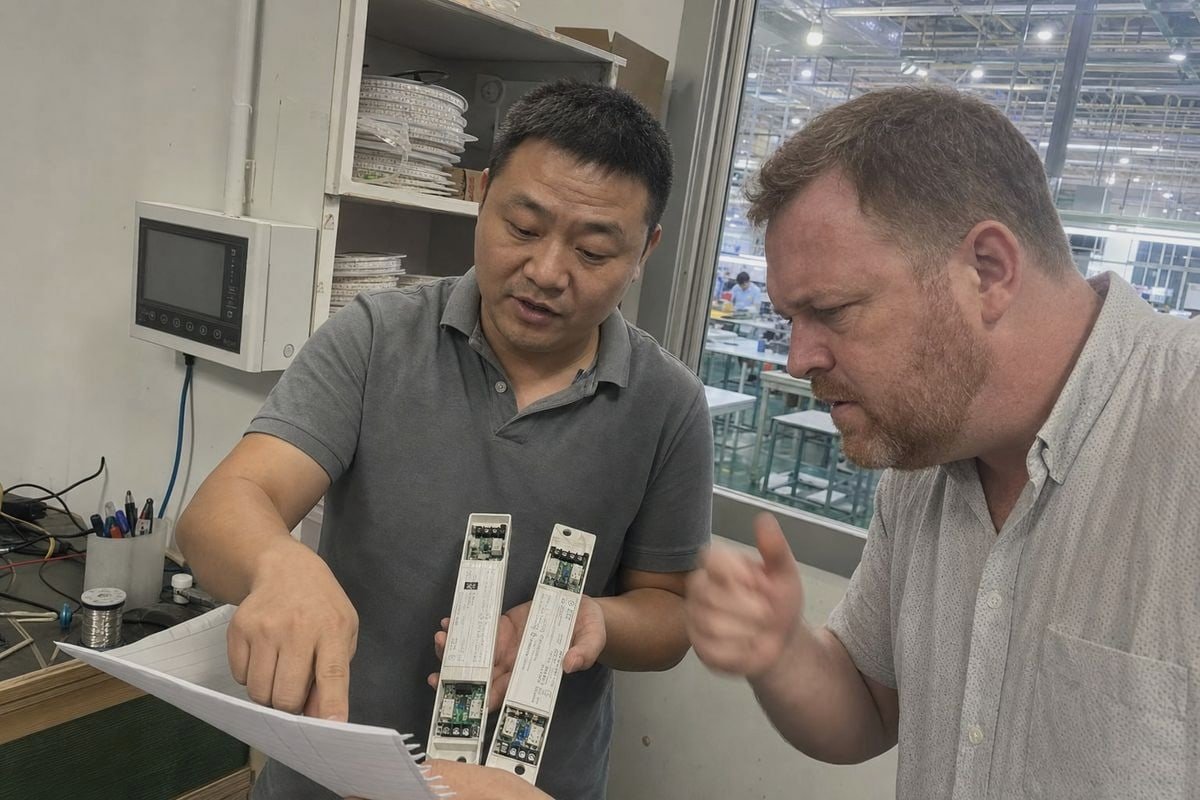
Le DT8 n'est pas automatiquement meilleur que le DT6. C'est le point le plus important que je dis aux acheteurs B2B. Le bon choix dépend de ce que le système LED doit contrôler—rien de plus.
Voici la matrice de décision que nous partageons avec nos clients :
| Exigence | Meilleur choix |
|---|---|
| LED monochrome, luminosité uniquement | DT6 |
| Gradation 0–100% d'une sortie CV | DT6 |
| Blanc réglable / contrôle CCT | DT8 |
| LED blanc chaud + blanc froid | DT8 |
| Applications RVB / RVBW | DT8, selon l'implémentation |
| Éclairage simple, sensible au coût | DT6 |
| Contrôle avancé de la température de couleur | DT8 |
L'argument de l'efficacité d'adressage
Il y a un facteur de coût caché ici. Une ligne DALI supporte un maximum de 64 adresses courtes 1. Avec le DT6, un luminaire blanc réglable consomme généralement deux adresses—une pour le canal chaud et une pour le canal froid. Un driver DT8 contrôle les deux canaux via une seule adresse. Sur un grand projet avec des dizaines de luminaires blanc réglable, le DT8 peut effectivement doubler le nombre de luminaires par bus. Il simplifie également l'adressage et le regroupement lors de la mise en service, car le logiciel de contrôle traite chaque luminaire comme un objet unique au lieu de deux.
Où se trouve la logique
Avec le DT6, le contrôleur externe doit calculer l'intensité de chaque canal séparément pour produire une température de couleur. Avec le DT8, le microcontrôleur interne du driver gère les calculs de mélange de couleurs. Cela signifie des transitions CCT plus fluides et moins de risques de dérive entre les canaux. Mais cela signifie aussi que la mise en service du DT8 dépend davantage de la compatibilité du contrôleur—un compromis réel que nous discutons ouvertement avec les acheteurs avant de soumettre un devis.
Pour un éclairage de couloir simple ou un éclairage de bande LED sous meuble en blanc fixe, le DT6 reste la base sensée et rentable. Ne payez pas pour une capacité de couleur que vous n'utiliserez jamais.
Quelles certifications dois-je vérifier lors de l’approvisionnement en drivers CV DALI DT6/DT8 ?
Le compromis que nous pesons le plus soigneusement dans notre usine est la portée de la certification par rapport au marché cible. Un driver certifié pour une région peut être un cauchemar douanier dans une autre.
Vérifiez la conformité DALI-2, ainsi que les marques de sécurité régionales : CE pour l'Europe, SAA pour l'Australie, et CB pour l'acceptation internationale. Confirmez la conformité SELV pour les sorties CV basse tension, et vérifiez que le certificat couvre le numéro de modèle exact que vous achetez.
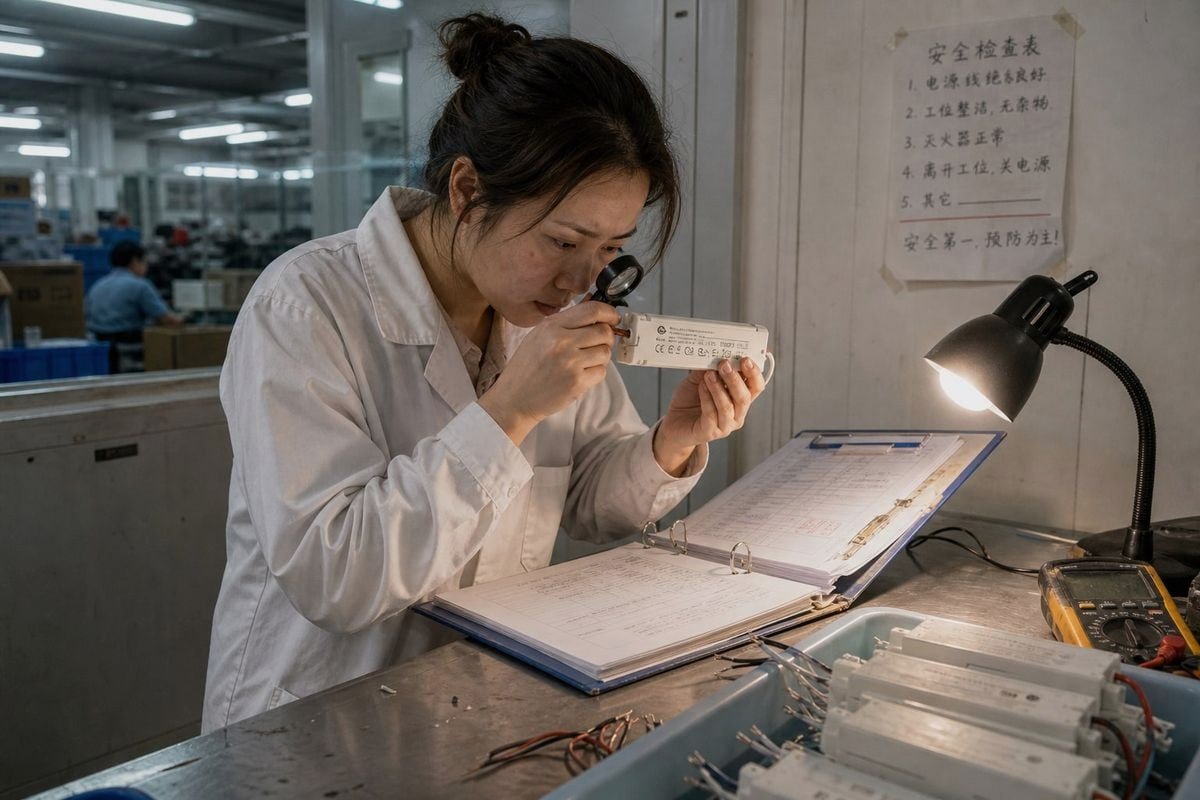
La vérification des certifications est là où les importateurs se protègent ou parient. Parce que nous exportons vers des marchés aussi différents que l'Allemagne, l'Australie, le Japon et Singapour, nos propres étiquettes portent les marques CE, SAA, CB et SELV—et chaque marque répond à une question différente.
Ce que couvre réellement chaque certification
| Certification | Ce qu'elle vérifie | Critique pour |
|---|---|---|
| Conformité DALI-2 | Interopérabilité du protocole, testée selon les exigences du protocole IEC 62386 | Systèmes de contrôle multi-fournisseurs |
| CE | Directives européennes de sécurité et CEM | Marchés de l'UE (Italie, France, Allemagne, Royaume-Uni) |
| ASA | Approbation de sécurité électrique australienne | Australie, certains projets en Asie du Sud-Est |
| CB | Schéma de rapport de test IEC international | Approbation plus rapide dans plusieurs pays |
| SELV | Conception de sortie à très basse tension de sécurité | Installations de bandes LED CV 12V/24V |
Comment puis-je garantir la compatibilité du driver DALI DT6/DT8 avec mon système de contrôle d’éclairage existant ?
Une leçon difficile de nos premières années d'exportation : deux drivers peuvent tous deux indiquer “ DT8 ” sur la fiche technique et se comporter complètement différemment sur le même bus.
Confirmez quel type de contrôle DT8 le driver implémente (Tc pour blanc réglable, XY ou RGBWAF pour la couleur), vérifiez que votre contrôleur envoie des commandes correspondantes, testez un échantillon sur votre bus réel et vérifiez la capacité d’alimentation du bus DALI avant le déploiement complet.
La compatibilité n'est pas une case à cocher oui/non. C'est une chaîne, et chaque maillon doit tenir. Pour les drivers CV, ne jugez pas la compatibilité DT6/DT8 uniquement à partir de l'étiquette du protocole DALI. Un driver peut être annoncé comme DT8, mais la vraie question est de savoir quel type de contrôle DT8 il implémente et comment son équipement de commande mappe les commandes aux sorties CV.
La chaîne de signal qui compte réellement
Pour un driver CV blanc réglable, le chemin ressemble à ceci :
- La commande DALI arrive du contrôleur
- Le MCU du driver l’interprète
- La régulation PWM ou du courant est appliquée
- Les canaux LED WW/CW répondent
La qualité du résultat final dépend fortement de l’algorithme de contrôle interne du driver. Deux drivers DT8 peuvent se comporter très différemment en termes de niveau de gradation minimal 3, fluidité de transition CCT, correspondance des canaux, fréquence PWM, performance de scintillement, comportement à la mise sous tension, temporisation de fondu DALI et stabilité de gradation en bas de gamme. C’est là que la véritable différence d’ingénierie entre les drivers CV se cache souvent—pas dans les mots “ DT6 ” ou “ DT8 ” imprimés sur la fiche technique.
Vérifications pratiques de compatibilité avant de vous engager
Vérifiez si votre contrôleur prend en charge DT8 nativement. Les anciens contrôleurs DALI-1 ne le font souvent pas, et certains drivers DT8 modernes peuvent être configurés pour imiter plusieurs adresses DT6 comme solution de contournement pour les systèmes hérités. Confirmez également la courbe de gradation—la plupart des systèmes DALI attendent une courbe de gradation logarithmique 4, et une inadéquation provoque des pas visibles aux niveaux bas. Vérifiez que l’alimentation du bus DALI a suffisamment de marge de courant pour tous les appareils connectés, car chaque appareil de commande tire un courant permanent du bus. Enfin, demandez la synchronisation PWM : les drivers CV DT8 de qualité synchronisent le PWM sur tous les canaux pour éviter la décomposition des couleurs, un artefact courant lors du mélange de couleurs avec plusieurs drivers DT6 indépendants.
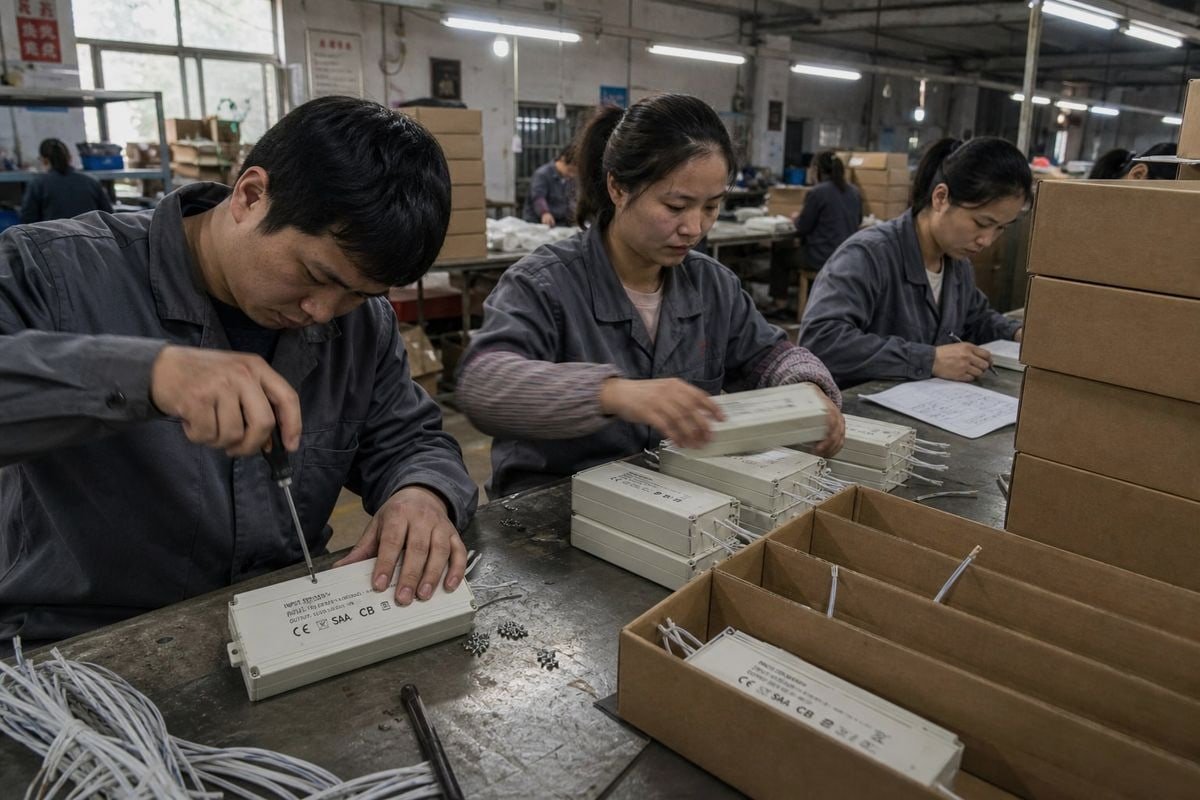
Notre équipe de support technique effectue un test de banc conjoint avec le modèle exact du contrôleur du client chaque fois que possible. Cela a sauvé plus de projets que n’importe quelle fiche technique.
Quels problèmes de qualité devrais-je surveiller lors de l’importation de drivers CV DALI DT6/DT8 pour de grands projets ?
Lorsqu’un client distributeur au Vietnam a reçu un lot d’un concurrent avec une gradation bas de gamme incohérente, il nous a envoyé des photos sur WhatsApp en demandant ce qui n’allait pas. La réponse était un contrôle qualité au niveau du lot, pas une conception.
Surveillez les scintillements à faibles niveaux de gradation, une luminosité minimale incohérente entre les unités, un mauvais appariement des canaux dans les variateurs blancs réglables, un comportement instable à la mise sous tension, des défaillances de déclassement thermique et des différences de firmware non documentées entre les lots de production. Exigez des rapports de tests avant expédition et une garantie écrite.
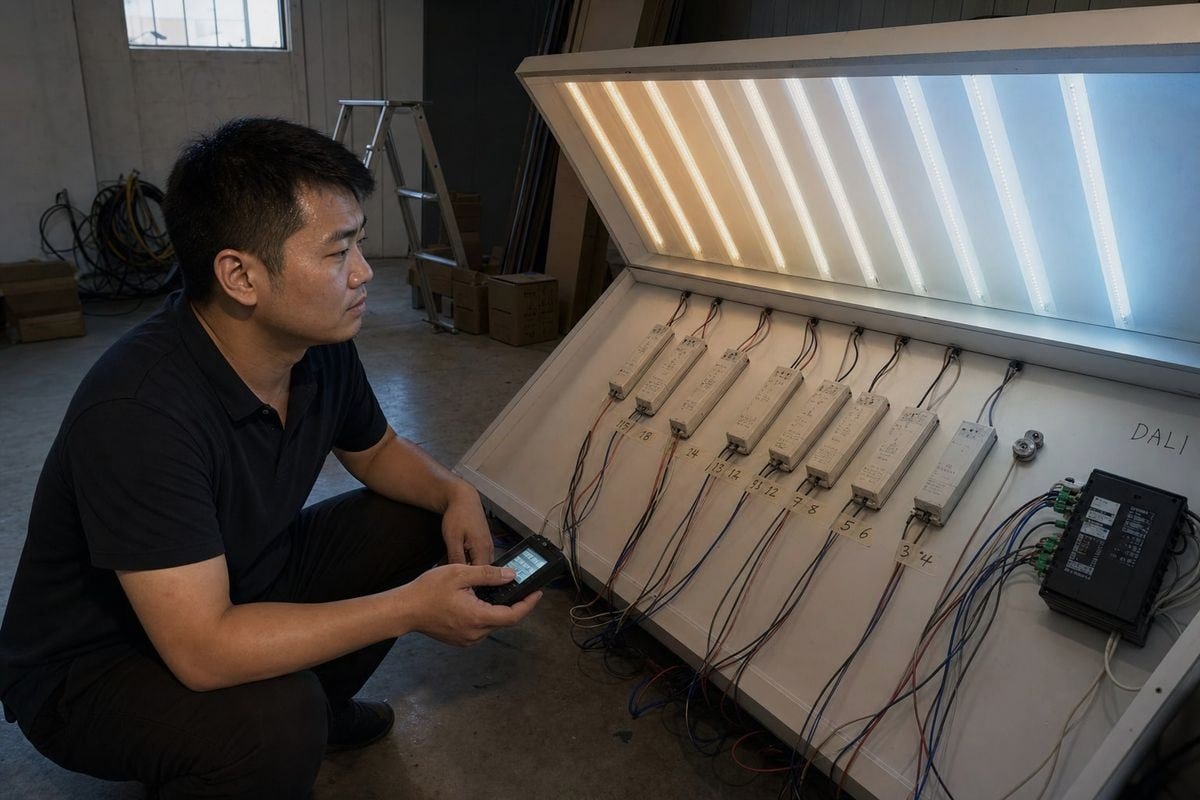
Les grands projets amplifient les petits défauts. Un driver scintillant dans un échantillon ressemble à de la malchance ; deux cents dans une installation hôtelière ressemblent à un procès. Voici les points de défaillance que nous testons le plus durement sur nos propres lignes, et ceux pour lesquels les importateurs devraient exiger des preuves.
La liste de contrôle qualité pour les commandes en volume
| Problème de qualité | Comment cela se manifeste sur site | Comment vérifier avant l’expédition |
|---|---|---|
| Scintillement bas de gamme | Stroboscopie visible en dessous de 10% de luminosité | Demandez les données de test de scintillement ; les drivers DALI-2 premium atténuent en douceur jusqu’à des niveaux très profonds |
| Variation unité à unité | Bandes LED adjacentes à différentes luminosités | Demandez des rapports d’échantillonnage de lot au niveau de gradation minimal |
| Inadéquation des canaux (DT8) | L’ajustement de la température de couleur semble inégal | Testez l’équilibre de sortie WW/CW sur les unités échantillonnées |
| Comportement à la mise sous tension | Les luminaires clignotent à pleine luminosité lors du rétablissement du secteur | Confirmez les niveaux programmables de mise sous tension et de défaillance système |
| Erreurs de temporisation de fondu | Les scènes transitionnent à des vitesses différentes | Vérifiez la conformité du temps de fondu DALI sur un bus réel |
| Dérating thermique | Les drivers échouent tôt dans les plafonds fermés | Vérifiez le point tc et la courbe de dérating |
Pourquoi la cohérence des lots est le véritable différenciateur
Les drivers CV pour blanc réglable sont particulièrement sensibles au firmware. Si une usine met silencieusement à jour le code MCU entre les lots, les temporisations de fondu et les courbes de gradation peuvent changer. Sur un projet par phases—disons, un bâtiment équipé étage par étage sur six mois—ce changement devient visible là où les anciens et nouveaux lots se rencontrent. Nous verrouillons les versions de firmware par commande et les notons dans nos enregistrements QC, car un comportement mixte entre les lots est l’une des plaintes les plus courantes que les acheteurs nous apportent de fournisseurs précédents.
Insistez également sur un processus de garantie clair par écrit avant le paiement. Un point douloureux courant que j’entends de la part des acheteurs est des fournisseurs qui citent une garantie de cinq ans verbalement, puis contestent chaque réclamation. Demandez exactement comment les unités défectueuses sont traitées : remplacement expédié avec la prochaine commande, note de crédit ou retour pour réparation. La réponse vous en dit long sur l’usine derrière le driver.

Conclusion
Choisir entre DALI DT6 et DT8 pour les drivers CV revient à faire correspondre le protocole à vos besoins de contrôle—puis à vérifier la certification, la compatibilité et la qualité des lots avant de vous engager.
L’étiquette sur la fiche technique est le point de départ, pas la réponse. DT6 couvre la gradation à canal unique honnêtement et à un prix abordable. DT8 débloque le contrôle du blanc réglable et le mélange de couleurs RVB avec une adressage efficace. Mais la véritable ingénierie vit à l’intérieur du driver : l’algorithme mappant les commandes DALI aux sorties CV, le comportement PWM, la performance de scintillement, la discipline du firmware entre les lots. J’ai vu des projets réussir parce qu’un acheteur a posé une question supplémentaire sur les types de contrôle DT8, et j’ai vu d’autres stagner parce que personne n’a vérifié le registre DALI-2. Si vous spécifiez des drivers pour votre prochain projet, testez un échantillon sur votre bus réel, exigez les vrais rapports de test et obtenez les conditions de garantie par écrit. Lorsque vous travaillez avec un fournisseur qui traite ces étapes comme normales plutôt que négociables, la plupart des risques dans cet article disparaissent simplement.
Notes de bas de page
- Aperçu technique de la structure d’adressage et des limites de communication du protocole DALI. ↩︎
- Registre officiel pour vérifier les produits certifiés DALI-2 afin de garantir l'interopérabilité et la conformité du protocole. ↩︎
- L'organisme international de normalisation responsable de la définition des métriques de performance dans les protocoles de contrôle d'éclairage. ↩︎
- Explication technique officielle des courbes de gradation DALI standardisées et de l'architecture système. ↩︎