Ga naar de inhoud









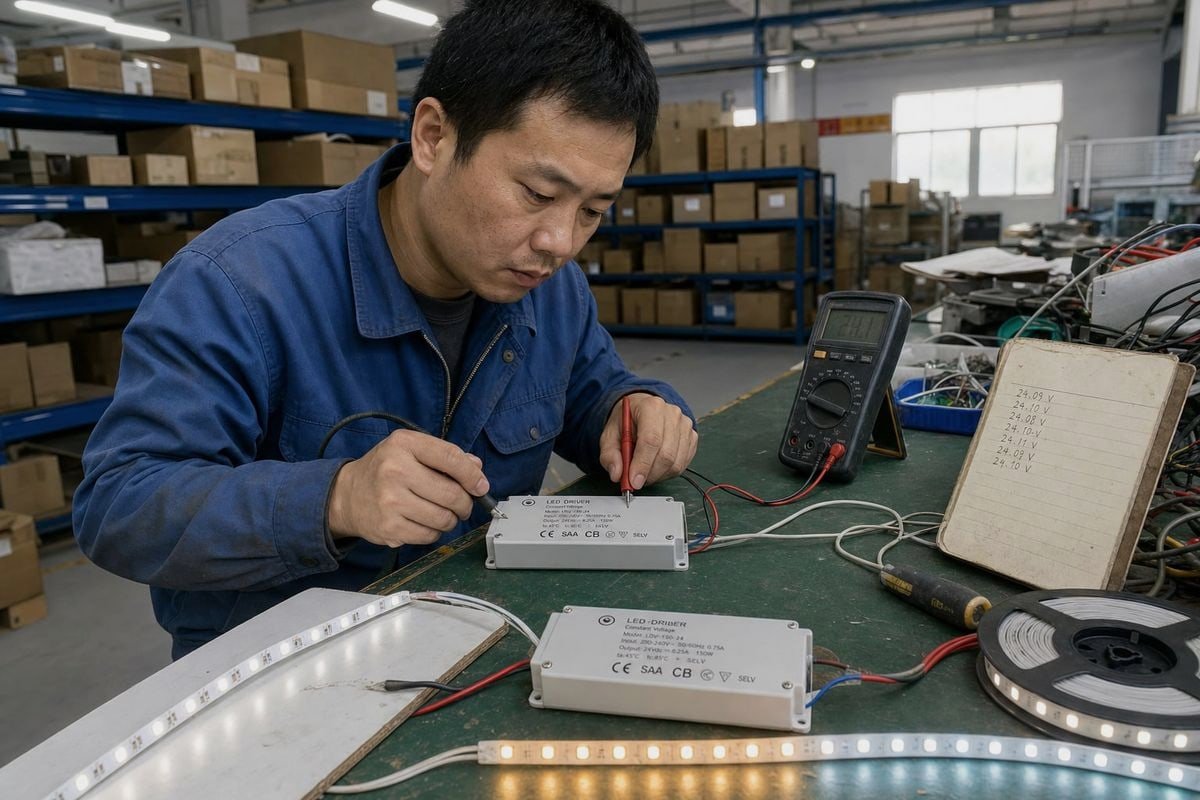
DALI DT6 / DT8 voor CV-drivers verwart veel kopers. Ik zie het wekelijks op onze productielijn, waar een verkeerde protocolkeuze een heel verlichtingsproject kan stagneren.
DALI DT6 voor CV-drivers regelt standaard dimmen in één kleur volgens IEC 62386-207, terwijl DT8 (IEC 62386-209) meerdere kanalen aanstuurt—zoals warm en koel wit—voor tunable white of RGBW-kleurmenging. Kies DT6 voor alleen helderheidsregeling; kies DT8 voor kleurtemperatuurcorrectie.
Dat is het korte antwoord. Maar de details doen er meer toe dan de labels. Laat me je doorlopen hoe je deze drivers correct kiest, verifieert en betrekt.
Hoe kies ik tussen DT6- en DT8-protocollen voor mijn CV-driverproject?
Afgelopen voorjaar vroeg een technische inkoper uit Singapore ons team om “de DT8-versie, omdat die nieuwer is.” We moesten uitleggen dat zijn project met enkelkleurige LED-strips alleen DT6 nodig had.
Kies DT6 wanneer u éénkanaals dimmen nodig heeft van één constante-spanning uitgang, zoals een vast-witte LED-strip. Kies DT8 wanneer u dimbaar wit of RGBW-kleurmenging nodig heeft, omdat DT8 meerdere kanalen beheert onder één DALI-adres.
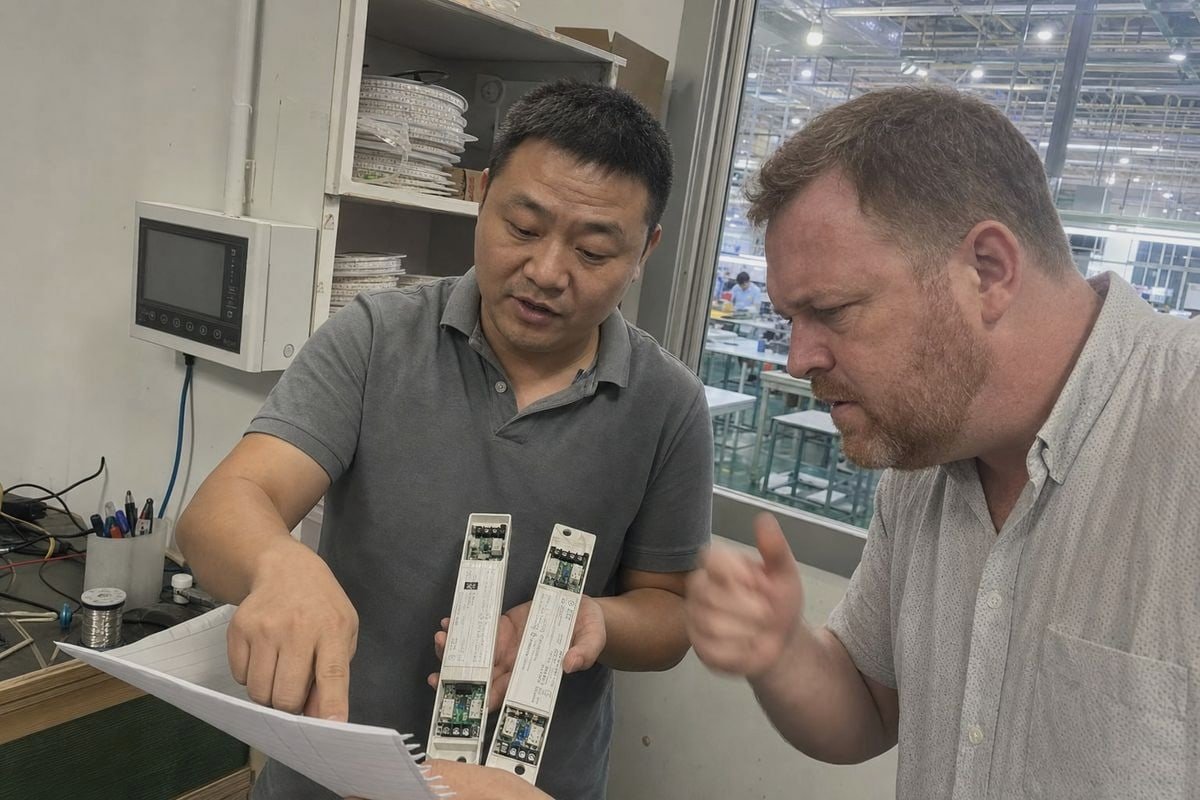
DT8 is niet automatisch beter dan DT6. Dat is het allerbelangrijkste punt dat ik aan B2B-kopers vertel. De juiste keuze hangt af van wat het LED-systeem moet regelen—niets meer.
Hier is de beslissingsmatrix die we met onze klanten delen:
| Vereiste | Betere keuze |
|---|---|
| Enkelkleurige LED, alleen helderheid | DT6 |
| 0–100% dimmen van één CV-uitgang | DT6 |
| Tunable white / CCT-regeling | DT8 |
| Warm-witte + koel-witte LED's | DT8 |
| RGB / RGBW-toepassingen | DT8, afhankelijk van de implementatie |
| Eenvoudige, kostenbewuste verlichting | DT6 |
| Geavanceerde kleurtemperatuurregeling | DT8 |
Het adressefficiëntie-argument
Er zit een verborgen kostenfactor in. Een DALI-lijn ondersteunt maximaal 64 korte adressen 1. Met DT6 verbruikt een tunable white armatuur doorgaans twee adressen—één voor het warme kanaal en één voor het koele kanaal. Een DT8-driver stuurt beide kanalen aan via één adres. Bij een groot project met tientallen tunable white armaturen kan DT8 het aantal armaturen per bus effectief verdubbelen. Het vereenvoudigt ook adressering en groepering tijdens de inbedrijfstelling, omdat de besturingssoftware elk armatuur als één object behandelt in plaats van twee.
Waar de logica zit
Met DT6 moet de externe controller de intensiteit van elk kanaal afzonderlijk berekenen om een kleurtemperatuur te produceren. Met DT8 verzorgt de interne MCU van de driver de kleurmengberekening. Dat zorgt voor vloeiendere CCT-overgangen en minder kans dat kanalen uit sync raken. Maar het betekent ook dat DT8-inbedrijfstelling meer afhankelijk is van controllercompatibiliteit—een echte afweging die we openlijk met kopers bespreken voordat we offerten.
Voor eenvoudige gangverlichting of LED-stripverlichting onder kasten in vast wit blijft DT6 de verstandige, kosteneffectieve basis. Betaal niet voor kleurmogelijkheden die je nooit zult gebruiken.
Welke certificeringen moet ik verifiëren bij het inkopen van DALI DT6/DT8 CV-drivers?
De afweging die we in onze fabriek het zorgvuldigst wegen, is certificeringsomvang versus doelmarkt. Een driver die voor één regio gecertificeerd is, kan in een ander land een douanenachtmerrie zijn.
Controleer DALI-2-naleving, plus regionale veiligheidskeurmerken: CE voor Europa, SAA voor Australië en CB voor internationale acceptatie. Bevestig SELV-naleving voor laagspannings-CV-uitgangen en controleer dat het certificaat het exacte modelnummer dekt dat je koopt.
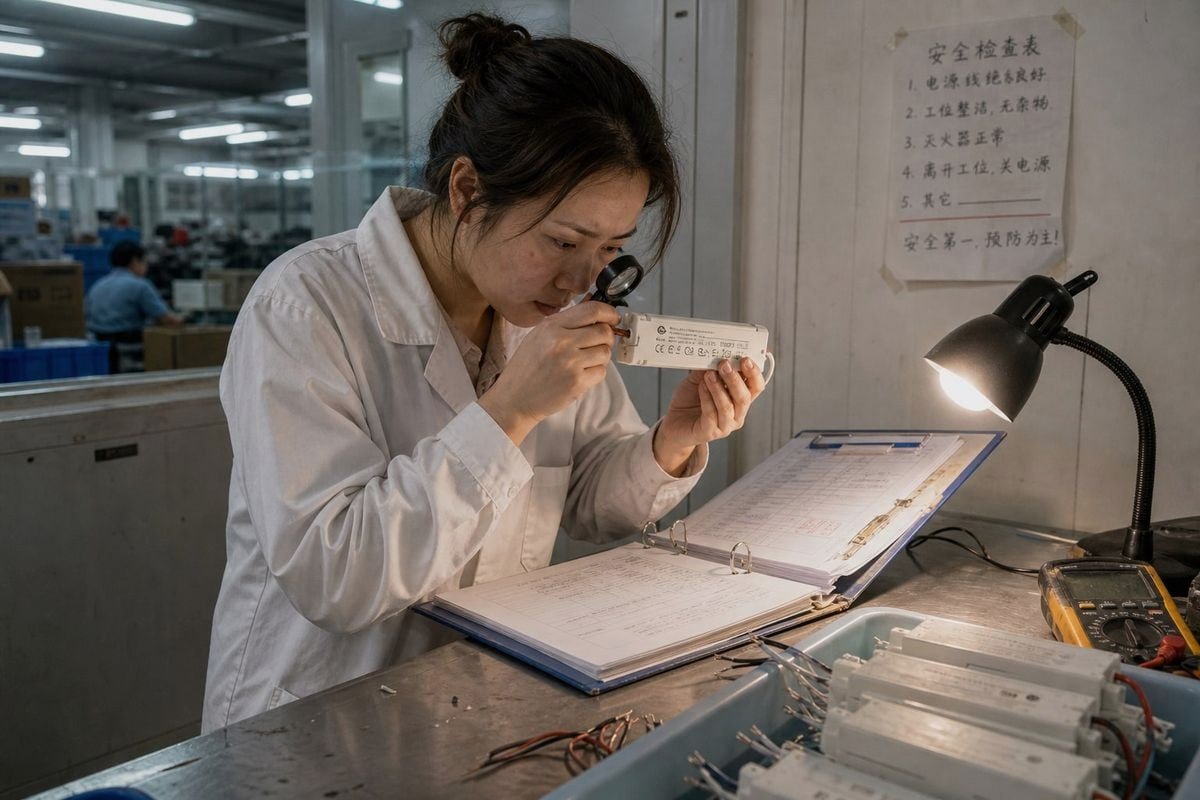
Certificeringscontrole is waar importeurs zichzelf beschermen of gokken. Omdat we exporteren naar markten zo verschillend als Duitsland, Australië, Japan en Singapore, dragen onze eigen labels CE, SAA, CB en SELV-keurmerken—en elk keurmerk beantwoordt een andere vraag.
Wat elke certificering daadwerkelijk dekt
| Certificering | Wat het verifieert | Kritiek voor |
|---|---|---|
| DALI-2-naleving | Protocolinteroperabiliteit, getest tegen IEC 62386-protocolvereisten | Multi-vendor besturingssystemen |
| CE | Europese veiligheids- en EMC-richtlijnen | EU-markten (Italië, Frankrijk, Duitsland, VK) |
| SAA | Australische elektrische veiligheidsgoedkeuring | Australië, sommige Zuidoost-Aziatische projecten |
| CB | Internationaal IEC-testrapportschema | Snellere goedkeuring in meerdere landen |
| SELV | Veiligheids-extra-laagspanning uitgangsontwerp | 12V/24V CV LED-stripinstallaties |
Hoe kan ik DALI DT6/DT8-drivercompatibiliteit met mijn bestaande verlichtingsregelsysteem garanderen?
Een harde les uit onze vroege exportjaren: twee drivers kunnen allebei “DT8” op het datasheet vermelden en zich toch volledig anders gedragen op dezelfde bus.
Bevestig welk DT8-besturingstype de driver implementeert (Tc voor tunable white, XY of RGBWAF voor kleur), verifieer dat uw controller overeenkomende commando's verzendt, test één exemplaar op uw daadwerkelijke bus en controleer de DALI-busvoedingscapaciteit vóór volledige uitrol.

Compatibiliteit is geen ja/nee-vinkje. Het is een keten, en elke schakel moet standhouden. Voor CV-drivers beoordeel DT6/DT8-compatibiliteit niet alleen op basis van het DALI-protocollabel. Een driver kan geadverteerd worden als DT8, maar de echte vraag is welk DT8-regeltype het implementeert en hoe de regelapparatuur commando's naar de fysieke CV-uitgangenmapt.
De signaalketen die er echt toe doet
Voor een tunable white CV-driver ziet het pad er als volgt uit:
- DALI-commando arriveert vanaf de controller
- De driver-MCU interpreteert dit
- PWM- of stroomregeling wordt toegepast
- De WW/CW-LED-kanalen reageren
De kwaliteit van het eindresultaat hangt sterk af van het interne regelalgoritme van de driver. Twee DT8-drivers kunnen zich heel verschillend gedragen qua minimaal dimniveau 3, CCT-overgangsvloeiendheid, kanaalmatching, PWM-frequentie, flikkerprestaties, inschakelgedrag, DALI-fade-timing en dimstabiliteit op laag niveau. Dit is waar het echte technische verschil tussen CV-drivers vaak verborgen zit—niet in de woorden “DT6” of “DT8” op het datasheet.
Praktische compatibiliteitscontroles voordat u zich vastlegt
Controleer of uw controller DT8 native ondersteunt. Oudere DALI-1-controllers doen dit vaak niet, en sommige moderne DT8-drivers kunnen worden geconfigureerd om meerdere DT6-adressen na te bootsen als workaround voor legacy-systemen. Bevestig ook de dimcurve—de meeste DALI-systemen verwachten een logaritmische dimcurve 4, en een mismatch veroorzaakt zichtbare stappen op lage niveaus. Controleer of de DALI-busvoeding voldoende stroomheadroom heeft voor alle aangesloten apparaten, aangezien elk regelapparaat ruststroom van de bus trekt. Vraag ten slotte naar PWM-synchronisatie: kwalitatieve DT8-CV-drivers synchroniseren PWM over kanalen om kleurbreuk te voorkomen, een veelvoorkomend artefact bij het mengen van kleuren met meerdere onafhankelijke DT6-drivers.
Ons technisch supportteam voert waar mogelijk een gezamenlijke banktest uit met het exacte controllermodel van de klant. Dit heeft meer projecten gered dan welk datasheet dan ook ooit heeft gedaan.
Waar moet ik op letten bij kwaliteitsproblemen bij het importeren van DALI DT6/DT8 CV-drivers voor grote projecten?
Toen een distributeurklant in Vietnam een partij van een concurrent ontving met inconsistente dimming op laag niveau, stuurde hij ons foto's via WhatsApp met de vraag wat er mis was gegaan. Het antwoord was QC op batchniveau, niet het ontwerp.
Let op voor flikkering bij lage dimniveaus, inconsistente minimale helderheid tussen units, slechte kanaalafstemming in tunable white drivers, instabiel inschakelgedrag, thermische derating-storingen en ongedocumenteerde firmwareverschillen tussen productiebatches. Eis pre-shipment testrapporten en een schriftelijke garantie.
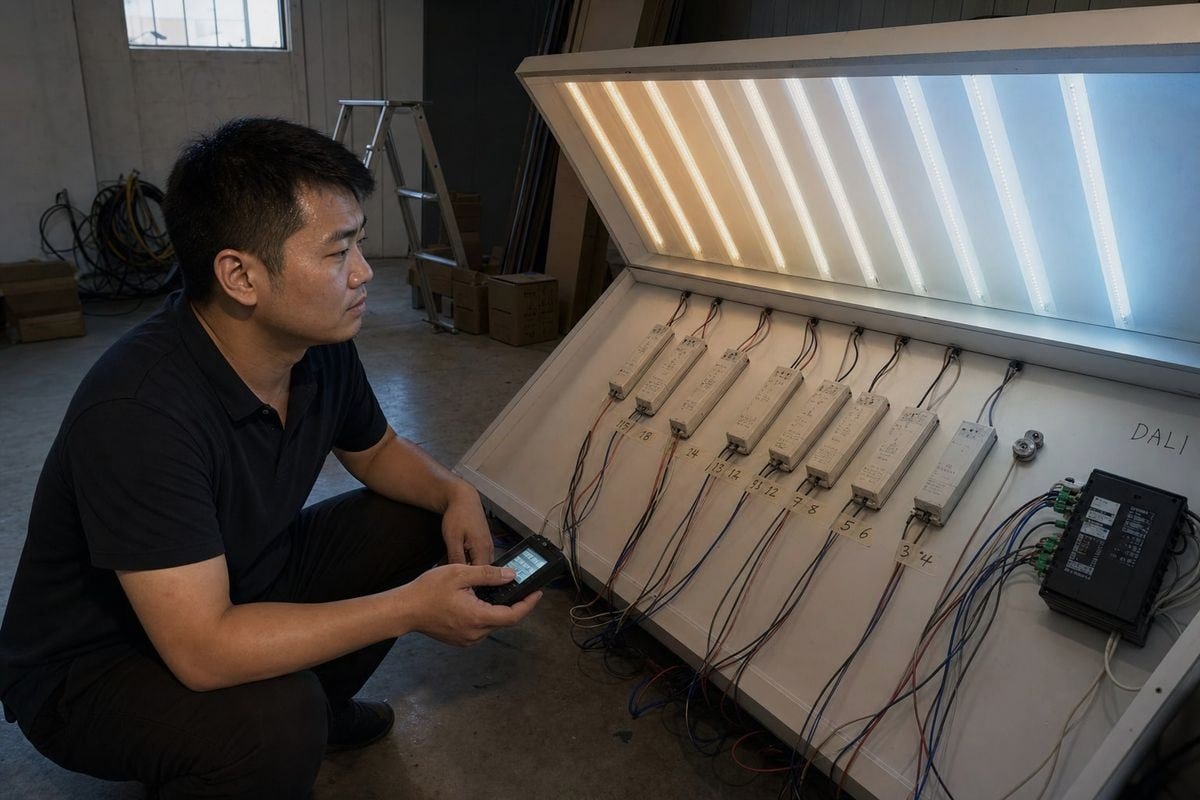
Grote projecten versterken kleine defecten. Eén flikkerende driver in een sample lijkt op pech; tweehonderd in een hotelinstallatie lijkt op een rechtszaak. Hier zijn de faalpunten die wij het hardst testen op onze eigen lijnen, en waar importeurs bewijs voor moeten eisen.
De kwaliteitschecklist voor volumeorders
| Kwaliteitsprobleem | Hoe het zich op locatie uit | Hoe te verifiëren vóór verzending |
|---|---|---|
| Flikkeren op laag niveau | Zichtbaar stroboscopisch effect onder 10% helderheid | Vraag om flikkertestgegevens; premium DALI-2-drivers dimmen soepel naar zeer diepe niveaus |
| Variatie tussen units | Aangrenzende LED-strips op verschillende helderheid | Vraag om batchsamplingrapporten op minimaal dimniveau |
| Kanaalmismatch (DT8) | Kleurtemperatuurcorrectie ziet er ongelijkmatig uit | Test de WW/CW-uitgangsbalans over sample-units |
| Inschakelgedrag | Armaturen flitsen op volledige helderheid bij netherstel | Bevestig programmeerbare inschakel- en systeemfoutniveaus |
| Fade-timingfouten | Scènes gaan over met verschillende snelheden | Verifieer DALI-fade-tijdnaleving op een echte bus |
| Thermische derating | Drivers falen vroegtijdig in gesloten plafonds | Controleer tc-puntclassificatie en deratingcurve |
Waarom batchconsistentie de echte onderscheider is
CV-drivers voor tunable white zijn bijzonder gevoelig voor firmware. Als een fabriek stilletjes de MCU-code tussen batches bijwerkt, kunnen fade-timing en dimcurves verschuiven. Bij een gefaseerd project—bijvoorbeeld een gebouw dat over zes maanden verdieping voor verdieping wordt uitgerust—wordt die verschuiving zichtbaar waar oude en nieuwe batches elkaar ontmoeten. Wij vergrendelen firmwareversies per order en noteren deze in onze QC-records, omdat gemengd gedrag tussen batches een van de meest voorkomende klachten is die kopers ons brengen van eerdere leveranciers.
Sta ook op een duidelijke garantieprocedure op schrift vóór betaling. Een veelvoorkomend pijnpunt dat ik van kopers hoor, is leveranciers die mondeling een vijfjarige garantie citeren en vervolgens elke claim betwisten. Vraag precies hoe defecte units worden afgehandeld: vervanging verzonden met de volgende bestelling, creditnota of retour-voor-reparatie. Het antwoord zegt veel over de fabriek achter de driver.

Conclusie
De keuze tussen DALI DT6 en DT8 voor CV-drivers komt neer op het matchen van het protocol aan uw regelbehoeften—en vervolgens het verifiëren van certificering, compatibiliteit en batchkwaliteit voordat u zich vastlegt.
Het label op het datasheet is het startpunt, niet het antwoord. DT6 dekt single-channel dimmen eerlijk en betaalbaar. DT8 ontgrendelt tunable white-regeling en RGBW-kleurmenging met efficiënte adressering. Maar de echte techniek leeft binnenin de driver: het algoritme dat DALI-commando's naar CV-uitgangen vertaalt, het PWM-gedrag, de flikkerprestaties, de firmware-discipline over batches. Ik heb projecten zien slagen omdat een koper één extra vraag stelde over DT8-regeltypen, en ik heb andere zien stagneren omdat niemand het DALI-2-register controleerde. Als u drivers specificeert voor uw volgende project, test dan een sample op uw daadwerkelijke bus, eis de echte testrapporten en krijg garantievoorwaarden op schrift. Wanneer u werkt met een leverancier die die stappen als normaal beschouwt in plaats van onderhandelbaar, verdwijnen de meeste risico's in dit artikel simpelweg.
Voetnoten
- Technisch overzicht van de adresseringsstructuur en communicatielimieten van het DALI-protocol. ↩︎
- Officieel register voor het verifiëren van DALI-2-gecertificeerde producten om protocolinteroperabiliteit en naleving te waarborgen. ↩︎
- De internationale normalisatie-instelling die verantwoordelijk is voor het definiëren van prestatiemetrieken in verlichtingsregelprotocollen. ↩︎
- Officiële technische uitleg van gestandaardiseerde DALI-dimmercurves en systeemarchitectuur. ↩︎