Ga naar de inhoud









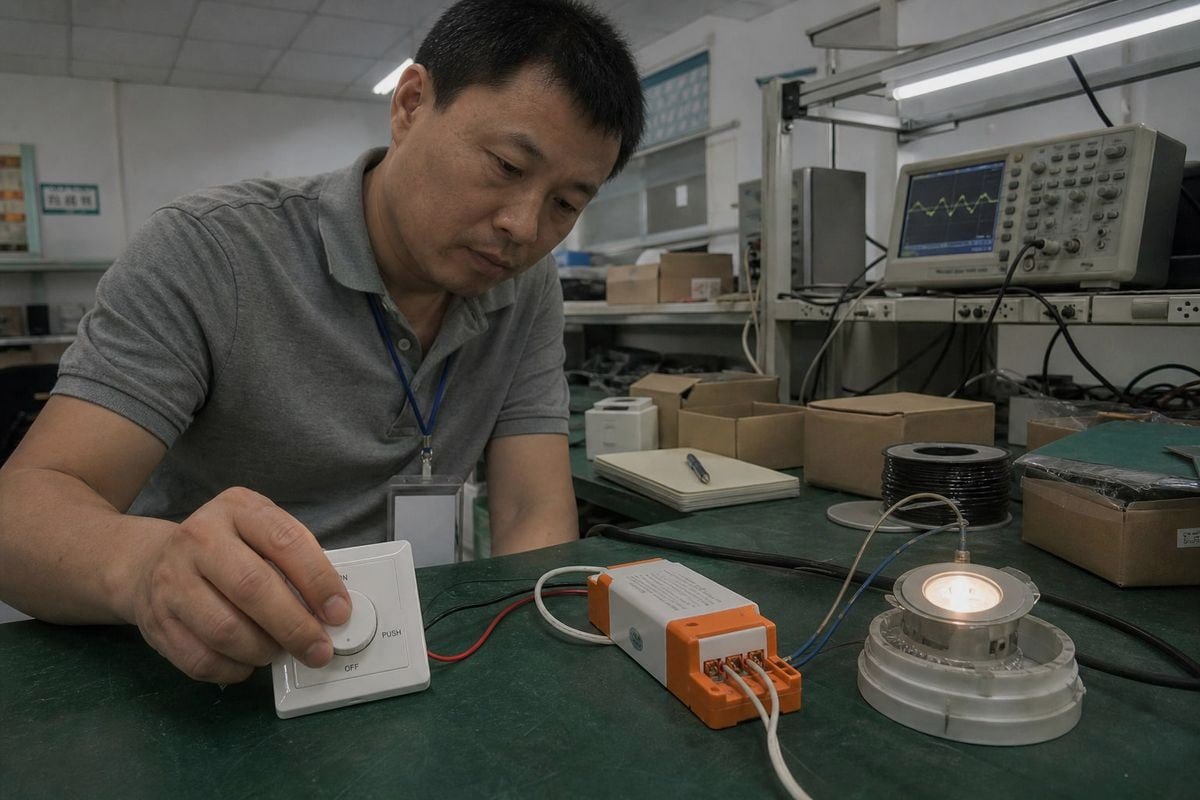
Het matchen van TRIAC-dimmers met CC-drivers lijkt eenvoudig totdat een project ter plaatse flikkert. Ik heb dit zien gebeuren bij kopers die blindelings twee “dimbare” labels vertrouwden.
Om een TRIAC-dimmer te matchen met een constant-current LED-driver, kies je een CC-driver die geschikt is voor TRIAC fase-aansnijdingsdimming, match je het leading- of trailing-edge type van de dimmer, de AC-ingangsspanning, het belastingsbereik en het wattage, bevestig je het stroom- en doorlaatspanningsvenster van de LED, en verifieer je vervolgens het exacte dimmer-driver-paar door middel van echte tests.
Dat antwoord klinkt compact. Maar elke clausule erin verbergt een faalmodus. Hieronder loop ik elke controle met je door, in de volgorde die ik met onze eigen klanten gebruik.
Wat moet ik controleren voordat ik een TRIAC-dimmer koppel aan een CC-driver?
Vorig jaar stuurde een technische inkoper uit Singapore mij een “TRIAC-dimbare” driver-specificatie van een andere leverancier en vroeg waarom zijn downlights flikkerden bij 10% helderheid. Het datasheet vertelde hem dat nooit.
Controleer vóór het koppelen tien dingen: LED-doorlaatspanningsbereik, vereiste LED-stroom, driver-ingangsspanning en -frequentie, leading- of trailing-edge-compatibiliteit, minimale en maximale belasting, dimbereik, opstartgedrag, aantal drivers per dimmer, de LED-geschikte belasting van de dimmer, en daadwerkelijke compatibiliteitstests.

Het kerninzicht dat ik altijd eerst deel: TRIAC-compatibiliteit wordt niet bepaald door het woord “TRIAC” alleen. Het echte probleem is of de afgekapte AC-golfvorm 1 van de dimmer correct kan worden gedetecteerd en verwerkt door de ingangstrap van de driver, terwijl stabiele werking bij de vereiste belasting behouden blijft. Fase-aansnijdingsdimming snijdt de AC-sinusgolf aan. De driver moet die afgesneden golfvorm elke halve cyclus, op elke dimpositie, schoon kunnen lezen.
Begin aan de uitgangszijde, niet aan de ingangszijde
Veel kopers beginnen met de dimmer. Ik zeg hen te beginnen met de LED-belasting. Een CC-driver regelt stroom, dus de uitgangsstroom van de driver moet gelijk zijn aan de nominale stroom van de LED, en de doorlaatspanning van de LED moet binnen het uitgangsspanningsvenster van de driver vallen. Als die koppeling verkeerd is, kan geen enkele dimmer ter wereld dat oplossen.
Ga dan naar de ingangszijde
Pas nadat de uitgang overeenkomt, kijk ik naar de AC-zijde. Hier is de volledige checklist vóór aankoop die ik aan onze distributeurs geef:
| # | Controlepunt | Waarom het ertoe doet |
|---|---|---|
| 1 | LED-doorlaatspanningsbereik | Moet binnen het uitgangsvenster van de driver vallen |
| 2 | Vereiste LED-stroom | CC-drivers regelen stroom, niet spanning |
| 3 | Driver-ingangsspanning/-frequentie | 120V vs 230V vs 277V-mismatch veroorzaakt onregelmatig dimmen |
| 4 | Leading edge vs trailing edge | Verkeerd fasetype veroorzaakt gezoem en stress |
| 5 | Minimale en maximale belasting | Onderbelasting van een TRIAC veroorzaakt flikkering |
| 6 | Dimbereik | Bepaalt bruikbare lage helderheid |
| 7 | Opstartgedrag | Langzaam of flikkerend opstarten irriteert eindgebruikers |
| 8 | Drivers per dimmer | Cumulatieve inschakelstroom 2 beperkt het aantal |
| 9 | LED-geschikte belasting van de dimmer | Vaak veel lager dan de gloeilamp-classificatie |
| 10 | Daadwerkelijke compatibiliteitstests | Het enige bewijs dat het paar werkt |
Een waarschuwing die ik elke B2B-klant geef: match de driver niet met de dimmer op basis van alleen wattage. Een LED-belasting van 30 W betekent niet dat je simpelweg een “30 W TRIAC-compatibele driver” nodig hebt. Wattage is één regel uit tien.
Hoe weet ik of mijn CC-driver compatibel is met mijn TRIAC-dimmer?
Wanneer we in onze fabriek een nieuwe TRIAC-dimbare driver ontwikkelen, testen we die op de testbank tegen tientallen dimmermodellen vóór release. Die gewoonte kwam voort uit één harde les: datasheets beloven, golfvormen bewijzen.
Een CC-driver is compatibel wanneer het datasheet expliciet TRIAC- of fase-aansnijdingsdimming ondersteunt, de ingang overeenkomt met het fasetype en de spanning van de dimmer, de aangesloten belasting binnen het LED-geschikte bereik van de dimmer valt, en het exacte paar op een door de fabrikant geteste compatibiliteitslijst staat of de testbanktest doorstaat.
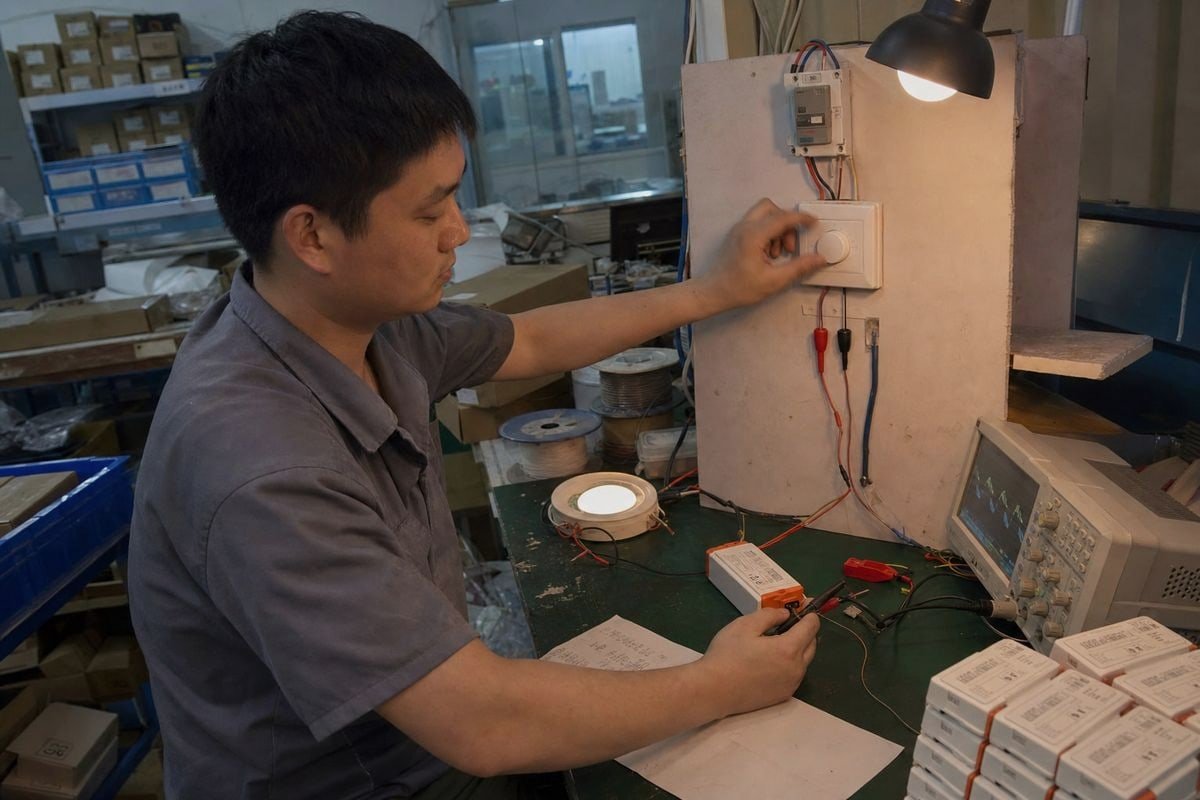
Hier is het verificatieproces dat ik aanbeveel, in de exacte volgorde die we in ons eigen laboratorium gebruiken.
Een vijfstappen-verificatieproces
- Lees het driver-datasheet. Zoek naar expliciete bewoordingen: “TRIAC-dimbare,” “fase-aansnijdingscompatibel,” “leading-edge-compatibel,” of “forward phase.” Vage termen zoals alleen “dimbaar” zijn een rode vlag.
- Lees het dimmer-datasheet. Bevestig dat het “LED-compatibel” of “universeel fase-aansnijdend” is gemarkeerd, en noteer de minimale en maximale LED-belasting, niet de gloeilamp-belasting.
- Match fase-type. Leading edge versus trailing edge is geen checkbox. Een leading-edge TRIAC-dimmer gekoppeld aan een driver die is afgestemd op trailing-edge (ELV)-gedrag kan zoemen, oververhitten en vroegtijdig falen.
- Controleer de compatibiliteitslijst. In productie vertrouw ik veel meer op een door de fabrikant geteste dimmer-compatibiliteitslijst dan op de zinsnede “TRIAC dimbaar” op een datasheet. De interactieketen loopt van dimmer → TRIAC → ingangsfilter → gelijkrichter → bulkcondensator → regel-IC, en een sterk gefilterde ingang kan een anderszins “compatibele” driver slecht laten presteren met bepaalde dimmers.
- Test één eenheid op de bank en test daarna een kleine batch in het veld. Doorloop langzaam het volledige dimbereik. Let op flikkeren, dode zones, zoemen en uitval nabij de onderkant.
Signalen van een goed ontworpen TRIAC-dimbare driver
Moderne drivers gebruiken verschillende technieken om vriendelijk te blijven met fase-afsnijdimmers. Geef prioriteit aan drivers met intelligente bleeder-circuits, die alleen bij lage dimniveaus extra stroom trekken om de TRIAC stabiel te houden, terwijl ze een hoge arbeidsfactor behouden bij volledige helderheid. Actieve demping is een ander sterk signaal; het onderdrukt de resonante oscillaties veroorzaakt door het snelle schakelen van de TRIAC, wat flikkervrije prestaties in veeleisende ruimtes verbetert. In Noord-Amerikaanse projecten, NEMA SSL 7A-naleving 3 is een nuttige benchmark, omdat het definieert hoe fase-afsnijdimmers en LED-drivers moeten samenwerken. Controleer ook de dimcurve: een mismatch tussen lineair en logaritmisch creëert “dode zones,” waarbij het verplaatsen van de schuifregelaar gedurende een deel van het bereik niets verandert.
Waarom Flikkert Mijn TRIAC-Dimmer of Faalt Hij om Soepel te Dimmen met een CC-Driver?
Een distributeur in Vietnam belde me ooit in paniek: één armatuur per kamer dimde prima, maar drie armaturen flikkerden. Dezelfde driver, dezelfde dimmer, ander gedrag. De oorzaak was stroom, niet kwaliteit.
Flikkeren gebeurt meestal omdat de TRIAC zijn houdstroom niet kan handhaven met een laagvermogen LED-belasting, het ingangsfilter van de driver fasehoekdetectie vervormt, of inschakelstroom het ontsteken verstoort. Symptomen zijn onder meer flikkeren aan de onderkant, willekeurige uitschakeling, dode dimzones, zoemen en uitval.
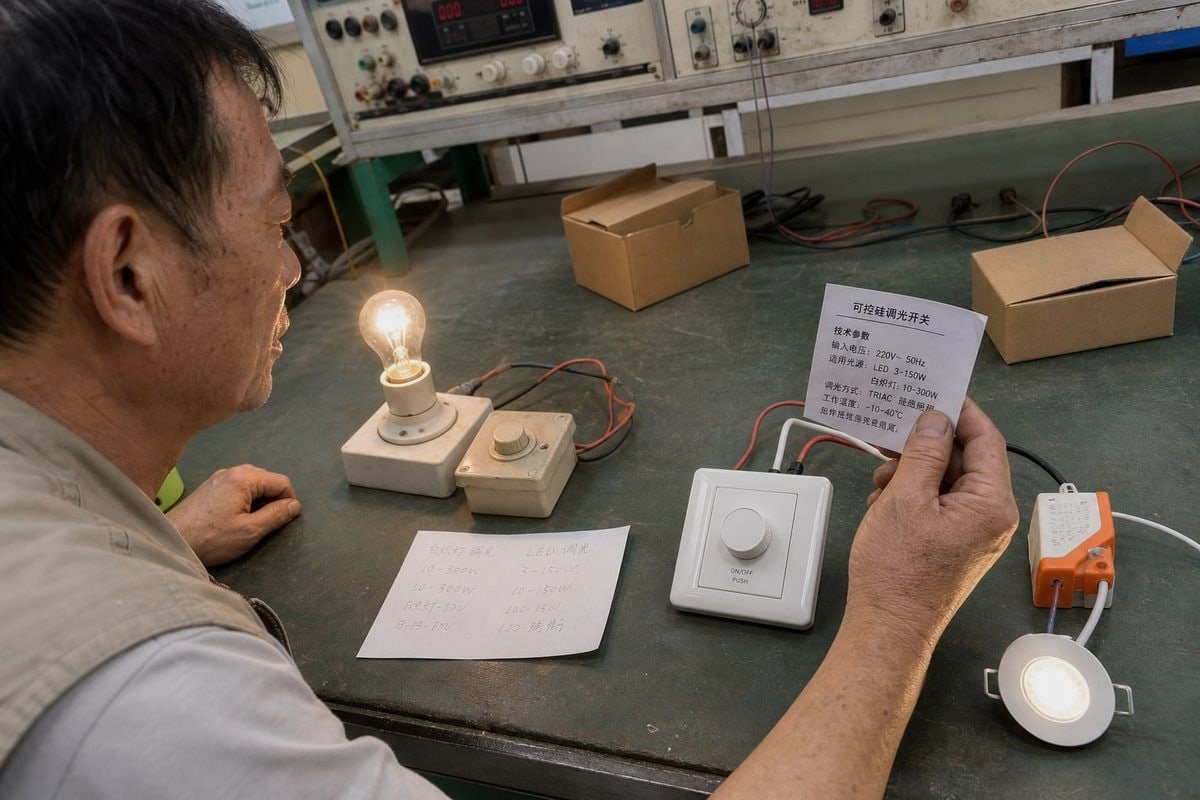
TRIAC-dimmers zijn ontworpen voor resistieve belastingen zoals gloeilampen. Een LED-driver presenteert een heel ander ingangskarakteristiek. Bij laag vermogen trekt de driver mogelijk niet genoeg stroom om de TRIAC betrouwbaar geleidend te houden, vooral nabij het begin van elke AC-halve cyclus. STMicroelectronics merkt op dat de TRIAC doorgaans ongeveer 30–50 mA houdstroom 4 nodig heeft tijdens de halve cyclus om vergrendeld te blijven. Als de stroomafname van de driver daaronder zakt, ontsteken de TRIAC verkeerd en zie je flikkeren of knipperen.
Het minimale-belastingsprobleem, uitgelegd
Dit is het verborgen probleem dat de meeste algemene artikelen missen. Wanneer de belasting te klein is, schakelt de TRIAC midden in de cyclus uit. De driver verliest dan invoer, reset en start opnieuw, keer op keer. Dat is jouw flikkeren. En hier is de industrienuanne die veel kopers verkeerd begrijpen: het verhogen van het LED-wattage lost compatibiliteit niet automatisch op. Het ingangscircuit van de driver, houdstroomgedrag, opstartsequentie, EMI-filter, bulkcondensator en fasehoekdetectiestrategie beïnvloeden allemaal hoe de dimmer zich gedraagt.
Symptoom-naar-oorzaak probleemoplossingstabel
| Symptoom | Meest waarschijnlijke oorzaak | Praktische oplossing |
|---|---|---|
| Flikkeren bij lage helderheid | TRIAC verliest houdstroom | Gebruik een driver met een intelligent bleeder-circuit |
| Willekeurige uitschakeling | Belasting onder de minimale belastingsvereiste van de dimmer | Voeg belasting toe of schakel over naar een geteste driver |
| Dode zone in het bereik | Mismatch in dimcurve | Pas de low-end trim aan; match lineaire versus log-curves |
| Hoorbaar gezoem | Fasettype-mismatch of resonantie | Match leading/trailing edge; kies actieve demping |
| Ander gedrag met aantal armaturen | Cumulatieve inschakelstroom | Derate de dimmer; beperk drivers per circuit |
| Ghosting wanneer uit | Lekstroom door de dimmer | Controleer minimale belasting en bleeder-ontwerp |
Waarom het aantal armaturen alles verandert
De bulkcondensator van elke driver laadt op op het ontstekingsmoment van de TRIAC. Vermenigvuldig die inschakelstroom met tien drivers en de piek kan dimmercontacten lassen, zelfs als het totale lopende wattage laag is. Daarom staat het aantal drivers per dimmer op mijn checklist. Pas ook de low-end trim van de dimmer aan waar beschikbaar; een stabiele minimale geleidingshoek voorkomt dat de driver uitvalt aan de onderkant van het dimbereik.
Welke TRIAC-dimmer- en CC-drivercombinatie werkt het beste voor mijn project?
Onze ingenieurs wegen een constante afweging bij het ontwerpen van driver-front-ends: een sterker EMI-filter verbetert elektrische ruis, maar het kan de afgesneden golfvorm vervagen die de driver moet lezen. Projectselectie staat voor dezelfde spanning.
De beste combinatie is een CC-driver uit een familie met gepubliceerde dimmer-compatibiliteitslijsten, gekoppeld aan een bijpassende roterende TRIAC-dimmer waarvan de LED-classificatie je totale driveraantal dekt met 10–20% marge, geverifieerd door een kleine proefinstallatie vóór volledige uitrol.
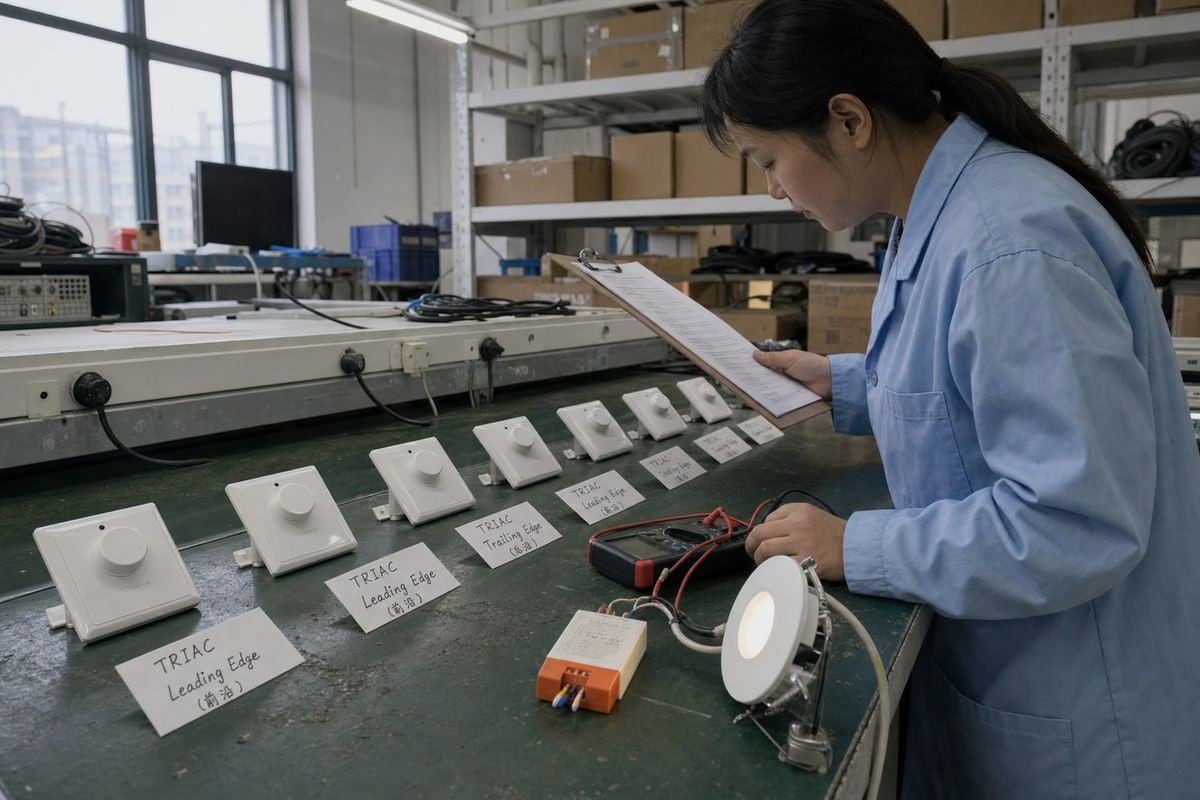
Verschillende projecten vereisen verschillende combinaties. Zo frame ik het voor kopers die vanuit ons sourcen voor bouwtechnische projecten in Zuidoost-Azië en Europa.
| Projecttype | Aanbevolen combinatie | Belangrijkste specificatie om op te letten |
|---|---|---|
| Hotelrenovatie, bestaande wanddimmers | Universele fase-aansnijdings-CC-driver | Diep dimbereik, stabiliteit bij laag niveau |
| Nieuwe residentiële downlights | Draaibare TRIAC-dimmer + geteste CC-driver | LED-geclassificeerde belasting van de dimmer |
| Kleine commerciële toepassing, weinig circuits | Fase-afsnijdingsdimmer + compatibele driver | Soepel laag niveau, stille werking |
| Grote commerciële toepassing, veel circuits | Overweeg in plaats daarvan 0-10V of DALI | Schaalbaarheid en gecentraliseerde bediening |
Wanneer TRIAC de juiste keuze is
Sommige kopers beweren dat een “TRIAC-dimbare” label voldoende is voor normale projecten. Voor een handvol armaturen op één wanddimmer werkt die visie vaak. Maar ik neem het conservatieve technische standpunt in: alleen geteste compatibiliteit tussen het exacte dimmermodel en het exacte drivermodel is betrouwbaar, omdat de kosten van een locatiebezoek de kosten van een proeftest ver overtreffen. TRIAC blijft een kosteneffectieve renovatie-route. Eindgebruikers behouden hun vertrouwde wandplaten, zoals de compacte glanzende draaidimmer met drukschakelaar aan/uit die we breed leveren, en installateurs vermijden nieuwe besturingsbedrading.
Wanneer over te stappen naar een ander protocol
De markt verschuift naar universele fase-aansnijdingsdrivers en hybride compatibiliteitslabels, omdat klanten bestaande dimmers behouden maar LED-kwaliteitsprestaties verwachten. Toch is voor grote installaties, 0-10V of DALI robuuster. DALI biedt digitale adressering 5; veel drivers gebruiken pulsbreedtemodulatie of hybride dimmen aan de uitgangszijde om zeer lage niveaus soepel te bereiken. Als uw project tientallen circuits, lange dimscènes of strikte flikkervereisten heeft, is fase-aansnijdingsdimmen het verkeerde hulpmiddel. Wanneer compatibiliteit na testen onzeker blijft, is het wisselen van het dimmertype of de driverfamilie een betrouwbaardere oplossing dan proberen een incompatibel paar te “tunen”. Pas ook een belastingsmarge van 10–20% op de dimmer toe als aankoopregel en bevestig certificeringen zoals CE- en SELV-markeringen voor uw doelmarkt.

Conclusie
Match TRIAC-dimmers met CC-drivers via geverifieerde paren, niet via labels. Controleer fasetype, belastingsbereik, houdstroom en doorlaatspanning, en test vervolgens. Deze discipline voorkomt flikkeren en kostbare locatiebezoeken.
Voetnoten
- Technische uitleg over hoe dimmers de AC-golfvorm afsnijden om vermogen te regelen. ↩︎
- Technische definitie van de hoge initiële stroom die elektrische belastingen zoals LED-drivers trekken. ↩︎
- Officiële industriestandaard voor het waarborgen van compatibiliteit tussen fase-aansnijdingsdimmers en LED-drivers. ↩︎
- Technische specificaties voor TRIAC-componenten en hun operationele vereisten zoals houdstroom. ↩︎
- Officiële bron voor het DALI-protocol, dat digitale adressering gebruikt voor lichtregeling. ↩︎