Vai al contenuto










Vuoi un'attenuazione più fluida, un controllo più intelligente e un'uscita affidabile per le tue strisce LED?
Un driver LED dimmerabile DALI a tensione costante fornisce un'uscita stabile a 12V o 24V e si collega ai sistemi DALI per un controllo avanzato dell'illuminazione. È una soluzione digitale per progetti di illuminazione flessibili e intelligenti.
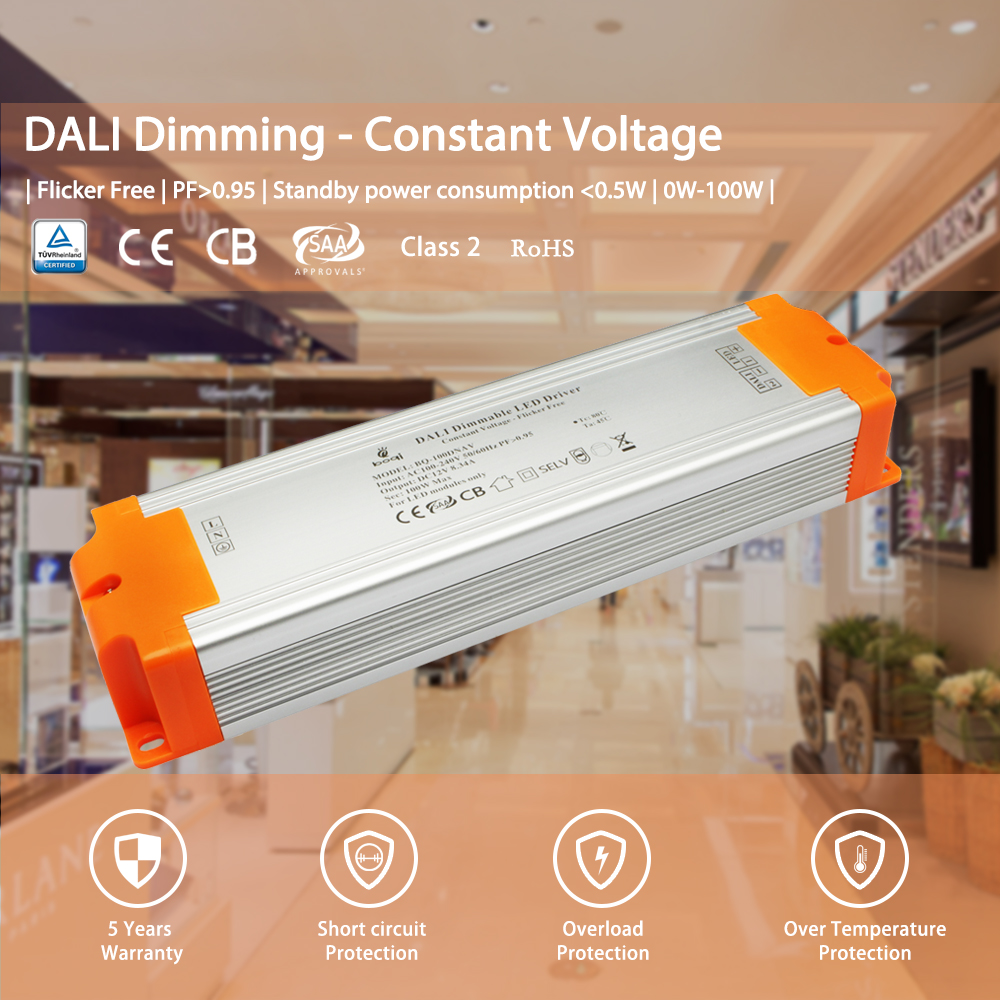
Molti progetti di illuminazione non raggiungono il loro pieno potenziale a causa di una scarsa attenuazione o di sistemi incompatibili. Se stai progettando con strisce LED o insegne, l'uso di un driver DALI a tensione costante può risolvere questi problemi. Vediamo come funziona, dove usarlo e perché è una scelta intelligente.
Cos'è un driver LED a tensione costante?
Strisce LED tremolanti, cavi surriscaldati o luminosità incoerente possono essere un mal di testa in qualsiasi progetto.
Un driver LED a tensione costante fornisce un'uscita DC fissa (es. 12V o 24V) indipendentemente dalla corrente, progettato per carichi LED cablati in parallelo come le strisce LED.
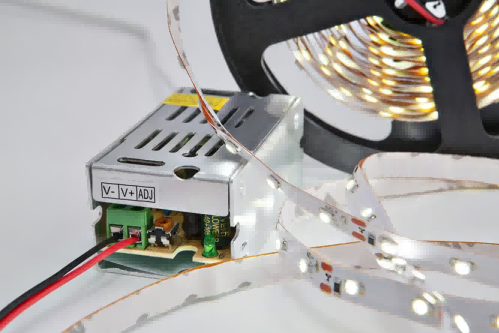
Cosa lo rende “a tensione costante”?
A differenza dei driver a corrente costante che regolano la corrente, un driver a tensione costante (CV) regola la tensione. Questo è perfetto per carichi LED in cui ogni segmento ha il proprio resistore per controllare la corrente.
| Caratteristica | Driver a tensione costante | Driver a corrente costante |
|---|---|---|
| Risultato | Tensione fissa (es. 12V, 24V) | Corrente fissa (es. 350mA, 700mA) |
| Tipo di LED | Strisce LED, insegne, LED a bassa potenza | COB, LED ad alta potenza, downlight |
| Cablaggio | Parallelo | Serie |
Le uscite CV più comuni sono 12V o 24V DC. Queste corrispondono al design della maggior parte delle strisce LED e di altri sistemi di illuminazione a bassa tensione.
Una panoramica rapida del DALI: interfaccia di illuminazione indirizzabile digitale
Confuso dal termine “DALI” nei controlli di illuminazione?
DALI è un protocollo digitale utilizzato per sistemi di illuminazione intelligenti. Consente un'attenuazione precisa, raggruppamento, impostazione di scene e comunicazione bidirezionale tra dispositivi.

Come funziona il DALI?
DALI (standard IEC 62386) non riguarda solo l'accensione o lo spegnimento delle luci. Consente:
- Controllo individuale degli apparecchi
- Controllo di gruppo e richiamo di scene
- Feedback di stato da ciascun driver
- Integrazione senza soluzione di continuità con l'automazione degli edifici
Rispetto all'attenuazione analogica (come 0–10V), DALI offre precisione digitale. Ogni dispositivo su un bus DALI ha il proprio indirizzo univoco (fino a 64 per loop). Puoi modificare il comportamento di attenuazione tramite software, non tramite controlli cablati.
Come funziona un driver dimmerabile DALI a tensione costante
Non si tratta solo di potenza. Si tratta di controllo.
Un driver DALI a tensione costante fornisce una tensione DC stabile mentre riceve comandi DALI per attenuare o controllare il carico LED collegato.
All'interno del circuito
Ecco come funziona il driver:
- Conversione AC in DC: Converte l'alimentazione di rete (100–277V AC) in 12V o 24V DC.
- Regolazione della tensione: Mantiene stabile l'uscita indipendentemente dalla variazione del carico.
- Circuito di interfaccia DALI: Riceve i segnali DALI e interpreta i livelli di attenuazione.
- Attenuazione PWM o CCR: Regola l'uscita per attenuare la striscia LED in modo fluido.
Alcuni driver CV DALI utilizzano PWM (modulazione di larghezza di impulso) per attenuare, mentre altri utilizzano la riduzione della corrente costante (CCR). Entrambi i metodi sono validi, ma il PWM è più comune nei driver CV grazie alla migliore compatibilità con le strisce LED.
Caratteristiche elettriche: tensione di uscita, gamma di potenza, efficienza
Il tuo driver ha abbastanza potenza per la tua striscia LED? Ed è abbastanza efficiente da ridurre il calore?
I driver CV DALI sono disponibili in versioni con uscita a 12V o 24V, tipicamente da 30W a 300W, con efficienza superiore all'85%.
Specifiche tipiche che troverai
| Parametro | Intervallo di valori |
|---|---|
| Tensione di uscita | 12V DC, 24V DC |
| Gamma di potenza | Da 30W a 300W |
| Tensione di ingresso | 100–277V AC |
| Intervallo di oscuramento | 1%–100% (a seconda del modello) |
| Efficienza | ≥ 85%, alcuni raggiungono 92%+ |
| PF (fattore di potenza) | ≥ 0,95 |
Una maggiore efficienza significa meno calore e costi elettrici inferiori. Quando selezioni un driver DALI CV, assicurati che corrisponda al tuo carico. Lascia sempre un margine del 10–20% per prevenire sovraccarichi.
Scenari applicativi: Strisce LED, Illuminazione a incasso, Insegne e altro
Non sai dove utilizzare un driver DALI a tensione costante?
I driver DALI CV sono ideali per applicazioni con strisce LED, come illuminazione a incasso, illuminazione lineare, insegne, display ed effetti decorativi.
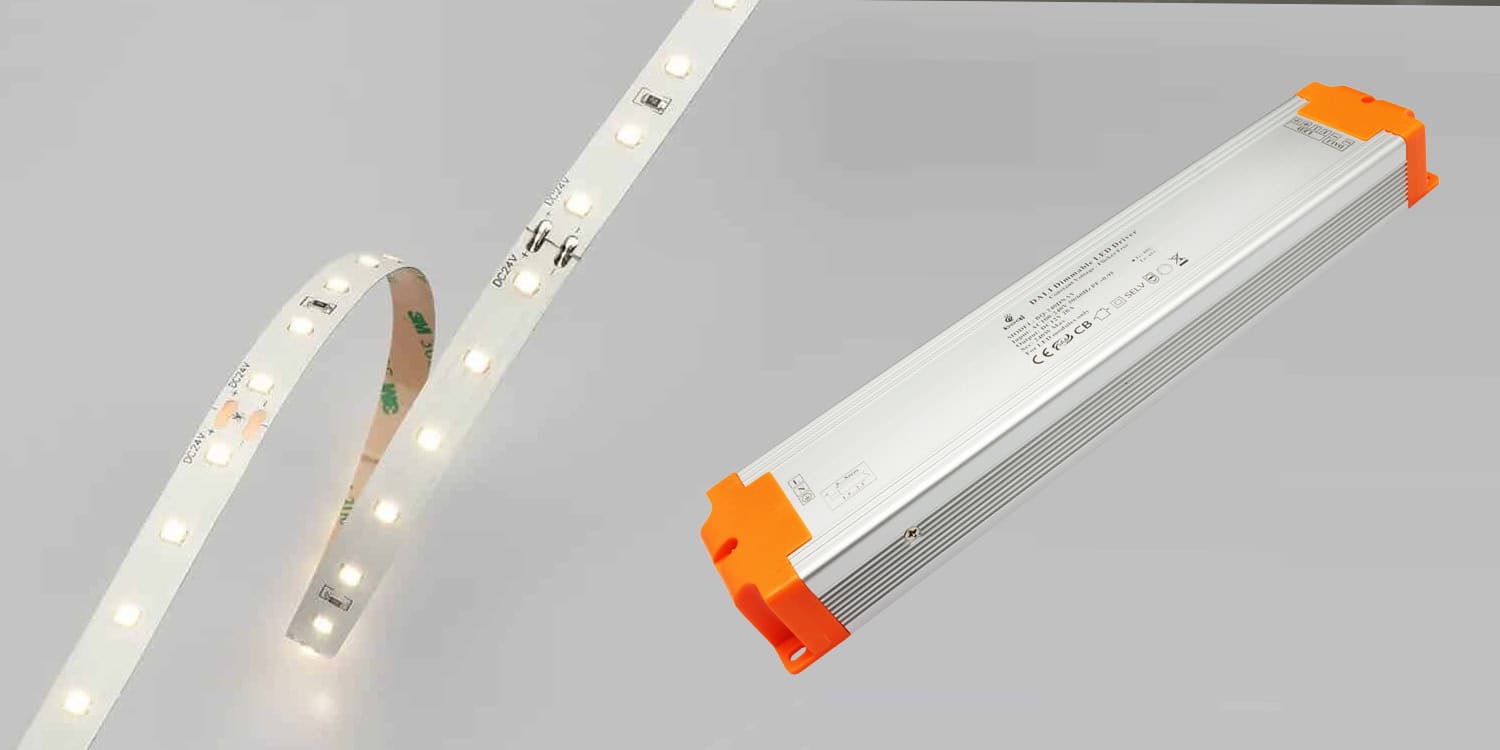
Dove brillano
Ecco i casi d'uso comuni:
- Illuminazione architetturale: Dimmerazione fluida per apparecchi lineari lunghi
- Hotel e vendita al dettaglio: Scene luminose dinamiche controllate da sensori DALI
- Illuminazione a incasso e di accento: Controllo preciso della luminosità
- Insegne e lettere a canale: Prestazioni affidabili in ambienti impegnativi
- Vetrine e scaffalature: Dimmerazione senza sfarfallio a bassa luminosità
In progetti dove la flessibilità di layout è importante, l'uso di driver a tensione costante e strisce LED semplifica la progettazione. Aggiungi DALI al mix e ora hai controllo centralizzato ed efficienza energetica.
Vantaggi della dimmerazione DALI per sistemi a tensione costante
Perché scegliere DALI rispetto ad altri sistemi di dimmerazione?
DALI offre una dimmerazione più fluida, zonizzazione flessibile e migliore integrazione di sistema per strisce LED alimentate da driver a tensione costante.
Rispetto alla dimmerazione analogica
- Nessuna interferenza di segnale: I segnali digitali sono più stabili
- Nessun problema di caduta di tensione: DALI non dipende dai livelli di tensione per la dimmerazione
- Migliore scalabilità: Indirizza fino a 64 dispositivi per bus DALI
- Configurazione remota: Modifica gruppi o scene tramite software
Questo è il motivo per cui DALI sta diventando uno standard di riferimento nei sistemi di illuminazione intelligente in uffici, vendita al dettaglio, ospitalità e persino residenziale.
Integrazione di sistema: Controller DALI, sensori e gateway
Come colleghi tutto in un sistema DALI?
Un driver DALI CV funziona con controller DALI, sensori di movimento, sensori di luce e gateway per creare un sistema di illuminazione completamente integrato.

Componenti chiave
- Controllore DALI: Invia comandi digitali ai driver.
- Sensori: I sensori di movimento e di luce ambientale possono attivare scene.
- Gateway: Si integrano con KNX, BACnet, o Zigbee.
- Strumenti software: Per indirizzamento e messa in servizio.
Quando si sceglie un driver, assicurarsi che sia certificato DALI-2 per la migliore compatibilità.
Guida all'installazione: cablaggio, indirizzamento e suggerimenti di configurazione
Non sai come cablare o programmare un driver DALI?
L'installazione include cablaggio AC, uscita DC per striscia LED, connessione bus DALI e indirizzamento digitale tramite software o pulsanti.

Approfondisci
Passaggi di configurazione
- Cablare ingresso AC e uscita DC
- Collegare DALI + e DALI – al bus di controllo
- Usare software (come DALI Cockpit) per assegnare gli indirizzi
- Testare la regolazione e il comportamento di controllo
Alcuni driver supportano la modalità broadcast, evitando la necessità di indirizzamento. Ma per un controllo completo, usare un software DALI appropriato.
DALI vs. PWM vs. 0–10V per illuminazione a tensione costante
Quale metodo di regolazione è il migliore?
DALI offre un controllo e una comunicazione migliori rispetto a PWM-solo o 0–10 V regolazione analogica nei sistemi a tensione costante.
Approfondisci
| Caratteristica | DALI | PWM | 0–10 V |
|---|---|---|---|
| Tipo | Digitale | Analogico/PWM | Analogico |
| Flessibilità di controllo | Alto | Medio | Basso |
| Comunicazione | Bidirezionale | Unidirezionale | Unidirezionale |
| Numero di canali | Fino a 64 | 1 per canale | 1 per canale |
| Configurazione scene | Sì | No | No |
PWM e 0–10V possono ancora essere usati per semplicità o motivi di costo, ma DALI vince in flessibilità e scalabilità a lungo termine.
Driver DALI a tensione costante di boqi: intelligenti, stabili e certificati
Cerchi un driver DALI CV affidabile?
boqi offre driver DALI a tensione costante da 12V e 24V, certificati DALI-2, dal design compatto e pensati per progetti di illuminazione intelligente.
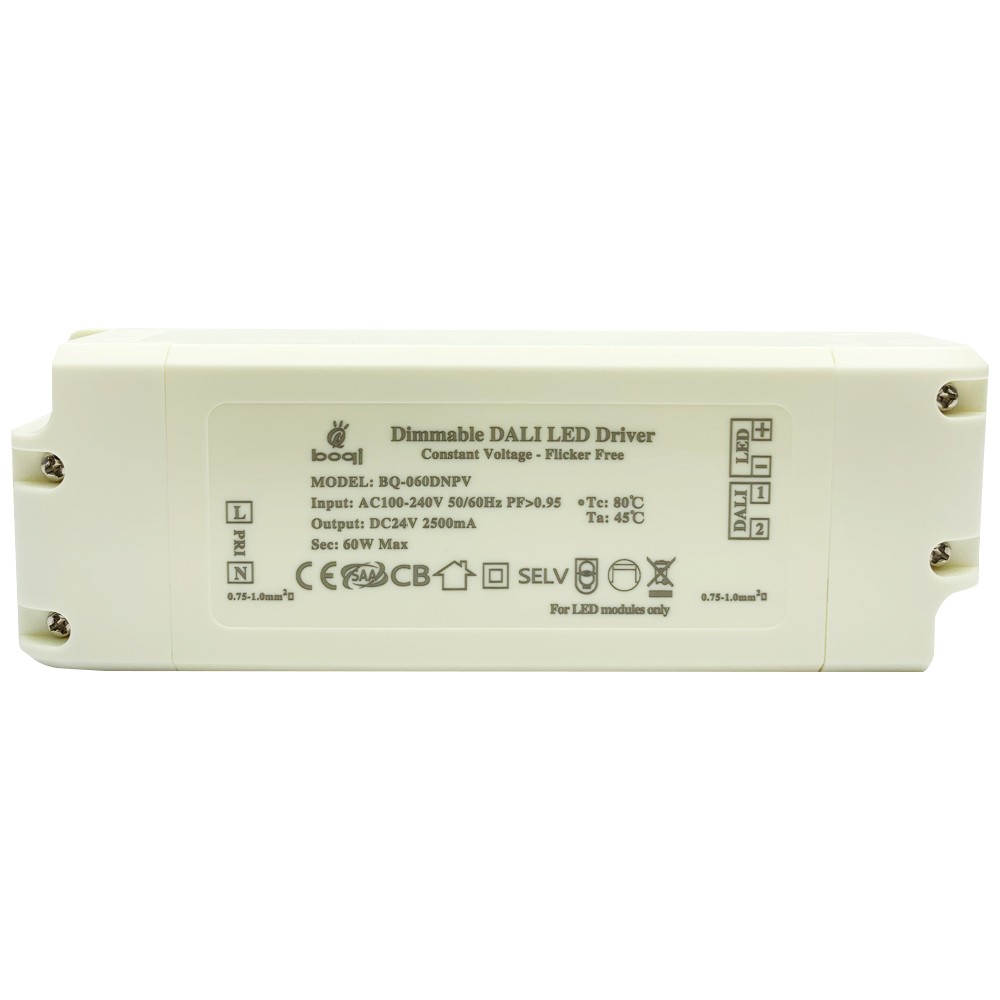
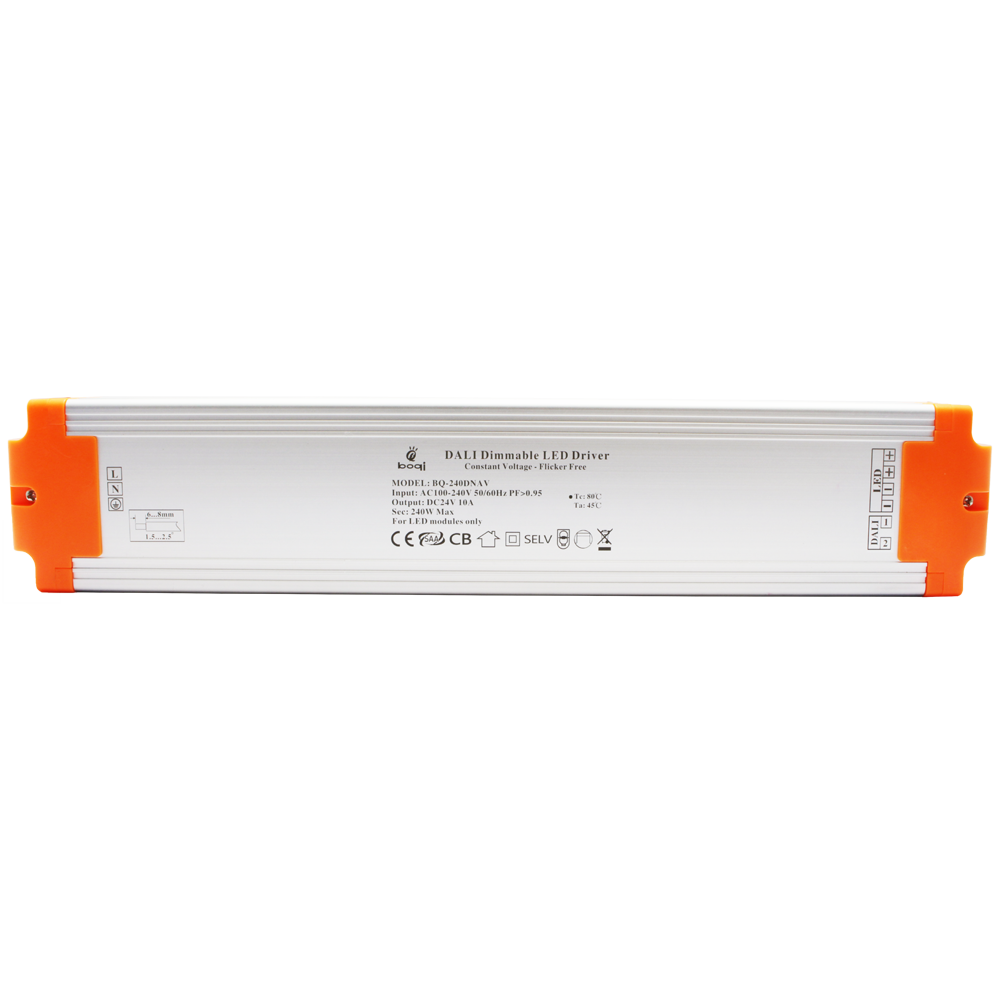

La gamma di boqi include:
- Modelli da 20W a 240W
- Versioni IP20 e IP67
- Regolazione DALI con prestazioni senza sfarfallio
- Opzioni di alloggiamento in plastica e metallo
- Piena conformità DALI-2
Questi sono costruiti con un robusto design EMC, gestione termica e uscita stabile a lungo termine.
Opzioni di personalizzazione: tensione, alloggiamento, connettori, branding
Hai bisogno di un driver su misura per il tuo progetto?
boqi supporta la personalizzazione di tensione di uscita, fattore di forma, connettori e persino branding OEM per driver dimmerabili DALI a tensione costante.

La personalizzazione include:
- Tensione di uscita: 12V, 24V, 36V, 48V
- Potenze nominali: Abbina lunghezza e densità della striscia LED
- Tipi di alloggiamento: Sottile, compatto, con grado IP
- Connettori di ingresso: Morsetti a vite, cavi, push-in
- Branding: Il tuo logo e packaging
Questo aiuta a soddisfare i requisiti di progetto per prestazioni, spazio e budget.
FAQ: Cosa devi sapere prima di scegliere un driver DALI CV
Hai ancora domande? Non sei solo.
Molti utenti chiedono informazioni su compatibilità, fluidità della regolazione, metodi di cablaggio e se sia necessaria la certificazione DALI-2.
Ecco alcune FAQ:
- Posso regolare fino all'1%? Sì, alcuni driver arrivano fino allo 0,1%.
- Ho bisogno di un controller DALI? Sì, per la piena funzionalità.
- DALI è sicuro per uso esterno? Solo con involucro con grado di protezione IP.
- Posso installare DALI in un vecchio sistema? Sì, con gateway o controlli ibridi.
Conclusione
Un driver dimmerabile DALI a tensione costante offre controllo preciso, alimentazione affidabile e integrazione intelligente per i moderni sistemi di strisce LED.