Aller au contenu










Voulez-vous un gradation plus fluide, un contrôle plus intelligent et une sortie fiable pour vos bandeaux LED ?
Un driver LED dimmable DALI à tension constante fournit une sortie stable de 12V ou 24V et se connecte aux systèmes DALI pour un contrôle d'éclairage avancé. C'est une solution numérique pour des projets d'éclairage flexibles et intelligents.
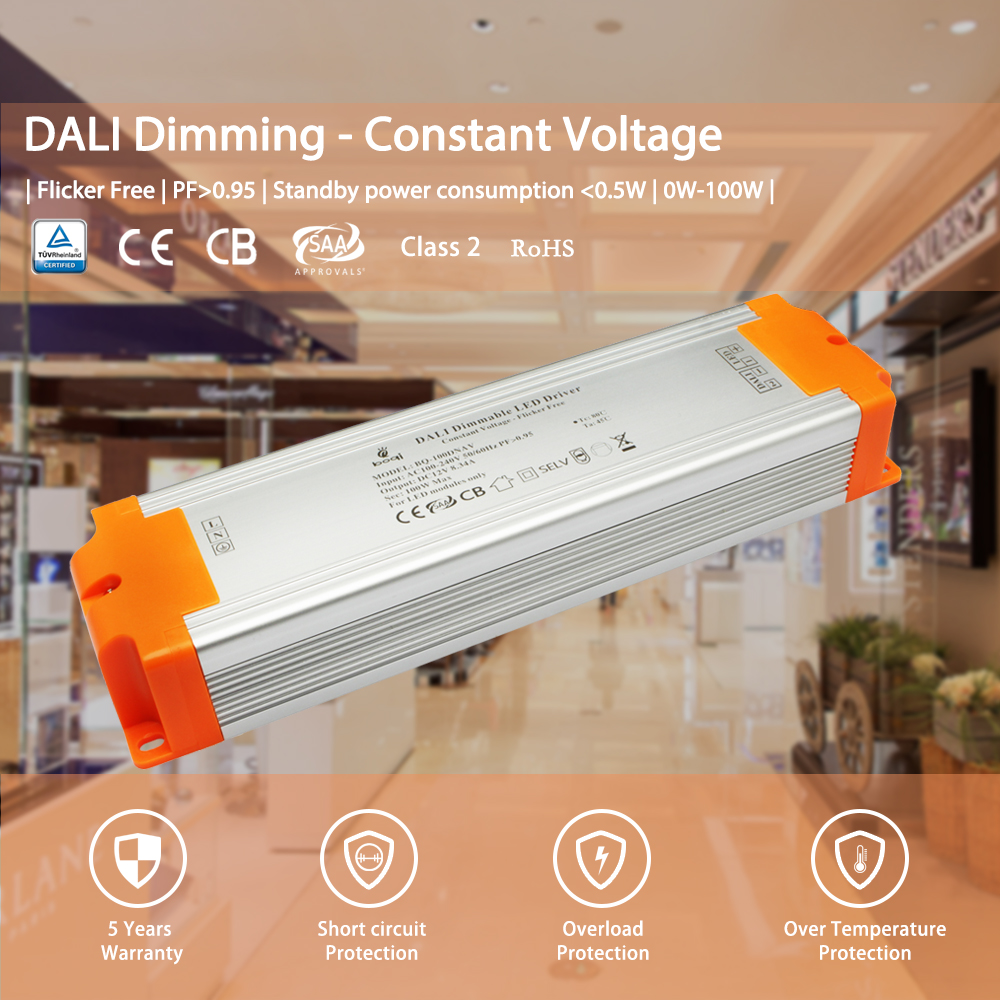
De nombreux projets d'éclairage n'atteignent pas leur plein potentiel en raison d'une mauvaise gradation ou de systèmes incompatibles. Si vous concevez avec des bandeaux LED ou de la signalétique, l'utilisation d'un driver à tension constante DALI peut résoudre ces problèmes. Voyons comment il fonctionne, où l'utiliser et pourquoi c'est un choix judicieux.
Qu'est-ce qu'un Driver LED à Tension Constante ?
Des bandeaux LED scintillants, des fils surchauffés ou une luminosité incohérente peuvent être un casse-tête dans tout projet.
Un driver LED à tension constante fournit une sortie DC fixe (par ex. 12V ou 24V) indépendamment du courant, conçu pour des charges LED câblées en parallèle comme les bandeaux LED.
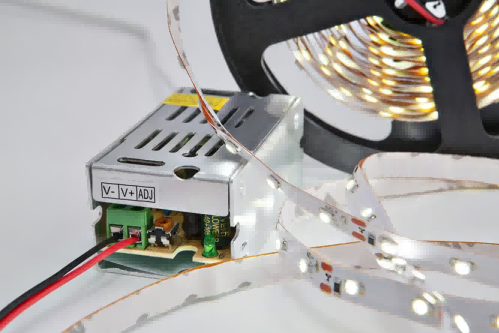
Qu'est-ce qui le rend “ à tension constante ” ?
Contrairement aux drivers à courant constant qui régulent le courant, un driver à tension constante (CV) régule la tension. C'est parfait pour les charges LED où chaque segment possède sa propre résistance pour contrôler le courant.
| Fonctionnalité | Circuit d'attaque à tension constante | Pilote à courant constant |
|---|---|---|
| Résultat | Tension fixe (par ex. 12V, 24V) | Courant fixe (par ex. 350mA, 700mA) |
| Type de LED | Bandeaux LED, signalétique, LED basse puissance | COB, LED haute puissance, downlights |
| Câblage | Parallèle | Série |
Les sorties CV les plus courantes sont 12V ou 24V DC. Elles correspondent à la conception de la plupart des bandeaux LED et autres systèmes d'éclairage basse tension.
Un Aperçu Rapide de DALI : Interface d'Éclairage Numérique Adressable
Confus par le terme “ DALI ” dans les contrôles d'éclairage ?
DALI est un protocole numérique utilisé pour les systèmes d'éclairage intelligents. Il permet une gradation précise, le regroupement, la création de scènes et une communication bidirectionnelle entre les appareils.

Comment Fonctionne DALI ?
DALI (norme IEC 62386) ne consiste pas seulement à allumer ou éteindre les lumières. Il permet :
- Contrôle individuel des luminaires
- Contrôle de groupe et rappel de scènes
- Retour d'état de chaque driver
- Intégration transparente avec l'automatisation des bâtiments
Comparé à la gradation analogique (comme 0–10V), DALI offre une précision numérique. Chaque appareil sur un bus DALI possède sa propre adresse unique (jusqu'à 64 par boucle). Vous pouvez modifier le comportement de gradation via un logiciel, et non par des contrôles câblés.
Comment Fonctionne un Driver Dimmable DALI à Tension Constante
Ce n'est pas seulement une question de puissance. C'est une question de contrôle.
Un driver DALI à tension constante fournit une tension DC stable tout en recevant des commandes DALI pour atténuer ou contrôler la charge LED connectée.
À l'Intérieur du Circuit
Voici comment fonctionne le driver :
- Conversion AC en DC: Convertit l'alimentation secteur (100–277V AC) en 12V ou 24V DC.
- Régulation de tension: Maintient la sortie stable quelle que soit la variation de charge.
- Circuit d'Interface DALI: Reçoit les signaux DALI et interprète les niveaux de gradation.
- Gradation PWM ou CCR: Ajuste la sortie pour atténuer le bandeau LED en douceur.
Certains drivers CV DALI utilisent le PWM (Modulation de Largeur d'Impulsion) pour atténuer, tandis que d'autres utilisent la Réduction de Courant Constant (CCR). Les deux méthodes sont valables, mais le PWM est plus courant dans les drivers CV en raison d'une meilleure compatibilité avec les bandeaux LED.
Caractéristiques Électriques : Tension de Sortie, Plage de Puissance, Efficacité
Votre driver a-t-il assez de puissance pour votre bandeau LED ? Et est-il assez efficace pour réduire la chaleur ?
Les drivers CV DALI sont disponibles en versions de sortie 12V ou 24V, allant généralement de 30W à 300W, avec une efficacité supérieure à 85%.
Spécifications Typiques que Vous Trouverez
| Paramètre | Plage de Valeur |
|---|---|
| Tension de sortie | 12V DC, 24V DC |
| Plage de Puissance | 30W à 300W |
| Tension d'Entrée | 100–277V AC |
| Gamme de gradation | 0,11 %–100 % (selon le modèle) |
| Efficacité | ≥ 85 %, certains atteignent 92 %+ |
| PF (facteur de puissance) | ≥ 0,95 |
Un rendement plus élevé signifie moins de chaleur et des coûts d’électricité réduits. Lorsque vous choisissez un driver CV DALI, assurez-vous qu’il correspond à votre charge. Laissez toujours une marge de 10–20 % pour éviter toute surcharge.
Scénarios d’application : bandeaux LED, éclairage en corniche, enseigne et plus encore
Vous ne savez pas où utiliser un driver à tension constante DALI ?
Les drivers CV DALI sont idéaux pour les applications utilisant des bandeaux LED, comme l’éclairage en corniche, l’éclairage linéaire, l’enseigne, les présentoirs et les effets décoratifs.
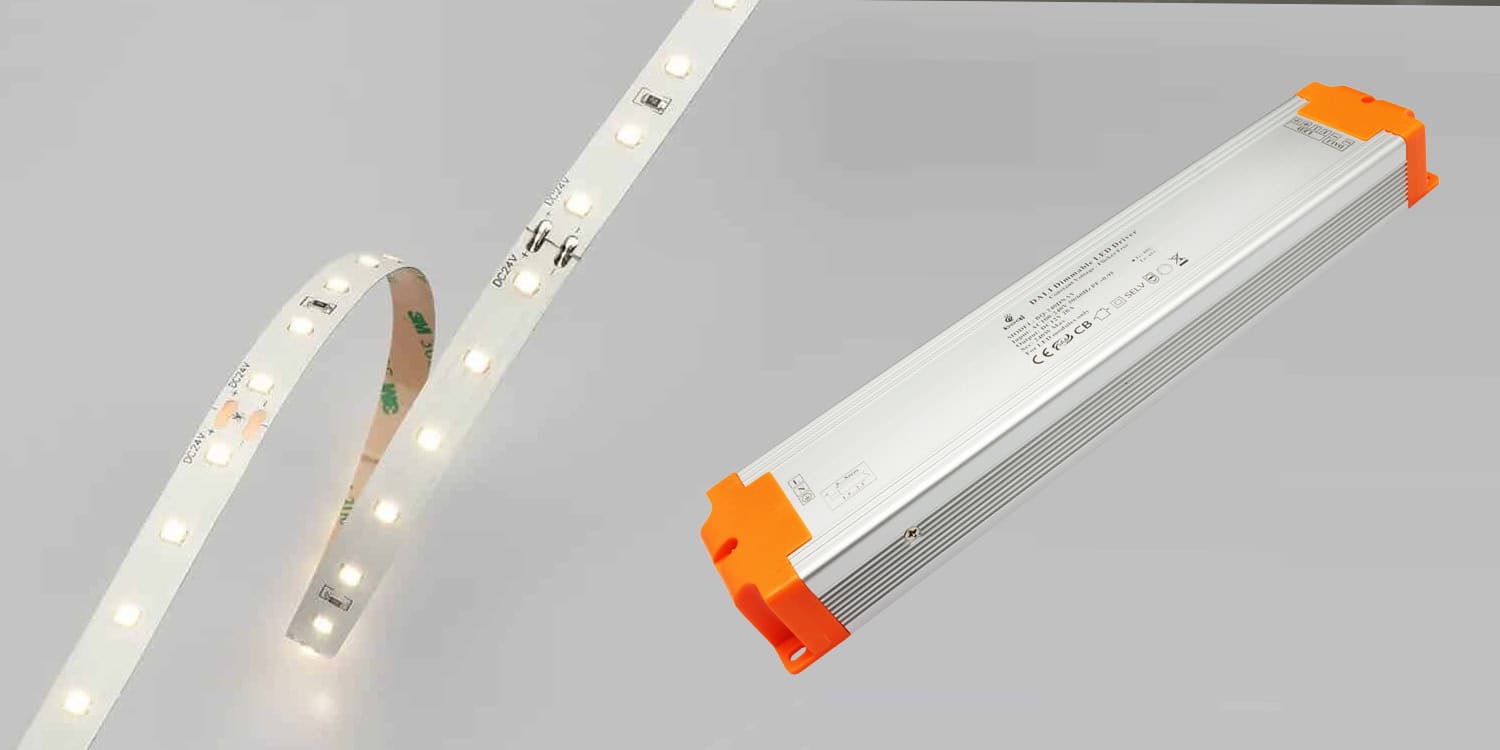
Où ils brillent
Voici les cas d’utilisation courants :
- Éclairage architectural: gradation fluide pour les luminaires linéaires longs
- Hôtels et commerces: scènes d’éclairage dynamiques contrôlées par des capteurs DALI
- Éclairage en corniche et d’accentuation: contrôle précis de la luminosité
- Enseignes et lettres de canal: performances fiables dans les environnements exigeants
- Vitrines et étagères: gradation sans scintillement à faible luminosité
Dans les projets où la flexibilité d’agencement est importante, l’utilisation de drivers à tension constante et de bandeaux LED simplifie la conception. Ajoutez DALI au mélange, et vous obtenez désormais un contrôle centralisé et une efficacité énergétique.
Avantages de la gradation DALI pour les systèmes à tension constante
Pourquoi choisir DALI plutôt que d’autres systèmes de gradation ?
DALI offre une gradation plus fluide, un zonage flexible et une meilleure intégration système pour les bandeaux LED alimentés par des drivers à tension constante.
Comparé à la gradation analogique
- Aucune interférence de signal: les signaux numériques sont plus stables
- Aucun problème de chute de tension: DALI ne dépend pas des niveaux de tension pour la gradation
- Meilleure évolutivité: adressez jusqu’à 64 appareils par bus DALI
- Configuration à distance: modifiez les groupes ou les scènes via un logiciel
C’est pourquoi DALI devient une norme de référence dans les systèmes d’éclairage intelligents dans les bureaux, les commerces, l’hôtellerie et même le résidentiel.
Intégration système : contrôleurs DALI, capteurs et passerelles
Comment connectez-vous tous les éléments d’un système DALI ?
Un driver CV DALI fonctionne avec des contrôleurs DALI, des capteurs de mouvement, des capteurs de lumière et des passerelles pour créer un système d’éclairage entièrement intégré.

Composants clés
- Contrôleur DALI: envoie des commandes numériques aux drivers.
- Capteurs: les capteurs de mouvement et de lumière ambiante peuvent déclencher des scènes.
- Passerelles: intégration avec KNX, BACnet, ou Zigbee.
- Outils logiciels: pour l’adressage et la mise en service.
Lors du choix d’un driver, assurez-vous qu’il est certifié DALI-2 pour une compatibilité optimale.
Guide d'installation : Conseils de câblage, d'adressage et de configuration
Vous ne savez pas comment câbler ou programmer un driver DALI ?
L'installation comprend le câblage AC, la sortie DC vers le ruban LED, la connexion au bus DALI et l'adressage numérique via logiciel ou boutons poussoirs.

Approfondir
Étapes de configuration
- Câblez l'entrée AC et la sortie DC
- Connectez DALI + et DALI – au bus de contrôle
- Utilisez un logiciel (comme DALI Cockpit) pour attribuer les adresses
- Testez la gradation et le comportement de contrôle
Certains drivers prennent en charge le mode broadcast, évitant ainsi le besoin d'adressage. Mais pour un contrôle complet, utilisez un logiciel DALI approprié.
DALI vs. PWM vs. 0–10V pour l'éclairage à tension constante
Quelle méthode de gradation est la meilleure ?
DALI offre un meilleur contrôle et une meilleure communication par rapport au PWM-uniquement ou 0-10V à la gradation analogique dans les systèmes à tension constante.
Approfondir
| Fonctionnalité | DALI | PWM | 0-10V |
|---|---|---|---|
| Tapez | Numérique | Analogique/PWM | Analogique |
| Flexibilité de contrôle | Haut | Moyen | Faible |
| Communication | Bidirectionnelle | Unidirectionnelle | Unidirectionnelle |
| Nombre de canaux | Jusqu'à 64 | 1 par canal | 1 par canal |
| Configuration de scènes | Oui | Non | Non |
PWM et 0–10V peuvent encore être utilisés pour la simplicité ou des raisons de coût, mais DALI l'emporte en termes de flexibilité et d'évolutivité à long terme.
Drivers DALI à tension constante de boqi : intelligents, stables et certifiés
Vous recherchez un driver DALI CV fiable ?
boqi propose des drivers DALI à tension constante 12V et 24V, certifiés DALI-2, au design compact et adaptés aux projets d'éclairage intelligent.
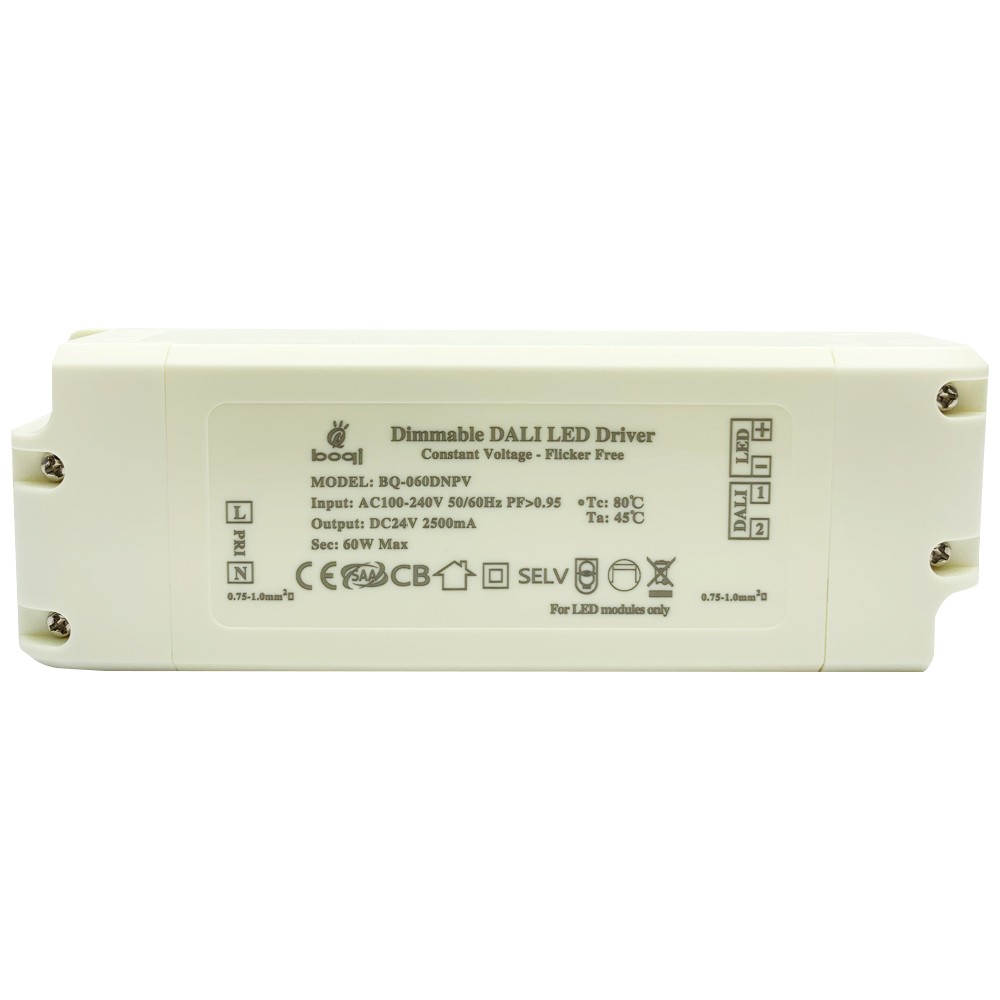
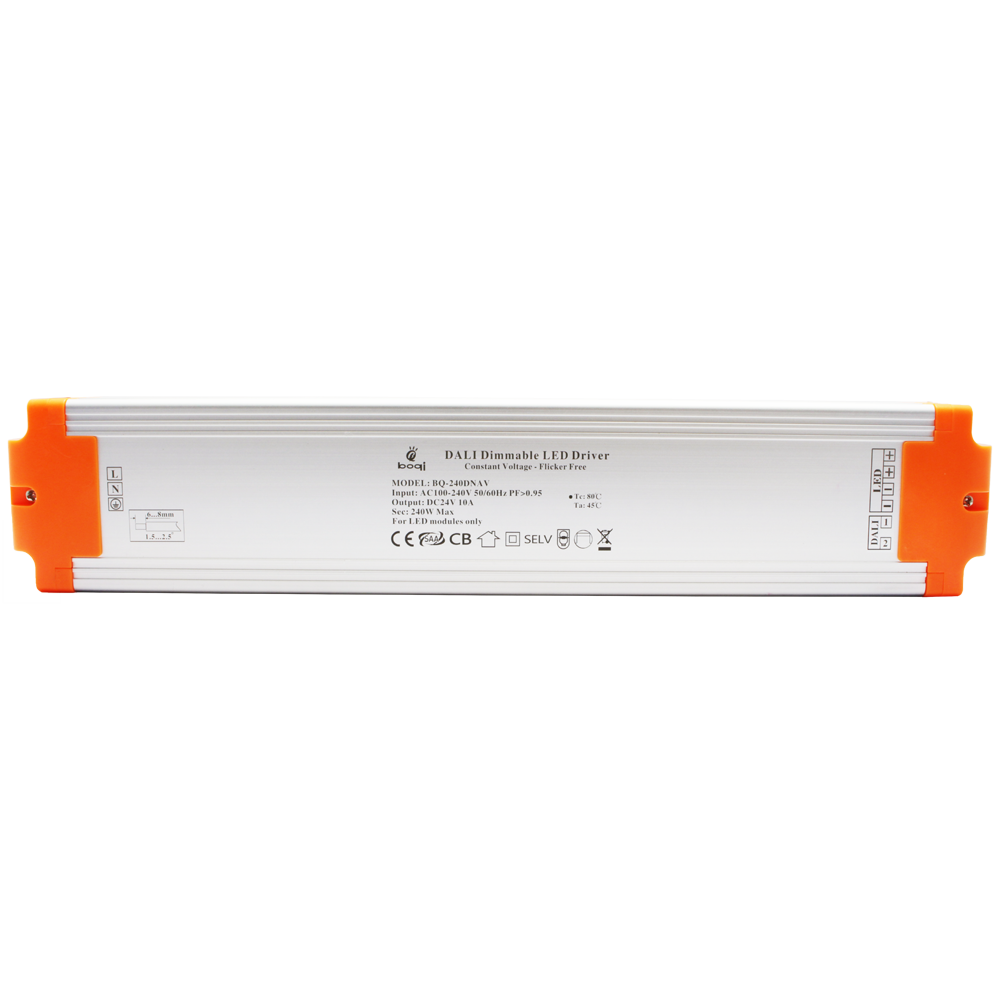

La gamme de boqi comprend :
- Modèles de 20W à 240W
- Versions IP20 et IP67
- Gradation DALI avec performance sans scintillement
- Options de boîtier en plastique et en métal
- Conformité totale DALI-2
Ils sont conçus avec une conception CEM robuste, une gestion thermique et une sortie stable à long terme.
Options de personnalisation : tension, boîtier, connecteurs, marque
Besoin d'un driver adapté à votre projet ?
boqi prend en charge la personnalisation de la tension de sortie, du facteur de forme, des connecteurs et même de la marque OEM pour les drivers DALI dimmables à tension constante.

La personnalisation comprend :
- Tension de sortie: 12V, 24V, 36V, 48V
- Puissances nominales: Adaptez la longueur et la densité du ruban LED
- Types de boîtier: Fin, compact, indice IP
- Connecteurs d'entrée: Bornes à vis, câbles, push-in
- Image de marque: Votre logo et emballage
Cela aide à répondre aux exigences du projet en matière de performance, d'espace et de budget.
FAQ : Ce que vous devez savoir avant de choisir un pilote DALI CV
Vous avez encore des questions ? Vous n'êtes pas seul.
De nombreux utilisateurs s'interrogent sur la compatibilité, la fluidité de la gradation, les méthodes de câblage et la nécessité d'une certification DALI-2.
Voici quelques FAQ :
- Puis-je gradater jusqu'à 1% ? Oui, certains pilotes descendent jusqu'à 0,1%.
- Ai-je besoin d'un contrôleur DALI ? Oui, pour une fonctionnalité complète.
- Le DALI est-il sûr pour une utilisation en extérieur ? Uniquement avec un boîtier certifié IP.
- Puis-je installer le DALI en rénovation dans un ancien système ? Oui, avec des passerelles ou des commandes hybrides.
Conclusion
Un pilote gradable DALI à tension constante offre un contrôle précis, une alimentation fiable et une intégration intelligente pour les systèmes d'éclairage à ruban LED modernes.