Vai al contenuto










L'illuminazione spesso sembra troppo luminosa o troppo fioca. Molte persone desiderano un controllo fluido, ma lottano con dimmer e driver LED incompatibili.
Un dimmer TRIAC come il BQ-TTDIM controlla la luminosità tagliando parte di ogni forma d'onda AC. Utilizza un semiconduttore TRIAC per commutare la corrente durante ogni ciclo AC, riducendo la potenza fornita alla lampada e consentendo una regolazione fluida per luci LED, alogene e a incandescenza compatibili.

In molti progetti di retrofit illuminotecnico, vedo spesso confusione riguardo al dimming TRIAC e alla compatibilità LED. Il BQ-TTDIM è progettato per rendere questo processo più semplice combinando un'interfaccia tradizionale con dimmer rotativo a parete con la compatibilità con i moderni driver LED. Per capire come funziona, dobbiamo prima esaminare come funziona il dimming TRIAC e perché domina ancora molti sistemi di illuminazione oggi.
Cos'è un Dimmer TRIAC e Perché Viene Utilizzato nell'Illuminazione LED?
Molti sistemi di illuminazione richiedono luminosità regolabile. Gli interruttori tradizionali accendono o spengono solo le luci. Questo crea disagio e spreca energia.
Un dimmer TRIAC regola l'intensità luminosa tagliando una porzione di ogni forma d'onda AC. Ritardando il momento in cui la corrente fluisce in ogni ciclo AC, riduce la potenza fornita alla lampada e cambia la luminosità in modo fluido.
Comprendere il Concetto di Base del Dimming TRIAC a Taglio di Fase
Il dimming TRIAC utilizza un metodo chiamato dimmerazione a taglio di fase. Il dimmer si trova tra l'alimentazione di rete AC e il carico di illuminazione. Invece di abbassare la tensione in modo continuo, taglia parte della forma d'onda AC.
Durante ogni ciclo AC:
- La tensione AC sale da zero.
- Il dimmer ritarda l'accensione del TRIAC.
- Una volta attivato, il TRIAC consente il flusso di corrente.
- Il resto della forma d'onda passa al carico.
Quando il dimmer ritarda ulteriormente il punto di attivazione, meno potenza raggiunge la lampada. La luminosità diminuisce.
Questo metodo funziona bene con carichi resistivi come lampade a incandescenza. Tuttavia, l'illuminazione LED richiede driver che convertano l'AC in corrente DC stabile.
Differenza Tra Dimmer Tradizionali e Dimmer Compatibili con LED
I dimmer tradizionali sono stati progettati per lampade a incandescenza. I LED si comportano diversamente perché dipendono da driver elettronici.
Le differenze principali includono:
| Caratteristica | Dimmer Tradizionale | Dimmer TRIAC Compatibile con LED |
|---|---|---|
| Tipo di carico | Lampade resistive | Driver LED elettronici |
| Carico minimo | Spesso elevata | Capacità di carico inferiore |
| Rischio di sfarfallio | Basso | Possibile se incompatibile |
| Intervallo di regolazione dell'intensità luminosa | Ampio per incandescenza | Dipende dal design del driver |
I dimmer compatibili con LED devono controllare attentamente la forma d'onda per prevenire sfarfallio o instabilità.
Componenti Chiave All'interno di un Circuito Dimmer TRIAC
Un dimmer TRIAC contiene diverse parti elettroniche che lavorano insieme.
I componenti principali includono:
| Componente | Funzione |
|---|---|
| TRIAC | Interruttore a semiconduttore che controlla la corrente AC |
| DIAC | Attiva il TRIAC quando la tensione raggiunge la soglia |
| Rete di temporizzazione RC | Imposta il ritardo di fase |
| Potenziometro | Regola il livello di dimming |
| Filtro EMI | Riduce il rumore elettrico |
La rete di temporizzazione determina quando il TRIAC si attiva durante ogni ciclo AC.
Applicazioni Comuni nell'Illuminazione Residenziale e Commerciale
I dimmer TRIAC rimangono comuni in molti ambienti di illuminazione.

Le applicazioni tipiche includono:
- Luci da soffitto del soggiorno
- Luci decorative da parete
- Ristoranti e caffè
- Corridoi alberghieri
- Vetrine al dettaglio
In questi casi, la regolazione migliora l'atmosfera e il controllo energetico.
Perché la regolazione TRIAC rimane popolare nei progetti di ristrutturazione
Anche con tecnologie di regolazione più recenti come 0-10V o DALI, la regolazione TRIAC domina ancora le installazioni di ristrutturazione.
I motivi includono:
| Vantaggio | Spiegazione |
|---|---|
| Cablaggio esistente | Funziona con cablaggio CA standard |
| Basso costo | Elettronica semplice |
| Interfaccia intuitiva | Dimmer rotativi da parete |
| Facile installazione | Nessun cavo di controllo aggiuntivo |
Grazie a questa semplicità, dispositivi come il BQ-TTDIM rimangono ampiamente utilizzati.
Panoramica del dimmer TRIAC BQ-TTDIM
Scegliere il dimmer sbagliato spesso causa sfarfallio o luminosità instabile. Molti installatori faticano ad abbinare i dimmer ai driver LED.
Il BQ-TTDIM è un dimmer rotativo a taglio di fase TRIAC progettato per driver LED dimmerabili, lampade a incandescenza e illuminazione alogena. Funziona su AC200-240V e supporta carichi fino a 400W.

Introduzione al modello di dimmer BQ-TTDIM
Il BQ-TTDIM è un dimmer TRIAC rotativo a pannello con un canale di uscita progettato per installazione a parete.
Secondo il manuale del prodotto, supporta:
- Regolazione rotativa della luminosità
- Pulsante per ON/OFF
- Impostazione della luminosità minima
- Funzione di memoria
Queste caratteristiche rendono il dimmer facile da usare sia in spazi residenziali che commerciali.
Design principale e compatibilità con i driver LED
Il dimmer è costruito per controllare Driver LED dimmerabili TRIAC.
Invece di regolare direttamente la tensione, modifica la forma d'onda CA in ingresso al driver. Il driver converte quindi quella forma d'onda in corrente continua per i LED.
A causa di questa interazione, la compatibilità tra dimmer e driver è molto importante.
Specifiche elettriche
Il manuale fornisce i seguenti parametri elettrici.
| Parametro | Specifiche |
|---|---|
| Tensione di ingresso | AC200-240V |
| Tensione di uscita | AC200-240V |
| Corrente massima | 1,25 A |
| Carico massimo | 3-400W |
| Metodo di regolazione dell'intensità luminosa | Taglio di fase rotativo (bordo posteriore) |
Queste specifiche consentono al dimmer di controllare molti tipi di driver LED.
Il dimmer supporta anche lampade LED dimmerabili, driver LED TRIAC, lampade a incandescenza e lampade alogene.
Specifiche ambientali e di sicurezza
Il dimmer è progettato per installazione interna.
| Parametro | Valore |
|---|---|
| Temperatura di esercizio | −30°C a +55°C |
| Temperatura dell'involucro | Max 85°C |
| Grado di protezione | IP20 |
| Certificazioni | CE, EMC, LVD |
Questi standard garantiscono sicurezza elettrica e compatibilità elettromagnetica.
Interfaccia Utente e Funzioni di Controllo
Il pannello frontale contiene una manopola rotativa che svolge due funzioni.
| Azione di Controllo | Funzione |
|---|---|
| Premere la manopola | Accendere/spegnere la luce |
| Ruotare in senso orario | Aumentare la luminosità |
| Ruotare in senso antiorario | Ridurre la luminosità |
Questa interfaccia semplice rende facile per gli utenti controllare i livelli di illuminazione.
Il Principio di Funzionamento del Dimmer TRIAC BQ-TTDIM
Molti utenti sanno che i dimmer cambiano la luminosità. Tuttavia, pochi comprendono il processo elettrico dietro l'effetto di regolazione.
Il BQ-TTDIM controlla la luminosità regolando l'angolo di conduzione del TRIAC durante ogni ciclo di corrente alternata. Un angolo di conduzione maggiore fornisce più potenza al driver LED, risultando in una luminosità più elevata.
Come il Dimming a Taglio di Fase Controlla la Potenza
La corrente alternata segue un'onda sinusoidale.
In un dimmer TRIAC:
- La forma d'onda AC inizia.
- Il dimmer ritarda il segnale di innesco.
- Il TRIAC si accende a un certo angolo.
- La corrente scorre per il resto del semiciclo.
Più tardi il TRIAC si accende, meno energia raggiunge la lampada.
Ruolo del Semiconduttore TRIAC
Il TRIAC agisce come un interruttore elettronico.
Le proprietà importanti includono:
| Proprietà | Spiegazione |
|---|---|
| Conduzione bidirezionale | Funziona con corrente alternata |
| Innescato da segnale di gate | Si accende a una tensione specifica |
| Comportamento di latch | Rimane acceso finché la corrente non scende a zero |
Poiché la corrente alternata attraversa lo zero due volte per ogni ciclo, il TRIAC si resetta automaticamente.
Regolazione dell'Angolo di Conduzione
La manopola rotativa modifica la resistenza nel circuito di temporizzazione.
Questo cambia il ritardo prima che il TRIAC si inneschi.
Esempio di livelli di regolazione:
| Angolo di Conduzione | Potenza Fornita | Luminosità |
|---|---|---|
| 170° | Alto | Luminoso |
| 120° | Medio | Moderato |
| 60° | Basso | Dim |
Questo metodo è efficiente perché il dimmer non dissipa grandi quantità di calore.
Interazione tra Dimmer e Driver LED
Quando la forma d'onda raggiunge il driver LED:
- Il driver riceve tensione AC tagliata.
- Il driver rileva l'angolo di fase.
- L'elettronica interna regola la corrente LED.
Un buon design del driver garantisce una regolazione fluida senza sfarfallio.
Processo di Regolazione Passo per Passo
Il processo completo funziona così:
| Passo | Azione |
|---|---|
| 1 | L'utente ruota la manopola del dimmer |
| 2 | Il circuito di temporizzazione cambia il ritardo |
| 3 | Il TRIAC si attiva al nuovo angolo di fase |
| 4 | La porzione della forma d'onda AC cambia |
| 5 | Il driver LED regola la corrente di uscita |
| 6 | La luminosità LED cambia |
Questo ciclo si ripete a ogni forma d'onda AC.
Taglio di Fase sul Bordo Anteriore vs Posteriore nei Sistemi TRIAC
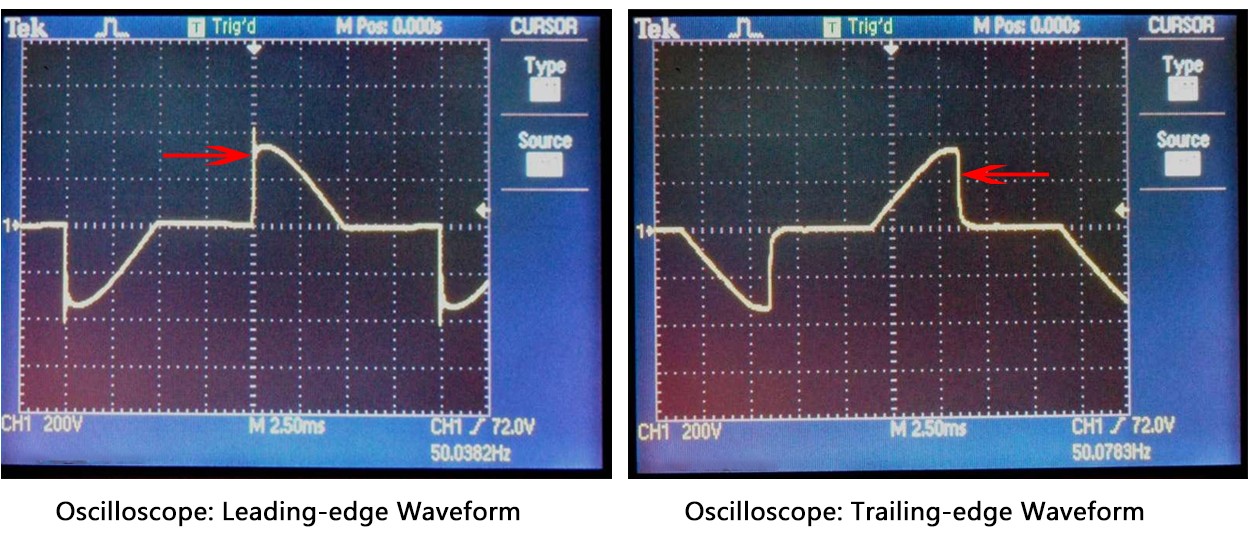
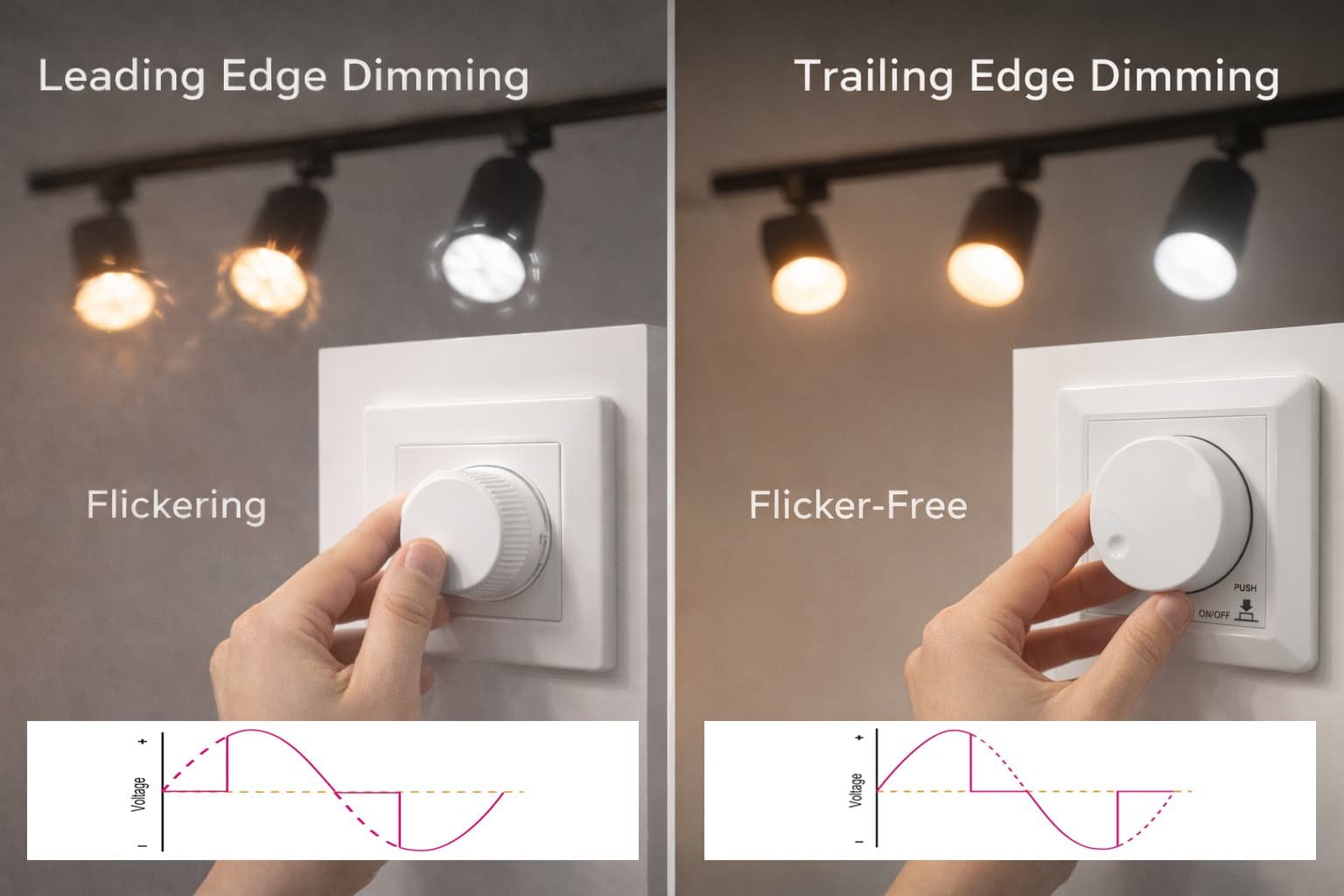
Non tutta la regolazione a taglio di fase funziona allo stesso modo. Alcuni dimmer tagliano l'inizio della forma d'onda. Altri tagliano la fine.
Il taglio sul bordo anteriore rimuove l'inizio della forma d'onda AC, mentre il taglio sul bordo posteriore rimuove la fine. I dimmer TRIAC usano tradizionalmente il taglio di fase sul bordo anteriore.
Cosa Significa il Taglio sul Bordo Anteriore
Il taglio sul bordo anteriore ritarda l'inizio della forma d'onda.
Una volta attivato, il resto della forma d'onda passa attraverso.
Le caratteristiche includono:
| Caratteristica | Descrizione |
|---|---|
| Dispositivo di controllo | TRIAC |
| Uso comune | Lampade a incandescenza |
| Costo | Basso |
| Rumore elettrico | Più alto |
Come Funziona il Taglio sul Bordo Posteriore
Il taglio sul bordo posteriore usa un metodo diverso.
Invece di ritardare l'inizio, taglia la fine della forma d'onda.
| Caratteristica | Descrizione |
|---|---|
| Dispositivo di controllo | MOSFET |
| Livello di rumore | Più basso |
| Compatibilità con i LED | Spesso migliore |
| Costo | Più alto |
Quale Tipo È Usato nei Dimmer TRIAC
La maggior parte dei dimmer TRIAC usa regolazione a bordo iniziale.
Tuttavia, alcuni design avanzati possono simulare il comportamento del bordo posteriore.
Il BQ-TTDIM è descritto come un dimmer rotativo a taglio di fase sul bordo posteriore nel manuale del prodotto.
Questo migliora la compatibilità con molti driver LED.
Vantaggi e Limitazioni
Ogni metodo di regolazione ha i suoi punti di forza.
| Metodo | Vantaggi | Limitazioni |
|---|---|---|
| All’avanguardia | Semplice, basso costo | Maggiore EMI |
| Bordo d'uscita | Dimmerazione fluida | Costo più elevato |
Compatibilità con i Driver LED
I driver LED devono supportare lo stesso metodo a taglio di fase.
Altrimenti possono verificarsi problemi:
- sfarfallio
- intervallo di regolazione limitato
- ronzio
La selezione di driver compatibili risolve la maggior parte dei problemi.
Vantaggi principali dell'uso del dimmer TRIAC BQ-TTDIM
Una scarsa prestazione di dimming può rovinare la qualità dell'illuminazione. Sfarfallio e luminosità instabile sono problemi comuni.
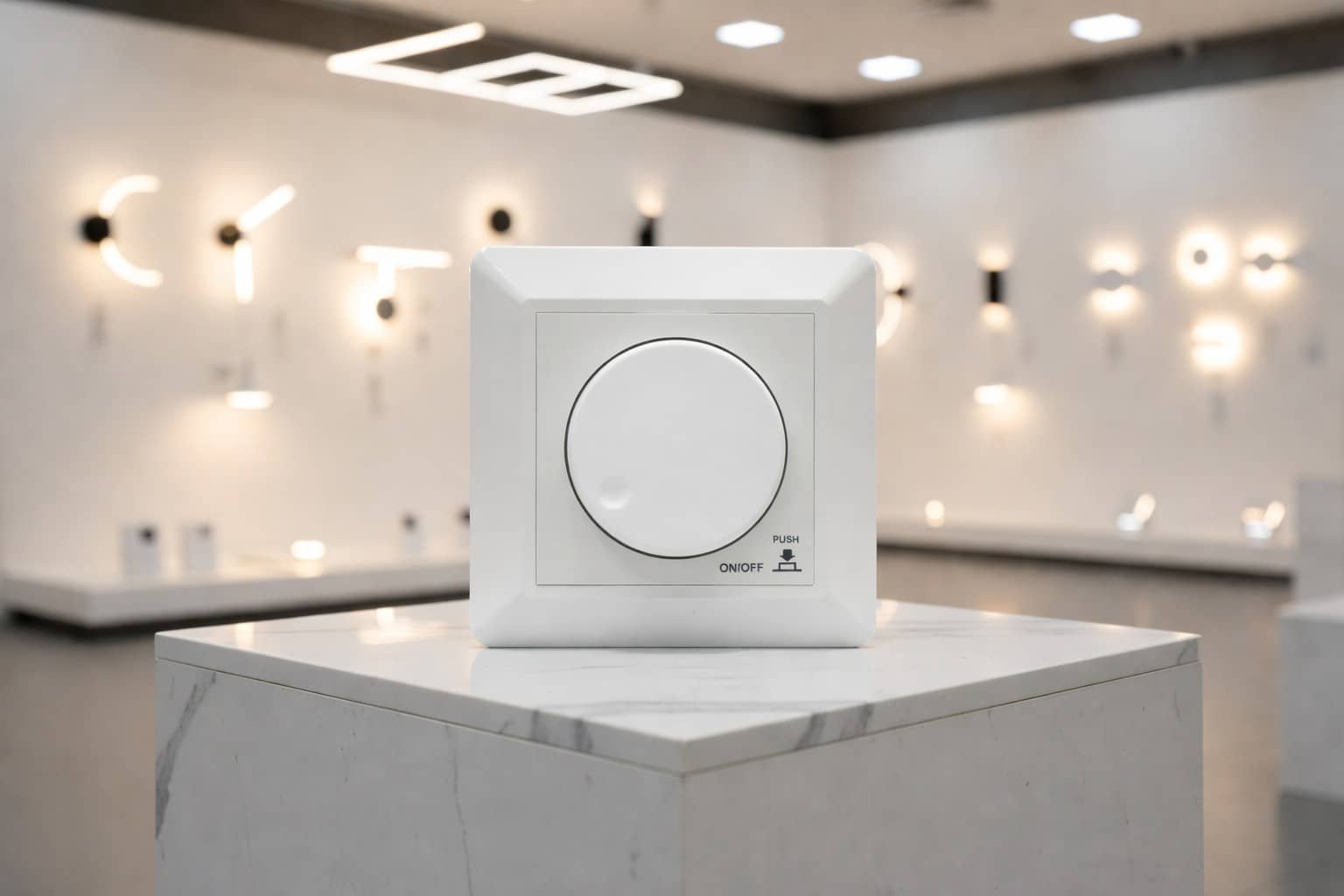
Il BQ-TTDIM offre un dimming fluido, una forte compatibilità con i driver dimmerabili TRIAC, un'installazione semplice e un funzionamento affidabile per molte applicazioni di illuminazione.
Dimming fluido e stabile
I buoni dimmer forniscono cambi graduali di luminosità.
Il BQ-TTDIM consente agli utenti di regolare la luminosità da 0-100% utilizzando una manopola rotativa.
Un dimming fluido migliora il comfort visivo in ambienti di vita e di lavoro.
Elevata compatibilità con i sistemi TRIAC globali
Molti edifici utilizzano già infrastrutture di dimming TRIAC.
I vantaggi includono:
| Benefici | Spiegazione |
|---|---|
| Cablaggio standard | Nessun bus di controllo richiesto |
| Compatibilità globale | Funziona con molti driver |
| Adatto al retrofit | Sostituisci facilmente i dimmer esistenti |
Installazione facile
I dimmer a pannello a muro si installano in modo simile agli interruttori standard.
I passaggi tipici di installazione includono:
- Collegare l'ingresso AC live.
- Collegare l'uscita al driver LED.
- Montare il pannello del dimmer.
- Installare il coperchio della manopola.
Poiché il cablaggio rimane semplice, gli elettricisti possono installare il dispositivo rapidamente.
Sfarfallio ridotto
Quando utilizzato con driver compatibili, il dimmer fornisce un controllo stabile della luminosità.
Una corretta rilevazione del taglio di fase nel driver LED garantisce un dimming fluido.
Funzionalità di protezione
Il dimmer include anche meccanismi di sicurezza.
| Protezione | Funzione |
|---|---|
| Sovratemperatura | Previene il surriscaldamento |
| Sovraccarico | Protegge il circuito interno |
| Recupero automatico | Ritorna al funzionamento normale |
Queste protezioni aumentano l'affidabilità del sistema.
Compatibilità con i driver LED dimmerabili TRIAC
Uno dei problemi più grandi nell'illuminazione LED è l'incompatibilità tra dimmer e driver.
I driver LED devono essere progettati per rilevare le forme d'onda a taglio di fase. Senza questa caratteristica, il dimming TRIAC non può funzionare correttamente.

Perché i driver devono essere compatibili TRIAC
I driver LED convertono l'alimentazione AC in corrente DC controllata.
Il dimming TRIAC modifica la forma d'onda AC. Se il driver non può interpretare quella forma d'onda, la corrente LED diventa instabile.
Come il design del driver influisce sul dimming
L'elettronica del driver deve rilevare:
- angolo di conduzione
- forma della forma d'onda
- passaggio per lo zero
Sulla base di queste informazioni, il driver regola la corrente LED.
Abbinamento dei driver con i tipi di dimmer
Due tipi di driver sono comuni nei sistemi LED.
| Tipo di driver | Applicazione |
|---|---|
| Corrente costante | Moduli LED |
| Tensione costante | Strisce LED |
Entrambi i tipi possono supportare la dimmerazione TRIAC se progettati correttamente.
Evitare problemi comuni
Gli installatori incontrano spesso problemi come:
| Problema | Causa |
|---|---|
| Sfarfallio | Incompatibilità del driver |
| Regolazione della luminosità limitata | Progettazione inadeguata del driver |
| Rumore | EMI dal taglio di fase |
La selezione di componenti compatibili risolve questi problemi.
Migliori pratiche
Per una dimmerazione stabile:
- Utilizzare driver LED compatibili con TRIAC.
- Mantenere il carico entro la potenza nominale del dimmer.
- Testare la gamma di dimmerazione durante l'installazione.
- Evitare di mescolare tipi di lampade incompatibili.
Applicazioni tipiche dei dimmer TRIAC nei progetti di illuminazione
I progettisti di illuminazione spesso necessitano di un controllo flessibile della luminosità. Molti progetti edilizi si affidano ancora a sistemi di cablaggio tradizionali.
I dimmer TRIAC sono ampiamente utilizzati in case, hotel, negozi al dettaglio e illuminazione architettonica perché funzionano con cablaggio CA standard e richiedono un'infrastruttura di controllo minima.

Illuminazione residenziale
Le case traggono grande beneficio dal controllo della dimmerazione.
Le stanze tipiche includono:
| Stanza | Benefici |
|---|---|
| Soggiorno | Regolare l'illuminazione d'atmosfera |
| Camera da letto | Illuminazione notturna confortevole |
| Cucina | Illuminazione da lavoro flessibile |
Illuminazione alberghiera
Hotel e ristoranti si affidano fortemente alla dimmerazione.
I vantaggi includono:
- creare atmosfera
- regolare la luminosità per eventi
- risparmiare energia
Illuminazione al dettaglio
I negozi al dettaglio utilizzano la dimmerazione per evidenziare i prodotti.
I progettisti di illuminazione regolano la luminosità per:
- scaffali espositivi
- manichini
- illuminazione decorativa
Illuminazione architettonica
I progetti architettonici spesso richiedono un'intensità luminosa variabile.
I dimmer consentono:
- controllo dell'illuminazione di facciata
- illuminazione d'accento
- regolazione dell'ambiente circostante
Progetti di retrofit LED
Molti edifici esistenti hanno ancora cablaggio tradizionale.
I dimmer TRIAC semplificano gli aggiornamenti LED perché:
| Vantaggio | Spiegazione |
|---|---|
| Nessun nuovo cavo di controllo | Utilizza il cablaggio esistente |
| Costi di installazione contenuti | Modifiche minime |
| Aggiornamenti rapidi | Sostituire lampade e driver |
Per questo motivo, i dimmer TRIAC rimangono molto popolari nei mercati retrofit.
Suggerimenti per l'installazione per prestazioni di dimming TRIAC stabili
Anche i buoni dimmer possono funzionare male se installati in modo errato. Molti problemi di dimming derivano da problemi di cablaggio o di carico.
Un cablaggio corretto, un'adeguata corrispondenza del carico e test di compatibilità sono essenziali per ottenere prestazioni di dimming TRIAC stabili.

Configurazione di cablaggio corretta
Il BQ-TTDIM si collega tra la rete AC e il driver LED.
Secondo lo schema di cablaggio nel manuale, il dimmer riceve Ingresso AC live e emette un segnale AC a taglio di fase al driver LED TRIAC.
Assicurarsi sempre che i collegamenti siano sicuri prima di alimentare il sistema.
Calcolo del carico
Il dimmer supporta fino a Carico di 400W a 220V.
Tuttavia, i driver LED hanno corrente di spunto.
Il manuale nota che la corrente di spunto totale non deve superare il doppio del limite di 65A.
Considerazioni sul carico minimo
Alcuni dimmer richiedono un carico minimo per funzionare correttamente.
Per i sistemi LED:
- evitare carichi estremamente piccoli
- garantire la compatibilità del driver
Test dell'intervallo di dimming
Dopo l'installazione, testare i livelli di luminosità.
Verificare la presenza di:
- sfarfallio
- zone morte
- salti improvvisi di luminosità
Se compaiono problemi, testare driver diversi.
Risoluzione dei problemi comuni
Il manuale elenca semplici passaggi di risoluzione dei problemi.
| Problema | Causa | Soluzione |
|---|---|---|
| Nessuna luce | Nessuna alimentazione | Controllare l'alimentazione AC |
| Nessuna luce | Cablaggio errato | Verificare i collegamenti |
Un cablaggio corretto di solito risolve la maggior parte dei problemi di installazione.
Conclusione
Il dimmer TRIAC BQ-TTDIM controlla la luminosità regolando la conduzione di fase AC utilizzando un interruttore TRIAC, consentendo un dimming fluido per driver LED compatibili, lampade a incandescenza e sistemi di illuminazione alogena.