Lewati ke konten










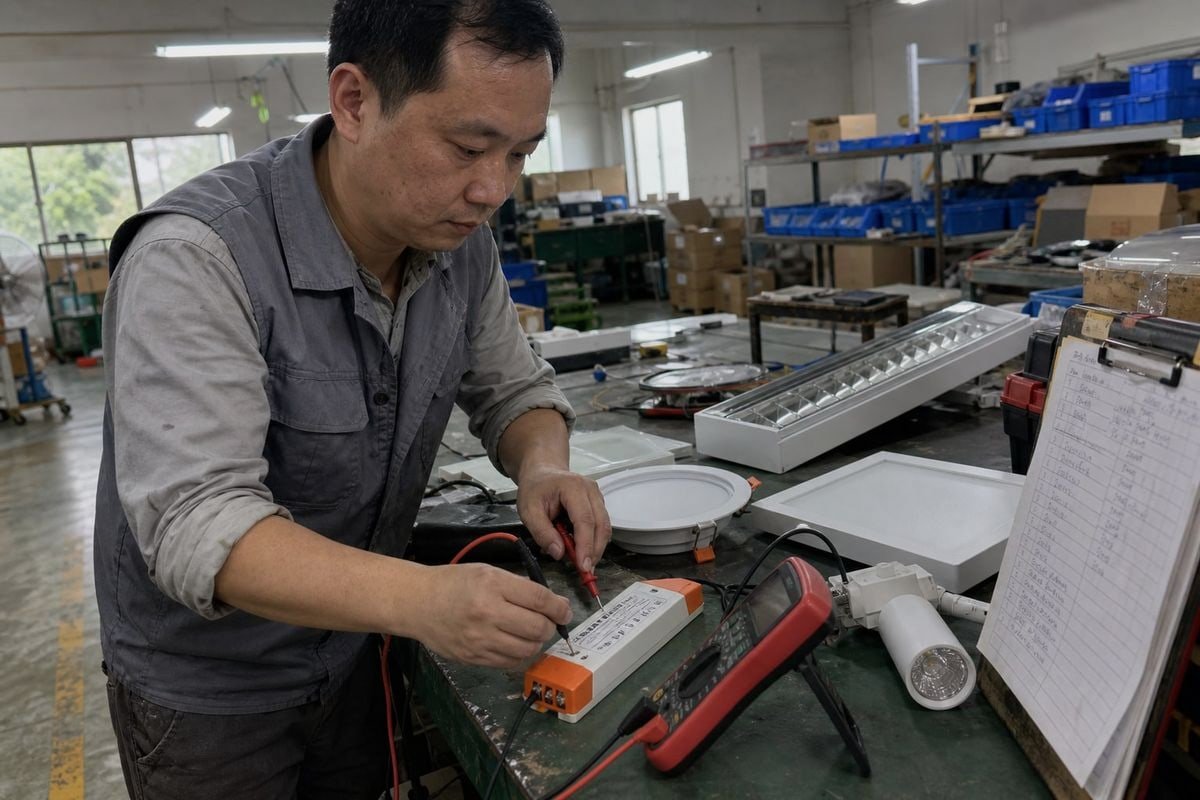
[Penggerak arus konstan 0–10 V](https://bo-qi.com/how-to-choose-between-constant-current-and-constant-voltage-0-10v-led-drivers/) sering mengalami kegagalan di lapangan, lebih sering daripada yang seharusnya. Di lini produksi kami di boqi, kami berulang kali menemukan penyebab utama yang sama: pembeli hanya menyesuaikan daya (watt), mengabaikan titik operasi LED, dan akibatnya seluruh proyek mengalami [kedipan, modul mati mendadak, atau modul yang tidak berfungsi](https://bo-qi.com/?p=6205). Solusinya adalah mengetahui dengan tepat di mana driver-driver ini seharusnya digunakan dan bagaimana cara menentukan spesifikasinya.
Penggerak arus konstan 0–10 V umumnya digunakan dalam pencahayaan LED komersial dan arsitektural yang membutuhkan arus LED yang stabil serta kontrol peredupan analog. Aplikasi yang umum antara lain lampu downlight, lampu panel, lampu troffer, perlengkapan lampu linier, lampu rel, pencahayaan industri ruang tinggi, dan pencahayaan area luar ruangan yang terintegrasi dengan sistem kontrol bangunan.
Itulah jawaban singkatnya. Di bawah ini, saya akan membahas penerapan nyata, cara memilih driver yang tepat, kinerja peredupan seperti apa yang bisa diharapkan, serta sertifikasi mana saja yang benar-benar penting.
Untuk proyek apa saja saya dapat menggunakan penggerak arus konstan 0-10V?
Seorang pembeli di bidang teknik dari Singapura pernah meminta saya untuk memberikan penawaran harga untuk satu model driver yang dapat digunakan secara bersamaan untuk lampu downlight, lampu troffer, dan strip LED. Dua dari ketiga jenis lampu tersebut cocok dengan model tersebut. Namun, strip LED-nya tidak.
Driver arus konstan 0–10 V cocok untuk lampu downlight LED, lampu tersembunyi, lampu panel, perlengkapan pencahayaan linier, lampu troffer, lampu rel, perlengkapan pencahayaan high-bay dan low-bay, serta pencahayaan arsitektural. Driver ini cocok untuk proyek apa pun yang memerlukan modul LED COB atau SMD dengan arus yang diatur dan pengaturan kecerahan analog sederhana melalui sistem kontrol gedung.
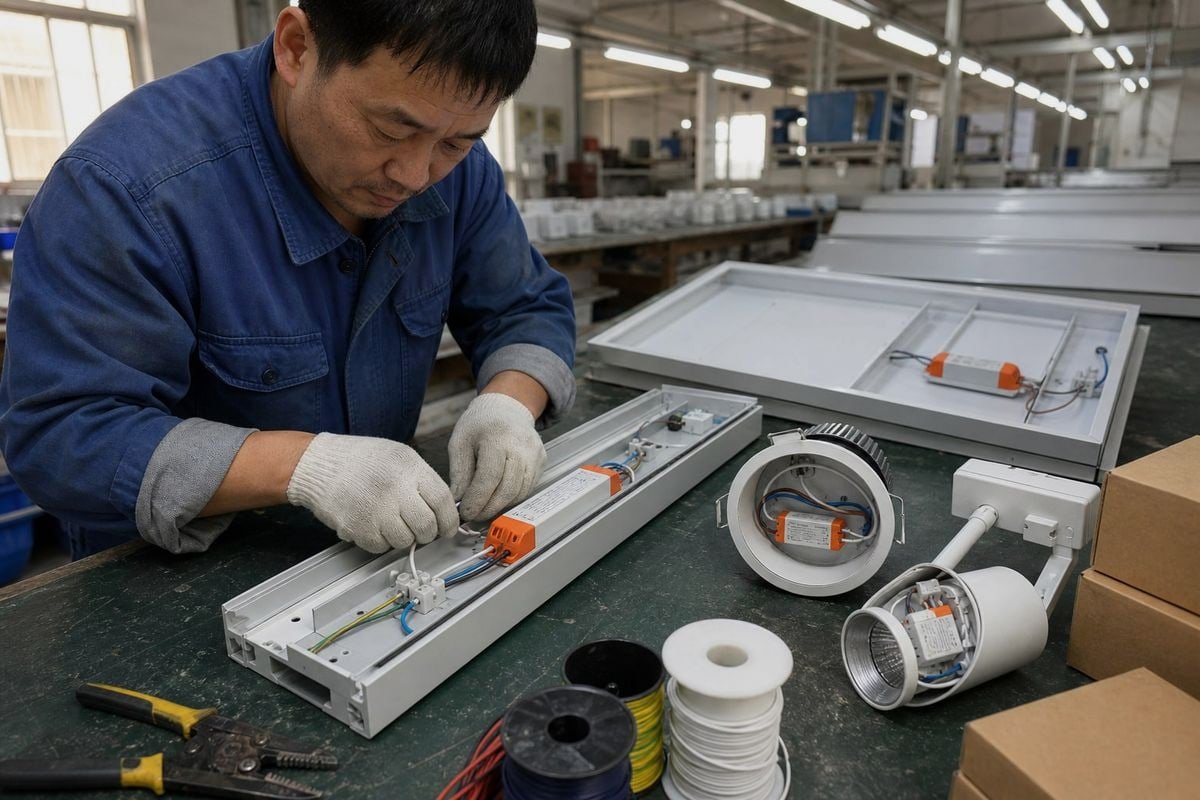
Pola di balik semua aplikasi ini sama. Perlengkapan pencahayaan tersebut menggunakan modul LED yang dirancang untuk beroperasi pada arus tertentu, dan proyek tersebut memerlukan fitur peredupan yang dapat terintegrasi dengan mudah ke dalam sistem otomatisasi gedung. Sinyal 0–10 V berfungsi sebagai antarmuka kontrol. Sinyal ini bukanlah keluaran LED itu sendiri. Driver mengatur arus — misalnya 700 mA dalam rentang tegangan DC 18–42 V — sementara sinyal tegangan rendah memberi tahu driver berapa banyak arus yang harus disalurkan.
Aplikasi berdasarkan sektor
| Aplikasi | Mengapa Menggunakan Driver Arus Konstan 0–10 V? |
|---|---|
| Lampu downlight LED | Arus yang stabil untuk modul COB/SMD dan pengaturan kecerahan analog yang halus |
| Lampu panel dan lampu troffer | Penerangan yang merata di kantor dan gedung-gedung institusi |
| Lampu LED linier | Cocok untuk lampu linier di perkantoran, ritel, dan arsitektur |
| Penerangan high-bay / low-bay | Memungkinkan integrasi sensor kehadiran dan pengaturan kecerahan berdasarkan cahaya alami |
| Penerangan rel | Memungkinkan pengaturan kecerahan analog terpusat 1 berkepala banyak |
| Pajangan di toko ritel dan museum | Arus konstan mencegah perubahan warna selama siklus peredupan |
| Penerangan area parkir luar ruangan dan jalan setapak | Dapat digunakan bersama sensor gerak dan fotosel untuk penerangan keamanan |
| Pencahayaan fasad arsitektur dan pencahayaan dinding | Menjaga intensitas tetap seragam di seluruh permukaan bangunan |
| Pencahayaan di bidang perhotelan | Pengaturan kecerahan ruangan secara terpusat melalui panel kontrol pencahayaan |
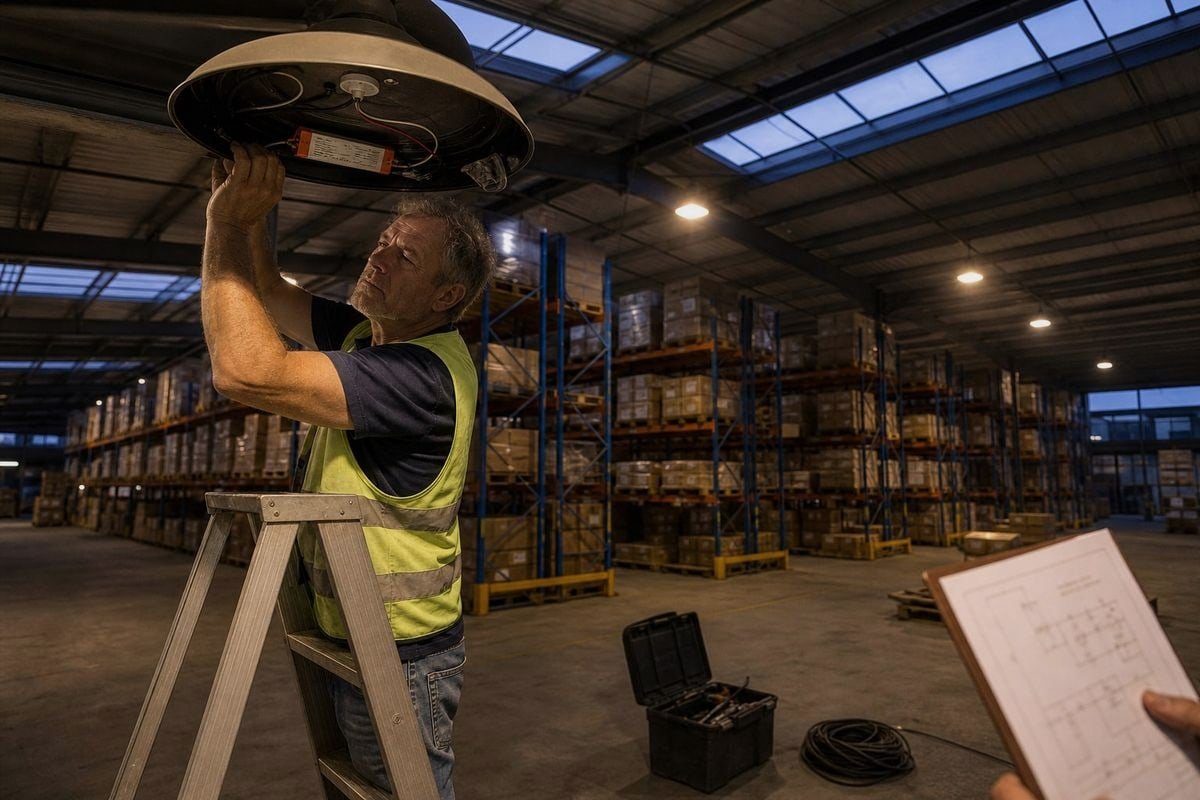
Kantor komersial merupakan contoh klasiknya. Sensor pemanfaatan cahaya alami mengeluarkan sinyal 0–10V, dan driver merespons dengan mengatur arus, sehingga mengurangi konsumsi energi di dekat jendela. Gudang menerapkan prinsip yang sama dengan sistem zonasi yang terhubung dengan sensor kehadiran pada lampu gantung tinggi. Proyek luar ruangan — tempat parkir, lampu jalan, lampu terowongan — mengandalkan format ini karena peredupan analog terpusat mudah dipasang dan dirawat. Sebagian besar driver LED arsitektural kami dikirimkan ke jenis proyek seperti ini di seluruh Eropa dan Asia Tenggara.
Di mana saja mereka tidak boleh dipasang? Strip LED 12 V atau 24 V merupakan beban tegangan konstan. Strip ini memerlukan catu daya CV ditambah sebuah pengendali modulasi lebar pulsa 2, bukan pengemudi CC. Ini adalah ketidaksesuaian yang paling sering kami temukan dalam pertanyaan yang masuk.
Bagaimana cara memilih driver arus konstan 0-10V yang tepat untuk aplikasi pencahayaan saya?
Pelajaran paling mahal yang menurut para insinyur kami sering dipelajari oleh para pembeli adalah sebagai berikut: “driver 700 mA” yang tertera secara nominal tidak otomatis cocok untuk modul LED 700 mA.
Sesuaikan tiga parameter berikut: arus keluaran driver, rentang tegangan arus konstan driver, dan persyaratan tegangan maju modul LED. Rentang tegangan driver harus mencakup tegangan operasi modul pada arus penuh. Selanjutnya, pastikan jenis antarmuka 0–10 V, kapasitas daya cadangan, dan lingkungan pemasangan.
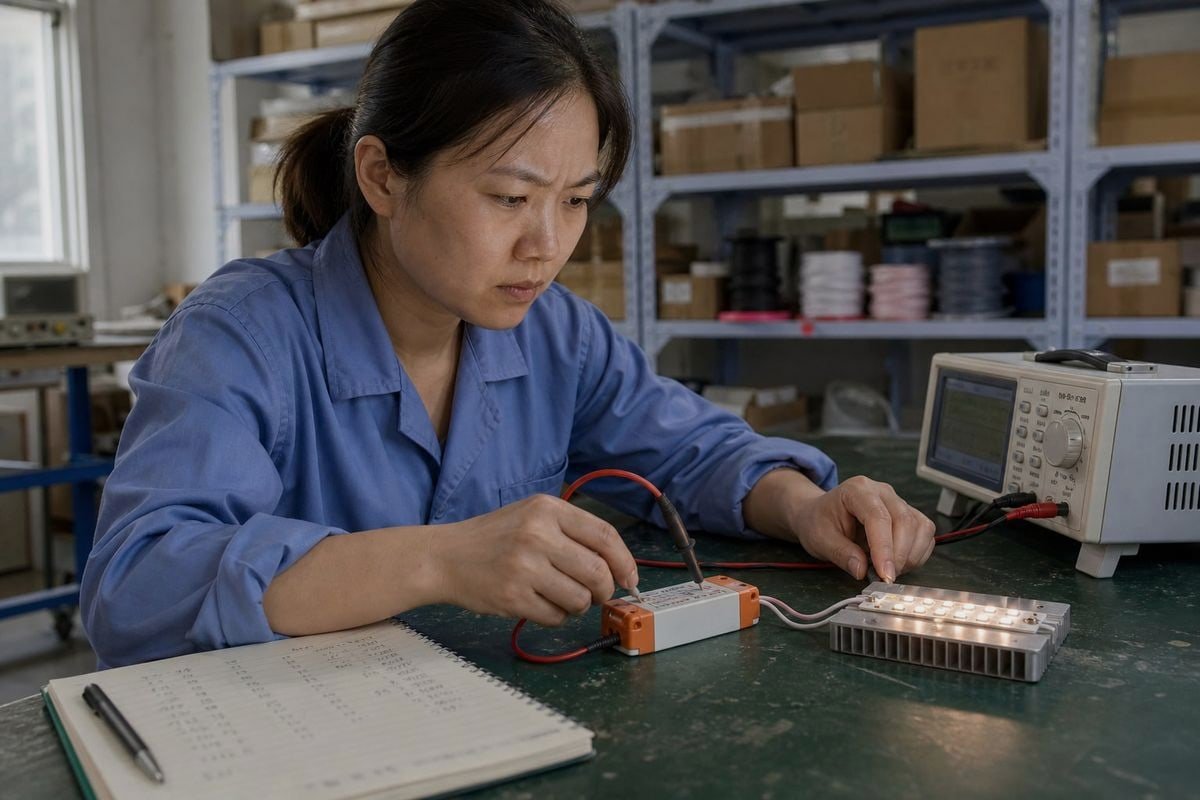
Inilah alasan mengapa arus saja tidak cukup. Misalkan modul LED Anda membutuhkan 700 mA pada tegangan sekitar 36 V. Sebuah driver dengan rating 700 mA pada 18–42 V DC dapat digunakan, karena 36 V berada dalam rentang tegangan tersebut. Namun, driver dengan rating 700 mA pada 18–34 V tidak dapat berfungsi, meskipun arus yang dibutuhkan sama. Driver tersebut tidak dapat mencapai tegangan modul yang tegangan maju 3, sehingga beban tersebut kekurangan daya. Ketidakcocokan tersebut merupakan penyebab umum terjadinya kegagalan di lapangan, dan hal ini tidak terlihat pada lembar spesifikasi jika Anda hanya membaca baris yang bersangkutan.
Urutan pemilihan yang sederhana
- Pastikan titik operasi modul LED. Peroleh nilai tegangan dan arus searah dari lembar data modul, bukan dari nilai daya pemasaran lampu tersebut.
- Pilih peringkat saat ini. Nilai-nilai yang umum digunakan adalah 350 mA, 500 mA, 700 mA, dan 1.050 mA.
- Periksa rentang tegangan. Tegangan maju modul harus berada di dalam rentang arus konstan penggerak dengan margin untuk penyimpangan akibat suhu.
- Periksa sisi kontrol. Pastikan apakah sistem kontrol perlengkapan tersebut mengharapkan perilaku arus sink atau source pada jalur pengatur kecerahan, dan apakah Anda memerlukan tegangan 0–10 V atau 1–10 V.
- Sesuaikan dengan lingkungan. Troffer dalam ruangan dapat menggunakan penutup dasar; lampu area luar ruangan memerlukan rumah dengan peringkat IP yang sesuai.
Referensi cepat
| Parameter | Contoh | Apa yang Terjadi Jika Diabaikan |
|---|---|---|
| Arus keluaran | 700 mA | LED yang didorong berlebihan, masa pakai berkurang |
| Rentang tegangan CC | 18–42 V DC | Driver tidak dapat mencapai tegangan maju modul |
| Titik operasi modul | 700 mA pada ~36 V | Berkedip, putus, modul mati di lapangan |
| Jenis antarmuka 0–10V | Sink vs. source | Jalur peredupan tidak merespons pengontrol |
Saat kami mengkalibrasi driver LED yang dapat diredupkan 0–10V sebelum pengiriman, kami mengujinya terhadap beban LED nyata di bagian atas dan bawah jendela tegangan, karena di situlah desain marginal gagal. Tanyakan kepada pemasok Anda apakah mereka melakukan hal yang sama.
Dapatkah driver arus konstan 0-10V memenuhi persyaratan peredupan proyek saya?
Ada trade-off yang kami diskusikan dengan hampir setiap klien distributor: peredupan 0–10V sederhana dan kuat, tetapi “sederhana” juga berarti standar tersebut membiarkan beberapa perilaku tidak terdefinisi.
Ya, untuk sebagian besar proyek komersial — driver arus konstan 0–10V memberikan peredupan analog yang halus hingga tingkat rendah dengan kinerja bebas kedipan saat dirancang dengan baik. Tetapi Anda harus menentukan tingkat peredupan minimum, kemampuan mati-saat-diredupkan, kurva peredupan, dan kompatibilitas sistem kontrol, karena standar 0–10V tidak mendefinisikan hal-hal ini.
Asumsi umum adalah bahwa input 5 V sama persis dengan kecerahan yang dirasakan 50%. Itu tidak benar. Hubungan antara tegangan kontrol dan keluaran bergantung pada desain driver, dan persentase keluaran listrik tidak sama dengan kecerahan visual yang dirasakan. Mata manusia merespons secara logaritmik, sehingga kurva driver linier dapat terasa tiba-tiba di ujung rendah. Itulah sebabnya kami menawarkan opsi kurva linier dan logaritmik pada rangkaian driver yang dapat diredupkan, dan mengapa proyek serius menentukan kurva secara tertulis.
Apa yang harus ditentukan untuk peredupan komersial
- Jenis antarmuka 0–10V, termasuk perilaku arus sink dan source
- Tingkat peredupan minimum, seperti 10%, 5%, atau 1%
- Kemampuan mati-saat-diredupkan, atau apakah jalur yang dialihkan menangani mati penuh
- Kurva peredupan — linier atau logaritmik
- Akurasi arus keluaran di seluruh rentang peredupan
- Karakteristik kedipan dan PWM pada tingkat keluaran rendah
- Daya siaga saat diredupkan ke minimum atau mati
- Kompatibilitas dengan sistem kontrol pencahayaan yang dimaksudkan
Dua poin memerlukan perhatian ekstra. Pertama, beberapa driver meredupkan secara internal menggunakan modulasi lebar pulsa pada tingkat rendah. PWM yang diimplementasikan dengan buruk menyebabkan kedipan yang terlihat pada kamera 4 dan dapat menjadi masalah dalam proyek perawatan kesehatan yang bertujuan pada pencahayaan ramah sirkadian. Minta data kedipan, bukan hanya klaim “bebas kedipan”. Kedua, varian 0–10V dan 1–10V berperilaku berbeda di bagian bawah rentang; sistem 1–10V kadang lebih disukai di mana keluaran cahaya minimum harus dipertahankan dan mati yang tidak disengaja dihindari. Dalam pengalaman kami mengekspor ke Jerman dan Inggris, firma teknik semakin sering meminta perilaku ini dalam dokumen tender — dan driver yang hanya menyatakan “peredupan 0–10V” tanpa detail akan ditolak.
Untuk proyek yang memerlukan pengalamatan atau diagnostik perlengkapan individual, DALI adalah alat yang lebih baik, dan kami membuat driver yang dapat diredupkan DALI untuk alasan itu. Tetapi 0–10V tetap dominan dalam retrofit dan fasilitas misi-kritis, sebagian karena loop analog sederhana bahkan dapat mendukung protokol digital sebagai pengaman.

Sertifikasi apa saja yang sebaiknya saya periksa sebelum membeli driver arus konstan 0-10V?
Pertanyaan sertifikasi muncul di hampir setiap panggilan pertama dengan pembeli baru, dan untuk alasan yang baik — driver tanpa tanda yang valid dapat menghentikan seluruh pengiriman di bea cukai.
Verifikasi CE untuk Eropa, SAA untuk Australia, dan laporan CB untuk penerimaan multi-pasar, plus klasifikasi keluaran SELV untuk instalasi tegangan rendah yang aman. Cocokkan sertifikasi dengan pasar tujuan proyek Anda, dan selalu minta sertifikat uji aktual daripada hanya mengandalkan logo yang dicetak.
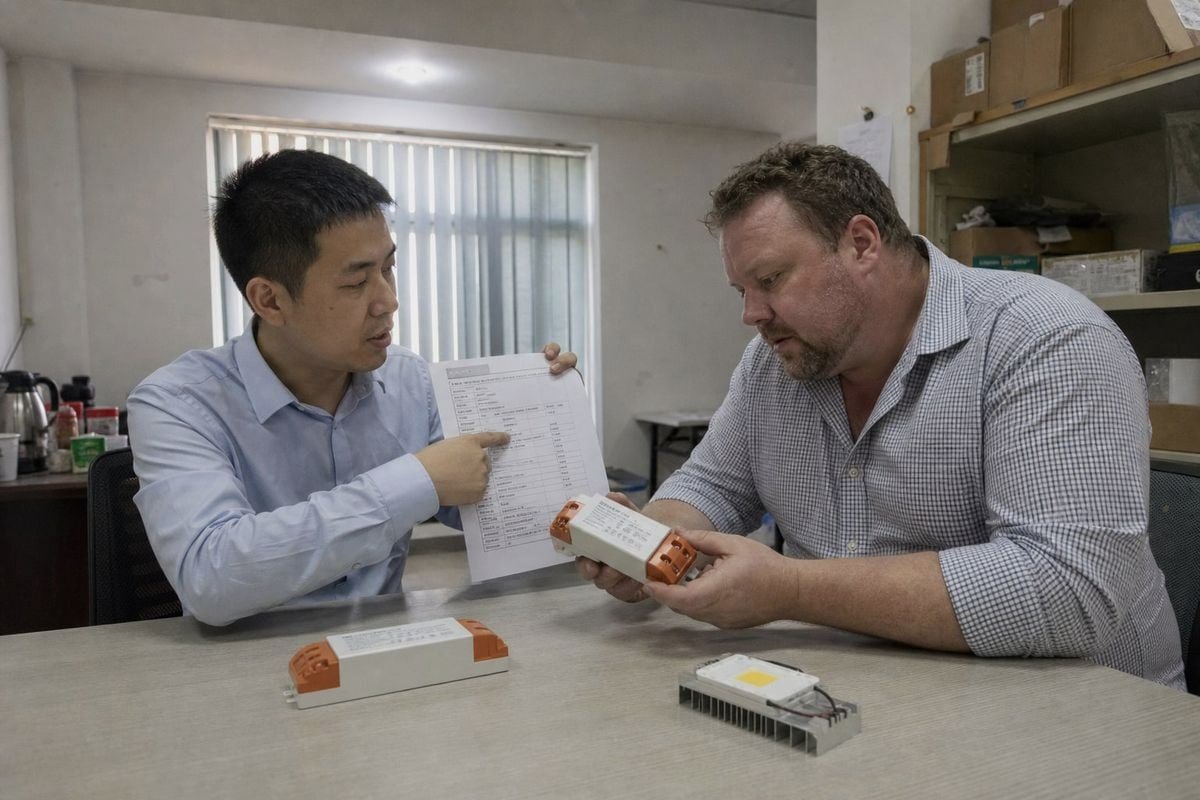
Lihat label pada driver kami dan Anda akan melihat tanda CE, SAA, CB, dan SELV dicetak di samping nomor model dan peringkat listrik. Masing-masing ada untuk alasan yang berbeda, dan masing-masing penting bagi pembeli yang berbeda.
Apa yang dicakup oleh setiap tanda
| Sertifikasi | Pasar / Tujuan | Mengapa Itu Penting untuk Proyek Anda |
|---|---|---|
| CE | Kawasan Ekonomi Eropa | Diwajibkan secara hukum untuk dijual di UE; mencakup direktif keselamatan dan EMC |
| SAA | Australia / Selandia Baru | Persetujuan yang diperlukan untuk produk listrik di pasar ini |
| CB | Internasional (skema IECEE) | Laporan uji CB mempercepat persetujuan nasional di banyak negara |
| SELV | Klasifikasi keselamatan keluaran | Mengonfirmasi keluaran LED adalah tegangan sangat rendah aman, melindungi pemasang |
Untuk proyek di Amerika Utara, percakapan yang setara melibatkan pendaftaran UL atau ETL dan sering kali klasifikasi catu daya kelas 2, yang membatasi daya keluaran untuk penyederhanaan kabel di gedung. Jika perlengkapan Anda dikirim ke AS, angkat hal ini sejak awal — ini mengubah desain driver, bukan hanya dokumen.
Dua peringatan praktis dari pengalaman ekspor kami di Eropa, Australia, dan Asia Tenggara. Pertama, logo cetak itu murah; sertifikat tidak. Minta nomor sertifikat dan verifikasi dengan lembaga penerbit. Kami menyediakan dokumentasi lengkap dengan setiap pesanan karena perusahaan teknik dan pabrik lampu membutuhkan ketertelusuran itu untuk persetujuan proyek mereka sendiri. Kedua, periksa bahwa sertifikat mencakup model persis dan peringkat arus yang Anda beli, bukan model serupa dalam keluarga yang sama. Laporan CB untuk versi 30 W tidak otomatis mencakup versi 50 W. Pembeli yang melewatkan pemeriksaan itu terkadang menemukan celah hanya ketika tim kepatuhan distributor mengaudit kiriman — dan pada saat itu jadwal proyek sudah berisiko.
Kesimpulan
Driver 0–10V arus konstan memberi daya pada pencahayaan komersial, industri, dan arsitektural yang dapat diredupkan. Cocokkan titik operasi LED terlebih dahulu, tentukan perilaku peredupan dengan jelas, dan verifikasi sertifikasi — maka driver akan berkinerja andal selama bertahun-tahun.
Catatan kaki
- Situs Departemen Energi AS yang menyediakan otoritas tentang teknologi pencahayaan dan kontrol hemat energi. ↩︎
- Tinjauan teknis metode kontrol PWM yang digunakan dalam aplikasi LED tegangan konstan. ↩︎
- Referensi Institut Standar dan Teknologi Nasional untuk karakteristik kelistrikan semikonduktor. ↩︎
- Asosiasi profesional yang menyediakan standar untuk kedipan dan interferensi listrik dalam sistem pencahayaan. ↩︎