Aller au contenu










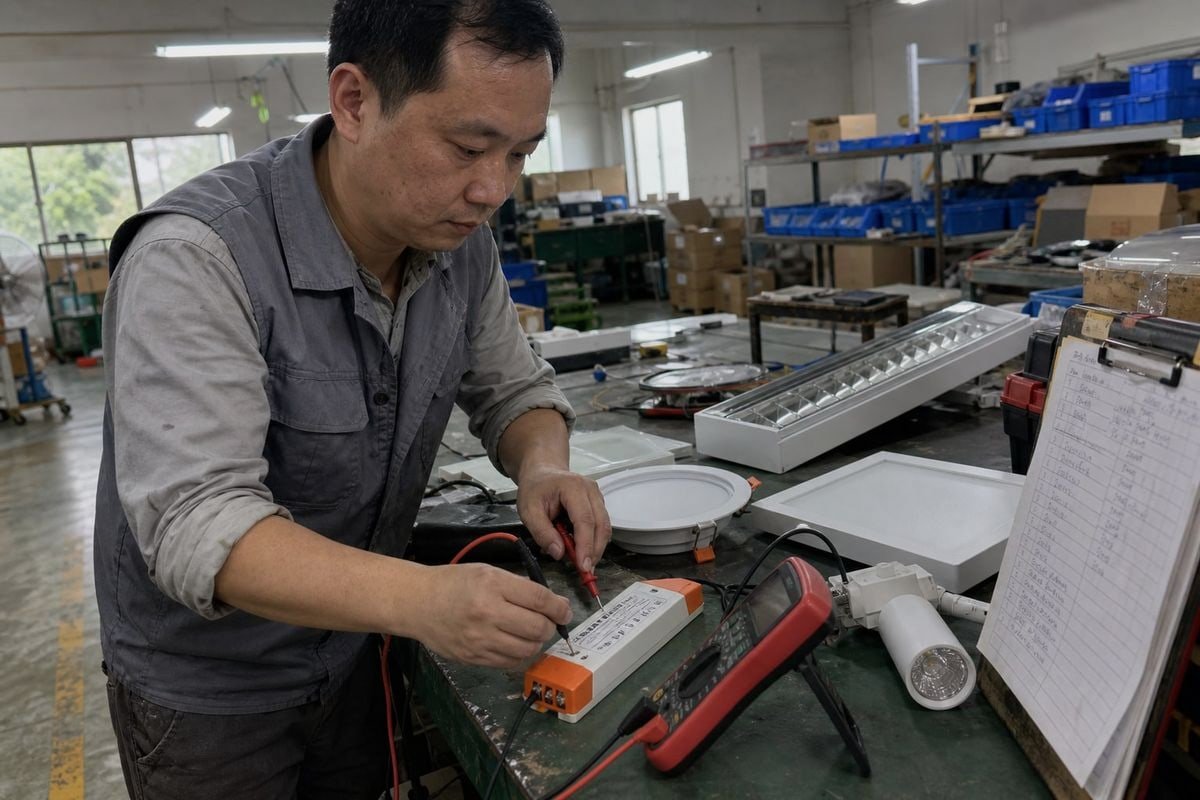
[Les drivers à courant constant 0–10V](https://bo-qi.com/how-to-choose-between-constant-current-and-constant-voltage-0-10v-led-drivers/) échouent sur le terrain plus souvent qu'ils ne le devraient. Sur notre ligne de production chez boqi, nous voyons la même cause racine à plusieurs reprises : les acheteurs font correspondre la puissance, ignorent le point de fonctionnement des LED, et tout le projet souffre de [scintillement, de coupures ou de modules morts](https://bo-qi.com/?p=6205). La solution est de savoir exactement où ces drivers ont leur place et comment les spécifier.
Les drivers à courant constant 0–10V sont généralement utilisés dans l'éclairage LED commercial et architectural qui nécessite un courant LED stable ainsi qu'un contrôle de gradation analogique. Les applications courantes incluent les downlights, les panneaux lumineux, les troffers, les luminaires linéaires, les rails lumineux, l'éclairage industriel haute hauteur et l'éclairage extérieur de zone intégré aux systèmes de contrôle des bâtiments.
C'est la réponse courte. Ci-dessous, je vais passer en revue les applications réelles, comment sélectionner le bon driver, à quelles performances de gradation s'attendre et quelles certifications comptent réellement.
Quels projets puis-je réaliser avec des drivers à courant constant 0-10V ?
Un acheteur ingénieur de Singapour m'a demandé un jour de deviser un seul modèle de driver pour des downlights, des troffers et des bandes LED ensemble. Deux de ces trois étaient un bon choix. Les bandes ne l'étaient pas.
Les drivers à courant constant 0–10V conviennent aux downlights LED, aux luminaires encastrés, aux panneaux lumineux, aux luminaires linéaires, aux troffers, aux rails lumineux, aux luminaires haute et basse hauteur et à l'éclairage architectural. Ils s'adaptent à tout projet où un module LED COB ou SMD nécessite un courant régulé et une gradation analogique simple via les contrôles du bâtiment.
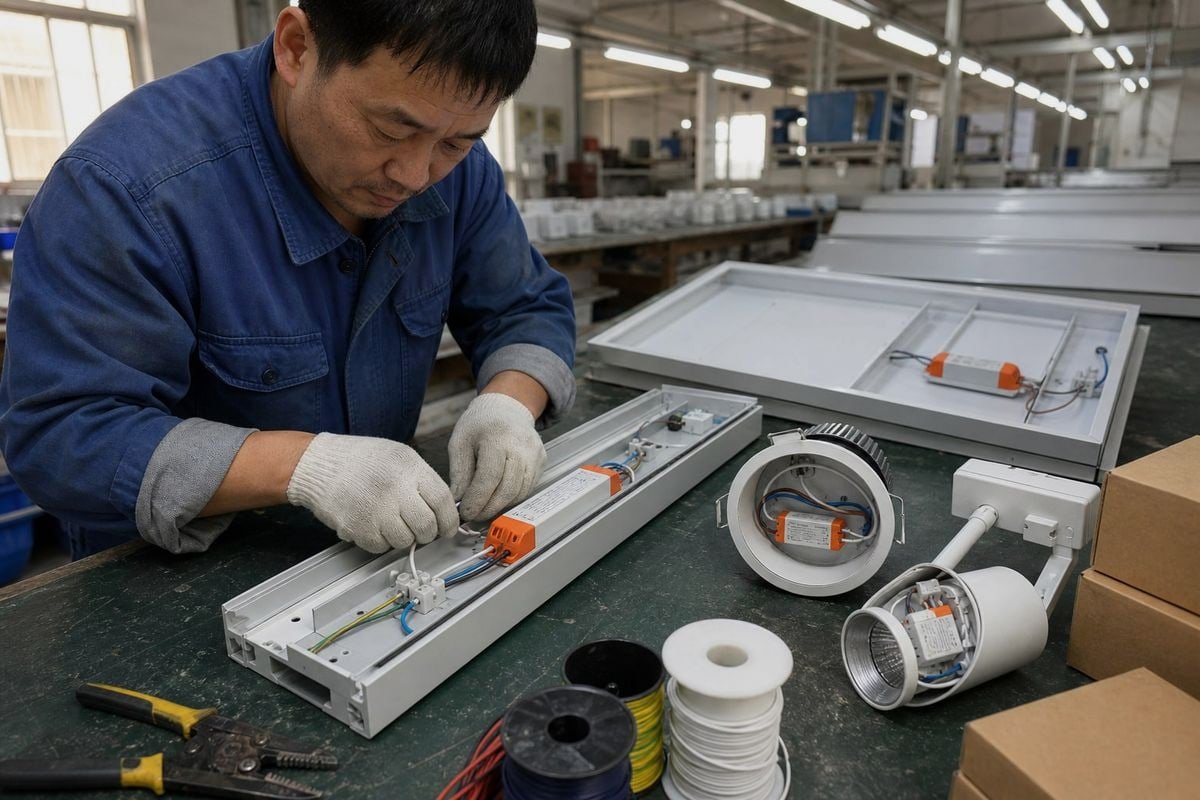
Le schéma derrière toutes ces applications est le même. Le luminaire utilise un module LED conçu pour fonctionner à un courant spécifié, et le projet nécessite une gradation qui s'intègre facilement aux systèmes d'automatisation des bâtiments. Un signal 0–10V est l'interface de contrôle. Ce n'est pas la sortie LED elle-même. Le driver régule le courant — par exemple 700 mA sur une fenêtre de 18–42 V DC — tandis que le signal basse tension lui indique quelle quantité de ce courant délivrer.
Applications par secteur
| Application | Pourquoi un driver à courant constant 0–10V est utilisé |
|---|---|
| Downlights LED | Courant stable pour les modules COB/SMD et gradation analogique fluide |
| Panneaux lumineux et troffers | Luminosité uniforme dans les bureaux et les bâtiments institutionnels |
| Luminaires LED linéaires | S'adapte aux luminaires linéaires de bureau, de commerce et d'architecture |
| Éclairage haute hauteur / basse hauteur | Permet l'intégration de capteurs de présence et la gradation basée sur la lumière du jour |
| Rails lumineux | Permet la gradation analogique centralisée 1 de plusieurs têtes |
| Éclairage de commerce et de musée | Le courant constant empêche le décalage de couleur pendant les cycles de gradation |
| Éclairage extérieur de parking et de chemin | Fonctionne avec des capteurs de mouvement et des photocellules pour l'éclairage de sécurité |
| Éclairage architectural de façade et de lavage de murs | Maintient une intensité uniforme sur les surfaces des bâtiments |
| Éclairage hôtelier | Gradation de scènes centralisée via des panneaux de contrôle d'éclairage |
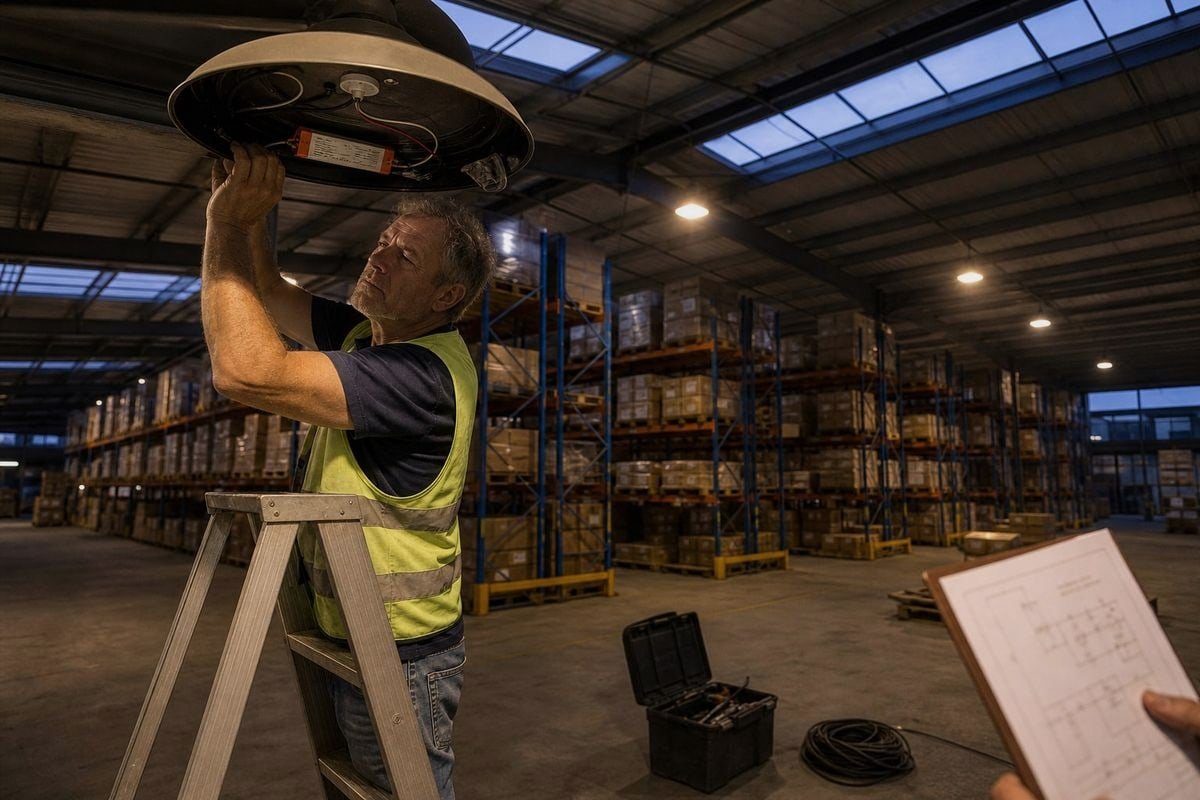
Les bureaux commerciaux sont le cas classique. Les capteurs de récupération de lumière du jour émettent un signal 0–10V, et le driver répond en réduisant le courant, coupant la consommation d'énergie près des fenêtres. Les entrepôts utilisent la même logique avec un zonage lié à l'occupation sur les luminaires haute hauteur. Les projets extérieurs — parkings, éclairage public, éclairage de tunnels — reposent sur ce format car la gradation analogique centralisée est simple à câbler et facile à entretenir. Nous expédions une grande part de nos drivers LED architecturaux exactement dans ces types de projets à travers l'Europe et l'Asie du Sud-Est.
Où ne conviennent-ils pas ? Une bande LED 12 V ou 24 V est une charge à tension constante. Elle nécessite une alimentation CV plus un contrôleur à modulation de largeur d'impulsion 2, pas un driver CC. C'est l'inadéquation la plus courante que nous détectons dans les demandes entrantes.
Comment choisir le bon driver à courant constant 0-10V pour mon application d’éclairage ?
La leçon la plus coûteuse que nos ingénieurs voient les acheteurs apprendre est celle-ci : un “ driver 700 mA ” nominal n'est pas automatiquement adapté à un module LED de 700 mA.
Faites correspondre trois paramètres : le courant de sortie du driver, sa plage de tension à courant constant et l'exigence de tension directe du module LED. La fenêtre de tension du driver doit inclure la tension de fonctionnement du module au courant maximal. Ensuite, confirmez le type d'interface 0–10V, la marge de puissance et l'environnement d'installation.
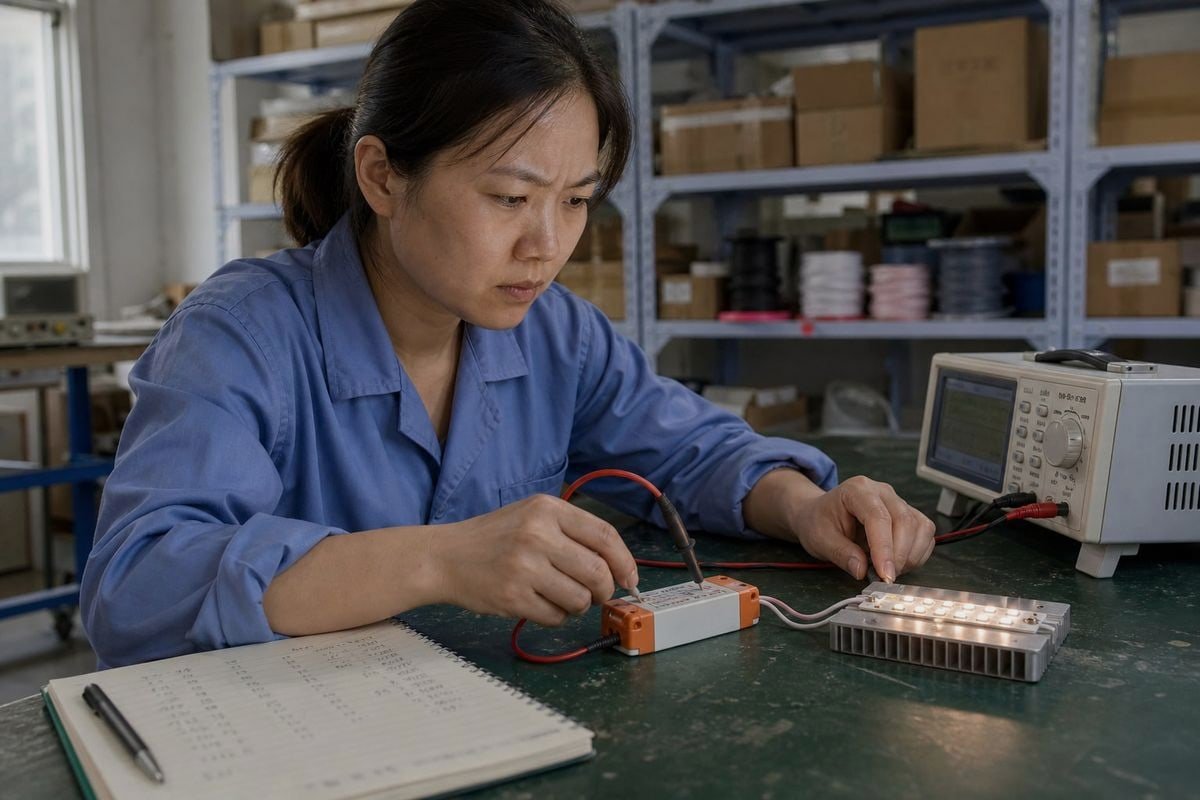
Voici pourquoi le courant seul ne suffit pas. Supposons que votre module LED nécessite 700 mA à environ 36 V. Un driver évalué à 700 mA sur 18–42 V DC fonctionne, car 36 V se situe dans la fenêtre. Mais un driver évalué à 700 mA sur 18–34 V ne fonctionne pas, même si le courant correspond. Le driver ne peut pas atteindre la tension directe 3, tension directe du module.
, donc il affame la charge. Cette inadéquation est une source courante de défaillances sur le terrain, et elle est invisible sur une fiche technique si vous ne lisez que la ligne de courant.
- Une séquence de sélection simple. Confirmez le point de fonctionnement du module LED.
- Obtenez la tension directe et le courant à partir de la fiche technique du module, pas de la puissance marketing du luminaire. Choisissez le calibre de courant.
- Les étapes typiques sont 350 mA, 500 mA, 700 mA et 1 050 mA. Vérifiez la fenêtre de tension.
- La tension directe du module doit se situer dans la plage de courant constant du driver avec une marge pour la dérive de température. Vérifiez le côté contrôle.
- Confirmez si le système de contrôle du luminaire attend un comportement de courant de puits et de source sur la ligne de gradation, et si vous avez besoin de 0–10V ou de 1–10V. Les luminaires troffers d'intérieur peuvent utiliser un boîtier de base ; les luminaires extérieurs nécessitent des boîtiers avec un indice IP approprié.
Référence rapide
| Paramètre | Exemple | Ce qui se passe si ignoré |
|---|---|---|
| Courant de sortie | 700 mA | LEDs surchargées, durée de vie réduite |
| Plage de tension CC | 18–42 V DC | Le driver ne peut pas atteindre la tension directe du module |
| Point de fonctionnement du module | 700 mA à ~36 V | Scintillement, coupures, modules morts sur le terrain |
| Type d'interface 0–10V | Absorption vs. source | La ligne de gradation ne répond pas au contrôleur |
Lorsque nous calibrons nos drivers LED dimmables 0–10V avant expédition, nous les testons avec de vraies charges LED en haut et en bas de la fenêtre de tension, car c'est là que les conceptions marginales échouent. Demandez à votre fournisseur s'il fait de même.
Les drivers à courant constant 0-10V peuvent-ils répondre aux exigences de gradation de mon projet ?
Il y a un compromis que nous discutons avec presque chaque client distributeur : la gradation 0–10V est simple et robuste, mais “ simple ” signifie aussi que la norme laisse plusieurs comportements non définis.
Oui, pour la plupart des projets commerciaux — les drivers à courant constant 0–10V offrent une gradation analogique fluide jusqu'à des niveaux bas avec des performances sans scintillement lorsqu'ils sont bien conçus. Mais vous devez spécifier le niveau de gradation minimum, la capacité de gradation jusqu'à l'extinction, la courbe de gradation et la compatibilité avec le système de contrôle, car la norme 0–10V ne définit pas ces éléments.
Une hypothèse courante est qu'une entrée de 5 V équivaut exactement à 50% de luminosité perçue. Ce n'est pas le cas. La relation entre la tension de contrôle et la sortie dépend de la conception du driver, et le pourcentage de sortie électrique n'est pas la même chose que la luminosité visuelle perçue de toute façon. L'œil humain répond de manière logarithmique, donc une courbe de driver linéaire peut sembler abrupte à l'extrémité basse. C'est pourquoi nous offrons des options de courbes linéaires et logarithmiques sur nos gammes de drivers dimmables, et pourquoi les projets sérieux spécifient la courbe par écrit.
Quoi spécifier pour la gradation commerciale
- Type d'interface 0–10V, y compris le comportement du courant d'absorption et de source
- Niveau de gradation minimum, comme 10%, 5% ou 1%
- Capacité de gradation jusqu'à l'extinction, ou si une ligne commutée gère l'extinction complète
- Courbe de gradation — linéaire ou logarithmique
- Précision du courant de sortie sur toute la plage de gradation
- Caractéristiques de scintillement et PWM aux niveaux de sortie bas
- Puissance en veille lorsqu'il est dimmé au minimum ou éteint
- Compatibilité avec le système de contrôle d'éclairage prévu
Deux points méritent une attention particulière. Premièrement, certains drivers dimment en interne en utilisant la modulation de largeur d'impulsion à bas niveaux. Un PWM mal implémenté provoque un scintillement visible à la caméra 4 et peut être important dans les projets de santé visant un éclairage circadien. Demandez des données sur le scintillement, pas seulement une affirmation “ sans scintillement ”. Deuxièmement, les variantes 0–10V et 1–10V se comportent différemment en bas de la plage ; les systèmes 1–10V sont parfois préférés lorsqu'un niveau de sortie minimum doit être préservé et qu'un arrêt accidentel doit être évité. Dans notre expérience d'exportation vers l'Allemagne et le Royaume-Uni, les cabinets d'ingénierie demandent de plus en plus ces comportements dans les documents d'appel d'offres — et les drivers qui indiquent seulement “ gradation 0–10V ” sans détail sont rejetés.
Pour les projets nécessitant un adressage individuel des luminaires ou des diagnostics, DALI est le meilleur outil, et nous construisons des drivers dimmables DALI précisément pour cette raison. Mais le 0–10V reste dominant dans les rénovations et les installations critiques, en partie parce qu'une simple boucle analogique peut même servir de secours aux protocoles numériques.

Quelles certifications devrais-je vérifier avant de me procurer des drivers à courant constant 0-10V ?
Les questions de certification reviennent dans presque chaque premier appel avec un nouvel acheteur, et pour une bonne raison — un driver sans marques valides peut bloquer toute une expédition à la douane.
Vérifiez le CE pour l'Europe, le SAA pour l'Australie et un rapport CB pour l'acceptation multi-marchés, plus la classification de sortie SELV pour une installation basse tension sûre. Faites correspondre les certifications au marché de destination de votre projet, et demandez toujours les certificats de test réels plutôt que de vous fier uniquement aux logos imprimés.
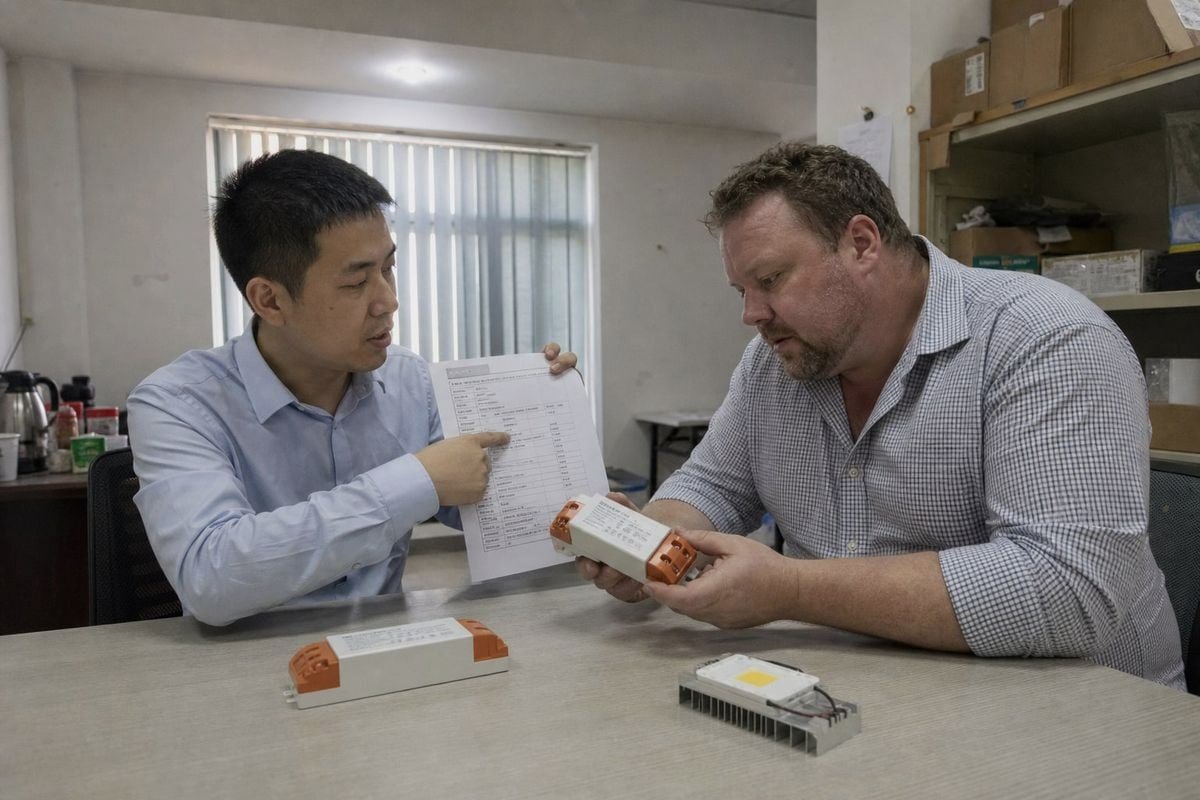
Regardez l'étiquette de nos drivers et vous verrez les marques CE, SAA, CB et SELV imprimées à côté du numéro de modèle et des caractéristiques électriques. Chacune existe pour une raison différente, et chacune compte pour un acheteur différent.
Ce que couvre chaque marque
| Certification | Marché / Objectif | Pourquoi c'est important pour votre projet |
|---|---|---|
| CE | Espace économique européen | Légalement requis pour la vente dans l'UE ; couvre les directives de sécurité et de CEM |
| ASA | Australie / Nouvelle-Zélande | Approbation requise pour les produits électriques sur ces marchés |
| CB | International (schéma IECEE) | Un rapport d'essai CB accélère les approbations nationales dans de nombreux pays |
| SELV | Classification de sécurité de sortie | Confirme que la sortie LED est en très basse tension de sécurité, protégeant les installateurs |
Pour les projets nord-américains, la conversation équivalente implique la certification UL ou ETL et souvent une classification d'alimentation de classe 2, qui limite la puissance de sortie pour un câblage simplifié dans les bâtiments. Si vos luminaires sont expédiés aux États-Unis, soulevez ce point tôt — cela modifie la conception du driver, pas seulement la paperasse.
Deux avertissements pratiques issus de notre expérience d'exportation en Europe, en Australie et en Asie du Sud-Est. Premièrement, les logos imprimés sont bon marché ; les certificats ne le sont pas. Demandez les numéros de certificat et vérifiez-les auprès de l'organisme émetteur. Nous fournissons une documentation complète avec chaque commande parce que les sociétés d'ingénierie et les usines d'éclairage ont besoin de cette traçabilité pour leur propre validation de projet. Deuxièmement, vérifiez que le certificat couvre le modèle exact et le courant nominal que vous achetez, et non un modèle similaire de la même famille. Un rapport CB pour une version 30 W ne couvre pas automatiquement la version 50 W. Les acheteurs qui négligent cette vérification découvrent parfois l'écart seulement lorsqu'une équipe de conformité d'un distributeur audite l'expédition — et à ce moment-là, le calendrier du projet est déjà en péril.
Conclusion
Les drivers à courant constant 0–10V alimentent l'éclairage commercial, industriel et architectural dimmable. Faites correspondre d'abord le point de fonctionnement de la LED, spécifiez clairement le comportement de gradation et vérifiez les certifications — ensuite, le driver fonctionnera de manière fiable pendant des années.
Notes de bas de page
- Site du Département de l'Énergie des États-Unis fournissant une autorité sur les technologies d'éclairage et de contrôle économes en énergie. ↩︎
- Aperçu technique des méthodes de contrôle PWM utilisées dans les applications LED à tension constante. ↩︎
- Référence de l'Institut national des normes et de la technologie pour les caractéristiques électriques des semi-conducteurs. ↩︎
- Association professionnelle fournissant des normes pour le scintillement et les interférences électriques dans les systèmes d'éclairage. ↩︎