Hoppa till innehåll










Belysningsstyrning kan vara förvirrande, särskilt när du försöker balansera prestanda, kostnad och kompatibilitet.
En 0–10V-dimmer justerar ljusstyrkan genom att skicka en lågspännings-DC-signal till LED-drivdonet, vilket gör den idealisk för mjuk, flimmerfri dimning i kommersiella belysningsprojekt.
Den här guiden hjälper dig att fullt ut förstå hur 0–10V-dimning fungerar, var den passar bäst och vad du ska vara uppmärksam på. Oavsett om du är ny inom belysning eller hanterar storskaliga installationer, är du på rätt plats.
Förstå grunderna: Vad betyder 0–10V?
Belysningsspecifikationer är fulla av jargong. Om du inte vet vad “0–10V” står för, är det svårt att jämföra dimningssystem med säkerhet.
Termen “0–10V” avser en lågspänningsanalog signal som styr ljusstyrkan hos en armatur, från helt av (0V) till full ljusstyrka (10V).
Vad är en analog styrsignal?
- Till skillnad från digitala protokoll använder 0–10V en enkel analog metod för att kommunicera ljusstyrka.
- Dimmern skickar ut en spänning mellan 0 och 10 volt DC.
- LED-drivdonet tar emot signalen och justerar strömmen till LED-lampan därefter.
| Spänningsnivå | Ljusutbyte |
|---|---|
| 10V | 100% ljusstyrka |
| 5V | 50% ljusstyrka |
| 1V | ~10% ljusstyrka |
| 0V | Av eller lägst (beror på drivdonet) |
Denna enkla signal är anledningen till att 0–10V-dimning ofta används i kommersiella eller industriella utrymmen—den är pålitlig och lätt att implementera.
Hur en 0–10V-dimmer fungerar: Grundprincipen
De flesta tror att dimrar minskar strömmen för att sänka ljusstyrkan. Men 0–10V fungerar på ett helt annat sätt.
En 0–10V-dimmer ändrar inte strömmen till armaturen—den justerar en separat lågspänningssignal för att tala om för drivdonet hur ljusa LED-lamporna ska vara.

Signalbana och styrlogik
0–10V-dimning innebär en parallell lågspänningssignalledning som kommunicerar med drivdonet.
- Den väggmonterade 0–10V-dimmern varierar styrspänningen.
- Drivdonet läser av spänningen och justerar sin utström.
- Strömmen avgör hur ljus LED-lampan verkar.
Sänk- vs. källstyrning
Det finns två typer av 0–10V-dimningsstyrning:
- Strömsänkande (vanligast): Dimmern drar ner spänningen från drivdonet.
- Strömkällande: Dimmern skickar spänning till drivdonet.
Kontrollera alltid vilken typ ditt drivdon stöder. Att blanda ihop dem kan resultera i att dimningen inte fungerar.
Nyckelkomponenter i ett 0–10V-dimningssystem
Att bara köpa en 0–10V-dimmer räcker inte. Du behöver rätt uppsättning för att få allt att fungera smidigt.
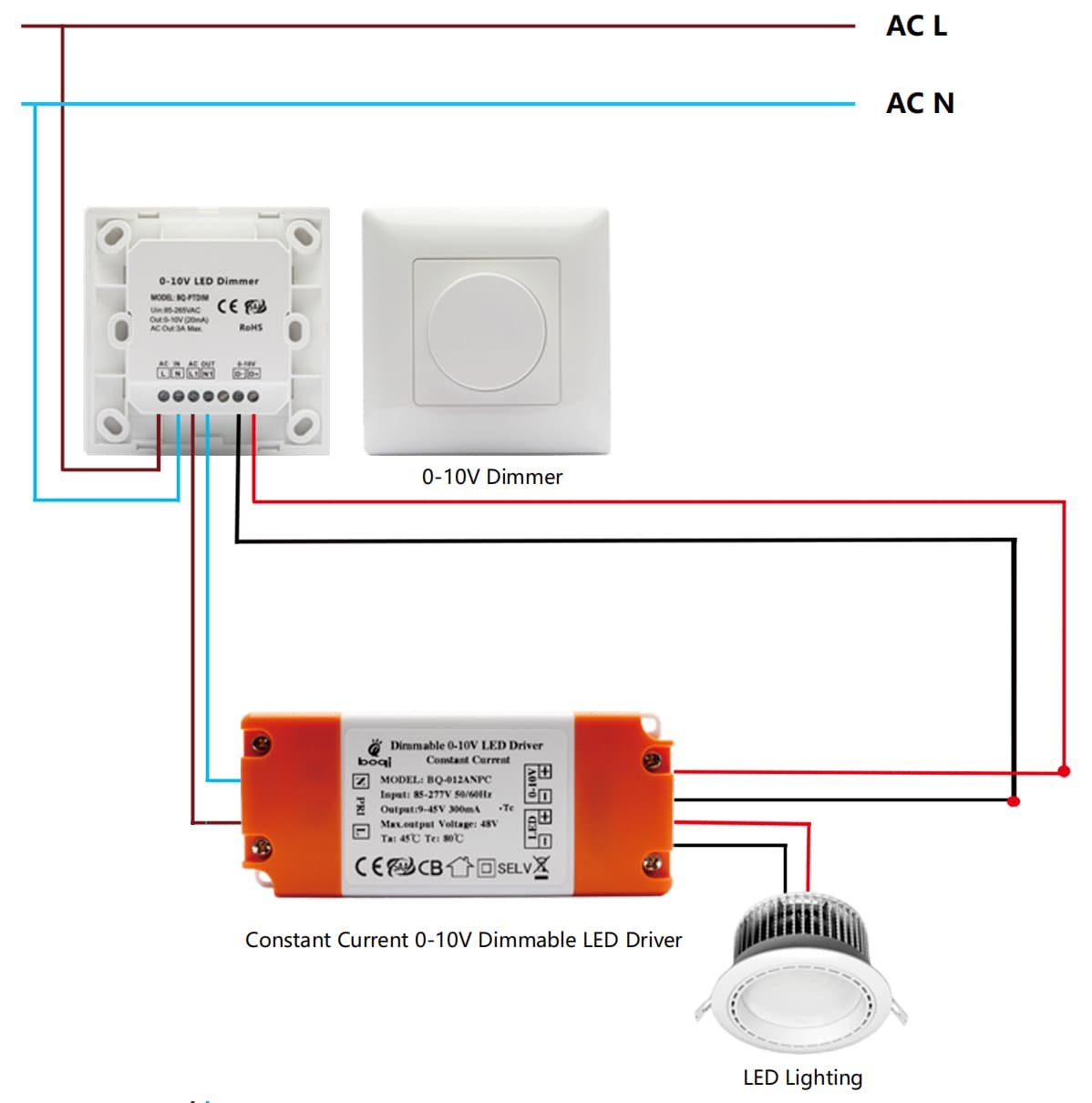
Ett 0–10V-dimningssystem inkluderar vanligtvis ett kompatibelt LED-drivdon, en 0–10V-dimmer och lågspänningsstyrkablar.
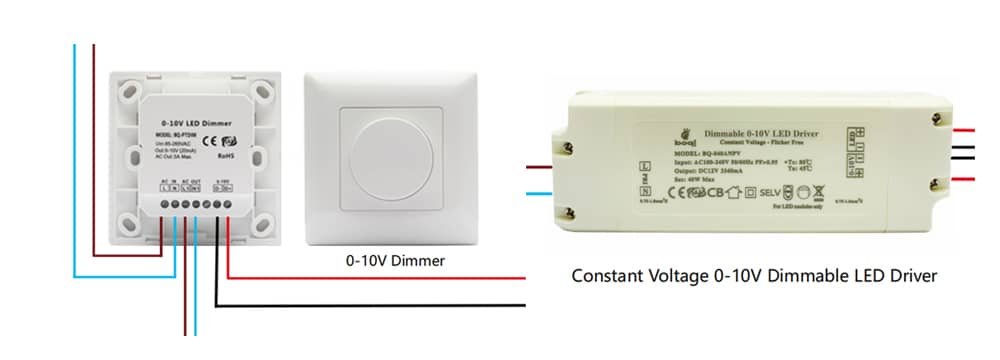
Uppdelning av systemet
0-10V LED-drivrutin
- Tar emot AC-ingång och omvandlar den till DC för LED-lampan.
- Måste stödja 0–10V-dimningsingång.
- Vissa stöder “dim-till-av” vid 0V.
0–10V-dimmer
- Vanligtvis en väggmonterad vridknapp eller skjutreglage.
- Justerar spänningen mellan 0 och 10V.
- Vissa avancerade modeller inkluderar scenminne eller fjärrkontroll.
Styrkablar
- Två extra ledningar (vanligtvis lila och grå).
- Dras separat från nätspänningsledningen.
- Måste vara ordentligt skärmade i bullriga elektriska miljöer.
| Komponent | Funktion |
|---|---|
| LED-drivdon | Styr LED-strömmen baserat på 0–10V-ingång |
| Dimmer | Skickar justerbar spänningssignal |
| Signalledningar | Överför 0–10V-styrsignal |
0–10V vs. andra dimningstekniker (TRIAC, DALI, PWM)
Att välja dimningsmetod handlar inte bara om ljusstyrka—det påverkar kompatibilitet, flimmer och till och med energibesparingar.
0–10V-dimning erbjuder tillförlitlig analog styrning men saknar de avancerade funktionerna och precisionen hos digitala dimningssystem som DALI eller PWM.

För- och nackdelar med andra system
TRIAC-dimning (ledande flank)
- Använder AC-fasklippning för att dimma.
- Enkelt, billigt, men kan flimra.
- Används mest i bostäder.
DALI (Digital Addressable Lighting Interface)
- Skickar digitala kommandon.
- Stödjer gruppering, scener, diagnostik.
- Komplext och kostsamt.
PWM (Pulsbreddsmodulering)
- Justerar ljus genom att snabbt slå på/av strömmen.
- Mycket jämnt och precist.
- Används i högkvalitativa applikationer.
| Typ av dimning | Signaltyp | Precision | Vanlig användning |
|---|---|---|---|
| 0–10 V | Analog | Medium | Kommersiell/industriell |
| TRIAC | AC-fasklippning | Låg | Bostäder |
| DALI | Digital | Hög | Kontor/Smart styrning |
| PWM | Digital | Mycket hög | Studio/Medicinsk |
Tillämpningar: Där 0–10V-dimmers vanligtvis används
Du hittar inte 0–10V-dimning i varje byggnad. Men för vissa användningsområden är det det bästa valet.
0–10V-dimmers används i stor utsträckning i kommersiella byggnader, lager, butiker, sjukhus och klassrum tack vare deras enkelhet och jämna styrning.

Varför det är idealiskt för kommersiella miljöer
- Kompatibelt med stora belysningsinstallationer
- Stödjer flera armaturer på en styrenhet
- Uppfyller många energikoder
- Integreras enkelt i belysningsstyrsystem
Typiska installationer:
- Kontorstakpaneler
- Linjära industriella high bays
- Downlights i butiksutrymmen
- Arkitektonisk accentbelysning
Fördelar med att använda 0–10V-dimmers
Om du är osäker på om 0–10V är värt det, tänk på långsiktig styrning och komfort.
0–10V-dimmers är kända för mjuk dimning, enkel installation och bred kompatibilitet med många LED-drivdon.
Varför proffs litar på det
Enkelt att designa och underhålla
- Färre komponenter jämfört med digitala system
- Lätt att felsöka
Flimmerfri drift
- Särskilt vid medel till höga ljusstyrkenivåer
Energibesparingar
- Stödjer dagsljusinsamling och närvarobaserad dimning
- Vissa drivdon går ner till 0,1 % uteffekt eller stängs av helt
Bred tillgänglighet
- Många stora LED-drivdonstillverkare stödjer 0–10V som standard
Begränsningar du bör känna till
Varje system har avvägningar. Att ignorera 0–10V:s begränsningar kan leda till kostsamma misstag.
0–10V-system är benägna att få signal- och spänningsfall över långa avstånd och kan inte rapportera armaturstatus som digitala protokoll kan.
Vanliga problem att hålla utkik efter
Ingen återkoppling eller kommunikation
- Till skillnad från DALI kan 0–10V inte rapportera fel eller dimningsnivåer tillbaka till en styrenhet.
Spänningsfall
- Över långa kabeldragningar kan signalen försämras, vilket leder till ojämn dimning.
Elektriskt brus
- I vissa miljöer kan närliggande AC-kablar störa signalen.
Installationstips för nybörjare
Korrekt installation är nyckeln till tillförlitlig dimning. Många problem härrör från grundläggande installationsfel.
För att installera en 0–10V-dimmer korrekt måste du dra två extra styrkablar, säkerställa korrekt polaritet och hålla signalkablar borta från AC-strömledningar.

Steg-för-steg-tips
- Identifiera lila (+) och grå (–) kablar på ditt drivdon.
- Dra skärmad lågspänningskabel för signalledningar.
- Undvik att dra signalkablar parallellt med högspänningskablar.
- Bekräfta att drivdonet stödjer dim-till-av om det behövs.
- Använd skarvhylsor eller push-in-kopplingar klassade för lågspänningsstyrning.
Felsökning av vanliga 0–10V-dimningsproblem
Ibland fungerar inte dimningen som förväntat. Ofta är lösningen enkel när du vet var du ska titta.
Om din 0–10V-dimmer inte svarar, kontrollera kablage, polaritet, dimmertyp och drivdonets kompatibilitet först.
Vanligaste problemen
| Problem | Trolig orsak |
|---|---|
| Ljuset dimmas inte | Signalkablar inte anslutna |
| Dimmars bara delvis | Drivdonet stödjer inte hela området |
| Flimmer vid låg dimningsnivå | Signalstörningar eller dåligt drivdon |
| Ingen dimning alls | Fel dimmertyp (source/sink) |
Dubbelkolla alltid att din dimmer och ditt drivdon använder samma styrtyp. Att blanda sourcing och sinking kan orsaka totalt fel.
Så väljer du rätt 0–10V-dimmer för ditt projekt
Alla dimmers är inte likvärdiga. Att välja fel slösar tid och pengar.
Rätt 0–10V-dimmer matchar din drivdonstyp, styrintervall, dim-till-av-förmåga och applikationsmiljö.

Vad du ska leta efter
- Styrtyp: Bekräfta sänk- eller källtyp.
- Dimningsområde: Se till att den stödjer djup dimning om det behövs.
- Miljö: Vissa modeller är klassade för fuktiga eller utomhusmiljöer.
- Extra funktioner: Scenkontroll, fjärråtkomst eller timers.
- Efterlevnad: Kontrollera CE EMC LVD RoHS-certifieringar.
boqis 0–10V dimningslösningar: Pålitliga, anpassningsbara, certifierade
En bra dimmer är bara så bra som företaget som står bakom den.
Hos boqi erbjuder vi certifierade, anpassningsbara 0–10V-dimmers och drivdon som säkerställer smidig prestanda, energibesparingar och långsiktig tillförlitlighet.

Egen privat modell design 0-10V roterande panel-dimmer
- Inspänning: AC 85–265V
- Utgångssignal: 0-10V(20mA)
- Utström: Max 3,0A(AC)
- Ingångssignal: Rotationsvred
- Dimningsområde: 0–100%
- IP-klassning: IP20 (inomhusbruk)
- Driftstemperatur: -30°C till +55°C
- Certifieringar: CE, EMC, LVD, RoHS
- Garanti: 5 år
- Stödjer 15 enheter 0-10V LED-drivdon
boqi 0–10V-dimmers BQ-PTDIM
Vi har hjälpt kunder runt om i världen att bygga belysningssystem som är effektiva, lätta att installera och byggda för att hålla. Våra lösningar inkluderar:
- 0–10V LED-drivdon med dim-till-av-stöd
- Väggmonterade dimmers med modern design
- OEM/ODM-anpassning för dina specifika projekt
- Certifieringar för Europa
Vanliga frågor om 0–10V-dimmers
Kan 0–10V-dimning bli helt mörkt?
Endast om ditt drivdon stödjer “dim-till-av”. Annars lämnar 0V fortfarande ett svagt sken.
Behöver jag speciella kablar?
Ja, använd lågspänningsklassade kablar, helst tvinnade par, för att minska störningar.
Kan jag använda en vanlig väggdimmer för 0–10V?
Nej. 0–10V-dimmers är separata från AC-fasklippningstyper som TRIAC.
Hur många armaturer kan en dimmer styra?
Det beror på drivdonets inströmförbrukning, men vanligtvis är dussintals armaturer möjliga.
Slutsats
0–10V-dimning är ett enkelt, pålitligt sätt att styra kommersiell LED-belysning smidigt och effektivt. Med rätt installation och komponenter är det lätt att få bra resultat.