Hoppa till innehåll










Grunderna för LED-remsor
LED-remsor har snabbt blivit en självklarhet inom modern ljusdesign och erbjuder ett spektrum av färger och effekter för alla miljöer. Men med så många typer tillgängliga, från RGB till RGBCCT, kan det vara överväldigande att välja det bästa alternativet för dina behov. Att förstå de viktigaste skillnaderna mellan RGB, RGBW, RGBIC, RGBWW och RGBCCT LED-remsor hjälper dig att fatta ett välgrundat beslut. Den här guiden utforskar varje typ, idealiska användningsområden och vad som skiljer dem åt.
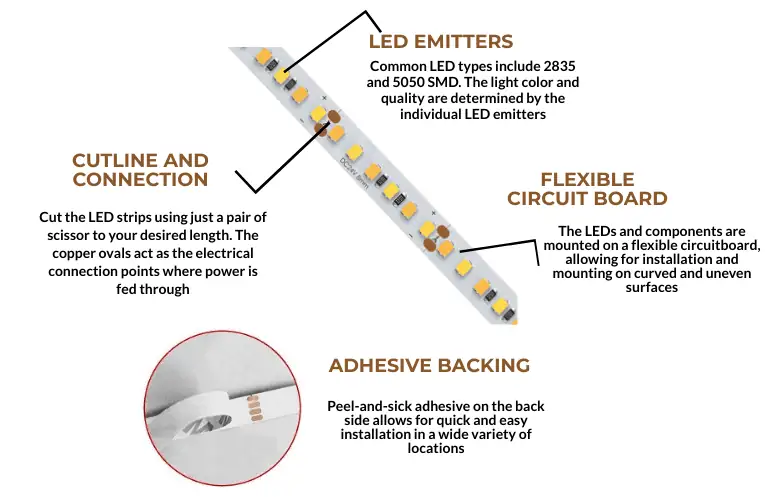
LED-remsor finns i fem huvudtyper: RGB, RGBW, RGBIC, RGBWW och RGBCCT.
- RGB använder röda, gröna och blå lysdioder för att skapa färger men saknar ett äkta vitt.
- RGBW lägger till en dedikerad vit lysdiod för ett mer autentiskt vitt.
- RGBIC har oberoende styrning och erbjuder dynamiska effekter.
- RGBWW ger varma och kalla vita alternativ, och RGBCCT erbjuder justerbara vita toner för anpassning av färgtemperatur.
| LED-typ | Beskrivning |
|---|---|
| RGB | Använder röda, gröna och blå lysdioder för att blanda färger och skapa ett brett spektrum. Kan inte producera ett äkta vitt ljus. |
| RGBW | Inkluderar en extra vit lysdiod tillsammans med RGB, vilket ger äkta vitt ljus (varmt eller kallt) och bättre färgnoggrannhet. |
| RGBIC | Har oberoende styrchips (IC), vilket gör att varje LED-segment kan visa olika färger samtidigt för dynamiska effekter som jakt eller flöde. |
| RGBWW | Kombinerar RGB med både varma vita och kalla vita lysdioder, vilket erbjuder justerbara vita toner och skapar en mysig eller ljus atmosfär. |
| RGBCCT | Utrustad med justerbara vita lysdioder tillsammans med RGB, vilket möjliggör justering av färgtemperatur över ett intervall från varmt till kallt, idealiskt för anpassningsbar belysning. |
Varje LED-remsa har distinkta styrkor, idealiska för olika belysningsmål. Här är en närmare titt på varje typ och hur den kan passa din installation.
Vad är RGB LED-remsor?

RGB LED-remsor är namngivna efter de tre färger de använder—röd, grön och blå. Genom att blanda dessa tre primärfärger i olika intensiteter kan RGB-remsor producera ett brett spektrum av färger. Dock saknar RGB en dedikerad vit lysdiod, så vitt ljus som skapas av dessa remsor är inte ett äkta vitt utan en blandning av rött, grönt och blått.
Bästa användningsområden: RGB LED-remsor är idealiska för dekorativ belysning och för att lägga till färgat ljus i utrymmen där rent vitt ljus inte är nödvändigt. De är populära för att skapa stämning i sovrum, vardagsrum och accentbelysning i olika miljöer.
Proffs:
- Brett utbud av färgalternativ
- Enkla att installera och använda
- Prisvärda jämfört med avancerade LED-typer
Nackdelar:
- Begränsad vit ljuskvalitet
- Färre alternativ för dynamiska effekter
RGBW LED-remsor: Lägga till äkta vitt
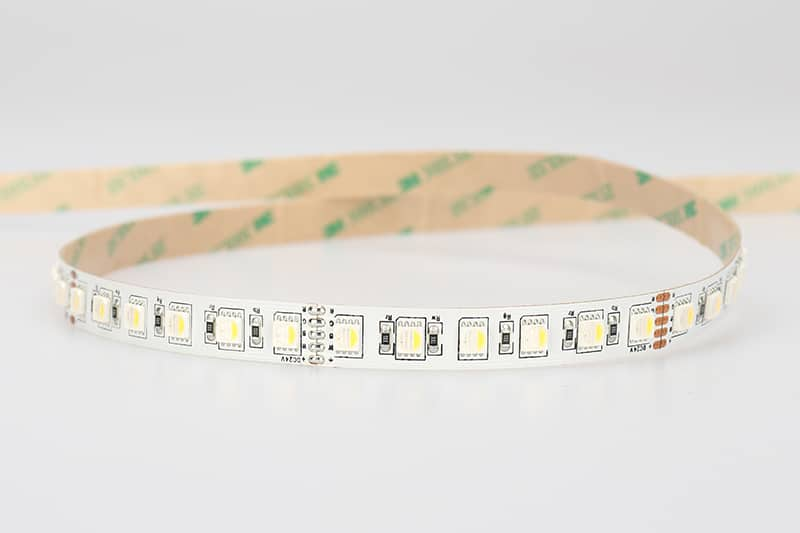
Tillägget av en vit lysdiod i RGBW-remsor skiljer dem från grundläggande RGB-remsor. Denna vita lysdiod kan vara antingen varm eller kall, vilket gör att användare kan njuta av både färgat och äkta vitt ljus i en enda remsa.
Bästa användningsområden: RGBW LED-remsor är utmärkta för utrymmen där både färgglad belysning och klart vitt ljus behövs. De är populära i kök, arbetsutrymmen och kommersiella tillämpningar där flexibilitet och kvalitet prioriteras.
Proffs:
- Äkta vitt ljusalternativ för ökad mångsidighet
- Balanserad ljusstyrka och färgåtergivning
- Bra för både funktionella och dekorativa användningar
Nackdelar:
- Något dyrare än RGB-endast-remsor
- Förbrukar mer ström på grund av den extra vita lysdioden
RGBIC LED-remsor: Oberoende styrning för dynamiska effekter
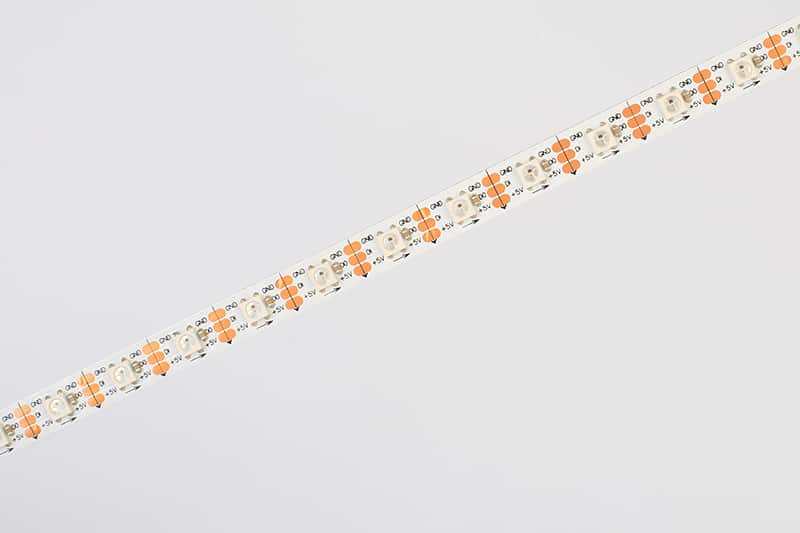
RGBIC-remsor innehåller oberoende styrning chips, vilket gör att varje LED eller segment kan visa en annan färg samtidigt. Denna funktion möjliggör unika ljuseffekter som jakt, regnbågsflöden och segmentbaserad färganpassning, vilket skapar iögonfallande visuella effekter som inte kan uppnås med standard RGB- eller RGBW-remsor.
Bästa användningsområden: RGBIC är idealiskt för underhållningsutrymmen eller alla miljöer som behöver dynamiska ljuseffekter. Dessa remsor används vanligtvis i spelrum, fester och platser där livfull, animerad belysning önskas.
Proffs:
- Möjliggör avancerade ljuseffekter
- Varje LED eller segment kan styras individuellt
- Skapar slående visuella effekter, idealiska för dekorativa installationer
Nackdelar:
- Kräver en kompatibel styrenhet för att programmera effekter
- Dyrare och mer komplexa att installera än RGB- och RGBW-remsor
RGBWW LED-remsor: Mångsidiga vita toner
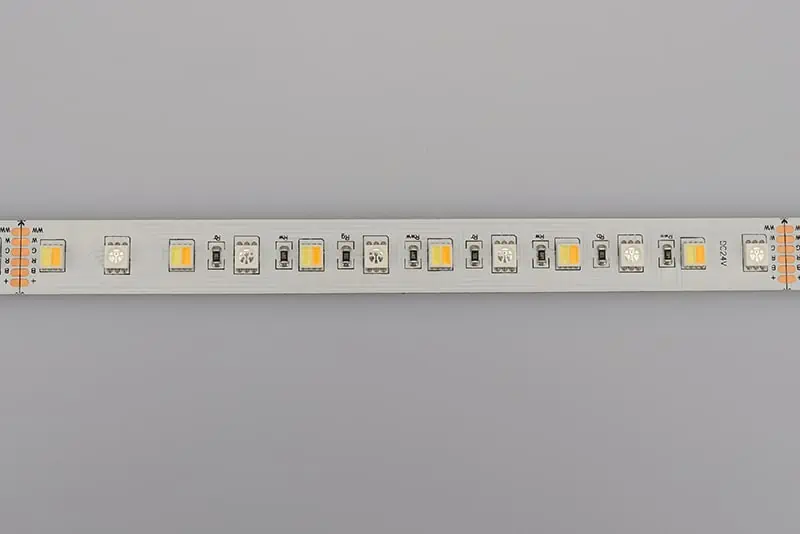
RGBWW LED-remsor går ett steg längre genom att inkludera både varma och kalla vita lysdioder. Denna extra flexibilitet gör att användare kan växla mellan en varm atmosfär och ett kallt, skarpt ljus, idealiskt för dag- och nattmiljöer.
Bästa användningsområden: RGBWW-remsor fungerar bra i hemmiljöer, särskilt i utrymmen som vardagsrum och sovrum, där användare kan justera ljustemperaturen för att matcha tid på dygnet eller önskad stämning.
Proffs:
- Erbjuder ett brett spektrum av vita toner
- Förbättrar atmosfären med justeringar från varmt till kallt ljus
- Utmärkt för att skapa mysiga eller energigivande miljöer
Nackdelar:
- Förbrukar mer energi än RGB och RGBW på grund av extra lysdioder
- Högre prispunkt för ökad flexibilitet i vita toner
RGBCCT LED-remsor: Full färg- och temperaturkontroll
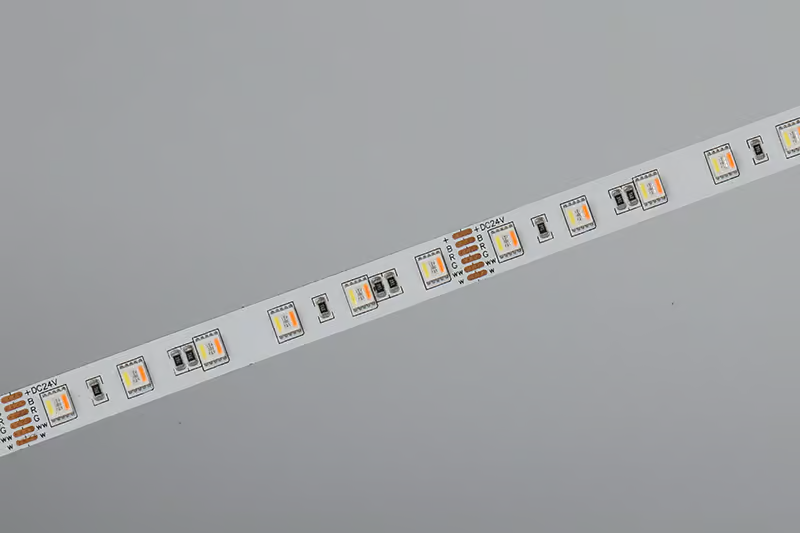
RGBCCT LED-remsor representerar det mest avancerade alternativet, med justerbar färgtemperatur och förmågan att justera den vita tonen över ett brett spektrum. RGBCCT-remsor ger bäst flexibilitet, vilket möjliggör både färgjusteringar och ett fullt spektrum av vitt ljus med olika temperaturer.
Bästa användningsområden: RGBCCT LED-remsor är populära i miljöer som kräver anpassningsbar belysning, såsom kontor, studior och kommersiella utrymmen. De möjliggör precisa ljusjusteringar för att passa olika uppgifter eller stämningar, från varm stämningsbelysning till kall, uppgiftsorienterad ljusstyrka.
Proffs:
- Full kontroll över färg och vit temperatur
- Perfekt för professionella och anpassningsbara miljöer
- Mycket mångsidig för olika belysningsbehov
Nackdelar:
- Mest komplex och kostsam av LED-remsalternativen
- Kräver sofistikerade styrenheter och strömkällor
Viktiga skillnader och fördelar
Här är en snabb jämförelse av varje LED-rems typ för att klargöra de bästa tillämpningarna:
| LED-typ | Nyckelfunktion | Bästa användningsområde |
|---|---|---|
| RGB | Grundläggande färgblandning | Dekorativ belysning, stämningsskapande |
| RGBW | Äkta vit LED | Funktionell och dekorativ belysning |
| RGBIC | Oberoende styrning för effekter | Dynamiska skärmar, visuella effekter |
| RGBWW | Varma & kalla vita | Hem, sovrum, anpassningsbar atmosfär |
| RGBCCT | Full färgtemperaturkontroll | Kontor, studior, anpassningsbar belysning |
Installationstips
Varje typ av LED-rems har unika installationsbehov:
- RGB: Enkel installation, idealisk för standardinstallationer utan komplexa krav.
- RGBW: Något mer installation krävs; välj var du vill ha både färger och äkta vitt ljus.
- RGBIC: Kräver en kompatibel styrenhet för IC-chippet; bäst för dem som söker animerade effekter.
- RGBWW: Välj områden där du vill ha justerbara vita toner för atmosfär.
- RGBCCT: Fungerar bäst med avancerade styrenheter, idealisk för utrymmen som behöver ljustemperaturkontroll.
Om du vill veta mer om LED-remsors kabeldragning, se denna artikel, Hur man kopplar LED-remsor (Kopplingsschema ingår).
Låt oss gå igenom en sida vid sida-jämförelse mellan RGB, RGBW, RGBIC, RGBWW och RGBCCT.
| Funktion | RGB | RGBW | RGBIC | RGBWW | RGBCCT |
|---|---|---|---|---|---|
| Primärfärger | Röd, Grön, Blå | Röd, Grön, Blå + Vit | Röd, Grön, Blå med individuell styrning | Röd, Grön, Blå + Varm & Kall Vit | Röd, Grön, Blå + Justerbar Vit |
| Vitljusalternativ | Nej (skapar en vit nyans med RGB-blandning) | Ja, dedikerad vit LED | Nej (fokus på färgeffekter) | Ja, med både varmvita och kallvita alternativ | Ja, justerbar vit färg möjliggör reglerbar värme |
| Dynamiska effekter | Begränsad (enfärgad visning) | Begränsad (kan visa vitt och färger) | Ja, möjliggör jakt, flöde, regnbåge | Begränsad till grundläggande färg- och vita toner | Ja, möjliggör anpassade färg- och temperatureffekter |
| Färgnoggrannhet | Bra för grundläggande färgvisning | Hög, tack vare dedikerad vit LED | Bra, men fokuserad på effekter snarare än äkta vitt | Hög, justerbara vita toner ger mångsidighet | Hög, med full färgtemperaturkontroll |
| Bästa användningsfall | Dekorativ belysning, stämningsbelysning | Funktionell och dekorativ belysning | Dynamiska ljusdisplayer, underhållning | Hemmamiljö, justerbara vita toner | Kontor och professionella miljöer som kräver anpassningsbar belysning |
| Styrtyp | Grundläggande styrenhet | Grundläggande eller RGBW-styrenhet | Avancerad styrenhet med IC-kompatibilitet | Grundläggande eller RGBWW-styrenhet | Avancerad styrenhet med justerbara vita alternativ |
| Strömförbrukning | Låg till måttlig | Måttlig på grund av extra vit LED | Måttlig till hög, beroende på effekter | Högre på grund av extra varmvita och kallvita LED | Högre, justerbar färgtemperatur och extra LED |
| Antal dioder/chip | 3 (en vardera för röd, grön, blå) | 4 (röd, grön, blå, vit) | 3 (röd, grön, blå) + IC för oberoende styrning | 5 (röd, grön, blå, varmvit, kallvit) | 5 (röd, grön, blå, justerbara vita LED) |
| Kostnad | Prisvärt | Mellanklass | Hög | Mellan till hög | Högst, på grund av justerbart vitt och färgalternativ |
Energieffektivitet och hållbarhet
LED-remsor är generellt energieffektiva och långlivade, men strömbehovet kan variera. RGBWW och RGBCCT kan dra något mer ström på grund av extra LED, så se till att du använder en högkvalitativ strömförsörjning och styrenhet. Korrekt strömhantering kan förlänga livslängden på dina LED-remsor och bibehålla ljusstyrka och effektivitet över tid.
Prisjämförelse och varumärkesrekommendationer
- Prisjämförelse: RGB-remsor är vanligtvis de mest prisvärda, med priser som stiger när fler funktioner läggs till (t.ex. RGBW, RGBIC, RGBWW, RGBCCT). RGBCCT- och RGBIC-typer tenderar, på grund av sina avancerade funktioner, att vara de högst prissatta.
- Varumärkesrekommendationer: Välrenommerade varumärken som Ledyi Lighting erbjuder olika typer med garantier och hög kvalitet. Leta efter LED-remsmärken med bra kundsupport och positiva recensioner, eftersom detta ofta återspeglar hållbarhet och produkttillförlitlighet.
Sammanfattning av för- och nackdelar
| LED-typ | Proffs | Nackdelar |
|---|---|---|
| RGB | Prisvärd, brett färgomfång | Saknar äkta vitt ljus |
| RGBW | Äkta vitt, mångsidig användning | Högre strömförbrukning |
| RGBIC | Dynamisk, individuell LED-styrning | Kräver avancerad styrenhet |
| RGBWW | Justerbara vit-tonalternativ | Dyrare, ökad energianvändning |
| RGBCCT | Fullständig färg- och temperaturkontroll | Mest komplex och kostsam |
Sammanfattning
Att välja rätt LED-list beror på dina behov och budget. RGB erbjuder prisvärd färgvariation, RGBW lägger till äkta vitt, RGBIC möjliggör dynamiska effekter, RGBWW ger anpassningsbara vita toner, och RGBCCT erbjuder den mest avancerade kontrollen över både färg och temperatur. Genom att förstå varje typ kan du förhöja ditt utrymme med belysning som passar din livsstil, funktion och atmosfär.