Vai al contenuto









Lighting often feels too bright or too dull. Many people want smooth control but struggle with incompatible dimmers and LED drivers.
A TRIAC dimmer such as the BQ-TTDIM controls brightness by cutting part of each AC waveform. It uses a TRIAC semiconductor to switch current during each AC cycle, reducing power delivered to the lamp and enabling smooth dimming for compatible LED, halogen, and incandescent lights.

In many retrofit lighting projects, I often see confusion around TRIAC dimming and LED compatibility. The BQ-TTDIM is designed to make this process easier by combining a traditional rotary wall dimmer interface with modern LED driver compatibility. To understand how it works, we first need to look at how TRIAC dimming functions and why it still dominates many lighting systems today.
What Is a TRIAC Dimmer and Why Is It Used in LED Lighting?
Many lighting systems require adjustable brightness. Traditional switches only turn lights on or off. This creates discomfort and wastes energy.
A TRIAC dimmer adjusts light intensity by cutting a portion of each AC waveform. By delaying when current flows in every AC cycle, it reduces the power delivered to the lamp and changes brightness smoothly.
Understanding the Basic Concept of TRIAC Phase-Cut Dimming
TRIAC dimming uses a method called dimmerazione a taglio di fase. The dimmer sits between the AC mains supply and the lighting load. Instead of lowering voltage continuously, it cuts part of the AC waveform.
During each AC cycle:
- The AC voltage rises from zero.
- The dimmer delays turning on the TRIAC.
- Once triggered, the TRIAC allows current to flow.
- The rest of the waveform passes to the load.
When the dimmer delays the trigger point further, less power reaches the lamp. The brightness drops.
This method works well with resistive loads such as incandescent lamps. However, LED lighting requires drivers to convert AC into stable DC current.
Difference Between Traditional Dimmers and LED-Compatible Dimmers
Traditional dimmers were designed for incandescent lamps. LEDs behave differently because they rely on electronic drivers.
Key differences include:
| Caratteristica | Traditional Dimmer | LED-Compatible TRIAC Dimmer |
|---|---|---|
| Load type | Resistive lamps | Electronic LED drivers |
| Minimum load | Often high | Lower load capability |
| Flicker risk | Basso | Possibile se incompatibile |
| Dimming range | Wide for incandescent | Depends on driver design |
LED-compatible dimmers must control the waveform carefully to prevent flicker or instability.
Key Components Inside a TRIAC Dimmer Circuit
A TRIAC dimmer contains several electronic parts that work together.
Main components include:
| Componente | Funzione |
|---|---|
| TRIAC | Semiconductor switch controlling AC current |
| DIAC | Triggers the TRIAC when voltage reaches threshold |
| RC timing network | Sets the phase delay |
| Potentiometer | Adjusts dimming level |
| EMI filter | Reduces electrical noise |
The timing network determines when the TRIAC fires during each AC cycle.
Common Applications in Residential and Commercial Lighting
TRIAC dimmers remain common in many lighting environments.

Typical applications include:
- Living room ceiling lights
- Decorative wall lights
- Restaurants and cafes
- Hotel corridors
- Retail displays
In these cases, dimming improves atmosphere and energy control.
Why TRIAC Dimming Remains Popular in Retrofit Projects
Even with newer dimming technologies like 0-10V or DALI, TRIAC dimming still dominates retrofit installations.
Reasons include:
| Vantaggio | Spiegazione |
|---|---|
| Existing wiring | Works with standard AC wiring |
| Low cost | Simple electronics |
| Familiar interface | Rotary wall dimmers |
| Easy installation | No additional control wires |
Because of this simplicity, devices like the BQ-TTDIM remain widely used.
Overview of the BQ-TTDIM TRIAC Dimmer
Choosing the wrong dimmer often causes flicker or unstable brightness. Many installers struggle to match dimmers with LED drivers.
The BQ-TTDIM is a rotary TRIAC phase-cut dimmer designed for dimmable LED drivers, incandescent lamps, and halogen lighting. It operates on AC200-240V and supports loads up to 400W.

Introduction to the BQ-TTDIM Dimmer Model
The BQ-TTDIM is a rotary panel TRIAC dimmer with one output channel designed for wall installation.
According to the product manual, it supports:
- Rotary brightness adjustment
- Push button for ON/OFF
- Minimum brightness setting
- Memory function
These features make the dimmer easy to use in both residential and commercial spaces.
Core Design and Compatibility with LED Drivers
The dimmer is built to control TRIAC dimmable LED drivers.
Instead of regulating voltage directly, it modifies the AC waveform entering the driver. The driver then converts that waveform into DC current for the LEDs.
Because of this interaction, compatibility between the dimmer and driver is very important.
Specifiche elettriche
The manual provides the following electrical parameters.
| Parameter | Specifiche |
|---|---|
| Input voltage | AC200-240V |
| Output voltage | AC200-240V |
| Maximum current | 1,25 A |
| Maximum load | 3-400W |
| Dimming method | Rotary phase-cut (Trailing Edge) |
These specifications allow the dimmer to control many LED driver types.
The dimmer also supports dimmable LED lamps, TRIAC LED drivers, incandescent lamps, and halogen lamps.
Environmental and Safety Specifications
The dimmer is designed for indoor installation.
| Parameter | Valore |
|---|---|
| Operating temperature | −30°C to +55°C |
| Case temperature | Max 85°C |
| Protection rating | IP20 |
| Certifications | CE, EMC, LVD |
These standards ensure electrical safety and electromagnetic compatibility.
User Interface and Control Features
The front panel contains a rotary knob that performs two functions.
| Control Action | Funzione |
|---|---|
| Push knob | Turn light ON/OFF |
| Rotate clockwise | Increase brightness |
| Rotate counterclockwise | Reduce brightness |
This simple interface makes it easy for users to control lighting levels.
The Working Principle of the BQ-TTDIM TRIAC Dimmer
Many users know dimmers change brightness. However, few understand the electrical process behind the dimming effect.
The BQ-TTDIM controls brightness by adjusting the conduction angle of the TRIAC during each AC cycle. A larger conduction angle delivers more power to the LED driver, resulting in higher brightness.
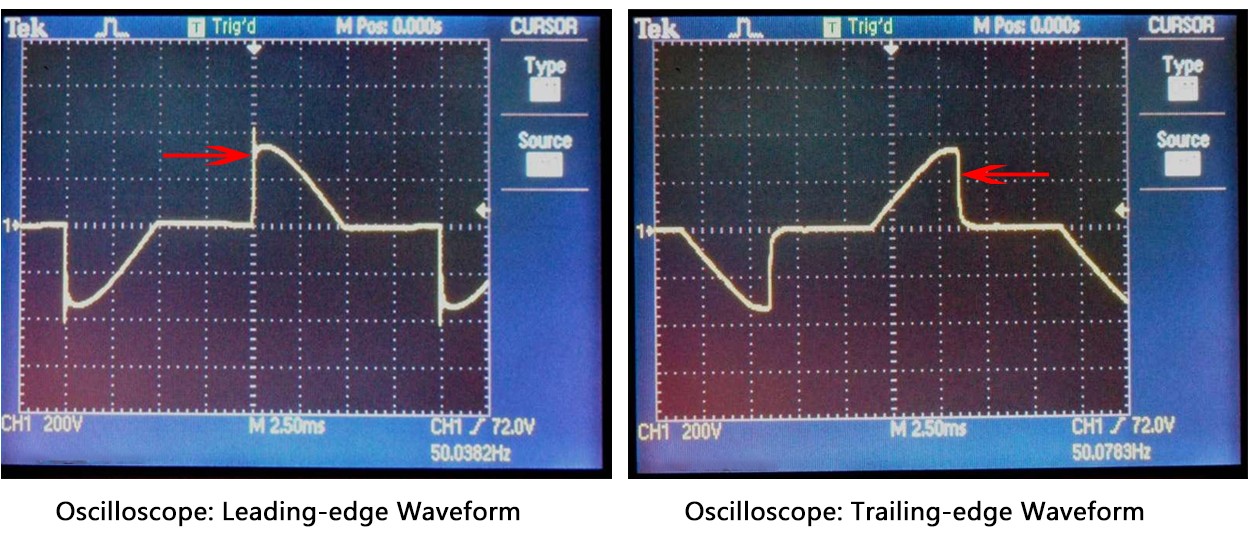
How Phase-Cut Dimming Controls Power
AC power follows a sine wave pattern.
In a TRIAC dimmer:
- The AC waveform begins.
- The dimmer delays the trigger signal.
- The TRIAC switches on at a certain angle.
- Current flows for the remainder of the half cycle.
The later the TRIAC turns on, the less energy reaches the lamp.
Role of the TRIAC Semiconductor
The TRIAC acts as an electronic switch.
Important properties include:
| Property | Spiegazione |
|---|---|
| Bidirectional conduction | Works with AC current |
| Triggered by gate signal | Turns on at specific voltage |
| Latching behavior | Remains on until current drops to zero |
Because AC crosses zero twice every cycle, the TRIAC automatically resets.
Adjusting the Conduction Angle
The rotary knob changes resistance in the timing circuit.
This changes the delay before the TRIAC fires.
Example dimming levels:
| Conduction Angle | Power Delivered | Brightness |
|---|---|---|
| 170° | Alto | Bright |
| 120° | Medio | Moderato |
| 60° | Basso | Dim |
This method is efficient because the dimmer does not dissipate large amounts of heat.
Interaction Between Dimmer and LED Driver
When the waveform reaches the LED driver:
- The driver receives chopped AC voltage.
- The driver detects the phase angle.
- Internal electronics adjust LED current.
Good driver design ensures smooth dimming without flicker.
Step-by-Step Dimming Process
The complete process works like this:
| Step | Action |
|---|---|
| 1 | User rotates dimmer knob |
| 2 | Timing circuit changes delay |
| 3 | TRIAC triggers at new phase angle |
| 4 | AC waveform portion changes |
| 5 | LED driver adjusts output current |
| 6 | LED brightness changes |
This cycle repeats every AC waveform.
Leading Edge vs Trailing Edge Dimming in TRIAC Systems
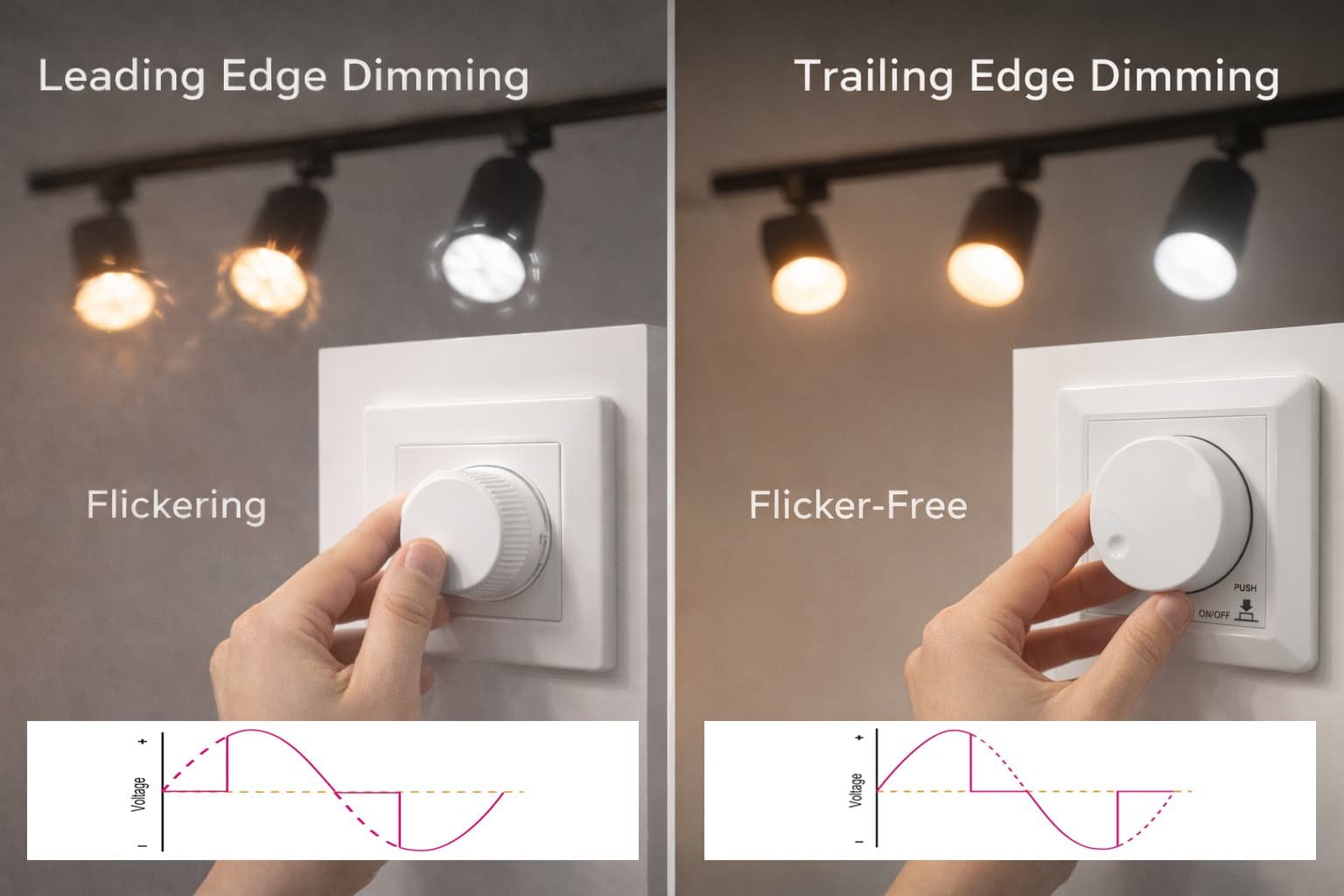
Not all phase-cut dimming works the same way. Some dimmers cut the beginning of the waveform. Others cut the end.
Leading edge dimming removes the beginning of the AC waveform, while trailing edge dimming removes the end. TRIAC dimmers traditionally use leading edge phase cutting.
What Leading Edge Dimming Means
Leading edge dimming delays the start of the waveform.
Once triggered, the remainder of the waveform passes through.
Characteristics include:
| Caratteristica | Descrizione |
|---|---|
| Control device | TRIAC |
| Common use | Incandescent lamps |
| Costo | Basso |
| Electrical noise | Più alto |
How Trailing Edge Dimming Works
Trailing edge dimming uses a different method.
Instead of delaying the start, it cuts the end of the waveform.
| Caratteristica | Descrizione |
|---|---|
| Control device | MOSFET |
| Noise level | Più basso |
| LED compatibility | Often better |
| Costo | Più alto |
Which Type Is Used in TRIAC Dimmers
Most TRIAC dimmers use leading edge dimming.
However, some advanced designs can simulate trailing edge behavior.
The BQ-TTDIM is described as a trailing edge rotary phase-cut dimmer in the product manual.
This improves compatibility with many LED drivers.
Advantages and Limitations
Each dimming method has strengths.
| Method | Vantaggi | Limitations |
|---|---|---|
| Leading edge | Simple, low cost | Higher EMI |
| Trailing edge | Smooth dimming | Costo più elevato |
Compatibility with LED Drivers
LED drivers must support the same phase-cut method.
Otherwise problems may occur:
- flicker
- limited dimming range
- buzzing
Selecting compatible drivers solves most issues.
Key Advantages of Using the BQ-TTDIM TRIAC Dimmer
Poor dimming performance can ruin lighting quality. Flicker and unstable brightness are common problems.
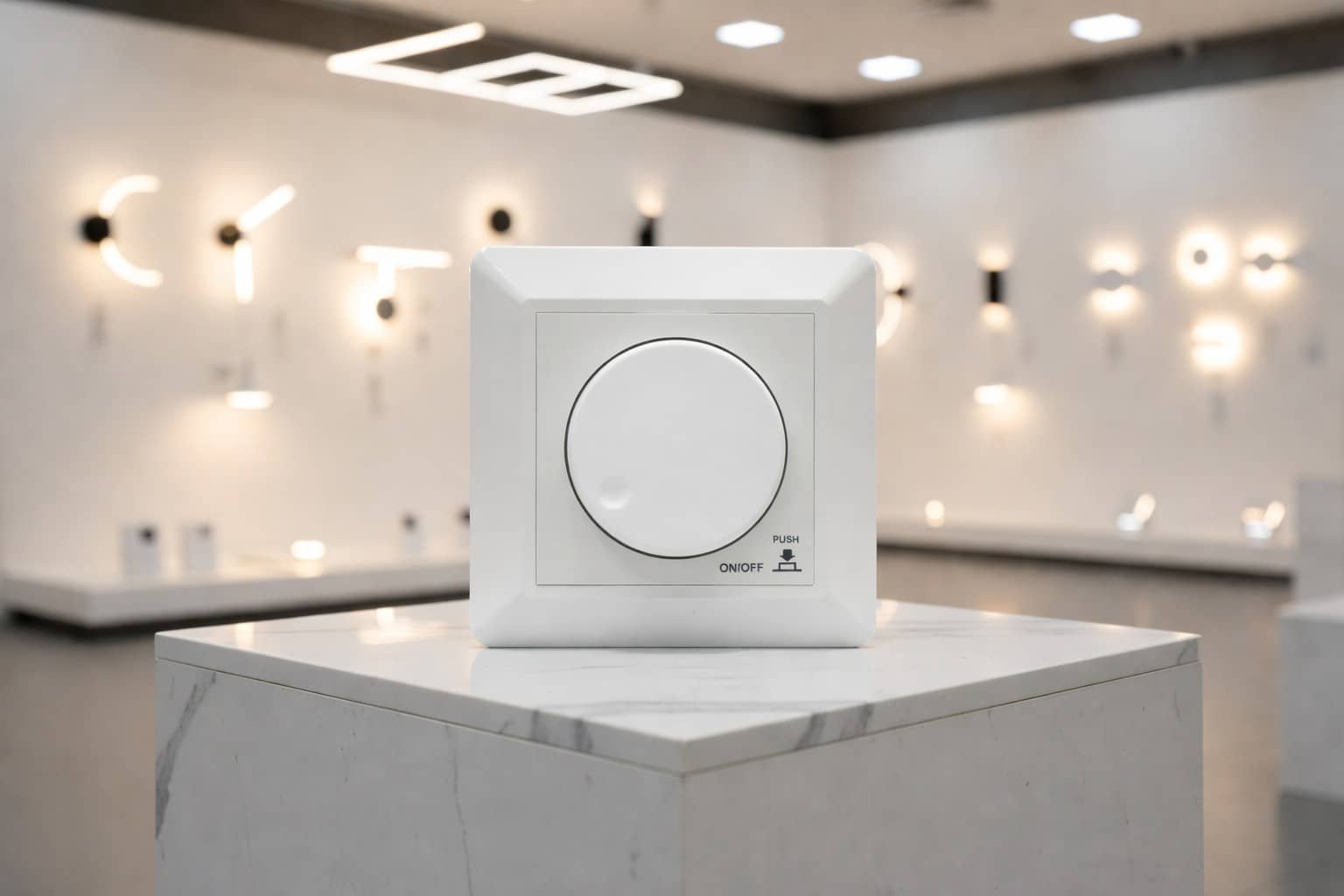
The BQ-TTDIM offers smooth dimming, strong compatibility with TRIAC dimmable drivers, simple installation, and reliable operation for many lighting applications.
Smooth and Stable Dimming
Good dimmers provide gradual brightness changes.
The BQ-TTDIM allows users to adjust brightness from 0-100% using a rotary knob.
Smooth dimming improves visual comfort in living and working environments.
High Compatibility with Global TRIAC Systems
Many buildings already use TRIAC dimming infrastructure.
Advantages include:
| Benefici | Spiegazione |
|---|---|
| Standard wiring | No control bus required |
| Global compatibility | Works with many drivers |
| Retrofit friendly | Replace existing dimmers easily |
Easy Installation
Wall-panel dimmers install similarly to standard switches.
Typical installation steps include:
- Connect AC live input.
- Connect output to LED driver.
- Mount the dimmer panel.
- Install the knob cover.
Because the wiring remains simple, electricians can install the device quickly.
Reduced Flicker
When used with compatible drivers, the dimmer provides stable brightness control.
Proper phase-cut detection in the LED driver ensures smooth dimming.
Funzionalità di protezione
The dimmer also includes safety mechanisms.
| Protection | Funzione |
|---|---|
| Over-temperature | Prevents overheating |
| Over-load | Protects internal circuit |
| Auto recovery | Returns to normal operation |
These protections increase system reliability.
Compatibility with TRIAC Dimmable LED Drivers
One of the biggest problems in LED lighting is incompatibility between dimmers and drivers.
LED drivers must be designed to detect phase-cut waveforms. Without this feature, TRIAC dimming cannot work properly.

Why Drivers Must Be TRIAC-Compatible
LED drivers convert AC power into controlled DC current.
TRIAC dimming changes the AC waveform. If the driver cannot interpret that waveform, the LED current becomes unstable.
How Driver Design Affects Dimming
Driver electronics must detect:
- conduction angle
- waveform shape
- zero crossing
Based on this information, the driver adjusts LED current.
Matching Drivers with Dimmer Types
Two driver types are common in LED systems.
| Driver Type | Applicazione |
|---|---|
| Constant current | LED modules |
| Constant voltage | LED strips |
Both types can support TRIAC dimming if designed properly.
Avoiding Common Problems
Installers often encounter issues such as:
| Problema | Causa |
|---|---|
| Flicker | Driver incompatibility |
| Limited dimming | Poor driver design |
| Rumore | EMI from phase cutting |
Selecting compatible components solves these problems.
Best Practices
For stable dimming:
- Use TRIAC-compatible LED drivers.
- Keep load within dimmer rating.
- Test dimming range during installation.
- Avoid mixing incompatible lamp types.
Typical Applications of TRIAC Dimmers in Lighting Projects
Lighting designers often need flexible brightness control. Many building projects still rely on traditional wiring systems.
TRIAC dimmers are widely used in homes, hotels, retail stores, and architectural lighting because they work with standard AC wiring and require minimal control infrastructure.

Illuminazione residenziale
Homes benefit greatly from dimming control.
Typical rooms include:
| Room | Benefici |
|---|---|
| Living room | Adjust mood lighting |
| Bedroom | Comfortable night lighting |
| Cucina | Flexible task lighting |
Hospitality Lighting
Hotels and restaurants rely heavily on dimming.
Benefits include:
- creating atmosphere
- adjusting brightness for events
- saving energy
Illuminazione al dettaglio
Retail stores use dimming to highlight products.
Lighting designers adjust brightness for:
- display shelves
- mannequins
- decorative lighting
Illuminazione architettonica
Architectural projects often require variable lighting intensity.
Dimmers allow:
- facade lighting control
- feature lighting
- ambient environment tuning
LED Retrofit Projects
Many existing buildings still have traditional wiring.
TRIAC dimmers simplify LED upgrades because:
| Vantaggio | Spiegazione |
|---|---|
| No new control wires | Uses existing wiring |
| Low installation cost | Minimal changes |
| Fast upgrades | Replace lamps and drivers |
Because of this, TRIAC dimmers remain very popular in retrofit markets.
Installation Tips for Stable TRIAC Dimming Performance
Even good dimmers can perform poorly if installed incorrectly. Many dimming issues come from wiring or load problems.
Correct wiring, proper load matching, and compatibility testing are essential to achieve stable TRIAC dimming performance.

Correct Wiring Configuration
The BQ-TTDIM connects between the AC mains and the LED driver.
According to the wiring diagram in the manual, the dimmer receives AC live input and outputs a phase-cut AC signal to the TRIAC LED driver.
Always ensure connections are secure before powering the system.
Load Calculation
The dimmer supports up to 400W load at 220V.
However, LED drivers have surge current.
The manual notes that total surge current must not exceed twice the 65A limit.
Minimum Load Considerations
Some dimmers require minimum load to operate correctly.
For LED systems:
- avoid extremely small loads
- ensure driver compatibility
Testing the Dimming Range
After installation, test brightness levels.
Check for:
- flicker
- dead zones
- sudden brightness jumps
If problems appear, test different drivers.
Troubleshooting Common Problems
The manual lists simple troubleshooting steps.
| Issue | Causa | Soluzione |
|---|---|---|
| No light | No power | Check AC supply |
| No light | Wrong wiring | Verify connections |
Correct wiring usually solves most installation problems.
Conclusione
The BQ-TTDIM TRIAC dimmer controls brightness by adjusting AC phase conduction using a TRIAC switch, enabling smooth dimming for compatible LED drivers, incandescent lamps, and halogen lighting systems.