Chuyển đến nội dung










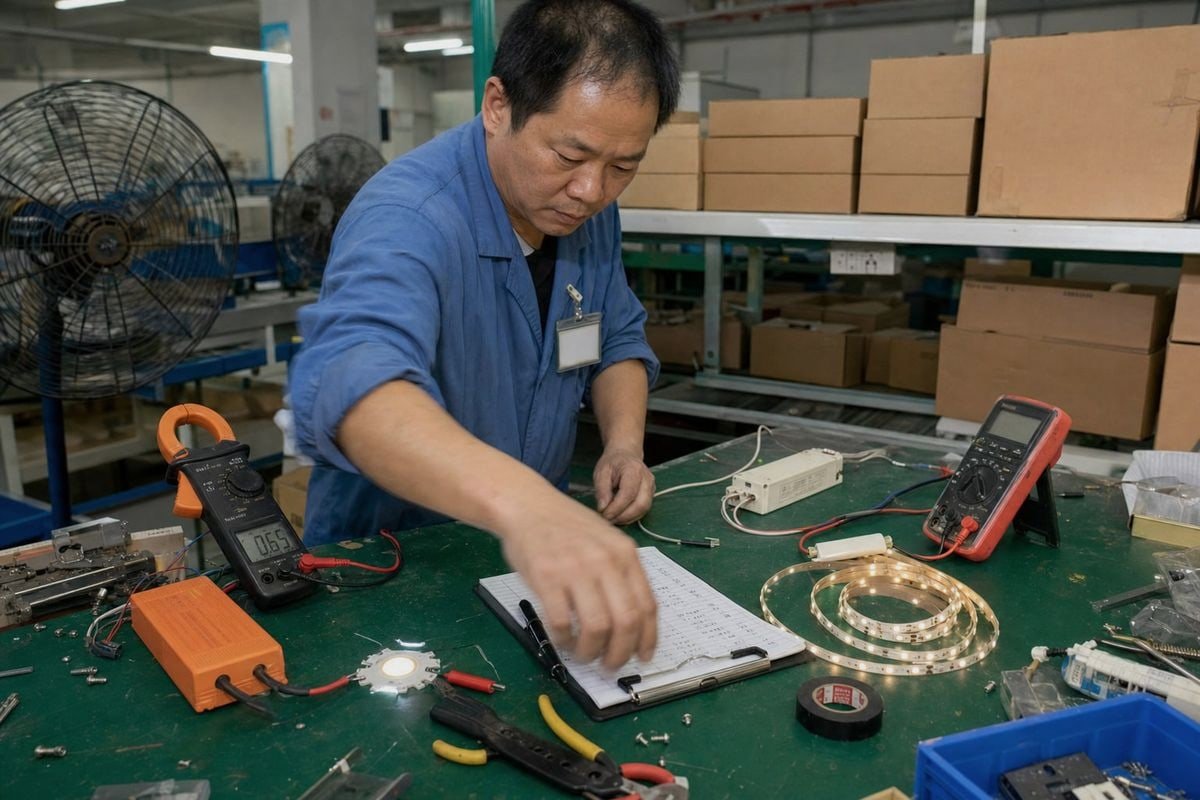
Việc chọn giữa bộ điều khiển LED 0–10V dòng không đổi và điện áp không đổi làm ngay cả những người mua có kinh nghiệm cũng bối rối. Tôi đã thấy những lựa chọn sai trên dây chuyền sản xuất của chúng tôi gây ra nhấp nháy, quá nhiệt và hỏng LED sớm. Một bộ điều khiển không khớp có thể làm hỏng toàn bộ lô đèn—và chi phí vận chuyển trả lại một mình có thể xóa sạch biên lợi nhuận dự án của bạn. Tin tốt? Quyết định trở nên đơn giản một khi bạn tách tín hiệu điều chỉnh độ sáng khỏi loại điều chỉnh đầu ra.
Chọn bộ điều khiển LED 0–10V dòng không đổi khi đèn LED của bạn chỉ định dòng điện dẫn như 350mA, 700mA hoặc 1A. Chọn bộ điều khiển 0–10V điện áp không đổi khi sản phẩm LED của bạn cần nguồn DC cố định 12V hoặc 24V, như dải LED có giới hạn dòng tích hợp.
Đó là câu trả lời ngắn gọn. Nhưng còn nhiều điều hơn thế. Tín hiệu 0–10V chỉ báo cho bộ điều khiển biết mức độ điều chỉnh độ sáng. Nó không quyết định bộ điều khiển là CC hay CV. Hãy để tôi hướng dẫn bạn qua các chi tiết để bạn không bao giờ mua sai thiết bị nữa.
Sự khác biệt chính giữa bộ điều khiển LED 0–10V dòng không đổi và điện áp không đổi là gì?
Khi chúng tôi hiệu chuẩn bộ điều khiển 0–10V tại nhà máy, điều đầu tiên băng thử nghiệm của chúng tôi kiểm tra là chế độ đầu ra. Một thiết bị CC và một thiết bị CV hoạt động hoàn toàn khác nhau dưới tải, ngay cả khi cả hai chấp nhận cùng một tín hiệu điều chỉnh độ sáng analog.
Bộ điều khiển 0–10V dòng không đổi giữ dòng điện đầu ra cố định trong khi điện áp thay đổi trong phạm vi điện áp thuận. Bộ điều khiển 0–10V điện áp không đổi giữ điện áp đầu ra cố định, thường là 12V hoặc 24V DC, trong khi dòng điện thay đổi theo tải. Đầu vào 0–10V chỉ kiểm soát mức độ điều chỉnh độ sáng.
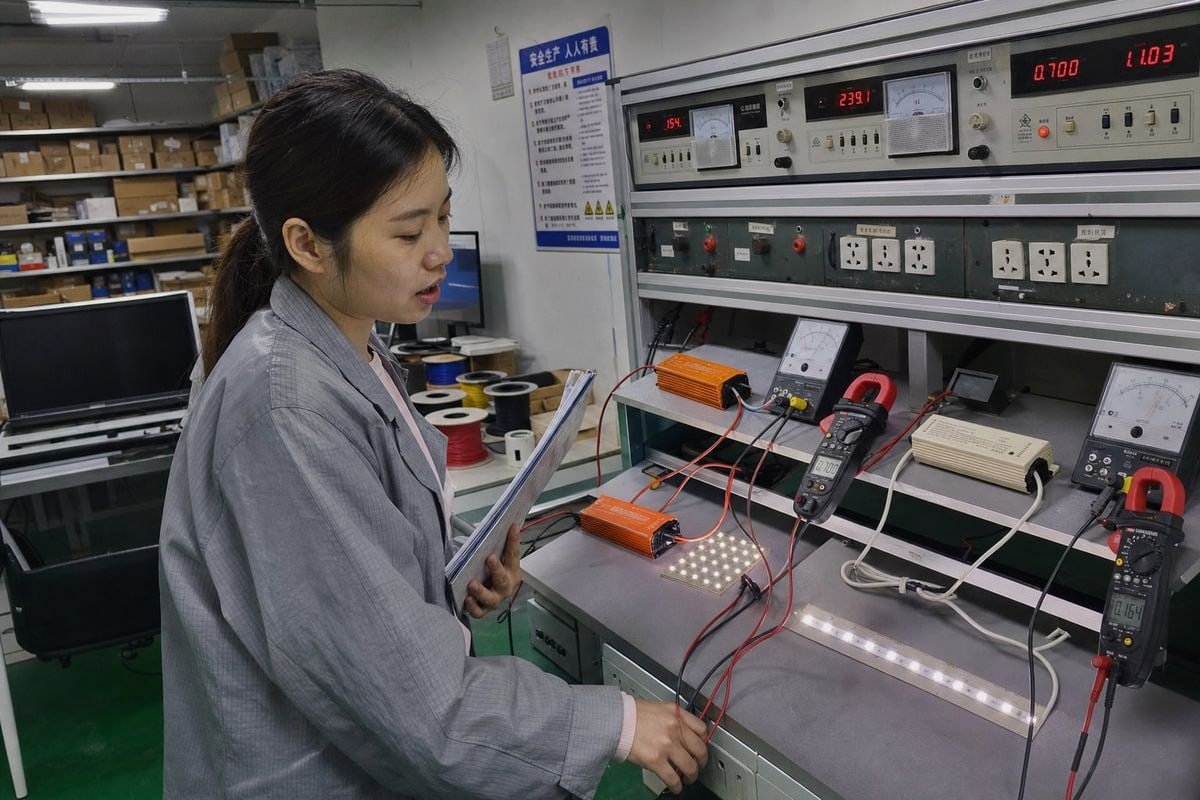
Đây là so sánh cốt lõi trong nháy mắt:
| Tính Năng | Dòng không đổi (CC) | Điện áp không đổi (CV) |
|---|---|---|
| Đầu ra được điều chỉnh | Dòng điện (ví dụ: 350mA, 700mA, 1A) | Điện áp (ví dụ: 12V, 24V DC) |
| Nhãn ghi | Dòng điện cố định + phạm vi điện áp | Điện áp cố định + dòng điện tối đa |
| Đấu dây điển hình | Nối tiếp | Song song |
| Tải phù hợp nhất | Mô-đun LED COB, đèn chiếu sáng công suất cao | Đèn dải LED, mô-đun biển báo |
| Giới hạn dòng điện | Được xử lý bởi bộ điều khiển | Phải được tích hợp vào sản phẩm LED |
| Phương pháp điều chỉnh độ sáng | Giảm dòng không đổi (CCR) | Thường là điều chế độ rộng xung 1 (PWM) |
CC Kiểm Soát Dòng Điện, CV Giữ Điện Áp
Sự khác biệt rất dễ nhớ: CC kiểm soát dòng điện LED; CV duy trì điện áp LED. Bộ điều khiển CC điều chỉnh điện áp đầu ra lên hoặc xuống trong phạm vi tuân thủ để dòng điện luôn ở giá trị định mức. Điều này bảo vệ chip LED chống quá dòng và sự chạy trốn nhiệt 2. Bộ điều khiển CV làm ngược lại. Nó khóa điện áp ở 12V hoặc 24V và cho phép tải kết nối kéo bất kỳ dòng điện nào cần, lên đến mức tối đa.
Vị Trí Của Tín Hiệu 0–10V
Giao diện 0–10V là tín hiệu điều chỉnh độ sáng analog, không phải loại đầu ra nguồn. Đây là tiêu chuẩn điều khiển điện áp thấp: 10V ra lệnh độ sáng tối đa, 0V ra lệnh đầu ra tối thiểu hoặc tắt, tùy thuộc vào việc bộ điều khiển có khả năng tắt hoàn toàn hay không. Cả bộ điều khiển CC và CV đều có thể chấp nhận tín hiệu này. Bộ điều khiển đóng vai trò là bộ dịch. Trong hệ thống CC, bộ điều khiển giảm dòng điện để phản hồi tín hiệu. Trong hệ thống CV, bộ điều khiển thường điều chỉnh đầu ra bằng PWM. Khi chúng tôi thiết kế mạch điều chỉnh độ sáng, chúng tôi cũng xác minh hành vi dòng điện hút và nguồn ở phía điều khiển, vì sự không khớp ở đó gây ra đường điều chỉnh độ sáng chết ngay cả khi đấu dây nguồn hoàn hảo.
Làm thế nào để tôi xác định loại driver LED nào phù hợp với yêu cầu sản xuất của tôi?
Một người mua từ Pháp từng gửi cho chúng tôi một thông số kỹ thuật đèn chỉ liệt kê công suất—không có dòng điện, không có điện áp. Chúng tôi phải gửi lại với một câu hỏi: bảng dữ liệu LED nói gì? Tài liệu duy nhất đó quyết định mọi thứ.
Đọc bảng dữ liệu LED trước. Nếu nó chỉ định dòng điện dẫn bằng mA hoặc A, hãy chọn bộ điều khiển dòng điện không đổi khớp với định mức chính xác đó. Nếu nó chỉ định điện áp hoạt động bằng VDC, chẳng hạn như 12V hoặc 24V, hãy chọn bộ điều khiển điện áp không đổi có công suất dự phòng đủ.

Hãy làm theo quy trình quyết định đơn giản này trước mỗi đơn đặt hàng:
- Kiểm tra bảng thông số kỹ thuật LED. Dòng điện tính bằng mA nghĩa là CC. Điện áp tính bằng VDC nghĩa là CV. Chỉ công suất không bao giờ đủ để đưa ra quyết định.
- Kiểm tra cấu trúc đấu dây. Đấu dây nối tiếp so với song song rất quan trọng. Chuỗi nối tiếp chip hoặc mô-đun LED COB cần CC. Mô-đun và dải kết nối song song cần CV.
- Kiểm tra dải điện áp thuận. Đối với driver dòng không đổi (CC), tổng điện áp thuận của chuỗi LED của bạn phải nằm trong cửa sổ điện áp đầu ra của driver.
- Kiểm tra giao diện điều chỉnh độ sáng. Xác nhận driver cụ thể là model CC có thể điều chỉnh 0–10V hoặc model CV có thể điều chỉnh 0–10V. Giao thức điều chỉnh độ sáng không bao giờ quyết định loại đầu ra.
- Kiểm tra yêu cầu về cấp an toàn. Đối với nhiều hệ thống điện áp thấp, một nguồn điện Class 2 3 đơn giản hóa việc tuân thủ hệ thống dây điện và kiểm tra.
Tại sao Đấu Nối Tiếp Song Song Lại Quan Trọng
Hệ thống CC thường dựa trên đấu nối tiếp. Mỗi LED trong chuỗi nhận dòng điện giống hệt nhau, do đó độ sáng đồng đều trên toàn bộ chuỗi. Hệ thống CV thường dựa trên đấu song song. Mỗi module hoặc đoạn dải đèn kết nối vào cùng một thanh điện áp, giúp dễ dàng thêm hoặc bớt đèn trong quá trình thay đổi bố trí. Theo kinh nghiệm xuất khẩu driver cho khách hàng châu Âu của chúng tôi, việc trộn lẫn các cấu trúc này là nguyên nhân số một gây ra lỗi tại hiện trường. Tải song song trên driver CC buộc phân chia dòng điện không đồng đều. Một chuỗi nối tiếp dài trên driver CV đơn giản sẽ không sáng đúng cách.
Khớp Vượt Quá Công Suất Watt
Đối với lựa chọn CC, khớp chính xác định mức milliamp — 350mA, 700mA hoặc 1A là các giá trị phổ biến nhất chúng tôi giao hàng. Đối với lựa chọn CV, đảm bảo công suất watt tổng của driver vượt quá tổng tất cả tải kết nối, lý tưởng nhất là có biên độ dự phòng 20%. Việc hoán đổi driver CC và CV chỉ vì công suất watt khớp là sai lầm chúng tôi thấy lặp đi lặp lại, và nó thường kết thúc bằng đèn chết hoặc nhấp nháy.
Những Yếu Tố Chi Phí Nào Tôi Nên Cân Nhắc Khi Chọn Driver LED 0–10V Cho Sản Xuất Quy Mô Lớn?
Có một sự đánh đổi mà tôi cân nhắc trong mọi báo giá số lượng lớn chúng tôi chuẩn bị: giá đơn vị so với tổng chi phí hệ thống. Driver rẻ nhất trên hóa đơn hiếm khi là driver rẻ nhất trong sản phẩm hoàn thiện.
Đối với sản xuất quy mô lớn, hãy đánh giá tổng chi phí hệ thống, không chỉ giá từng driver. Driver CV có chi phí thấp hơn mỗi đơn vị và đơn giản hóa bố trí song song, nhưng driver CC giảm tỷ lệ lỗi, yêu cầu bảo hành và tổn thất cáp. Cần tính đến dây điện, khoảng trống, chất lượng điều chỉnh độ sáng và yêu cầu chứng nhận.
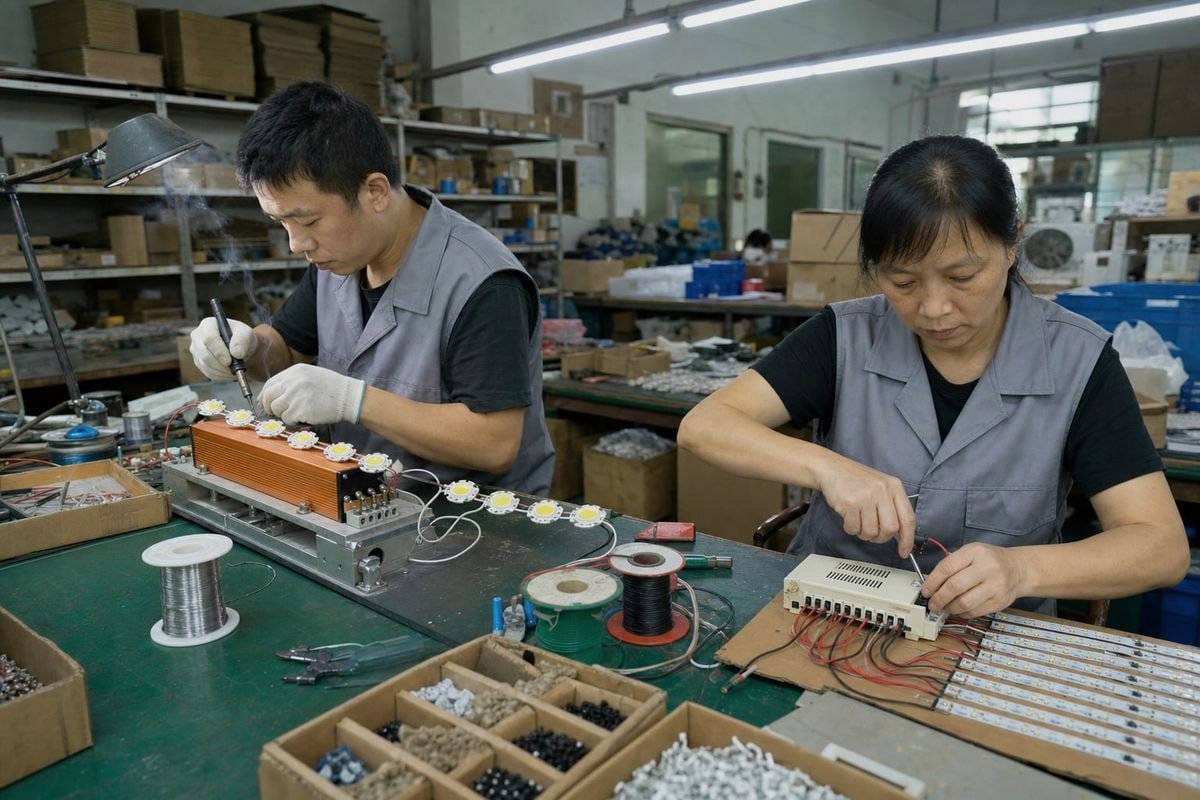
Đây là cách các yếu tố chi phí thường phân chia khi chúng tôi giúp khách hàng lập ngân sách cho một dự án:
| Yếu tố chi phí | Tác Động Dòng Không Đổi | Tác Động Điện Áp Không Đổi |
|---|---|---|
| Giá đơn vị driver | Cao hơn mỗi đơn vị | Thấp hơn mỗi đơn vị |
| Dây điện và cáp | Miễn nhiễm với sụt áp trên khoảng cách dài | Sụt áp buộc phải dùng cáp dày hơn hoặc khoảng cách ngắn hơn |
| Khả năng mở rộng | Một driver cho mỗi đèn hoặc chuỗi | Một driver lớn có thể cấp cho nhiều module song song |
| Rủi ro lỗi và bảo hành | Thấp hơn; dòng điện được điều chỉnh | Cao hơn nếu giới hạn dòng phía LED yếu |
| Chi phí chất lượng điều chỉnh độ sáng | CCR mượt mà, không cần linh kiện thêm | PWM có thể cần giảm nhấp nháy cho các công việc cao cấp |
Chi Phí Ẩn Của Sụt Áp
Driver CC tự động tăng điện áp đầu ra để khắc phục điện trở cáp. Điều đó làm chúng miễn nhiễm với sụt áp trên khoảng cách dài. Hệ thống CV không có đặc quyền đó. Trên hệ thống dải đèn 12V, cáp nguồn dài có thể làm mờ rõ rệt đầu xa của đoạn chạy. Khắc phục điều đó có nghĩa là đồng dày hơn, đoạn ngắn hơn hoặc điểm cấp nguồn bổ sung — tất cả đều là tiền thật ở quy mô sản xuất. Khi chúng tôi báo giá các dự án biển hiệu lớn, cỡ cáp thường là hạng mục khiến người mua ngạc nhiên nhất.
Tính Mô-đun So Với Bảo Vệ
Một số khách hàng phản đối và cho rằng CC luôn là khoản đầu tư tốt hơn vì nó bảo vệ LED và cải thiện hiệu suất. Những người khác nhấn mạnh CV thắng vì rẻ hơn và dễ cấu hình lại hơn. Cả hai quan điểm đều đúng một nửa. CC về mặt kỹ thuật được ưa chuộng cho chip LED trần và đèn công suất cao. CV thực sự kinh tế hơn cho các sản phẩm điện áp thấp được thiết kế sẵn, nơi giới hạn dòng điện đã nằm bên trong module. Một số khách hàng của chúng tôi cũng chỉ định driver lai CV+CC, chạy ở chế độ điện áp không đổi dưới tải bình thường nhưng chuyển sang chế độ dòng không đổi trong các sự kiện quá dòng. Bảo vệ lai đó tốn thêm một chút chi phí ban đầu nhưng ngăn ngừa lỗi hệ thống nghiêm trọng — một lập luận mạnh mẽ trong các lắp đặt thương mại không có người giám sát.
Ứng Dụng Nào Hoạt Động Tốt Nhất Với Hệ Thống Điều Chỉnh 0–10V Dòng Không Đổi So Với Điện Áp Không Đổi?
Đầu sự nghiệp tại một nhà máy chiếu sáng LED, tôi đã chứng kiến một đơn hàng chiếu sáng phim trường bị từ chối vì các dải đèn nhấp nháy trước camera. Đèn trông hoàn hảo với mắt thường. Cảm biến camera không đồng ý.
Driver 0–10V dòng không đổi hoạt động tốt nhất cho đèn downlight, đèn panel, đèn chiếu sáng cao và đèn dựa trên COB cần độ sáng đồng đều. Hệ thống 0–10V điện áp không đổi phù hợp với dải đèn LED, biển hiệu, đèn hắt trần và ứng dụng điểm nhấn được xây dựng từ các module đấu song song.
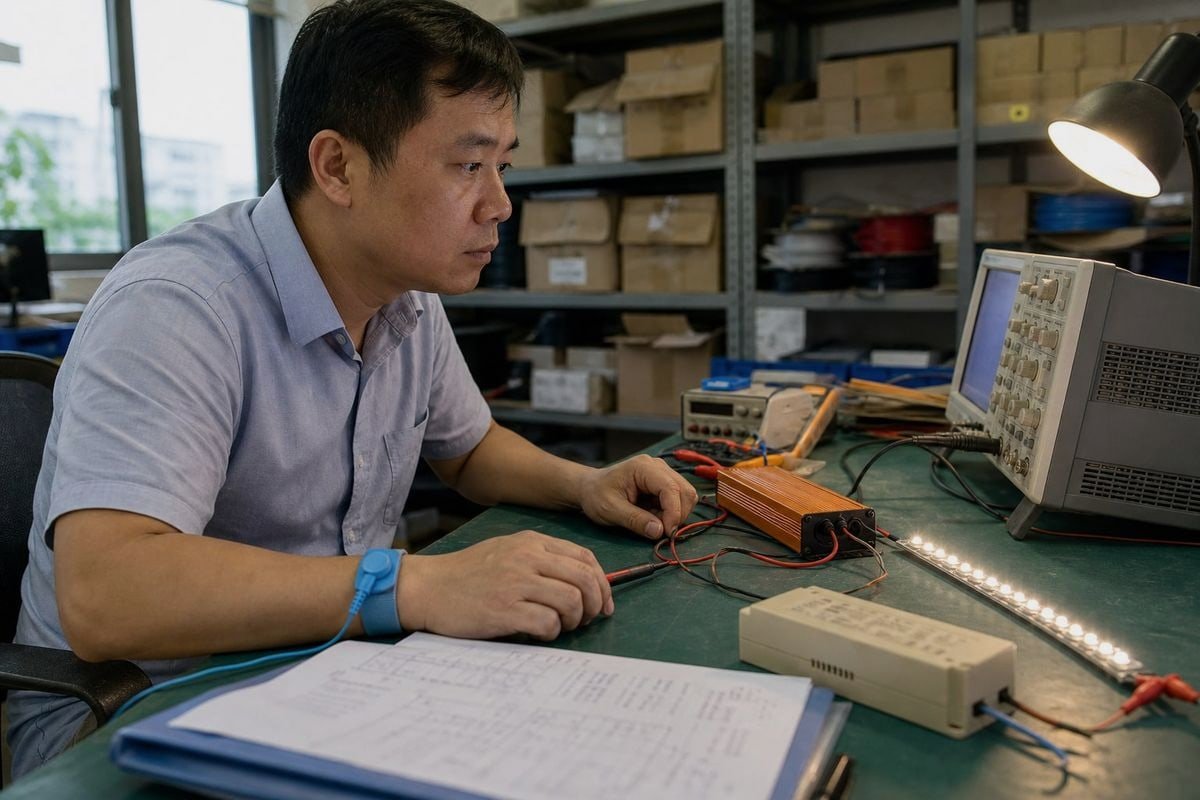
Khớp ứng dụng với loại driver bằng bảng tham chiếu này:
| Ứng dụng | Loại Khuyến Nghị | Tại Sao |
|---|---|---|
| Đèn downlight âm trần và đèn chiếu điểm | CC | Chip đấu nối tiếp cần dòng điện chính xác để đầu ra đồng đều |
| Đèn chiếu sáng cao và đèn công nghiệp | CC | Bộ phát công suất cao yêu cầu bảo vệ quá dòng |
| Chiếu sáng phim và phát sóng | CC với CCR tần số cao | Loại bỏ hiện tượng vệt banding do cảm biến camera tốc độ cao ghi lại |
| Đèn LED dạng dải và đèn dải dán | Sơ yếu lý lịch | Dải đèn có điện trở tích hợp và cần nguồn ổn định 12V/24V |
| Biển hiệu và chữ nổi | Sơ yếu lý lịch | Mô-đun song song dễ thêm, gỡ và thay thế |
| Đèn hắt và đèn nhấn | Sơ yếu lý lịch | Chiều dài linh hoạt và cấu hình lại đơn giản tại hiện trường |
Hành vi điều chỉnh độ sáng trong thiết bị chiếu sáng thực tế
Chất lượng điều chỉnh độ sáng là nơi các ứng dụng thực sự khác biệt. Bộ điều khiển CC thường điều chỉnh độ sáng thông qua Giảm dòng không đổi (Constant Current Reduction), giúp hạ dòng analog một cách mượt mà. Điều này phù hợp với chiếu sáng thông dụng, và hệ thống 0–10V được thiết kế tốt có thể điều chỉnh độ sáng mượt mà xuống 10%, 1% và thậm chí 0.1% trong một số cấu hình. Hệ thống CV thường dựa vào điều chế độ rộng xung (PWM), đóng ngắt đầu ra nhanh chóng. PWM hoàn toàn ổn cho hầu hết công việc trang trí, nhưng PWM tần số thấp có thể tạo ra hiện tượng nhấp nháy nhìn thấy được 4 hoặc banding trên camera. Đối với môi trường video, CCR tần số cao trên bộ điều khiển CC là thông số kỹ thuật an toàn hơn.
Đường cong điều chỉnh độ sáng và nhận thức của con người
Một chi tiết nữa mà kỹ sư của chúng tôi lưu ý cho các dự án cao cấp: hình dạng của đường cong điều chỉnh độ sáng. Hầu hết bộ điều khiển 0–10V xuất ra tín hiệu tuyến tính, nhưng mắt người cảm nhận ánh sáng không tuyến tính. Bộ điều khiển CC cao cấp có thể được lập trình với đường cong điều chỉnh độ sáng logarit để cảm nhận độ sáng trở nên tự nhiên trên toàn dải. Nếu dự án của bạn yêu cầu khả năng tắt hoàn toàn khi điều chỉnh (dim-to-off), hãy xác nhận bộ điều khiển hỗ trợ tính năng này một cách rõ ràng — nhiều bộ điều khiển 0–10V tiêu chuẩn chỉ điều chỉnh xuống mức tối thiểu và không bao giờ tắt hẳn nếu không có rơ-le riêng.

Phần kết luận
Khớp tải trước, sau đó khớp phương pháp điều chỉnh độ sáng. Nếu đèn LED của bạn quy định dòng điện, hãy chọn CC. Nếu quy định điện áp, hãy chọn CV. Coi 0–10V chỉ là giao diện điều chỉnh độ sáng — và xác minh khả năng tương thích trước khi đặt hàng với số lượng lớn.
Chú thích
- Giải thích phương pháp điều chỉnh độ sáng kỹ thuật mà bộ điều khiển CV thường sử dụng để kiểm soát độ sáng. ↩︎
- Thông tin nền về chế độ hỏng hóc do quá nhiệt mà điều chỉnh dòng không đổi ngăn ngừa ở đèn LED. ↩︎
- IEEE đề cập đến các phân loại an toàn điện liên quan đến thiết kế nguồn điện áp thấp. ↩︎
- ENERGY STAR cung cấp hướng dẫn có thẩm quyền về tiêu chuẩn hiệu suất nhấp nháy trong sản phẩm chiếu sáng LED. ↩︎