Aller au contenu










Les gradateurs TRIAC semblent simples, mais utiliser le mauvais peut ruiner votre installation d’éclairage — avec scintillement, bourdonnement, ou même des ampoules grillées.
Un gradateur TRIAC est un type de gradateur de lumière à courant alternatif qui contrôle la luminosité en activant et désactivant rapidement l’alimentation à chaque cycle de courant alternatif. Il utilise une puce TRIAC (Triode pour courant alternatif) pour “ couper ” une partie de la forme d’onde électrique — plus il s’active tard dans chaque cycle, plus la lumière paraît faible. Les gradateurs TRIAC sont largement utilisés pour les lampes à incandescence, halogènes et les LED compatibles, mais peuvent provoquer un scintillement ou du bruit s’ils ne sont pas associés à des pilotes LED adaptés.

La gradation TRIAC est l’une des méthodes les plus courantes dans les espaces résidentiels et petits espaces commerciaux. C’est une solution éprouvée, mais comprendre comment elle fonctionne — et quand ne pas l’utiliser — est essentiel pour obtenir des résultats de gradation fiables.
Qu’est-ce qu’un gradateur TRIAC ?
Beaucoup de gens installent des gradateurs en espérant des résultats parfaits, mais finissent frustrés parce qu’ils n’ont pas compris quel type ils avaient acheté.
Un gradateur TRIAC ajuste la luminosité de la lumière en régulant la quantité de courant alternatif qui atteint la lampe via un composant TRIAC.

Comprendre la puce TRIAC
Le mot " TRIAC " signifie " Triode pour courant alternatif ". C’est un semi-conducteur qui peut commuter et contrôler les signaux de courant alternatif. Contrairement aux interrupteurs mécaniques, les TRIAC fonctionnent silencieusement et rapidement.
Voici ce qu’il fait dans le gradateur :
- Coupe une partie de la forme d’onde de courant alternatif à chaque demi-cycle
- Le point de coupure (appelé " angle d’amorçage ") détermine la luminosité
- Angle d’amorçage plus tardif = sortie lumineuse plus faible
Ce type de gradation par coupure de phase est le plus souvent utilisé pour :
| Source lumineuse | Compatibilité avec les gradateurs TRIAC |
|---|---|
| Ampoules à incandescence | ✅ Excellente |
| Lampes halogènes | ✅ Excellente |
| LED (compatibles TRIAC) | ✅ Bonne, si conçue pour cela |
| Lampes fluocompactes ou ELV | ❌ Souvent incompatibles |
Le point clé : les gradateurs TRIAC sont simples, économiques et fiables — lorsqu’ils sont utilisés avec les bonnes lumières.
Comment fonctionne un variateur à TRIAC ?
Cela peut sembler magique qu’un petit interrupteur sur votre mur puisse rendre une LED brillante douce et chaleureuse. Mais il y a une science solide derrière cela.
Un gradateur TRIAC active et désactive rapidement le courant pendant chaque cycle de courant alternatif, coupant une partie de la forme d’onde pour réduire la puissance.
Décomposons cela
Le courant alternatif qui alimente les maisons est une onde sinusoïdale oscillant à 50 ou 60 Hz. Cela signifie que chaque cycle dure environ 16 à 20 millisecondes. Le gradateur TRIAC interrompt ce cycle.
Voici comment cela fonctionne :
- Il attend un nombre défini de millisecondes avant de permettre au courant de circuler.
- Plus il retarde, moins d’énergie atteint la lumière.
- C’est ce qu’on appelle la gradation par coupure de phase " de front montant ".
Par exemple :
| Temps de retard | Luminosité résultante |
|---|---|
| 0 ms | 100% (pleine puissance) |
| 8 ms | 50% atténué |
| 12 ms | ~20% de luminosité |
L’effet est instantané à l’œil, mais à l’intérieur du circuit, le TRIAC s’active et se désactive 120 fois par seconde (pour une alimentation à 60 Hz).
C’est efficace, mais toutes les LED n’aiment pas que leur puissance soit coupée de cette façon. C’est pourquoi la compatibilité gradateur-pilote est si importante.
Quelle est la différence entre la gradation de front montant et de front descendant ?
C’est là que les gens se perdent souvent — tous les gradateurs ne sont pas construits de la même manière. Même s’ils se ressemblent.
La gradation de front montant coupe la tension au début de la forme d’onde de courant alternatif, tandis que la gradation de front descendant la coupe à la fin.

Quel front devriez-vous utiliser ?
| Fonctionnalité | Front montant (TRIAC) | Front descendant (ELV) |
|---|---|---|
| Position de coupure | Début de la forme d’onde CA | Fin de la forme d’onde CA |
| Utilisation courante | Incandescentes, certaines LED | LED, transformateurs électroniques |
| Type de gradateur | TRIAC | MOSFET |
| Bruit/Scintillement avec les LED | Possible si incompatible | Moins probable |
| Coût | Plus bas | Plus élevé |
Variateurs TRIAC = front montant / commande de phase directe
Variateurs ELV = front descendant / commande de phase inversée
Le TRIAC est moins cher et plus courant, mais si vous utilisez des luminaires LED modernes, vérifiez s’ils préfèrent le front descendant. Sinon, vous risquez de mauvaises performances.
Quels types de lampes sont compatibles avec les variateurs TRIAC ?
Vous utilisez une mauvaise ampoule avec votre variateur TRIAC ? Vous le saurez immédiatement — probablement à cause du scintillement ou du bourdonnement.
Les variateurs TRIAC fonctionnent bien avec les ampoules incandescentes, halogènes et des LED dimmables conçues pour le gradateur par coupure de phase.
Correspondance avec votre source lumineuse
La règle la plus importante : n’utilisez que des ampoules marquées “ dimmables ” — et idéalement “ compatibles TRIAC ”.”
Voici un guide rapide :
| Type de lampe | Compatible avec TRIAC ? | Remarques |
|---|---|---|
| Incandescent | ✅ Oui | Correspondance parfaite |
| Halogène | ✅ Oui | Bonnes performances |
| LED à gradation | ⚠️ Parfois | Vérifiez la fiche technique |
| LFC (fluocompactes) | ❌ Non | Souvent instables |
| Ampoules intelligentes | ❌ Non | Utilisez l’application ou l’interrupteur intelligent |
La partie la plus délicate concerne les LED — elles nécessitent souvent des drivers très spécifiques. J’ai vu des projets ruinés parce que quelqu’un supposait que “ dimmable ” signifiait “ compatible avec n’importe quel variateur ”.”
Peut-on utiliser un variateur TRIAC avec des lampes LED ?
Oui — mais vous devez faire vos recherches avant de les associer.
Vous pouvez utiliser un variateur TRIAC avec des LED si elles sont spécifiquement conçues pour gradation par coupure de phase. Sinon, des problèmes comme le scintillement ou le bourdonnement peuvent survenir.
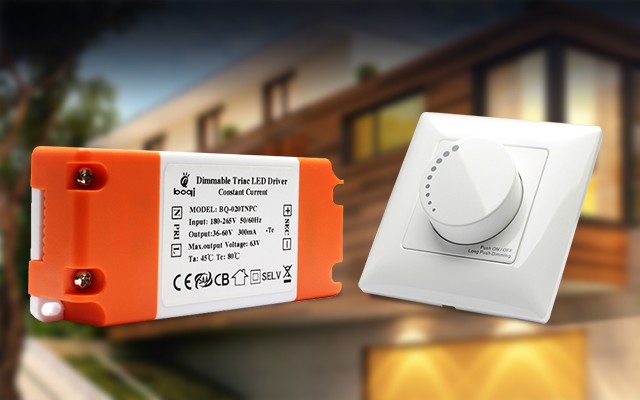
Pourquoi les LED sont si exigeantes
Les LED fonctionnent très différemment des ampoules traditionnelles. Elles fonctionnent en courant continu et nécessitent des drivers pour convertir le CA en CC. Ces drivers n’apprécient pas toujours le signal haché créé par un variateur TRIAC.
Si le driver n’est pas conçu pour le gradateur par coupure de phase :
- La LED peut scintiller à de faibles niveaux de gradation
- Vous pouvez entendre un bourdonnement aigu
- La lumière peut ne pas diminuer du tout, ou s’éteindre soudainement
Bonne pratique : vérifiez toujours la fiche technique ou l’étiquetage. Recherchez :
- “ Gradateur par coupure de phase ”
- “ Compatible front montant ”
- “ Dimmable TRIAC ”
Je recommande également de tester une unité avant de commander en gros. Cela évite bien des maux de tête par la suite.
Quels sont les avantages d’utiliser un variateur TRIAC ?
Les variateurs TRIAC ne sont peut-être pas la technologie la plus récente, mais ils font toujours bien le travail — surtout lorsque le coût et la simplicité comptent.
Les avantages incluent une gradation fluide, des économies d’énergie, une durée de vie prolongée des ampoules et une large disponibilité.

Pourquoi le TRIAC reste important
Malgré toutes les nouvelles méthodes de gradation, le TRIAC reste un choix de premier plan pour de nombreux professionnels de l’éclairage.
| Bénéfice | Description |
|---|---|
| Facile à installer | Même câblage qu’un interrupteur standard |
| Abordable | Coût inférieur aux systèmes de gradation numériques |
| Large compatibilité | Fonctionne avec la plupart des systèmes d’éclairage existants |
| Économies d'énergie | Moins d’énergie consommée en cas de gradation |
| Durée de vie prolongée des ampoules | Température de fonctionnement plus basse = durée de vie plus longue |
Ce n’est pas parfait pour chaque projet, mais quand ça correspond — ça correspond bien.
Quelles sont les limites des gradateurs TRIAC ?
Vous en avez pour votre argent — et avec le TRIAC, les compromis méritent d’être connus.
Les gradateurs TRIAC peuvent ne pas fonctionner avec toutes les ampoules et peuvent provoquer du bruit, des scintillements ou une plage de gradation limitée dans des configurations incompatibles.

Voici ce à quoi il faut faire attention
| Limitation | Explication |
|---|---|
| Compatibilité LED | Nécessite un support du driver pour la gradation par coupure de phase |
| Bruit audible | Certaines lumières bourdonnent en raison des formes d’onde hachées |
| Scintillement | Cela se produit à de faibles niveaux de gradation ou avec de mauvaises charges |
| Moins de précision | Pas de retour numérique ni de contrôle avancé |
Pour les installations avancées — surtout avec des types d’éclairage mixtes — vous pourriez être mieux loti avec des 0-10V ou DALI systèmes. Mais pour les maisons ou les petits bureaux, le TRIAC peut toujours être un choix solide.
Comment installer un gradateur TRIAC ?
C’est un processus accessible aux bricoleurs, mais le travail électrique exige toujours de la prudence.
L’installation d’un gradateur TRIAC consiste à remplacer un interrupteur mural par le gradateur, à suivre les schémas de câblage et à tester.

Guide étape par étape
- Coupez l’alimentation au disjoncteur
- Retirez l’ancien interrupteur et étiquetez les fils
- Connectez les fils aux bornes Line, Load et Ground Rangez le tout,
- fixez la plaque de finition, Rétablissez l’alimentation et
- testez la fonction de gradation Si vous n’êtes pas sûr du câblage, consultez un électricien. La sécurité passe toujours en premier.
Important : Comment un gradateur TRIAC se compare-t-il aux autres technologies de gradation ?.
Il n’existe pas de solution universelle en matière de contrôle de l’éclairage.
Les gradateurs TRIAC sont abordables et simples, mais d’autres méthodes comme le 0-10V ou le PWM offrent une meilleure compatibilité et un meilleur contrôle pour les LED.
Confrontation des méthodes de gradation.
TRIAC (front de montée)
| Type de gradation | Pour | Cons |
|---|---|---|
| Simple, économique | Problèmes avec les LED si incompatibles | ELV (front de descente) |
| Fluide pour les LED, silencieux | Coûteux, nécessite un équipement compatible | Cher, nécessite un équipement compatible. |
| 0-10V | Idéal pour les installations commerciales | Nécessite un câblage supplémentaire |
| PWM | Idéal pour un contrôle précis des LED | Nécessite des pilotes avancés |
Choisissez en fonction de votre type d'éclairage, de la taille du projet et de votre budget. Pour une installation résidentielle ou une rénovation ? Le TRIAC pourrait être le bon choix.
Que devez-vous prendre en compte lors du choix d'un variateur TRIAC ?
Tous les variateurs TRIAC ne se valent pas. Il est judicieux d'associer votre variateur à vos luminaires et à votre cas d'utilisation.
Assurez-vous que le variateur prend en charge votre charge d'éclairage, votre type d'ampoule, votre style de contrôle et vos exigences d'installation.

Liste de vérification avant achat
| Facteur | Ce qu'il faut rechercher |
|---|---|
| Compatibilité de charge | Correspondre à la puissance et au type d'éclairage |
| Étiquetage des ampoules | " Variateur " et " compatible TRIAC " |
| Type de contrôle | Rotatif, coulissant ou tactile |
| Configuration des pôles | Unipolaire ou va-et-vient, selon les besoins de câblage |
| Apparence | Couleur, forme et préférence de marque |
Je teste toujours un variateur dans une pièce d'abord. Si cela fonctionne correctement, je passe à l'ensemble du projet.
Conclusion
Les variateurs TRIAC offrent un moyen simple et économique de contrôler la lumière — à condition de les associer aux bonnes ampoules et aux bons pilotes.
Découvrez la puissance de la précision avec le variateur TRIAC de boqi
Vous recherchez une solution de contrôle d'éclairage fiable et sans scintillement ? Le variateur TRIAC de boqi est conçu pour offrir des performances de variation fluides et stables pour les systèmes d'éclairage résidentiels et commerciaux.
Fabriqué avec des matériaux de qualité supérieure et des circuits avancés, notre variateur TRIAC prend en charge la variation par découpage de phase, ce qui le rend compatible avec une large gamme de pilotes LED à intensité variable et de sources lumineuses traditionnelles. Il garantit un fonctionnement silencieux, une efficacité élevée et un délai nul — idéal pour toute installation d'éclairage moderne.
- ✅ Certifié CE et RoHS pour la conformité internationale en matière de sécurité
- 🔧 Paramètres personnalisables pour des expériences de variation sur mesure
- ⚡ Temps de réponse rapide et sans scintillement pour un confort maximal
- 🛠️ Construction durable avec garantie de 5 ans pour une utilisation à long terme
- 🌍 Approuvé par des partenaires mondiaux dans l'innovation en éclairage
Avec plus de 10 ans d'excellence en fabrication, boqi vous propose un variateur qui allie fiabilité, performance et durabilité. Que vous rénoviez une maison ou conceviez un espace commercial, notre Gradateur TRIAC offre le contrôle et la qualité dont vous avez besoin.
Choisissez boqi. Choisissez un éclairage plus intelligent.
👉 Contactez-nous dès aujourd'hui pour démarrer votre prochain projet d'éclairage.