Ga naar de inhoud









Introductie
Het kiezen van de juiste bundelhoek is essentieel om de beste lichtresultaten te bereiken. Bundelhoeken bepalen hoe licht zich over een ruimte verspreidt en beïnvloeden de sfeer en functionaliteit van de ruimte. Deze gids legt uit wat bundelhoeken betekenen, hoe u ze berekent en biedt praktische tips voor het kiezen van de beste voor uw behoeften, of u nu een huiseigenaar, interieurontwerper of lichtprofessional bent.
Wat is een bundelhoek?
Bundelhoek verwijst naar de hoek waaronder licht zich vanuit de bron verspreidt en definieert het gebied dat het verlicht. Smalle bundelhoeken (bijv. 10°) richten licht op een klein gebied, ideaal voor accentverlichting, terwijl bredere hoeken (bijv. 120°) een bredere dekking bieden voor algemene verlichtingsbehoeften. Het kiezen van de juiste bundelhoek hangt af van uw verlichtingsdoelen, de grootte van de ruimte en specifieke taken. Het selecteren van de juiste hoek verbetert de lichtverdeling, efficiëntie en visuele impact, waardoor dit cruciaal is voor zowel residentiële als commerciële ruimtes.
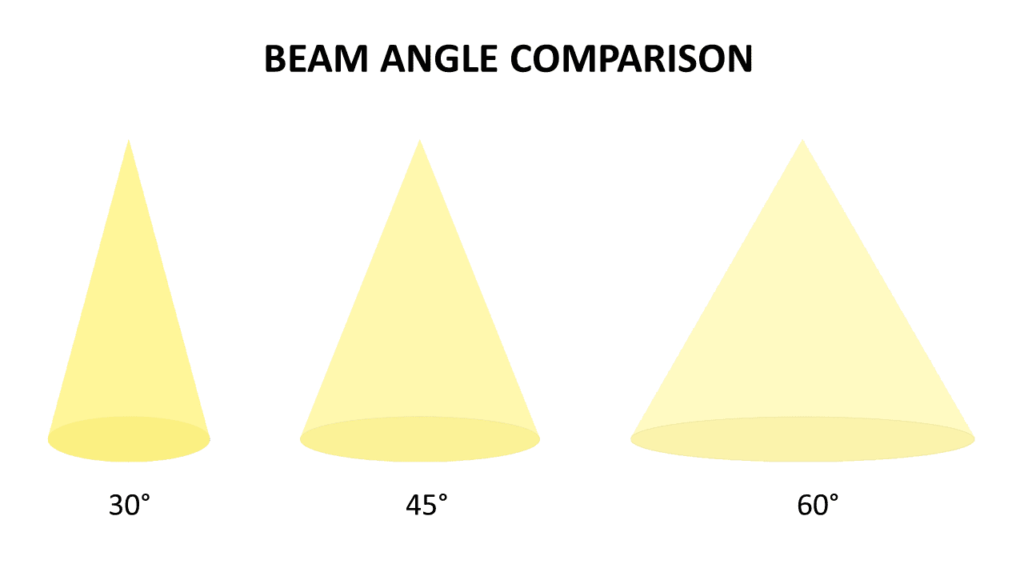
Laten we nu verkennen hoe verschillende bundelhoeken het lichtontwerp beïnvloeden en hoe u de juiste kunt kiezen voor elke ruimte, of het nu gaat om een gezellige thuisopstelling of een levendige commerciële presentatie.
Wat betekent een bundelhoek van 40 graden?
A 40° bundelhoek biedt een medium spreiding die lichtintensiteit en dekking in balans brengt. Deze hoek is zeer geschikt voor algemene verlichting in middelgrote ruimtes, omdat het een gelijkmatige lichtspreiding levert zonder overweldigende intensiteit. Veelvoorkomende toepassingen voor een 40° bundelhoek zijn accentverlichting, zoals het spotlighten van kunstwerken of het verlichten van specifieke gebieden in een ruimte. Deze hoek is ook veelzijdig genoeg om te werken in zowel residentiële als commerciële omgevingen en biedt een gerichte maar evenwichtige lichtspreiding.
Wat betekent een bundelhoek van 36 graden?
A 36° bundelhoek is iets smaller, waardoor het ideaal is voor meer gerichte verlichtingstoepassingen. Deze hoek wordt vaak gebruikt in galerieverlichting, waar gerichte verlichting nodig is om specifieke gebieden of objecten te accentueren. Door de smallere spreiding levert een 36° hoek meer geconcentreerd licht, waardoor details en texturen worden versterkt. Het wordt vaak gebruikt in retaildisplays en accentverlichting waar het creëren van visuele interesse essentieel is.
Wat betekent een bundelhoek van 120 graden?
A 120° bundelhoek biedt brede dekking, waardoor het ideaal is voor sfeerverlichting in grote ruimtes. Deze brede hoek overspoelt een ruimte met licht en zorgt voor gelijkmatige verlichting over het hele gebied. Het is perfect voor algemene verlichting in uitgestrekte ruimtes zoals woonkamers, grote kantoren en buitenruimtes. Vanwege de brede spreiding wordt een 120° bundelhoek vaak gebruikt in armaturen bedoeld voor sfeer- of plafondverlichting.
Wat betekent een bundelhoek van 90 graden?
A 90° bundelhoek ligt tussen medium en brede hoeken en biedt een gelijkmatige spreiding die geschikt is voor algemene verlichting. Het wordt vaak gekozen voor ruimtes waar zacht, wijdverspreid licht gewenst is, zoals woonkamers, kantoren of gebieden waar schaduwreductie belangrijk is. De 90° hoek creëert een comfortabele sfeer door harde schaduwen te verminderen en licht gelijkmatig over de ruimte te verdelen.
Hoe berekent u de bundelhoek voor verschillende ruimtegroottes
Het kiezen van de juiste bundelhoek vereist vaak enige berekening. Een bundelhoekcalculator helpt u de ideale hoek te bepalen op basis van ruimteafmetingen en plafondhoogte.
Als uw ruimte bijvoorbeeld klein is met lage plafonds, kan een smallere bundelhoek effectiever zijn om oververlichting te voorkomen. Voor grotere ruimtes zorgt een bredere hoek voor gelijkmatige dekking. Veel online calculators kunnen snel aanbevelingen geven, of u kunt een bundelhoekformule gebruiken voor nauwkeurigere metingen.
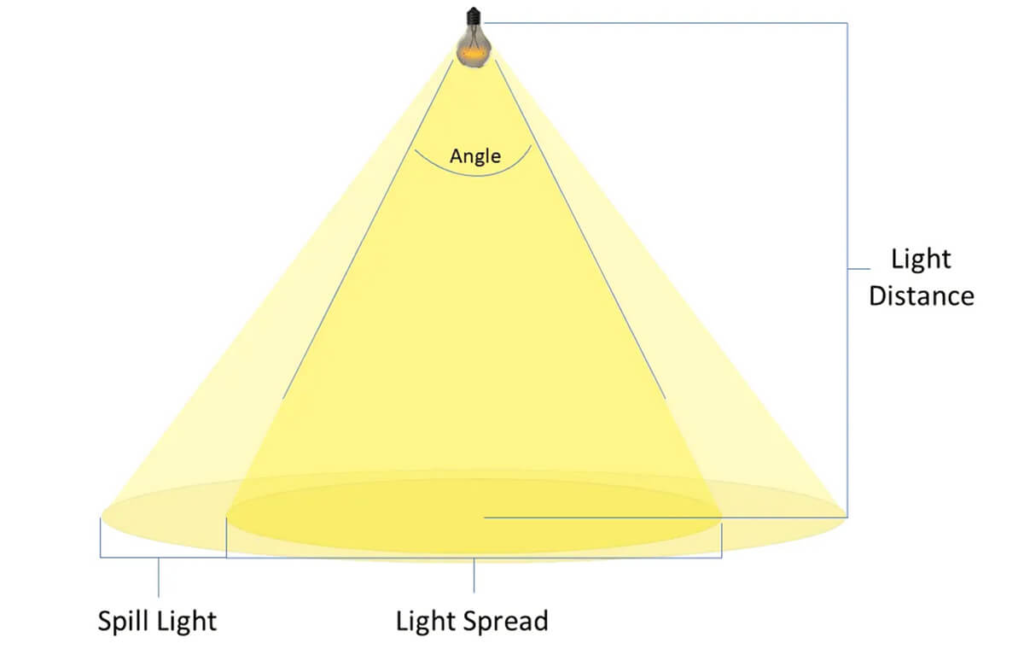
Bundelhoekformule
Om de bundelhoek te berekenen, heeft u de afstand van de lichtbron tot het verlichte oppervlak en de diameter van de lichtspreiding op dat oppervlak nodig.
Formule:
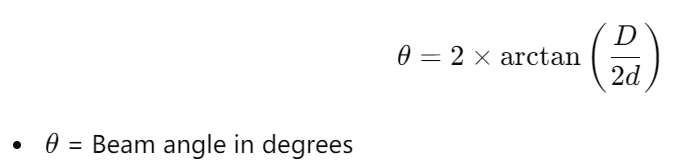
- ( D ) = Diameter van de lichtspreiding (bundeldiameter) op het oppervlak
- ( d ) = Afstand van de lichtbron tot het verlichte oppervlak
Stapsgewijze handleiding
- Meet de diameter van de lichtspreiding (D): Meet de breedte van het licht op het doelgebied, zoals een muur of vloer.
- Meet de afstand van de lichtbron (d): Noteer de afstand van het lichtarmatuur tot het verlichte oppervlak.
- Bereken de bundelhoek: Gebruik de formule om de bundelhoek te vinden.
Voorbeeldberekening
Stel:
- Diameter van de lichtspreiding (D): 2 meter
- Afstand van de lichtbron (d): 3 meter
Invullen in de formule:

Met een calculator kunt u de bundelhoek oplossen. Deze berekening is vooral nuttig voor grotere installaties of wanneer precisie in lichtverdeling essentieel is.
Bundelhoekgrafiek: Veelvoorkomende hoeken en hun toepassingen
Hieronder vindt u een snelle straalhoekdiagram om veelvoorkomende hoeken en hun toepassingen te raadplegen:
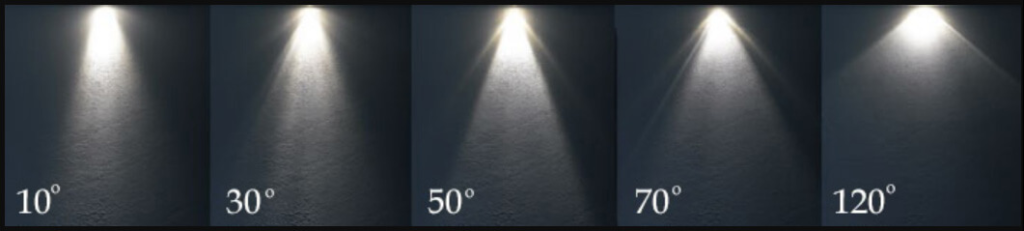
Hier is een meer gedetailleerde uitleg van veelvoorkomende straalhoeken en hun toepassingen:
10° – 24°: Gerichte, smalle stralen voor specifieke accenten
Straalhoeken variërend van 10° tot 24° bieden een zeer gerichte en smalle lichtverspreiding, waardoor ze ideaal zijn voor accentverlichting. Deze hoeken zijn perfect om de aandacht te vestigen op specifieke details in een ruimte, zoals kunstwerken, architectonische kenmerken of decoratieve items. Omdat het licht nauw gericht is, versterkt het contrast en voegt het diepte toe aan deze elementen, wat een opvallend effect creëert. Smalle straalhoeken worden vaak gebruikt in galerieën, winkels en elke omgeving waar het benadrukken van bepaalde objecten of gebieden prioriteit heeft.
36° – 40°: Gemiddelde verspreiding, veelzijdig voor algemene en accentverlichting
A 36° tot 40° straalhoek biedt een gemiddelde lichtverspreiding, waardoor het zeer veelzijdig is voor zowel algemene als accentverlichting. Deze hoek biedt voldoende focus om een gebied te benadrukken zonder harde schaduwen of overdreven intens licht te creëren. Het is goed geschikt voor ruimtes waar een balans tussen functionele verlichting en sfeer gewenst is. Gemiddelde straalhoeken worden vaak gebruikt in woonkamers, eetruimtes en kantoren, waar ze een groot gebied effectief kunnen verlichten en toch een zekere mate van focus kunnen bieden.
60° – 90°: Brede dekking voor residentiële en commerciële ruimtes
Straalhoeken in het 60° tot 90° bereik zijn ontworpen om een bredere lichtdekking te bieden, geschikt voor het verlichten van grotere ruimtes. Deze hoeken verdelen het licht gelijkmatiger over een gebied, waardoor ze ideaal zijn voor ruimtes die algemene, functionele verlichting vereisen. Ze worden vaak gebruikt in zowel residentiële als commerciële omgevingen, zoals woonkamers, vergaderruimtes en winkels. Deze straalhoeken zijn vooral nuttig wanneer u uitgebreide lichtdekking nodig hebt zonder intense focus, waardoor een comfortabele en goed verlichte omgeving ontstaat.

120°: Brede dekking voor grote ruimtes en sfeerverlichting
A 120° bundelhoek biedt de breedste lichtverspreiding en biedt uitgebreide dekking die ideaal is voor grote ruimtes of sfeerverlichting. Deze hoek is perfect voor omgevingen waar gelijkmatig, zacht licht nodig is over een groot gebied. Het wordt vaak gebruikt voor plafondarmaturen in ruime kamers, zoals grote woonkamers, auditoria of buitenomgevingen. De brede dekking helpt schaduwen te verminderen en vult de ruimte met een comfortabele, uitnodigende gloed, waardoor het een populaire keuze is voor algemene en sfeerverlichting.
Hier is een tabel die de veelvoorkomende straalhoeken en hun aanbevolen toepassingen samenvat:
| Straalhoek | Lichtverspreiding | Beste toepassingen |
|---|---|---|
| 10° – 24° | Gerichte, smalle straal | Specifieke gebieden benadrukken; ideaal voor accentverlichting |
| 36° – 40° | Gemiddelde verspreiding | Veelzijdig voor zowel algemene als accentverlichting |
| 60° – 90° | Brede lichtdekking | Geschikt voor residentiële en commerciële ruimtes |
| 120° | Brede dekking | Ideaal voor grote ruimtes of sfeerverlichting |
De beste straalhoek kiezen voor LED-verlichting
Bij het werken met LED-verlichting, zijn straalhoeken zeer veelzijdig, waardoor u meer controle hebt over de lichtverspreiding. LED's zijn energiezuinig en bieden verschillende opties voor straalhoeken, van smalle spots tot brede floodlights. Of u nu gericht licht nodig hebt voor kunstwerken of brede dekking voor een werkruimte, LED's kunnen aan uw specifieke verlichtingsbehoeften voldoen.
Een straalhoek-verlichtingscalculator gebruiken voor optimaal ontwerp
A straalhoek-verlichtingscalculator helpt het besluitvormingsproces te vereenvoudigen door u ruimteafmetingen en gewenste lichtfocus te laten invoeren. Door de optimale straalhoek te berekenen, kunt u veelvoorkomende fouten vermijden, zoals het kiezen van hoeken die te breed zijn voor kleine ruimtes of te smal voor grote kamers.
Spotlight op brede straalhoek (120°): wanneer en waar u deze gebruikt
De 120° bundelhoek is ideaal voor het creëren van een goed verlichte, uitnodigende sfeer. Het werkt het beste in grote kamers of buitenruimtes, waar brede verlichting voordelig is. Bij gebruik binnenshuis kan het het gebied overspoelen met licht, waardoor het perfect is voor woonruimtes of vergaderruimtes. Buitenshuis kan het paden, landschappen en architectonische kenmerken verlichten, wat zowel functionaliteit als esthetische aantrekkingskracht biedt.
Veelvoorkomende fouten bij het kiezen van straalhoeken
Het kiezen van de verkeerde straalhoek kan leiden tot problemen zoals oververlichting, het creëren van harde schaduwen of onvoldoende dekking. Hier zijn enkele veelvoorkomende fouten en tips om ze te vermijden:
- Een te smalle hoek kiezen voor grote ruimtes: Een smalle straalhoek kan een kamer donker en opgedeeld laten aanvoelen. Oplossing: Gebruik bredere hoeken (60° of meer) voor grotere gebieden.
- Een brede hoek gebruiken in een kleine ruimte: Een brede straalhoek in een kleine kamer kan leiden tot oververlichting. Oplossing: Kies voor smallere hoeken om een gerichte, comfortabele sfeer te creëren.
- Straalhoeken niet testen: Het testen van lichtmonsters of het gebruiken van een straalhoekcalculator helpt potentiële problemen te voorkomen en zorgt ervoor dat de verlichting overeenkomt met uw doelen.
Samenvatting
Houd bij het kiezen van een straalhoek rekening met de grootte van de ruimte, het gewenste lichteffect en de plaatsing van uw armaturen. De juiste hoek zal zowel de functionaliteit als de sfeer verbeteren, waardoor ruimtes comfortabel, uitnodigend of professioneel verlicht aanvoelen zoals nodig. Met de juiste begeleiding is het kiezen van de perfecte straalhoek voor uw behoeften eenvoudig en lonend.